

Cereal, O's, multigrain
Common food

Photo: Wikipedia
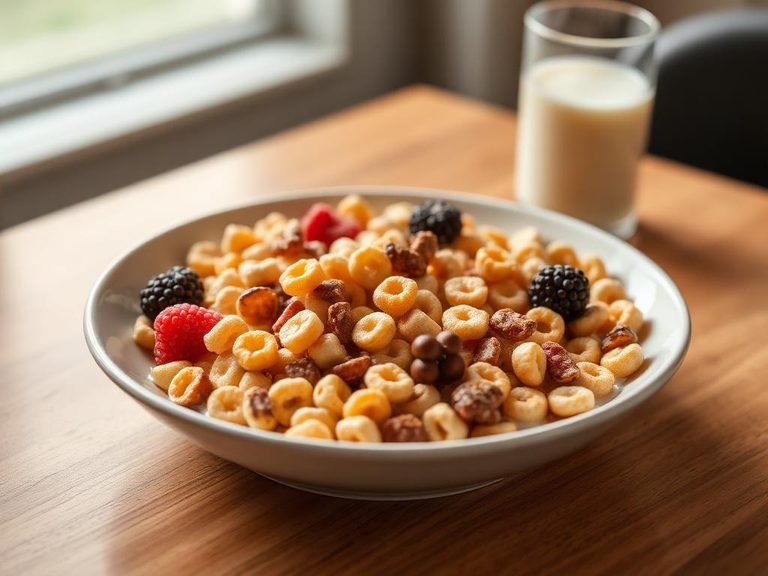
This is a classic, crunchy breakfast cereal made from toasted whole-grain oats and other grains, shaped into small, airy rings. It delivers a satisfying, light crunch with a mild, toasted grain flavor and a subtle sweetness. Nutritionally, it's a notable source of dietary fiber, providing over a third of the daily value per 100g.
Calorie split: 9% protein · 82% carbs · 9% fat
↓ Full nutrition💚 Why it's loved
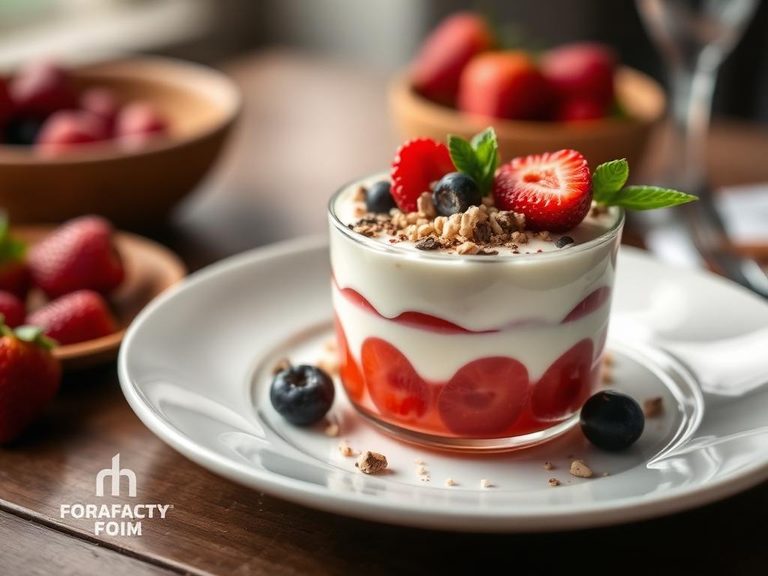
People adore its simple, comforting taste and the satisfying texture that stays crunchy in milk. It's a versatile staple, perfect for a quick breakfast, a healthy snack straight from the box, or as a crunchy topping for yogurt and smoothie bowls.
⚠️ Watch-outs & how to enjoy it better
The 20.49g of sugar per 100g can contribute to a rapid blood-sugar spike, especially when eaten alone. To counteract this, pair it with a source of protein and fat like Greek yogurt, nuts, or seeds, or choose a lower-sugar variety. Portion control is also key, as it's easy to overpour from the box.
Key benefits
- High in dietary fiber (10.9g per 100g)
- Good source of complex carbohydrates for sustained energy
- Provides plant-based protein (8.54g per 100g)
- Low in fat (3.76g per 100g)
- Fortified with essential vitamins and minerals (common in this category)
🍽️ Popular dishes

🌍 Where it's eaten
💡 Did you know?
The iconic 'O' shape was pioneered by Cheerios in 1941, designed to be a spoon-friendly, bite-sized cereal that wouldn't get soggy too quickly.
Full nutrition (USDA data · scales with serving)
| Water | 8.7 g |
| Energy | 373 kcal |
| Protein | 8.5 g |
| Total lipid (fat) | 3.8 g |
| Carbohydrate, by difference | 76.2 g |
| Fiber, total dietary | 10.9 g |
| Total Sugars | 20.5 g |
| Calcium, Ca | 342 mg |
| Iron, Fe | 46.6 mg |
| Magnesium, Mg | 77.0 mg |
| Phosphorus, P | 230 mg |
| Potassium, K | 217 mg |
| Sodium, Na | 385 mg |
| Zinc, Zn | 2.0 mg |
| Copper, Cu | 0.22 mg |
| Selenium, Se | 17.2 ug |
| Vitamin C, total ascorbic acid | 22.6 mg |
| Thiamin | 3.2 mg |
| Riboflavin | 3.3 mg |
| Niacin | 40.1 mg |
| Vitamin B-6 | 4.3 mg |
| Folate, total | 603 ug |
| Folic acid | 580 ug |
| Folate, food | 24.0 ug |
| Folate, DFE | 1009 ug |
| Choline, total | 22.2 mg |
| Vitamin B-12 | 5.9 ug |
| Vitamin B-12, added | 5.9 ug |
| Vitamin A, RAE | 3.0 ug |
| Retinol | 0.00 ug |
| Carotene, beta | 24.0 ug |
| Carotene, alpha | 15.0 ug |
| Cryptoxanthin, beta | 0.00 ug |
| Lycopene | 0.00 ug |
| Lutein + zeaxanthin | 488 ug |
| Vitamin E (alpha-tocopherol) | 0.24 mg |
| Vitamin E, added | 0.00 mg |
| Vitamin D (D2 + D3) | 4.9 ug |
| Vitamin K (phylloquinone) | 1.0 ug |
| Alcohol, ethyl | 0.00 g |
| Caffeine | 0.00 mg |
| Theobromine | 0.00 mg |
Fat & fatty acid profile (per 100g)
| Fatty acids, total saturated | 0.62 g |
| SFA 4:0 | 0.00 g |
| SFA 6:0 | 0.00 g |
| SFA 8:0 | 0.00 g |
| SFA 10:0 | 0.00 g |
| SFA 12:0 | 0.01 g |
| SFA 14:0 | 0.01 g |
| SFA 16:0 | 0.52 g |
| SFA 18:0 | 0.04 g |
| Fatty acids, total monounsaturated | 1.1 g |
| MUFA 16:1 | 0.01 g |
| MUFA 18:1 | 1.1 g |
| MUFA 20:1 | 0.00 g |
| MUFA 22:1 | 0.00 g |
| Fatty acids, total polyunsaturated | 1.4 g |
| PUFA 18:2 | 1.3 g |
| PUFA 18:3 | 0.06 g |
| PUFA 18:4 | 0.00 g |
| PUFA 20:4 | 0.00 g |
| PUFA 20:5 n-3 (EPA) | 0.00 g |
| PUFA 22:5 n-3 (DPA) | 0.00 g |
| PUFA 22:6 n-3 (DHA) | 0.00 g |
| Cholesterol | 0.00 mg |
Amino acid profile (per 100g)
Estimated from Cereals ready-to-eat, POST, HONEY BUNCHES OF OATS, honey roasted — USDA does not publish this profile for Cereal.
| Tryptophan | 0.09 g |
| Threonine | 0.24 g |
| Isoleucine | 0.26 g |
| Leucine | 0.80 g |
| Lysine | 0.12 g |
| Methionine | 0.10 g |
| Cystine | 0.11 g |
| Phenylalanine | 0.39 g |
| Tyrosine | 0.21 g |
| Valine | 0.34 g |
| Arginine | 0.24 g |
| Histidine | 0.18 g |
| Alanine | 0.46 g |
| Aspartic acid | 0.48 g |
| Glutamic acid | 1.9 g |
| Glycine | 0.27 g |
| Proline | 0.49 g |
| Serine | 0.38 g |
FAQ
Is multigrain 'O's cereal healthy?
It can be part of a healthy diet. It's a good source of fiber and whole grains, but you should check the label for added sugar content and choose varieties fortified with vitamins and minerals.
Why does it stay crunchy in milk longer than flakes?
The extrusion process that forms the 'O' shape creates a dense, low-surface-area structure that absorbs liquid more slowly than flat, porous flakes.
Can I eat this cereal if I'm gluten-free?
Not unless it is specifically labeled 'gluten-free.' Multigrain blends often contain wheat or barley, and cross-contamination is common in facilities that process gluten grains.
Nutrient density (calculated · NRF9.3)
Nutrient Rich Foods index: beneficial nutrients (protein, fiber, vitamins, minerals) minus saturated fat, added sugar & sodium, per 100 kcal.
NRF9.3 index — Fulgoni, Keast & Drewnowski, 2009. Computed from USDA nutrients.
Weight-loss friendliness (composite index)
Energy density 3.73 kcal/g · 9% calories from protein · 10.9 g fiber · 20.5 g sugar per 100 g.
Composite of energy density (Rolls et al., 1999), protein & fiber satiety, minus sugar. A calculated heuristic — ranks satiety-per-calorie, not a clinical measure.
Dietary load (calculated from USDA values)
Potential renal acid load. Positive = acid-forming, negative = alkaline-forming.
Sodium-to-potassium ratio: 1.77 (lower is better — aim for ≤ 1)
Sodium:potassium per WHO potassium guidance. Computed from USDA nutrients.