

Butter, tub
Common food
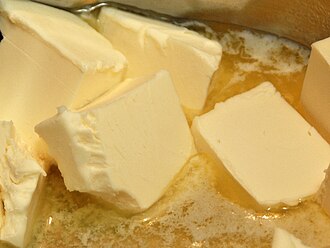
Photo: Wikipedia
Butter, tub is a soft, spreadable dairy product made from churned cream, typically containing a small amount of water and salt for a smoother, more pliable texture than stick butter. It offers a rich, creamy mouthfeel and a clean, sweet dairy flavor that melts instantly on the tongue. Nutritionally, it is a concentrated source of energy, being almost pure fat with over 78 grams per 100 grams, providing essential fat-soluble vitamins like A, D, E, and K.
Calorie split: 0% protein · 0% carbs · 100% fat
↓ Full nutrition💚 Why it's loved
People love tub butter for its unparalleled creamy richness and convenience—it spreads easily straight from the fridge, making it a beloved staple for everything from morning toast to enriching sauces.
⚠️ Watch-outs & how to enjoy it better
Due to its very high saturated fat and calorie content, excessive consumption can contribute to elevated cholesterol levels and should be moderated by those managing heart health. A practical tip is to use it as a flavor enhancer rather than a primary fat, employing a measured scrape or pat to finish a dish instead of a large dollop.
Key benefits
- Excellent source of fat-soluble vitamins A, D, E, and K.
- Provides conjugated linoleic acid (CLA), a naturally occurring fatty acid.
- Contains butyrate, a short-chain fatty acid that supports colon health.
- Enhances the absorption of fat-soluble nutrients from other foods.
- A versatile cooking fat for sautéing, baking, and finishing dishes.
🍽️ Popular dishes
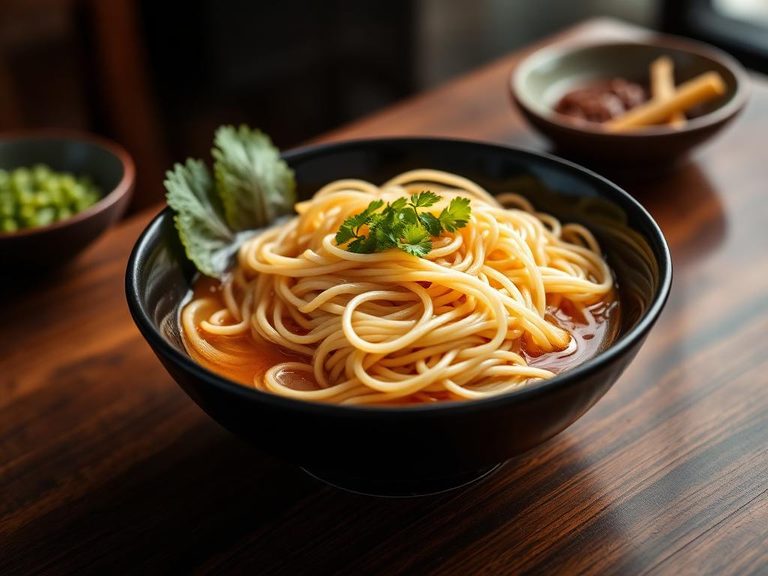
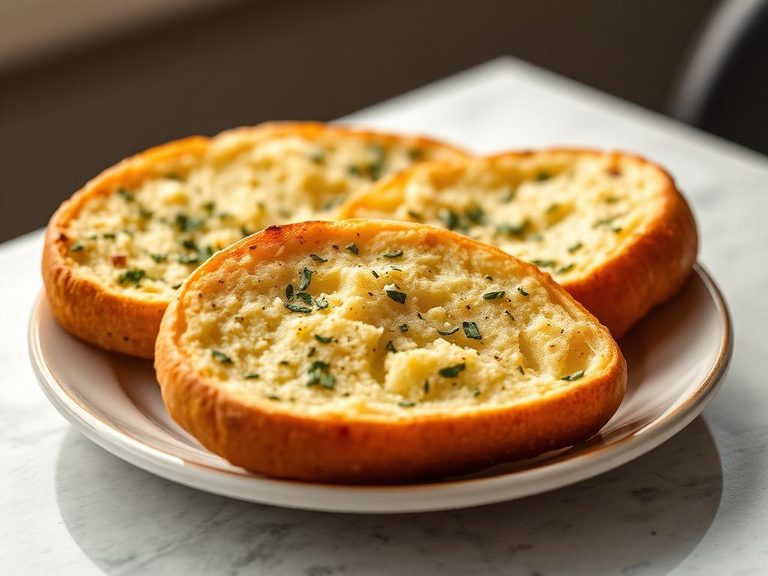
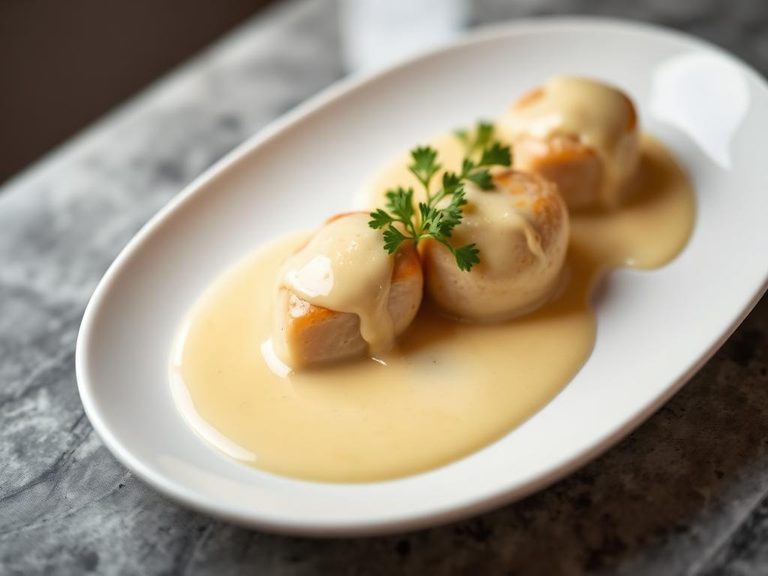
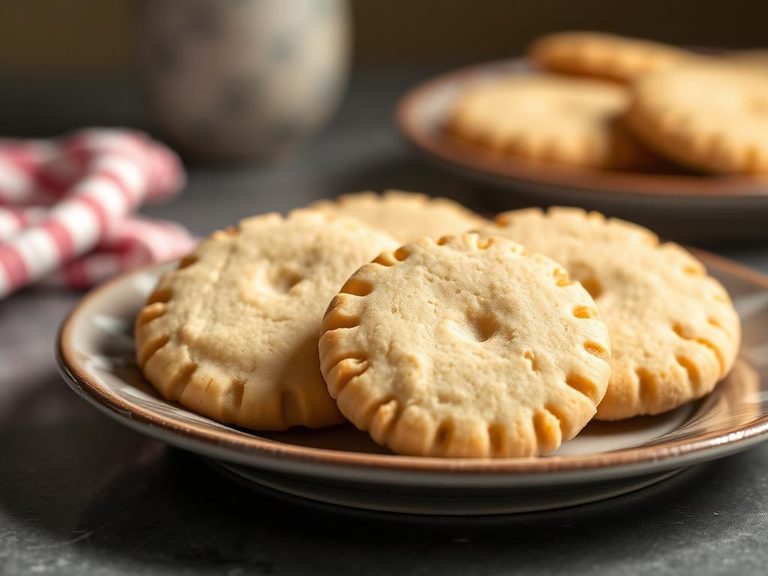
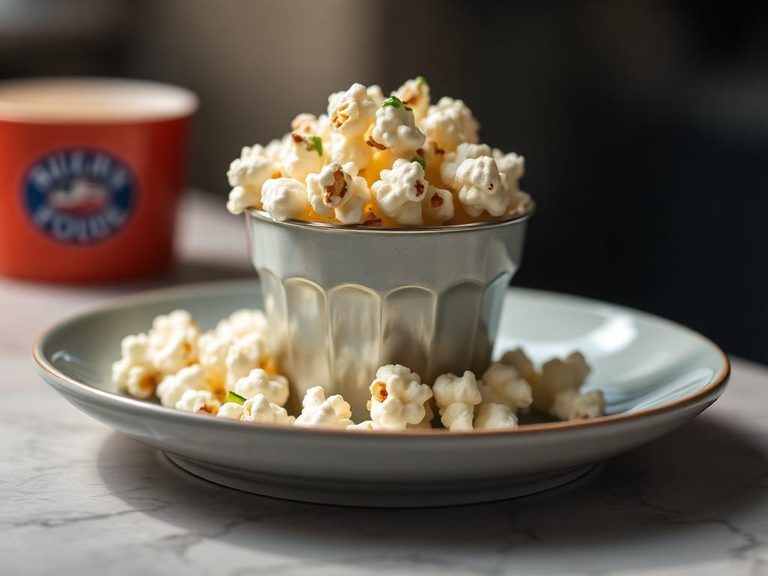
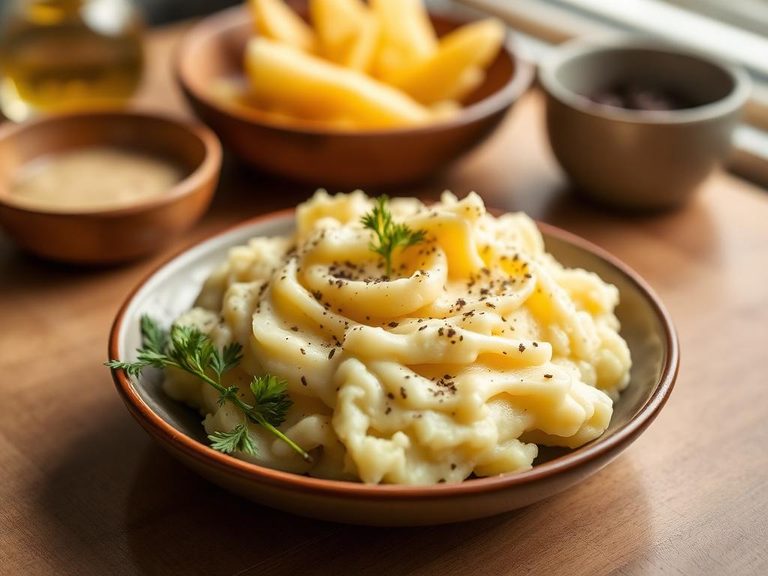
🌍 Where it's eaten
💡 Did you know?
Tub butter often contains a higher water content (around 15-20%) than stick butter, which is why it's softer and spreads easily but can also lead to slightly less flaky results in pastry.
Full nutrition (USDA data · scales with serving)
| Water | 16.7 g |
| Energy | 731 kcal |
| Protein | 0.49 g |
| Total lipid (fat) | 78.3 g |
| Carbohydrate, by difference | 0.00 g |
| Fiber, total dietary | 0.00 g |
| Total Sugars | 0.06 g |
| Calcium, Ca | 23.0 mg |
| Iron, Fe | 0.05 mg |
| Magnesium, Mg | 1.0 mg |
| Phosphorus, P | 24.0 mg |
| Potassium, K | 41.0 mg |
| Sodium, Na | 583 mg |
| Zinc, Zn | 0.05 mg |
| Copper, Cu | 0.01 mg |
| Selenium, Se | 0.00 ug |
| Vitamin C, total ascorbic acid | 0.00 mg |
| Thiamin | 0.01 mg |
| Riboflavin | 0.06 mg |
| Niacin | 0.02 mg |
| Vitamin B-6 | 0.01 mg |
| Folate, total | 4.0 ug |
| Folic acid | 0.00 ug |
| Folate, food | 4.0 ug |
| Folate, DFE | 4.0 ug |
| Choline, total | 18.8 mg |
| Vitamin B-12 | 0.07 ug |
| Vitamin B-12, added | 0.00 ug |
| Vitamin A, RAE | 683 ug |
| Retinol | 671 ug |
| Carotene, beta | 135 ug |
| Carotene, alpha | 1.0 ug |
| Cryptoxanthin, beta | 6.0 ug |
| Lycopene | 0.00 ug |
| Lutein + zeaxanthin | 13.0 ug |
| Vitamin E (alpha-tocopherol) | 1.4 mg |
| Vitamin E, added | 0.00 mg |
| Vitamin D (D2 + D3) | 0.00 ug |
| Vitamin K (phylloquinone) | 4.6 ug |
| Alcohol, ethyl | 0.00 g |
| Caffeine | 0.00 mg |
| Theobromine | 0.00 mg |
Fat & fatty acid profile (per 100g)
| Fatty acids, total saturated | 45.4 g |
| SFA 4:0 | 1.6 g |
| SFA 6:0 | 1.4 g |
| SFA 8:0 | 0.86 g |
| SFA 10:0 | 2.0 g |
| SFA 12:0 | 2.4 g |
| SFA 14:0 | 7.5 g |
| SFA 16:0 | 20.5 g |
| SFA 18:0 | 7.6 g |
| Fatty acids, total monounsaturated | 19.9 g |
| MUFA 16:1 | 1.4 g |
| MUFA 18:1 | 17.4 g |
| MUFA 20:1 | 0.15 g |
| MUFA 22:1 | 0.01 g |
| Fatty acids, total polyunsaturated | 3.3 g |
| PUFA 18:2 | 2.7 g |
| PUFA 18:3 | 0.30 g |
| PUFA 18:4 | 0.00 g |
| PUFA 20:4 | 0.12 g |
| PUFA 20:5 n-3 (EPA) | 0.02 g |
| PUFA 22:5 n-3 (DPA) | 0.04 g |
| PUFA 22:6 n-3 (DHA) | 0.00 g |
| Cholesterol | 225 mg |
Amino acid profile (per 100g)
Estimated from Waffles, buttermilk, frozen, ready-to-heat — USDA does not publish this profile for Butter.
| Tryptophan | 0.07 g |
| Threonine | 0.23 g |
| Isoleucine | 0.28 g |
| Leucine | 0.49 g |
| Lysine | 0.30 g |
| Methionine | 0.13 g |
| Cystine | 0.15 g |
| Phenylalanine | 0.30 g |
| Tyrosine | 0.15 g |
| Valine | 0.33 g |
| Arginine | 0.28 g |
| Histidine | 0.14 g |
| Alanine | 0.25 g |
| Aspartic acid | 0.41 g |
| Glutamic acid | 1.6 g |
| Glycine | 0.21 g |
| Proline | 0.56 g |
| Serine | 0.35 g |
FAQ
What's the difference between tub butter and stick butter?
Tub butter is whipped and contains more water and sometimes added emulsifiers for a softer, spreadable texture. Stick butter is denser, has less water, and is better for baking where precise fat content matters.
Can I use tub butter for baking?
You can, but results may differ. The higher water content can make baked goods less tender and more cake-like. For flaky pastries like pie crust, stick butter is preferred.
Is tub butter the same as margarine?
No. Tub butter is a dairy product made from cream. Margarine is a plant-based spread made from vegetable oils. They have different flavors, textures, and nutritional profiles.
How should I store tub butter?
Keep it in the refrigerator for freshness. For optimal spreadability, you can keep a small amount in a butter dish at room temperature for up to a week, away from heat and light.
Nutrient density (calculated · NRF9.3)
Nutrient Rich Foods index: beneficial nutrients (protein, fiber, vitamins, minerals) minus saturated fat, added sugar & sodium, per 100 kcal.
NRF9.3 index — Fulgoni, Keast & Drewnowski, 2009. Computed from USDA nutrients.
Weight-loss friendliness (composite index)
Energy density 7.31 kcal/g · 0% calories from protein · 0.0 g fiber · 0.1 g sugar per 100 g.
Composite of energy density (Rolls et al., 1999), protein & fiber satiety, minus sugar. A calculated heuristic — ranks satiety-per-calorie, not a clinical measure.
Dietary load (calculated from USDA values)
Potential renal acid load. Positive = acid-forming, negative = alkaline-forming.
Sodium-to-potassium ratio: 14.22 (lower is better — aim for ≤ 1)
Sodium:potassium per WHO potassium guidance. Computed from USDA nutrients.