

Buted Noodles
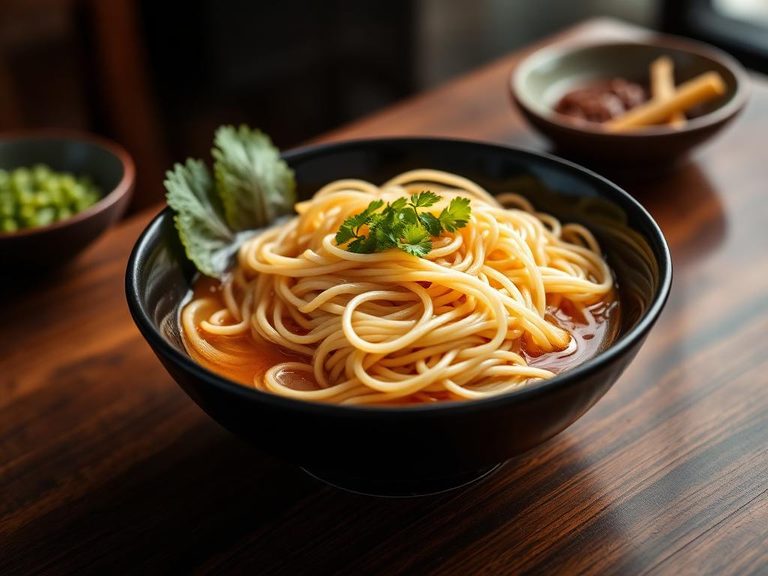
Buted Noodles, also known as Tantanmen, is a Japanese adaptation of the Sichuan Chinese dish Dan Dan Noodles. It features a rich, creamy broth made from sesame paste (nerigoma) and chili oil, typically topped with seasoned ground pork, leafy greens, and sometimes peanuts or scallions. This comforting noodle dish has become a beloved staple in Japanese ramen shops.
🍳 View the full Buted Noodles recipe →
🍽️ Nutrition at a glance
This dish is high in carbohydrates from the noodles and contains a moderate to high amount of fat, primarily from the sesame paste and chili oil. It provides a good source of protein from the pork and offers key nutrients like iron and B vitamins, with a typical serving ranging from 500 to 700 calories.
Nutrition breakdown
| Calories | 650 kcal |
| Protein | 28 g |
| Carbs | 75 g |
| Fat | 25 g |
| Fiber | 4 g |
| Sugar | 8 g |
| Sodium | 1800 mg |
| Iron | 4.5 mg |
| Calcium | 120 mg |
| Potassium | 550 mg |
| Vitamin A | 150 mcg |
| Vitamin C | 8 mg |
| Niacin (B3) | 8 mg |
| Magnesium | 60 mg |
| Phosphorus | 350 mg |
Per 1 bowl (approx. 500 g) · estimated, varies by recipe
💡 What's interesting
Culturally, it's a fascinating example of culinary adaptation, having evolved from a spicy, oily Sichuan street food into a milder, creamier, and often soupier Japanese comfort food. Nutritionally, the sesame paste base is a notable source of healthy fats and minerals like calcium, though the dish's richness comes from this very component.
🍽️ Related dishes

AI estimate may be inaccurate · Terms