Mongolian Beef with Noodles
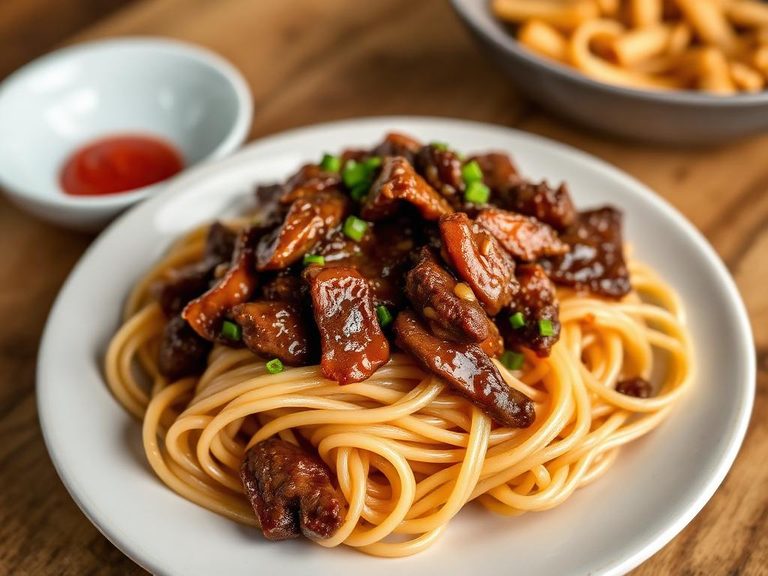
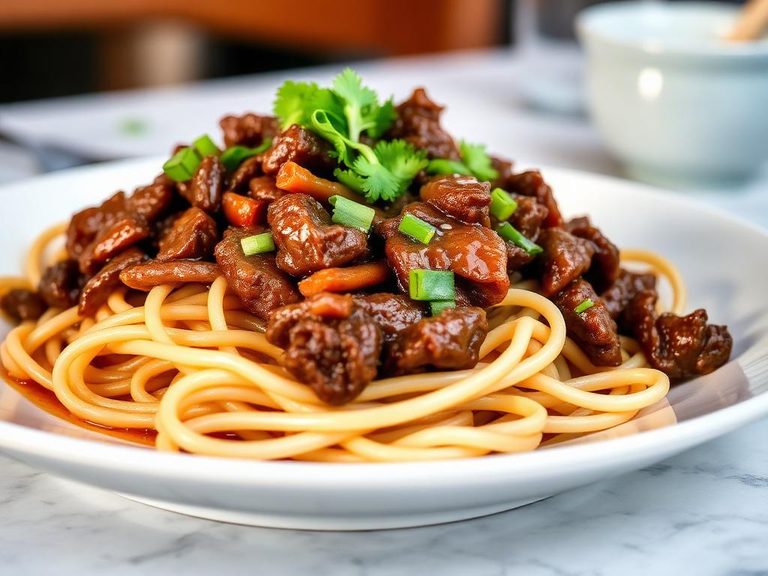
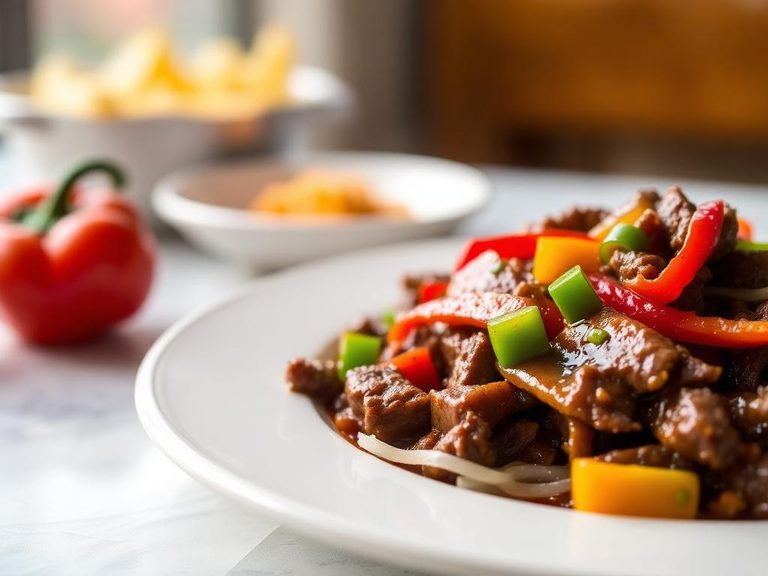
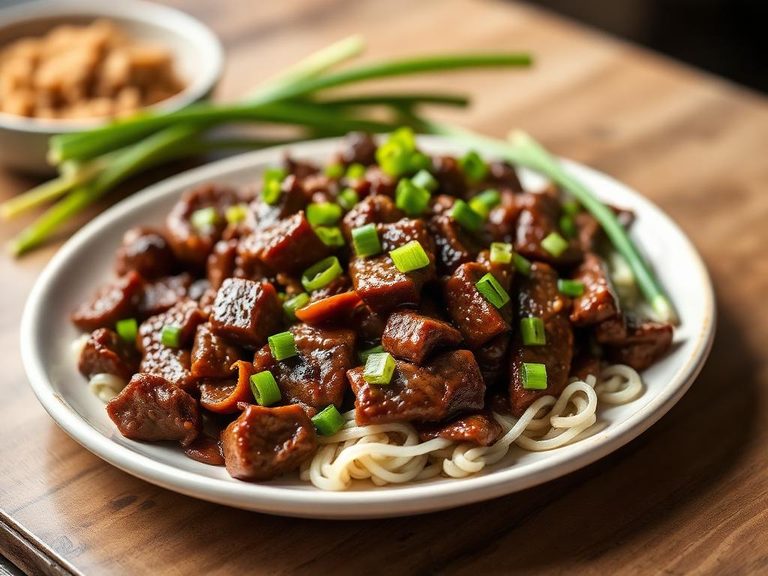
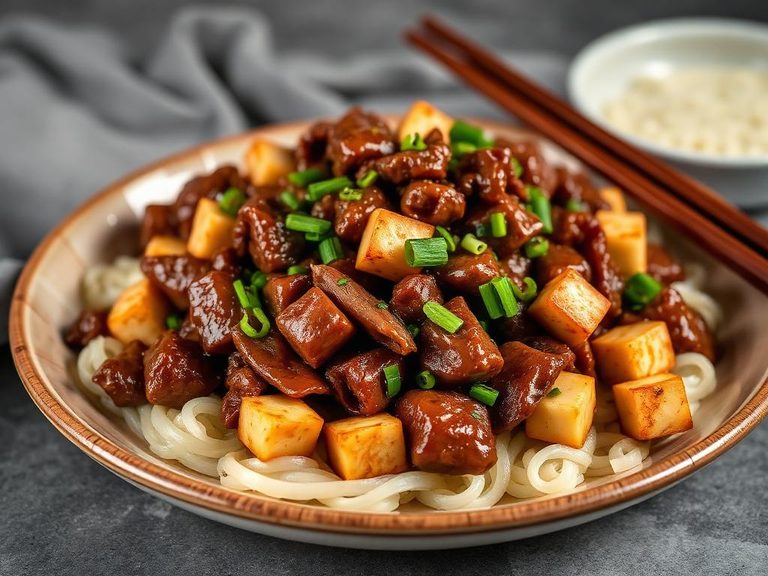
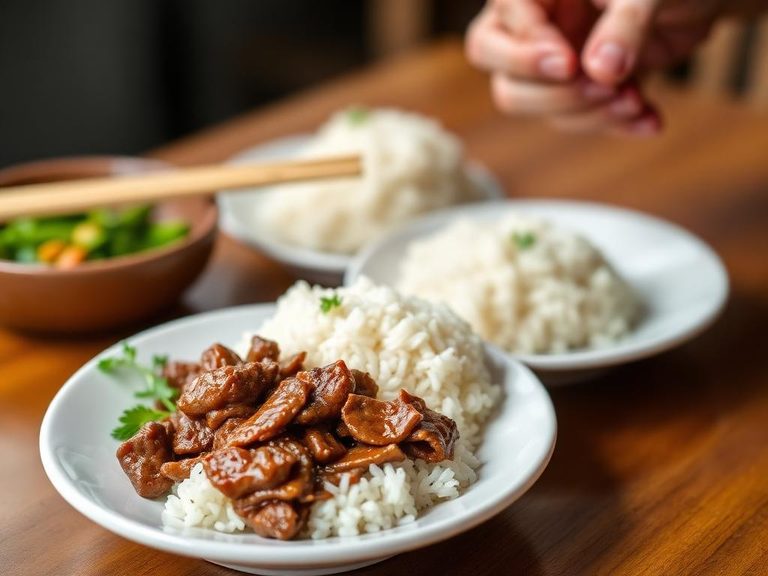
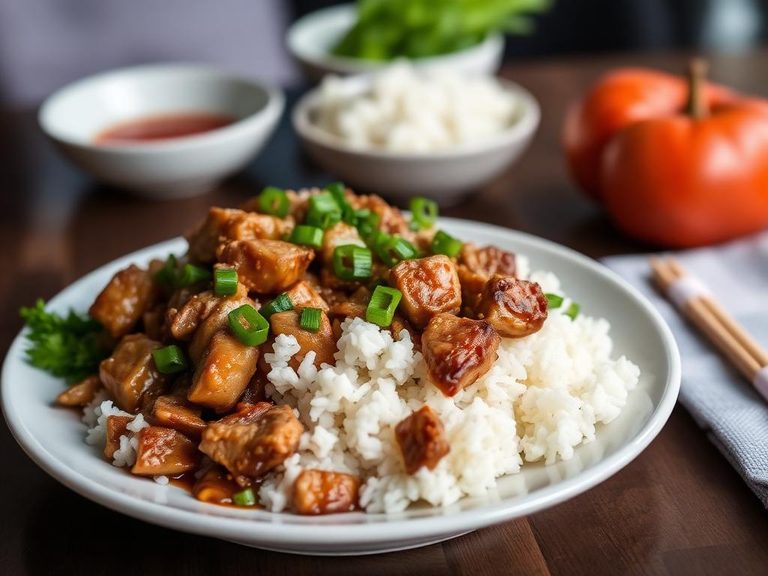
Mongolian Beef with Noodles is a popular Chinese-American dish featuring tender slices of beef, typically flank steak, stir-fried in a savory-sweet sauce with scallions and sometimes ginger or garlic, served over a bed of noodles. While it carries the 'Mongolian' name, the dish is primarily a creation of Chinese immigrant cuisine in North America, not a traditional Mongolian recipe. The noodles, often wheat-based like lo mein, soak up the rich sauce, making it a hearty and satisfying one-bowl meal.
🍽️ Nutrition at a glance
This dish is generally high in both protein from the beef and carbohydrates from the noodles, with a significant amount of fat coming from the cooking oil and sauce. A typical restaurant-style serving can provide a good source of iron and B vitamins but often contains high levels of sodium and added sugars, with a rough calorie range of 800-1200 calories per generous portion.
Nutrition breakdown
| Calories | 550 kcal |
| Protein | 25 g |
| Carbs | 65 g |
| Fat | 22 g |
| Fiber | 3 g |
| Sugar | 8 g |
| Sodium | 1200 mg |
| Potassium | 350 mg |
| Iron | 4.5 mg |
| Calcium | 80 mg |
| Vitamin A | 150 mcg |
| Vitamin C | 10 mg |
| Niacin (B3) | 6 mg |
| Selenium | 25 mcg |
| Zinc | 3.5 mg |
Per 1 cup (240 g) · estimated, varies by recipe
💡 What's interesting
Culturally, it's a fascinating example of culinary adaptation, where a dish's name evokes the vast steppes of Mongolia to suggest a hearty, robust flavor, while its preparation and ingredients are firmly rooted in Chinese wok cooking techniques. Nutritionally, the dish highlights how a single meal can be a dense source of energy (calories), useful for someone with high energy needs but requiring moderation for a balanced diet.