

Mongolian Pork with Rice
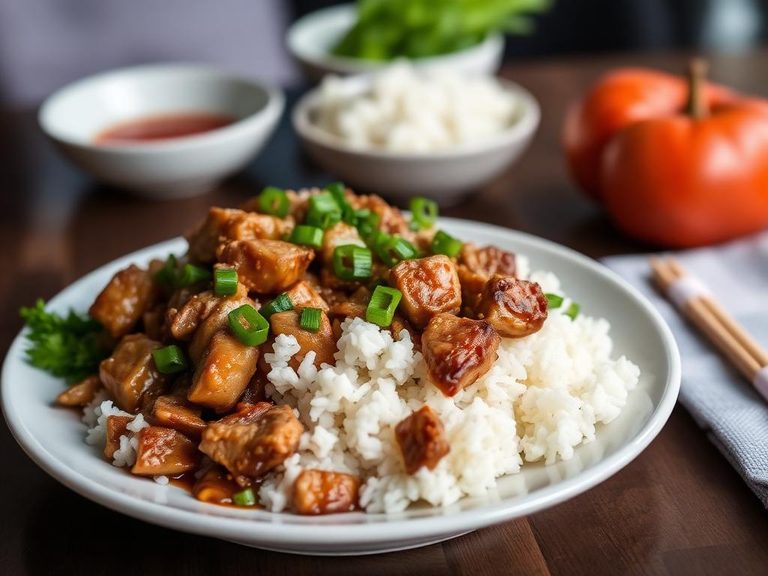
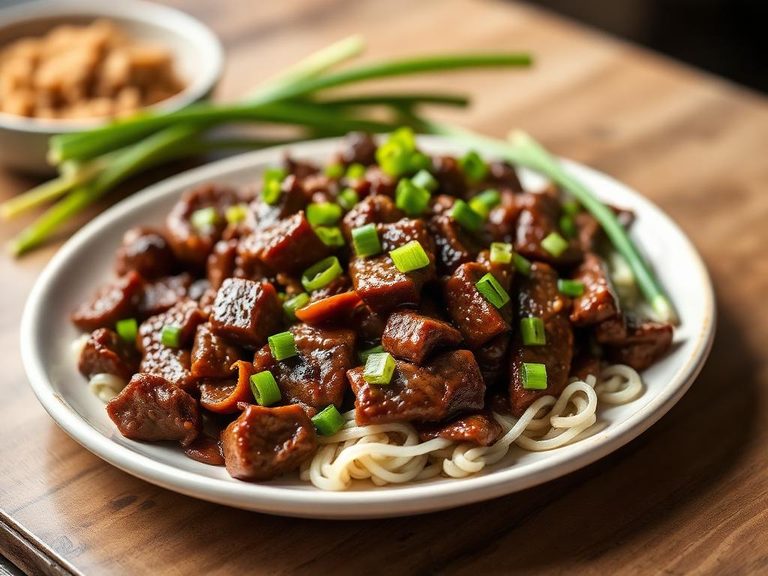
Mongolian Pork with Rice is a popular Chinese-American stir-fry dish featuring tender slices of pork in a savory-sweet brown sauce, often with scallions or other vegetables, served over steamed white rice. Despite its name, it is not traditionally Mongolian but rather a Western invention, likely inspired by Mongolian BBQ cooking styles. The dish is known for its bold, umami-rich flavor profile and satisfying combination of meat and rice.
🍳 View the full Mongolian Pork with Rice recipe →
🍽️ Nutrition at a glance
This dish is typically high in carbohydrates from the rice and can be moderately high in fat depending on the cut of pork and amount of oil used in cooking. It provides a good source of protein from the pork, along with some iron and B vitamins, and a single serving generally ranges from 500 to 700 calories.
Nutrition breakdown
| Calories | 650 kcal |
| Protein | 35 g |
| Carbs | 65 g |
| Fat | 28 g |
| Fiber | 3 g |
| Sugar | 8 g |
| Sodium | 950 mg |
| Iron | 4.5 mg |
| Potassium | 600 mg |
| Vitamin B1 (Thiamin) | 0.6 mg |
| Vitamin B2 (Riboflavin) | 0.3 mg |
| Vitamin B3 (Niacin) | 8.0 mg |
| Vitamin B6 | 0.5 mg |
| Phosphorus | 350 mg |
| Zinc | 4.0 mg |
Per 1 serving (350 g) · estimated, varies by recipe
💡 What's interesting
A fun cultural note is that the 'Mongolian' label is a marketing term from the 1970s in the U.S., not a reflection of actual Mongolian cuisine. Nutritionally, it's a classic example of how a balanced meal can be constructed with a protein, a starchy base, and a flavorful sauce to create a complete and comforting plate.
🍽️ Related dishes

AI estimate may be inaccurate · Terms