

Buckwheat groats
Common food

Photo: Wikipedia
Buckwheat groats are the hulled seeds of a flowering plant, not a true grain, with a robust, earthy flavor and a pleasantly chewy, nutty texture when cooked. Nutritionally, they are a standout source of plant-based protein and dietary fiber, making them a satisfying and energy-dense base for meals.
Calorie split: 10% protein · 61% carbs · 29% fat
↓ Full nutrition💚 Why it's loved
People love its hearty, earthy flavor that acts as a perfect canvas for both savory and sweet toppings, from roasted vegetables to honey and berries. It's cherished in many cultures as a comforting, warming staple that feels both rustic and nourishing.
⚠️ Watch-outs & how to enjoy it better
Some may find its strong, earthy taste an acquired one, and its high carbohydrate content can affect blood sugar if eaten in large, unpaired portions. To counteract this, pair it with protein (like an egg or legumes) and healthy fats (like nuts or seeds) to slow digestion and stabilize glucose response.
Key benefits
- Rich in plant-based protein for muscle maintenance.
- High in dietary fiber to support digestive health.
- Contains magnesium, which aids in energy production.
- A good source of resistant starch, which may benefit gut health.
- Naturally gluten-free, suitable for celiac diets.
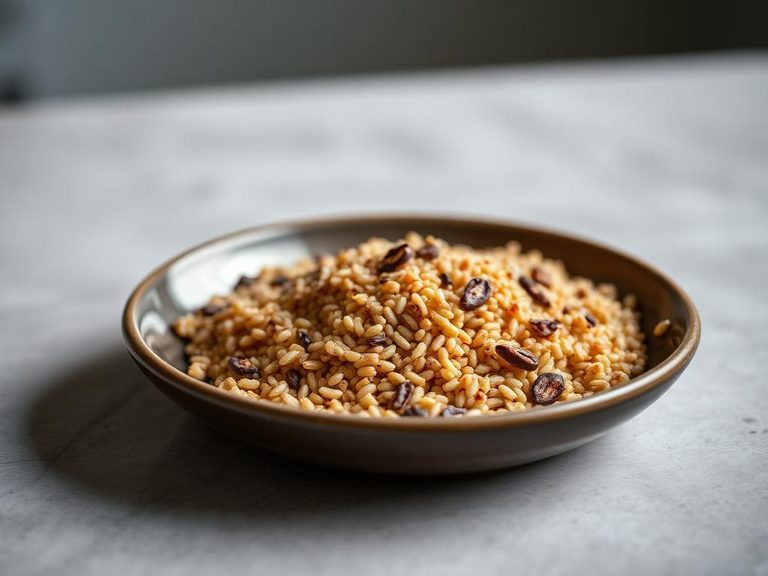
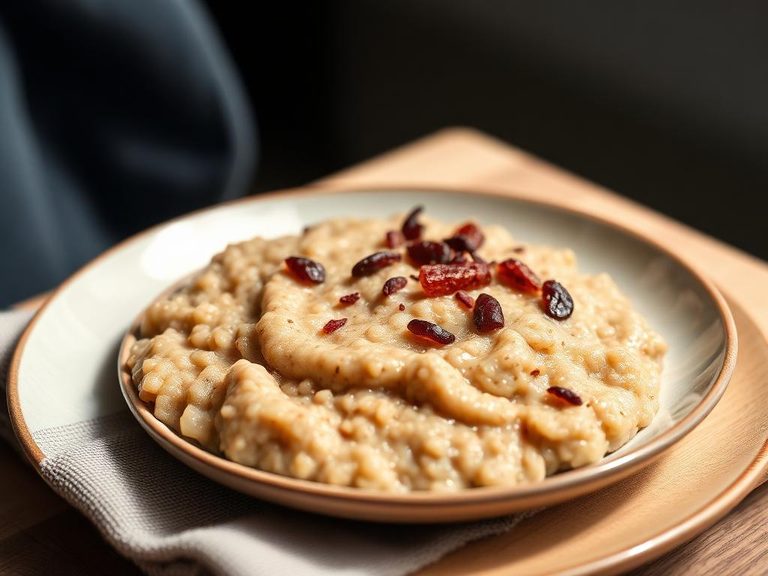
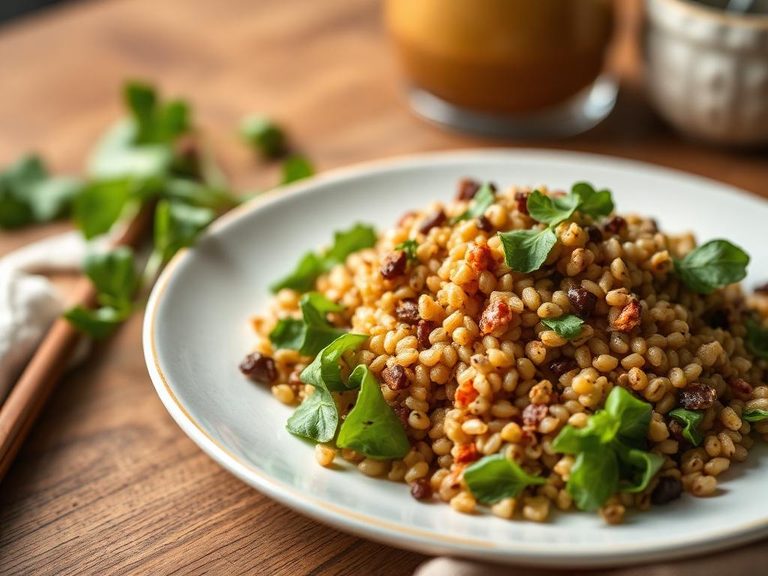
🍽️ Popular dishes



🌍 Where it's eaten
💡 Did you know?
Despite its name, buckwheat is not related to wheat; it's a pseudocereal botanically related to rhubarb and sorrel.
Full nutrition (USDA data · scales with serving)
| Water | 73.0 g |
| Energy | 118 kcal |
| Protein | 3.2 g |
| Total lipid (fat) | 4.0 g |
| Carbohydrate, by difference | 19.0 g |
| Fiber, total dietary | 2.6 g |
| Total Sugars | 0.87 g |
| Calcium, Ca | 8.0 mg |
| Iron, Fe | 0.76 mg |
| Magnesium, Mg | 49.0 mg |
| Phosphorus, P | 67.0 mg |
| Potassium, K | 85.0 mg |
| Sodium, Na | 170 mg |
| Zinc, Zn | 0.58 mg |
| Copper, Cu | 0.14 mg |
| Selenium, Se | 2.1 ug |
| Vitamin C, total ascorbic acid | 0.00 mg |
| Thiamin | 0.04 mg |
| Riboflavin | 0.04 mg |
| Niacin | 0.90 mg |
| Vitamin B-6 | 0.12 mg |
| Folate, total | 13.0 ug |
| Folic acid | 0.00 ug |
| Folate, food | 13.0 ug |
| Folate, DFE | 13.0 ug |
| Choline, total | 19.8 mg |
| Vitamin B-12 | 0.00 ug |
| Vitamin B-12, added | 0.00 ug |
| Vitamin A, RAE | 35.0 ug |
| Retinol | 34.0 ug |
| Carotene, beta | 15.0 ug |
| Carotene, alpha | 0.00 ug |
| Cryptoxanthin, beta | 0.00 ug |
| Lycopene | 0.00 ug |
| Lutein + zeaxanthin | 57.0 ug |
| Vitamin E (alpha-tocopherol) | 0.41 mg |
| Vitamin E, added | 0.00 mg |
| Vitamin D (D2 + D3) | 0.10 ug |
| Vitamin K (phylloquinone) | 3.8 ug |
| Alcohol, ethyl | 0.00 g |
| Caffeine | 0.00 mg |
| Theobromine | 0.00 mg |
Fat & fatty acid profile (per 100g)
| Fatty acids, total saturated | 1.6 g |
| SFA 4:0 | 0.06 g |
| SFA 6:0 | 0.04 g |
| SFA 8:0 | 0.03 g |
| SFA 10:0 | 0.06 g |
| SFA 12:0 | 0.06 g |
| SFA 14:0 | 0.20 g |
| SFA 16:0 | 0.77 g |
| SFA 18:0 | 0.30 g |
| Fatty acids, total monounsaturated | 1.1 g |
| MUFA 16:1 | 0.03 g |
| MUFA 18:1 | 1.0 g |
| MUFA 20:1 | 0.01 g |
| MUFA 22:1 | 0.00 g |
| Fatty acids, total polyunsaturated | 0.71 g |
| PUFA 18:2 | 0.65 g |
| PUFA 18:3 | 0.07 g |
| PUFA 18:4 | 0.00 g |
| PUFA 20:4 | 0.00 g |
| PUFA 20:5 n-3 (EPA) | 0.00 g |
| PUFA 22:5 n-3 (DPA) | 0.00 g |
| PUFA 22:6 n-3 (DHA) | 0.00 g |
| Cholesterol | 6.0 mg |
Amino acid profile (per 100g)
Estimated from Buckwheat groats, roasted, dry — USDA does not publish this profile for Buckwheat groats.
| Tryptophan | 0.17 g |
| Threonine | 0.45 g |
| Isoleucine | 0.44 g |
| Leucine | 0.74 g |
| Lysine | 0.59 g |
| Methionine | 0.15 g |
| Cystine | 0.20 g |
| Phenylalanine | 0.46 g |
| Tyrosine | 0.21 g |
| Valine | 0.60 g |
| Arginine | 0.87 g |
| Histidine | 0.27 g |
| Alanine | 0.66 g |
| Aspartic acid | 1.0 g |
| Glutamic acid | 1.8 g |
| Glycine | 0.91 g |
| Proline | 0.45 g |
| Serine | 0.61 g |
FAQ
Is buckwheat gluten-free?
Yes, pure buckwheat groats are naturally gluten-free, making them safe for people with celiac disease or gluten sensitivity. However, always check for cross-contamination on packaging.
How do I cook buckwheat groats?
Rinse the groats, then toast them in a dry pan for a nuttier flavor. Use a 1:2 ratio of groats to water or broth, bring to a boil, then simmer covered for 10-15 minutes until the liquid is absorbed.
What's the difference between buckwheat groats and kasha?
Kasha is a specific preparation where the buckwheat groats are first roasted, which gives them a deeper, nuttier flavor and a firmer texture. All kasha is buckwheat, but not all buckwheat is kasha.
Nutrient density (calculated · NRF9.3)
Nutrient Rich Foods index: beneficial nutrients (protein, fiber, vitamins, minerals) minus saturated fat, added sugar & sodium, per 100 kcal.
NRF9.3 index — Fulgoni, Keast & Drewnowski, 2009. Computed from USDA nutrients.
Weight-loss friendliness (composite index)
Energy density 1.18 kcal/g · 11% calories from protein · 2.6 g fiber · 0.9 g sugar per 100 g.
Composite of energy density (Rolls et al., 1999), protein & fiber satiety, minus sugar. A calculated heuristic — ranks satiety-per-calorie, not a clinical measure.
Dietary load (calculated from USDA values)
Potential renal acid load. Positive = acid-forming, negative = alkaline-forming.
Sodium-to-potassium ratio: 2.00 (lower is better — aim for ≤ 1)
Sodium:potassium per WHO potassium guidance. Computed from USDA nutrients.