

Buckwheat groats, roasted, dry
Whole food · Cereal Grains and Pasta

Photo: Wikipedia
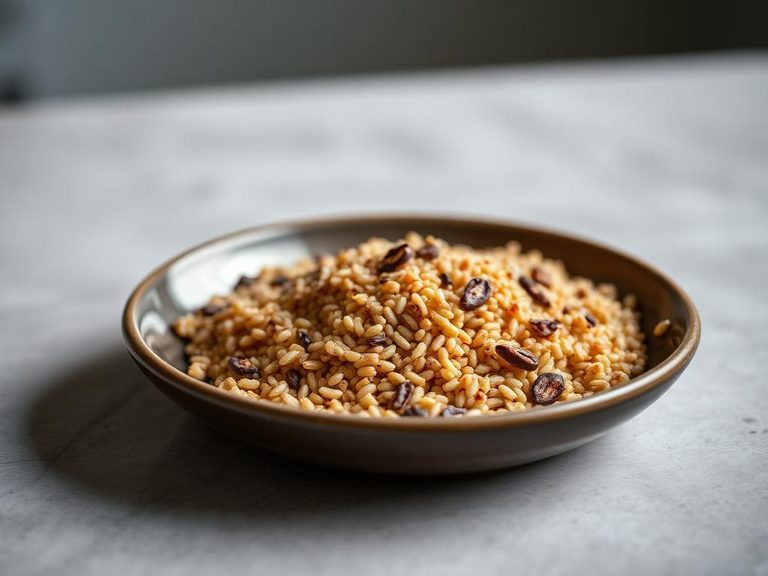
Buckwheat groats, roasted and dried, are the hulled seeds of a flowering plant, not a true grain. They have a deep, nutty, toasty flavor and a pleasantly chewy texture when cooked. Nutritionally, they are a standout source of plant-based protein and dietary fiber, while being very low in fat.
Calorie split: 13% protein · 81% carbs · 7% fat
↓ Full nutrition💚 Why it's loved
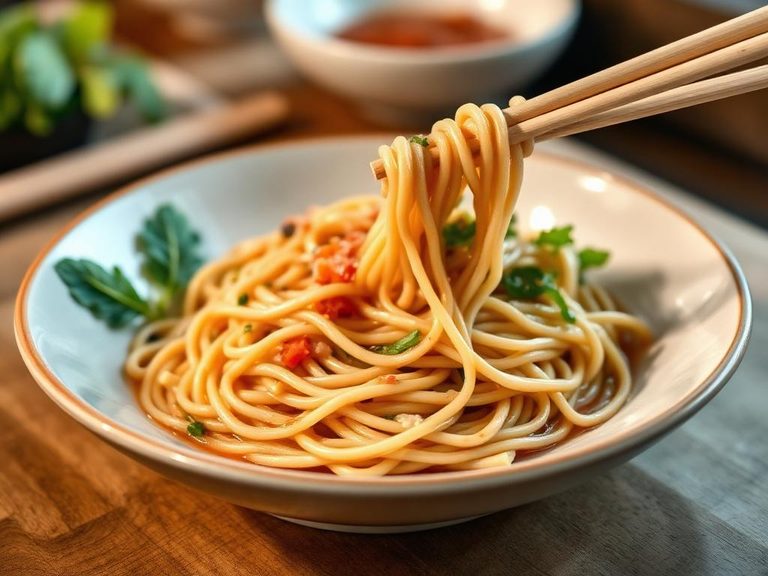
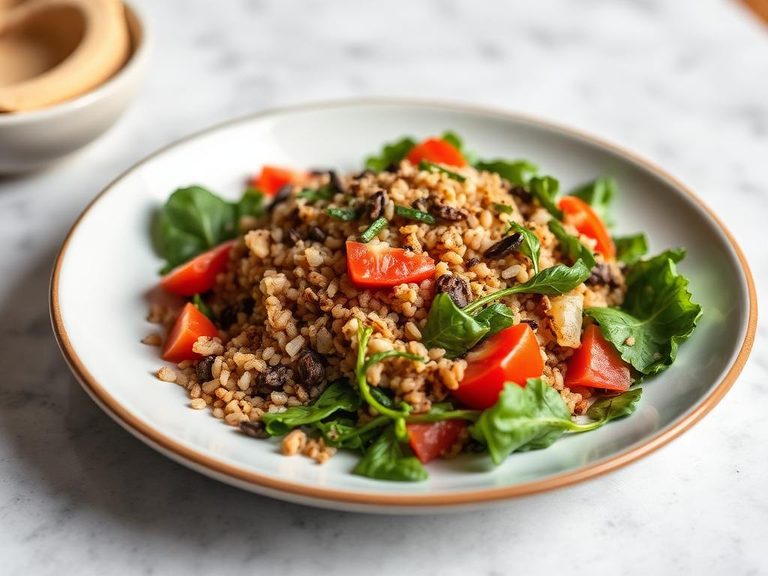
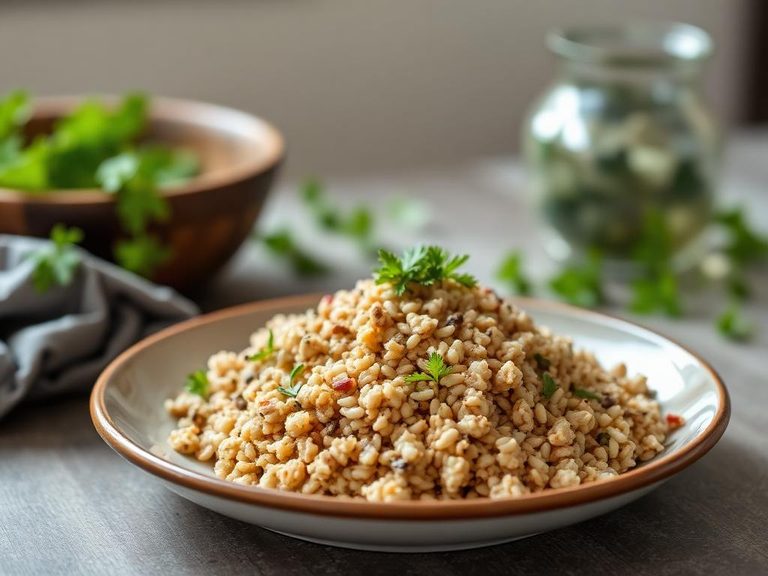
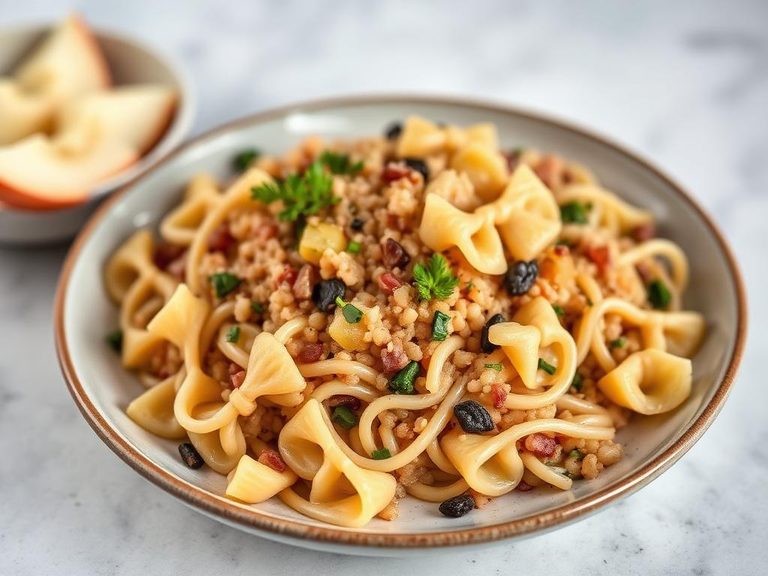
People love its robust, earthy, and nutty flavor that forms the hearty base of many comfort foods. It's cherished for its versatility, serving as a breakfast porridge, a savory side dish, or the foundation for traditional pancakes and noodles.
⚠️ Watch-outs & how to enjoy it better
The strong, distinct flavor can be overpowering if one is accustomed to milder grains. It contains oxalates, which may be a concern for individuals prone to certain kidney stones. To mitigate this, soak the groats before cooking and pair them with calcium-rich foods like yogurt or cheese.
Key benefits
- High in complete protein, containing all essential amino acids.
- Excellent source of dietary fiber for digestive health.
- Naturally gluten-free, suitable for celiac diets.
- Rich in minerals like magnesium, copper, and manganese.
- Provides sustained energy due to complex carbohydrates.
🍽️ Popular dishes

🌍 Where it's eaten
💡 Did you know?
Despite its name, buckwheat is not related to wheat; it's a pseudocereal related to rhubarb and sorrel.
Full nutrition (USDA data · scales with serving)
| Water | 8.4 g |
| Energy | 346 kcal |
| Energy | 1448 kj |
| Protein | 11.7 g |
| Total lipid (fat) | 2.7 g |
| Ash | 2.2 g |
| Carbohydrate, by difference | 75.0 g |
| Fiber, total dietary | 10.3 g |
| Calcium, Ca | 17.0 mg |
| Iron, Fe | 2.5 mg |
| Magnesium, Mg | 221 mg |
| Phosphorus, P | 319 mg |
| Potassium, K | 320 mg |
| Sodium, Na | 11.0 mg |
| Zinc, Zn | 2.4 mg |
| Copper, Cu | 0.62 mg |
| Manganese, Mn | 1.6 mg |
| Selenium, Se | 8.4 ug |
| Vitamin C, total ascorbic acid | 0.00 mg |
| Thiamin | 0.22 mg |
| Riboflavin | 0.27 mg |
| Niacin | 5.1 mg |
| Pantothenic acid | 1.2 mg |
| Vitamin B-6 | 0.35 mg |
| Folate, total | 42.0 ug |
| Folic acid | 0.00 ug |
| Folate, food | 42.0 ug |
| Folate, DFE | 42.0 ug |
| Choline, total | 54.2 mg |
| Betaine | 2.6 mg |
| Vitamin B-12 | 0.00 ug |
| Vitamin A, RAE | 0.00 ug |
| Retinol | 0.00 ug |
| Vitamin A, IU | 0.00 iu |
| Vitamin D (D2 + D3), International Units | 0.00 iu |
| Vitamin D (D2 + D3) | 0.00 ug |
| Alcohol, ethyl | 0.00 g |
Fat & fatty acid profile (per 100g)
| Fatty acids, total saturated | 0.59 g |
| SFA 4:0 | 0.00 g |
| SFA 6:0 | 0.00 g |
| SFA 8:0 | 0.03 g |
| SFA 10:0 | 0.01 g |
| SFA 12:0 | 0.01 g |
| SFA 14:0 | 0.02 g |
| SFA 16:0 | 0.36 g |
| SFA 18:0 | 0.04 g |
| Fatty acids, total monounsaturated | 0.83 g |
| MUFA 16:1 | 0.02 g |
| MUFA 18:1 | 0.79 g |
| MUFA 20:1 | 0.00 g |
| MUFA 22:1 | 0.01 g |
| Fatty acids, total polyunsaturated | 0.83 g |
| PUFA 18:2 | 0.77 g |
| PUFA 18:3 | 0.06 g |
| PUFA 18:4 | 0.00 g |
| PUFA 20:4 | 0.00 g |
| PUFA 20:5 n-3 (EPA) | 0.00 g |
| PUFA 22:5 n-3 (DPA) | 0.00 g |
| PUFA 22:6 n-3 (DHA) | 0.00 g |
| Cholesterol | 0.00 mg |
Amino acid profile (per 100g)
| Tryptophan | 0.17 g |
| Threonine | 0.45 g |
| Isoleucine | 0.44 g |
| Leucine | 0.74 g |
| Lysine | 0.59 g |
| Methionine | 0.15 g |
| Cystine | 0.20 g |
| Phenylalanine | 0.46 g |
| Tyrosine | 0.21 g |
| Valine | 0.60 g |
| Arginine | 0.87 g |
| Histidine | 0.27 g |
| Alanine | 0.66 g |
| Aspartic acid | 1.0 g |
| Glutamic acid | 1.8 g |
| Glycine | 0.91 g |
| Proline | 0.45 g |
| Serine | 0.61 g |
FAQ
What's the difference between roasted and raw buckwheat groats?
Roasted groats (kasha) have a darker color, a stronger, nuttier flavor, and a firmer texture after cooking. Raw groats are lighter in color and have a milder, more grassy taste.
Do I need to rinse buckwheat groats before cooking?
It's generally not necessary for roasted groats, as rinsing can wash away some of the toasty flavor. For raw groats, a quick rinse can remove any residual dust.
How do I cook buckwheat groats to avoid a mushy texture?
Use a 1:2 ratio of groats to water or broth. Bring to a boil, then reduce to a simmer, cover, and cook for about 15-20 minutes until the liquid is absorbed. Let it stand covered for 5 minutes, then fluff with a fork.
Nutrient density (calculated · NRF9.3)
Nutrient Rich Foods index: beneficial nutrients (protein, fiber, vitamins, minerals) minus saturated fat, added sugar & sodium, per 100 kcal.
NRF9.3 index — Fulgoni, Keast & Drewnowski, 2009. Computed from USDA nutrients.
Weight-loss friendliness (composite index)
Energy density 3.46 kcal/g · 14% calories from protein · 10.3 g fiber · 0.0 g sugar per 100 g.
Composite of energy density (Rolls et al., 1999), protein & fiber satiety, minus sugar. A calculated heuristic — ranks satiety-per-calorie, not a clinical measure.
Dietary load (calculated from USDA values)
Potential renal acid load. Positive = acid-forming, negative = alkaline-forming.
Sodium-to-potassium ratio: 0.03 (lower is better — aim for ≤ 1)
Sodium:potassium per WHO potassium guidance. Computed from USDA nutrients.