Kasha Varnishkes
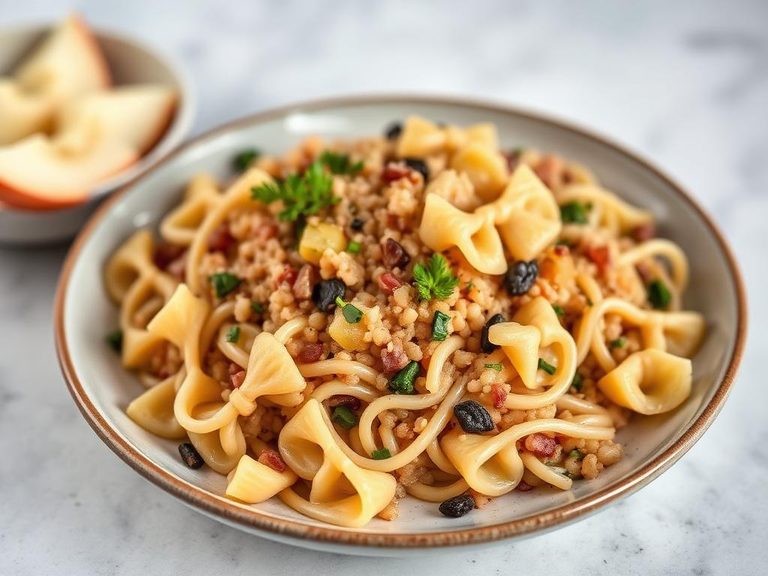
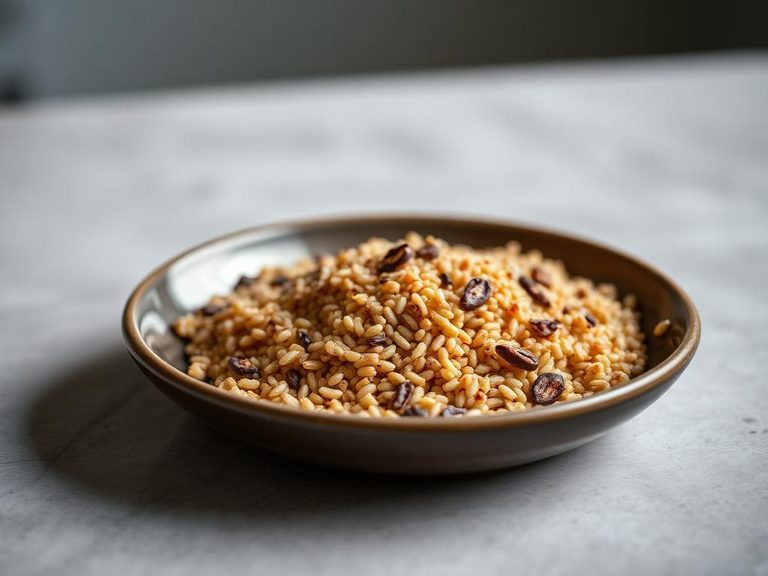
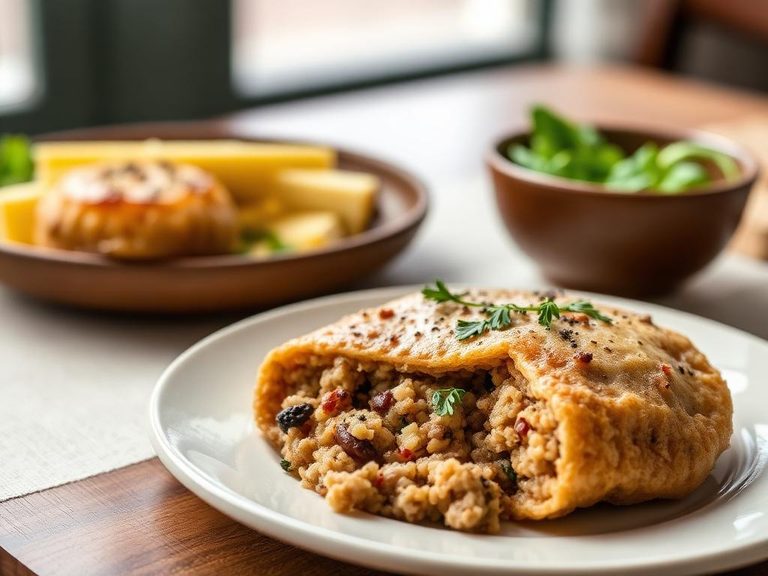
Kasha Varnishkes is a traditional Ashkenazi Jewish dish combining cooked buckwheat groats (kasha) with bow-tie pasta (varnishkes). It's typically made by sautéing onions and mushrooms, then mixing them with the cooked grains and pasta, often seasoned with salt and pepper. This hearty, savory side dish has roots in Eastern European Jewish cuisine and is a staple at holiday meals like Passover.
🍽️ Nutrition at a glance
This dish is primarily carbohydrate-rich from both the buckwheat and pasta, providing a good source of fiber and plant-based protein. A typical serving offers around 300-400 calories, with notable amounts of iron, magnesium, and B vitamins from the buckwheat.
Nutrition breakdown
| Calories | 350 kcal |
| Protein | 12 g |
| Carbs | 55 g |
| Fat | 10 g |
| Fiber | 5 g |
| Sugar | 4 g |
| Sodium | 400 mg |
| Iron | 3 mg |
| Magnesium | 120 mg |
| Phosphorus | 250 mg |
| Potassium | 350 mg |
| Zinc | 2.5 mg |
| Manganese | 1.2 mg |
| Thiamin (B1) | 0.3 mg |
| Niacin (B3) | 4 mg |
Per 1 cup (240 g) · estimated, varies by recipe
💡 What's interesting
What makes Kasha Varnishkes unique is its cultural significance as a symbol of Jewish resilience and adaptation, blending a traditional Eastern European grain with Italian-style pasta. Nutritionally, buckwheat is a pseudocereal that's naturally gluten-free and contains all essential amino acids, making it a surprisingly complete protein when paired with the pasta.