

Breadfruit, raw
Whole food · Fruits and Fruit Juices

Photo: Wikipedia
Breadfruit is a starchy, versatile tropical fruit from the mulberry family, with a texture like a fluffy potato when cooked. Its mild, slightly sweet flavor makes it a blank canvas for savory or sweet preparations. Nutritionally, it's a low-fat, high-fiber carbohydrate source, offering more fiber than a comparable serving of white rice.
Calorie split: 4% protein · 94% carbs · 2% fat
↓ Full nutrition💚 Why it's loved
People love breadfruit for its incredible versatility; it can be roasted, fried, boiled, or mashed, seamlessly taking on the flavors of a dish. It's a cherished staple in many cultures, symbolizing abundance and sustenance.
⚠️ Watch-outs & how to enjoy it better
Its high carbohydrate content can cause blood sugar spikes if eaten in large amounts without balancing nutrients. To counteract this, pair it with protein (like fish or beans) and healthy fats (like coconut milk or avocado), and practice portion control. Some people may experience digestive gas due to its fiber content; introducing it gradually can help.
Key benefits
- Excellent source of dietary fiber for digestive health.
- Provides complex carbohydrates for sustained energy.
- Naturally low in fat and contains no cholesterol.
- Contains essential minerals like potassium and magnesium.
🍽️ Popular dishes

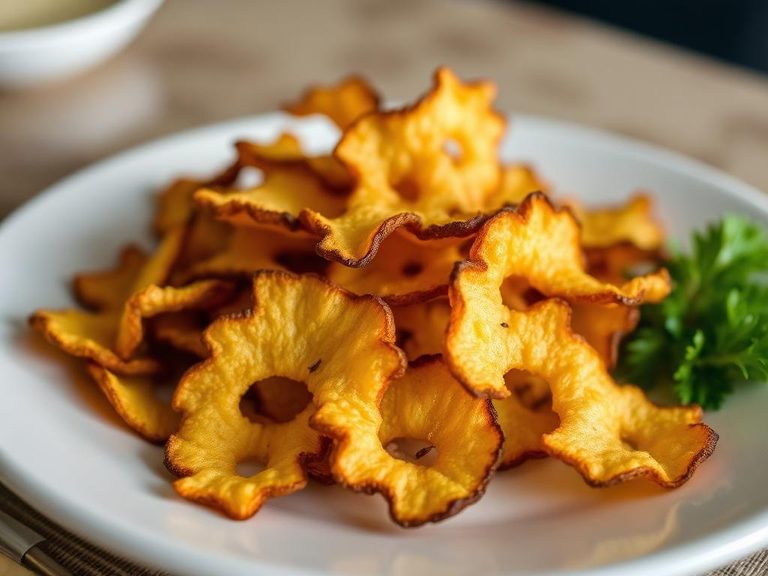
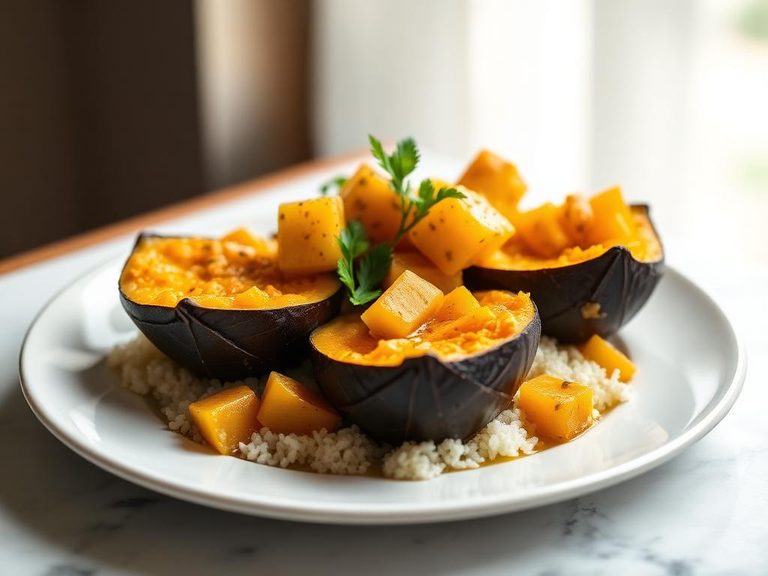
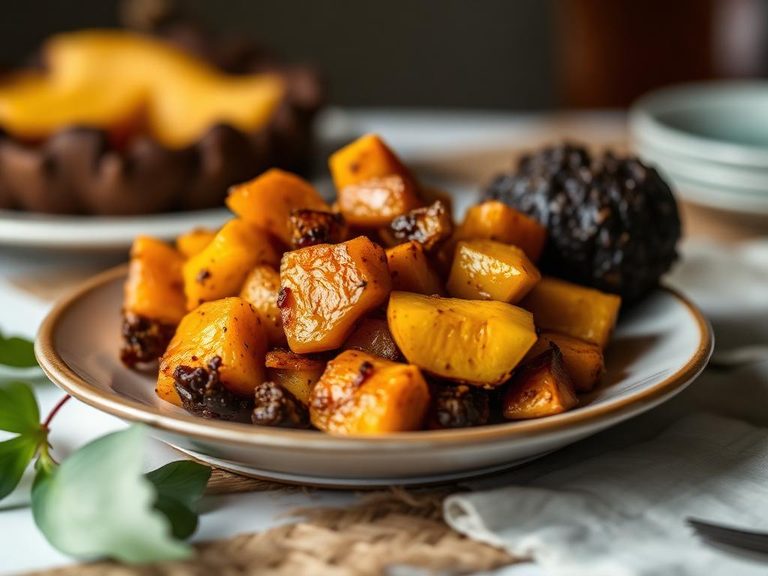

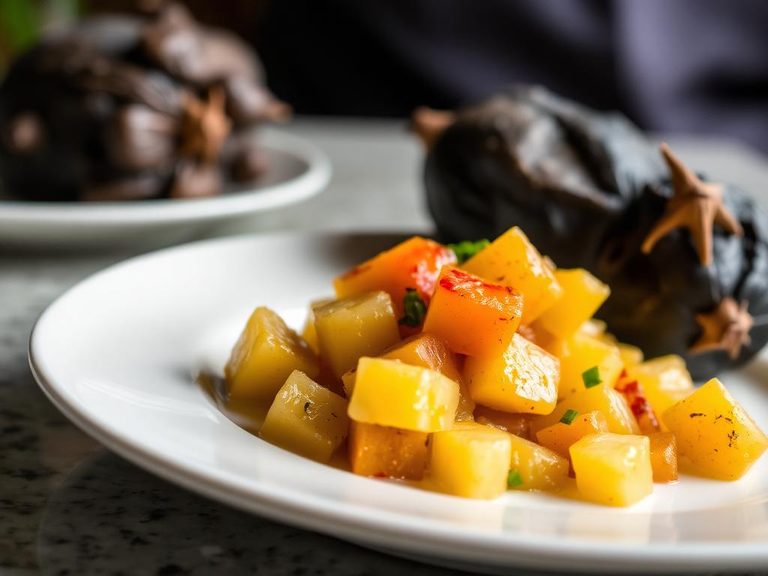
🌍 Where it's eaten
💡 Did you know?
A single mature breadfruit tree can produce up to 200 or more fruits per season, and the tree itself can live for centuries.
Full nutrition (USDA data · scales with serving)
| Water | 70.7 g |
| Energy | 103 kcal |
| Energy | 431 kj |
| Protein | 1.1 g |
| Total lipid (fat) | 0.23 g |
| Ash | 0.93 g |
| Carbohydrate, by difference | 27.1 g |
| Fiber, total dietary | 4.9 g |
| Total Sugars | 11.0 g |
| Calcium, Ca | 17.0 mg |
| Iron, Fe | 0.54 mg |
| Magnesium, Mg | 25.0 mg |
| Phosphorus, P | 30.0 mg |
| Potassium, K | 490 mg |
| Sodium, Na | 2.0 mg |
| Zinc, Zn | 0.12 mg |
| Copper, Cu | 0.08 mg |
| Manganese, Mn | 0.06 mg |
| Selenium, Se | 0.60 ug |
| Vitamin C, total ascorbic acid | 29.0 mg |
| Thiamin | 0.11 mg |
| Riboflavin | 0.03 mg |
| Niacin | 0.90 mg |
| Pantothenic acid | 0.46 mg |
| Vitamin B-6 | 0.10 mg |
| Folate, total | 14.0 ug |
| Folic acid | 0.00 ug |
| Folate, food | 14.0 ug |
| Folate, DFE | 14.0 ug |
| Choline, total | 9.8 mg |
| Vitamin B-12 | 0.00 ug |
| Vitamin B-12, added | 0.00 ug |
| Vitamin A, RAE | 0.00 ug |
| Retinol | 0.00 ug |
| Carotene, beta | 0.00 ug |
| Carotene, alpha | 0.00 ug |
| Cryptoxanthin, beta | 0.00 ug |
| Vitamin A, IU | 0.00 iu |
| Lycopene | 0.00 ug |
| Lutein + zeaxanthin | 22.0 ug |
| Vitamin E (alpha-tocopherol) | 0.10 mg |
| Vitamin E, added | 0.00 mg |
| Vitamin D (D2 + D3), International Units | 0.00 iu |
| Vitamin D (D2 + D3) | 0.00 ug |
| Vitamin K (phylloquinone) | 0.50 ug |
| Alcohol, ethyl | 0.00 g |
| Caffeine | 0.00 mg |
| Theobromine | 0.00 mg |
Fat & fatty acid profile (per 100g)
| Fatty acids, total saturated | 0.05 g |
| SFA 4:0 | 0.00 g |
| SFA 6:0 | 0.00 g |
| SFA 8:0 | 0.00 g |
| SFA 10:0 | 0.00 g |
| SFA 12:0 | 0.00 g |
| SFA 14:0 | 0.00 g |
| SFA 16:0 | 0.03 g |
| SFA 18:0 | 0.02 g |
| Fatty acids, total monounsaturated | 0.03 g |
| MUFA 16:1 | 0.00 g |
| MUFA 18:1 | 0.03 g |
| MUFA 20:1 | 0.00 g |
| MUFA 22:1 | 0.00 g |
| Fatty acids, total polyunsaturated | 0.07 g |
| PUFA 18:2 | 0.05 g |
| PUFA 18:3 | 0.02 g |
| PUFA 18:4 | 0.00 g |
| PUFA 20:4 | 0.00 g |
| PUFA 20:5 n-3 (EPA) | 0.00 g |
| PUFA 22:5 n-3 (DPA) | 0.00 g |
| PUFA 22:6 n-3 (DHA) | 0.00 g |
| Fatty acids, total trans | 0.00 g |
| Cholesterol | 0.00 mg |
Amino acid profile (per 100g)
| Threonine | 0.05 g |
| Isoleucine | 0.06 g |
| Leucine | 0.07 g |
| Lysine | 0.04 g |
| Methionine | 0.01 g |
| Cystine | 0.01 g |
| Phenylalanine | 0.03 g |
| Tyrosine | 0.02 g |
| Valine | 0.05 g |
FAQ
What does raw breadfruit taste like?
Raw breadfruit has a mild, slightly starchy and subtly sweet flavor, often compared to fresh bread or artichoke hearts. Its texture is firm and somewhat gummy.
How do you know when a breadfruit is ripe?
A ripe breadfruit will yield slightly to gentle pressure, have a fragrant, sweet smell, and its green skin may turn yellowish-green or develop light spots.
Is breadfruit a nut or a fruit?
Despite its name, breadfruit is not a nut. It is a starchy, edible fruit from the Moraceae family, which also includes figs and mulberries.
Nutrient density (calculated · NRF9.3)
Nutrient Rich Foods index: beneficial nutrients (protein, fiber, vitamins, minerals) minus saturated fat, added sugar & sodium, per 100 kcal.
NRF9.3 index — Fulgoni, Keast & Drewnowski, 2009. Computed from USDA nutrients.
Weight-loss friendliness (composite index)
Energy density 1.03 kcal/g · 4% calories from protein · 4.9 g fiber · 11.0 g sugar per 100 g.
Composite of energy density (Rolls et al., 1999), protein & fiber satiety, minus sugar. A calculated heuristic — ranks satiety-per-calorie, not a clinical measure.
Dietary load (calculated from USDA values)
Potential renal acid load. Positive = acid-forming, negative = alkaline-forming.
Sodium-to-potassium ratio: 0.00 (lower is better — aim for ≤ 1)
Sodium:potassium per WHO potassium guidance. Computed from USDA nutrients.