

Beef, round, top round, separable lean and fat, trimmed to 1/8" fat, select, cooked, braised
Whole food · Beef Products

Photo: Wikipedia
This is a lean, muscular cut from the rear leg of the cow, slow-cooked until fork-tender. Its braised texture is succulent and yielding, with a deep, clean beef flavor and virtually no connective tissue. It's a protein powerhouse, delivering over 34 grams of high-quality protein per 100 grams with minimal fat.
Calorie split: 64% protein · 0% carbs · 36% fat
↓ Full nutrition💚 Why it's loved
People love it for its incredible versatility and reliable tenderness when braised, making it a forgiving cut for home cooks. It absorbs marinades and braising liquids beautifully, resulting in a rich, savory flavor that's a staple in comforting family meals.
⚠️ Watch-outs & how to enjoy it better
If not cooked properly (i.e., not braised long enough), its lean nature can make it tough and chewy. Those monitoring sodium intake should be cautious, as braising often involves salty stocks or broths. To counteract this, use low-sodium broth, rinse canned ingredients, and season with herbs, acids (like vinegar or wine), and aromatics instead of extra salt.
Key benefits
- Excellent source of complete, high-quality protein for muscle maintenance.
- Very low in carbohydrates, making it suitable for low-carb and ketogenic diets.
- Rich in essential minerals like iron, zinc, and selenium.
- Provides B vitamins, particularly B12, crucial for nerve function and energy metabolism.
🍽️ Popular dishes
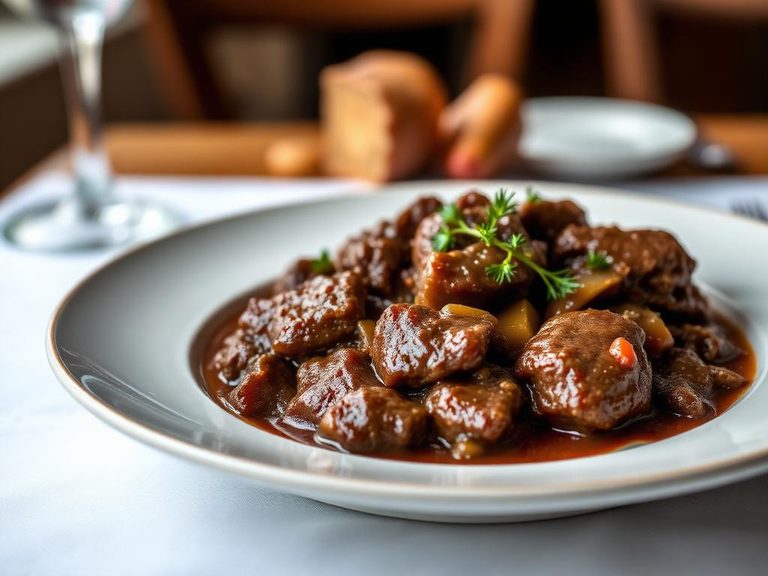
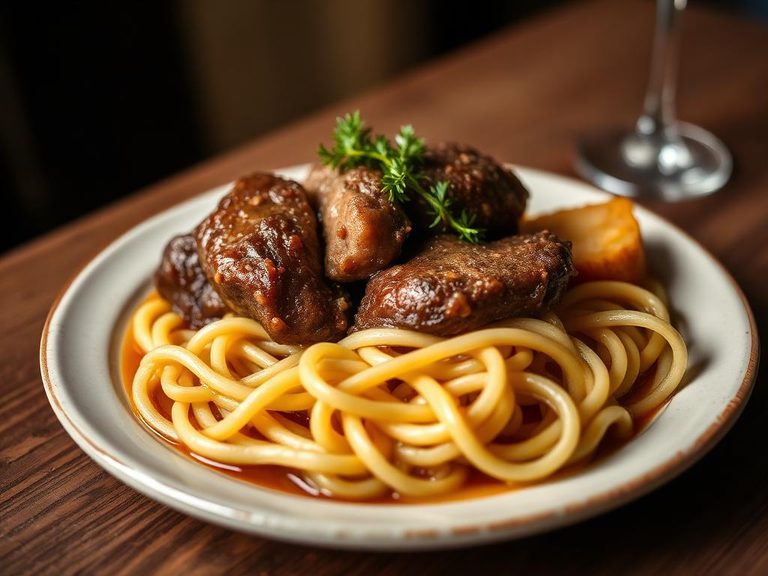
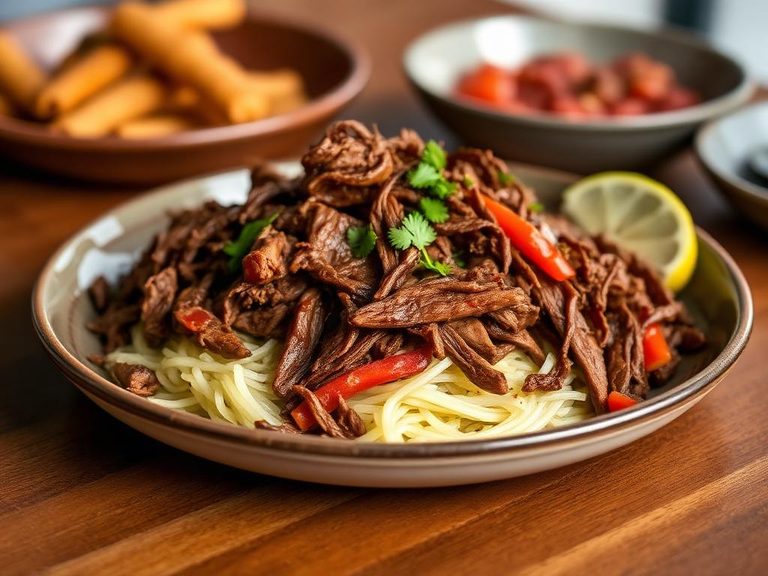
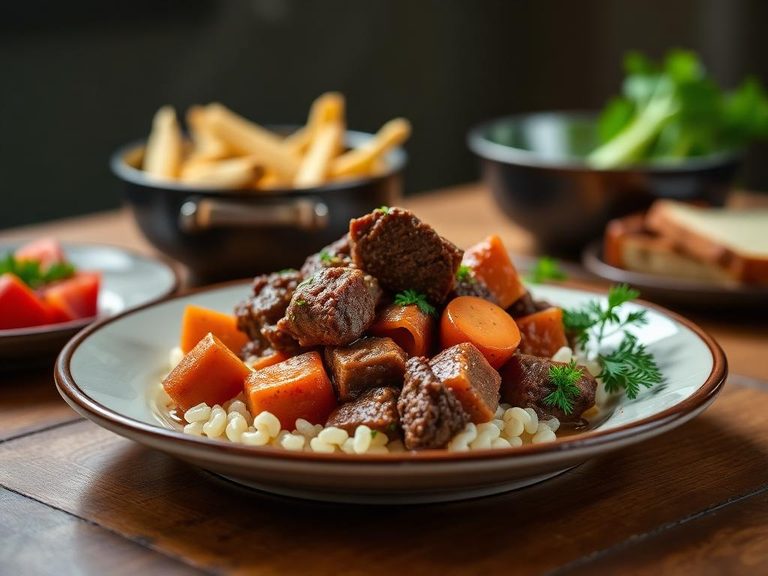
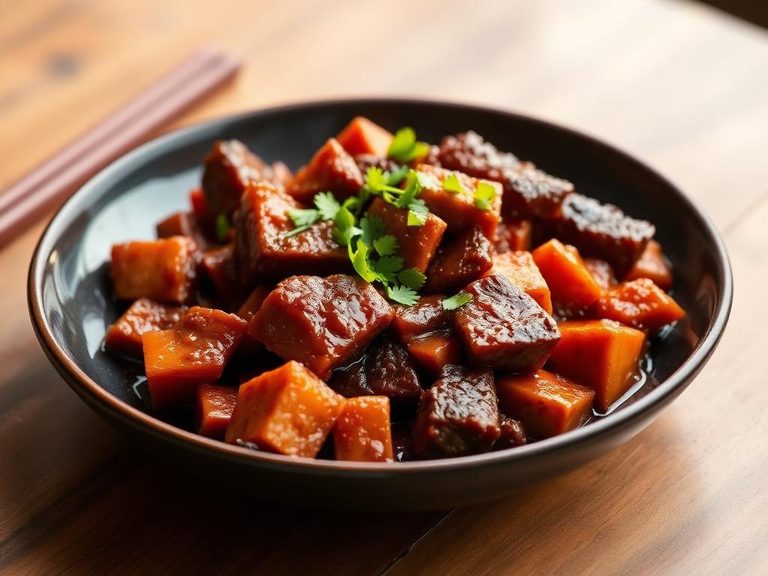
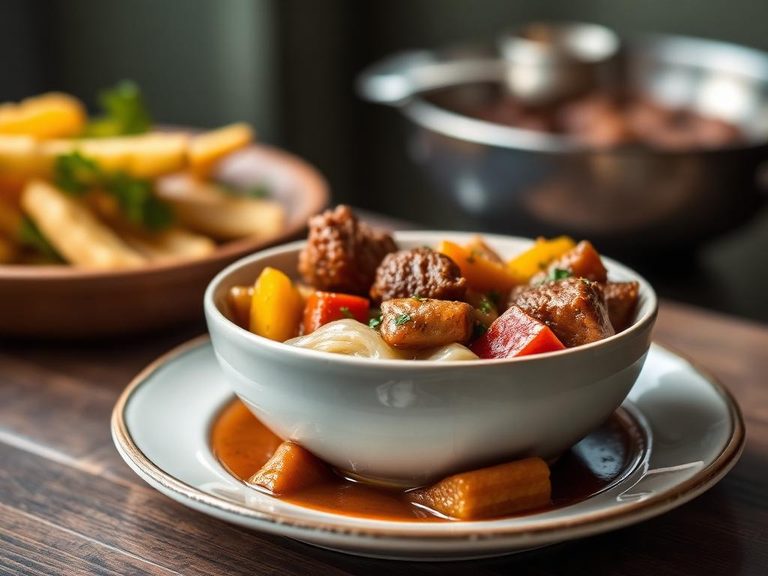
🌍 Where it's eaten
💡 Did you know?
The top round comes from the same area as the 'round steak' but is a specific sub-primal cut prized for its uniform shape, making it ideal for even slicing after cooking.
Full nutrition (USDA data · scales with serving)
| Water | 55.6 g |
| Energy | 225 kcal |
| Energy | 941 kj |
| Protein | 34.6 g |
| Total lipid (fat) | 8.5 g |
| Ash | 1.7 g |
| Carbohydrate, by difference | 0.00 g |
| Fiber, total dietary | 0.00 g |
| Total Sugars | 0.00 g |
| Calcium, Ca | 4.0 mg |
| Iron, Fe | 3.2 mg |
| Magnesium, Mg | 25.0 mg |
| Phosphorus, P | 217 mg |
| Potassium, K | 321 mg |
| Sodium, Na | 45.0 mg |
| Zinc, Zn | 4.4 mg |
| Copper, Cu | 0.12 mg |
| Manganese, Mn | 0.02 mg |
| Selenium, Se | 32.5 ug |
| Vitamin C, total ascorbic acid | 0.00 mg |
| Thiamin | 0.07 mg |
| Riboflavin | 0.24 mg |
| Niacin | 3.7 mg |
| Pantothenic acid | 0.36 mg |
| Vitamin B-6 | 0.27 mg |
| Folate, total | 9.0 ug |
| Folic acid | 0.00 ug |
| Folate, food | 9.0 ug |
| Folate, DFE | 9.0 ug |
| Choline, total | 132 mg |
| Betaine | 17.3 mg |
| Vitamin B-12 | 2.6 ug |
| Vitamin B-12, added | 0.00 ug |
| Vitamin A, RAE | 0.00 ug |
| Carotene, beta | 0.00 ug |
| Carotene, alpha | 0.00 ug |
| Cryptoxanthin, beta | 0.00 ug |
| Vitamin A, IU | 0.00 iu |
| Lycopene | 0.00 ug |
| Lutein + zeaxanthin | 0.00 ug |
| Alcohol, ethyl | 0.00 g |
| Caffeine | 0.00 mg |
| Theobromine | 0.00 mg |
Fat & fatty acid profile (per 100g)
| Fatty acids, total saturated | 3.2 g |
| SFA 4:0 | 0.00 g |
| SFA 6:0 | 0.00 g |
| SFA 8:0 | 0.00 g |
| SFA 10:0 | 0.02 g |
| SFA 12:0 | 0.02 g |
| SFA 14:0 | 0.24 g |
| SFA 16:0 | 2.0 g |
| SFA 18:0 | 0.95 g |
| Fatty acids, total monounsaturated | 3.5 g |
| MUFA 16:1 | 0.32 g |
| MUFA 18:1 | 3.2 g |
| MUFA 20:1 | 0.01 g |
| Fatty acids, total polyunsaturated | 0.35 g |
| PUFA 18:2 | 0.25 g |
| PUFA 18:3 | 0.08 g |
| PUFA 18:4 | 0.00 g |
| PUFA 20:4 | 0.03 g |
| Cholesterol | 90.0 mg |
Amino acid profile (per 100g)
| Tryptophan | 0.39 g |
| Threonine | 1.5 g |
| Isoleucine | 1.6 g |
| Leucine | 2.7 g |
| Lysine | 2.9 g |
| Methionine | 0.89 g |
| Cystine | 0.39 g |
| Phenylalanine | 1.4 g |
| Tyrosine | 1.2 g |
| Valine | 1.7 g |
| Arginine | 2.2 g |
| Histidine | 1.2 g |
| Alanine | 2.1 g |
| Aspartic acid | 3.2 g |
| Glutamic acid | 5.2 g |
| Glycine | 1.9 g |
| Proline | 1.5 g |
| Serine | 1.3 g |
FAQ
Why is it called 'braised' in the description?
Braising is a combination cooking method that uses both dry and wet heat. The beef is first seared at a high temperature, then finished in a covered pot with liquid at a lower temperature. This slow, moist cooking breaks down the lean muscle into a tender, juicy result.
How is this different from a roast beef cut?
This cut is specifically trimmed and selected for braising (wet heat), whereas roast beef cuts are typically larger, may have more fat marbling, and are cooked with dry heat in an oven. The top round can be roasted, but it's leaner and less forgiving than a ribeye or sirloin roast.
Can I cook this quickly in a pressure cooker?
Yes, absolutely. A pressure cooker or Instant Pot is an excellent tool for braising this cut, as it dramatically reduces the cooking time while still achieving the tender, fall-apart texture characteristic of slow braising.
Nutrient density (calculated · NRF9.3)
Nutrient Rich Foods index: beneficial nutrients (protein, fiber, vitamins, minerals) minus saturated fat, added sugar & sodium, per 100 kcal.
NRF9.3 index — Fulgoni, Keast & Drewnowski, 2009. Computed from USDA nutrients.
Weight-loss friendliness (composite index)
Energy density 2.25 kcal/g · 62% calories from protein · 0.0 g fiber · 0.0 g sugar per 100 g.
Composite of energy density (Rolls et al., 1999), protein & fiber satiety, minus sugar. A calculated heuristic — ranks satiety-per-calorie, not a clinical measure.
Dietary load (calculated from USDA values)
Potential renal acid load. Positive = acid-forming, negative = alkaline-forming.
Sodium-to-potassium ratio: 0.14 (lower is better — aim for ≤ 1)
Sodium:potassium per WHO potassium guidance. Computed from USDA nutrients.