

Beef, chuck, mock tender steak, separable lean only, trimmed to 0" fat, choice, cooked, broiled
Whole food · Beef Products

Photo: Wikipedia
Beef chuck mock tender steak, when broiled, transforms a lean, fibrous cut into a surprisingly tender, deeply savory piece of meat with a robust, beefy flavor. Stripped of all fat, it delivers a powerful protein punch with minimal calories, making it a lean powerhouse for muscle-building diets. Its texture is firm yet juicy when cooked correctly, offering a satisfying chew that's less fatty than a ribeye but more flavorful than a sirloin.
Calorie split: 67% protein · 0% carbs · 33% fat
↓ Full nutrition💚 Why it's loved
People love it for its intense, concentrated beef flavor and its ability to stay juicy and tender when broiled or grilled, despite being a lean cut. It's a budget-friendly alternative to pricier steaks, offering a hearty, satisfying meal that pairs perfectly with bold marinades or simple seasoning.
⚠️ Watch-outs & how to enjoy it better
The cut can be tough if overcooked or not sliced against the grain, as it's naturally lean and fibrous. To counteract this, marinate it for at least 30 minutes to break down fibers, and use a meat thermometer to cook it to medium-rare (135°F) before resting it for 5-10 minutes. Pair with a small amount of healthy fat like avocado or olive oil to aid nutrient absorption of fat-soluble vitamins.
Key benefits
- Extremely high protein density (25.74g per 100g) for muscle repair and satiety.
- Virtually fat-free (5.69g total, 0g saturated fat) and low in calories (161 kcal).
- Rich in iron and B vitamins (especially B12) for energy metabolism.
- No carbohydrates or sugars, making it ideal for keto and low-carb diets.
🍽️ Popular dishes
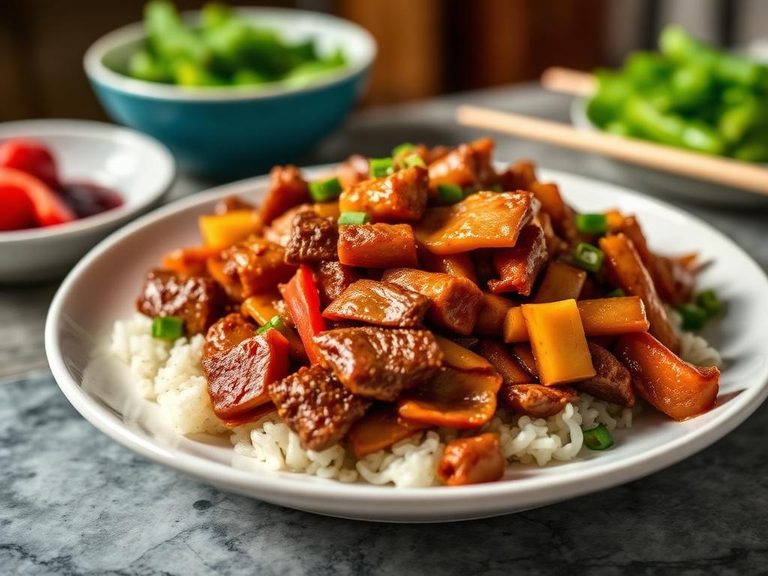
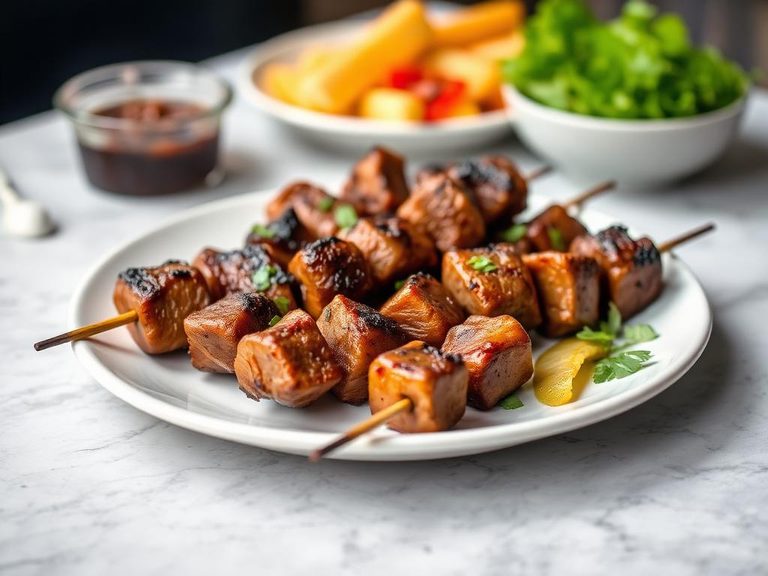
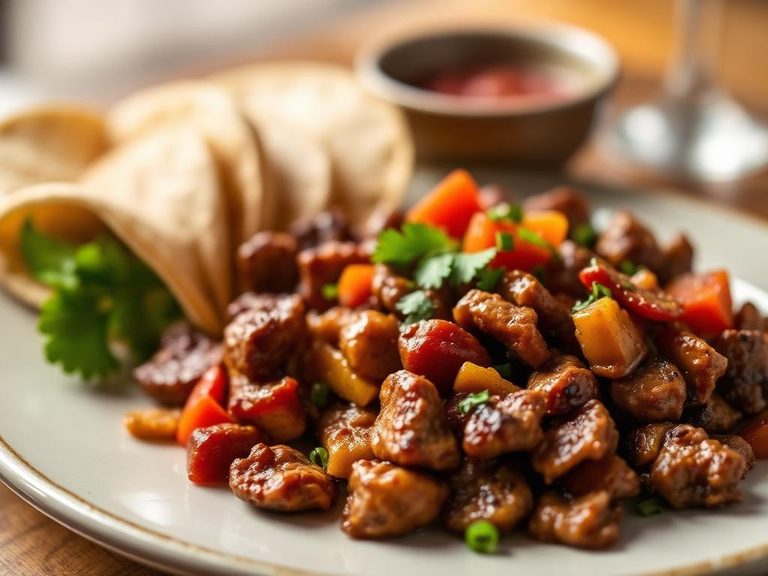
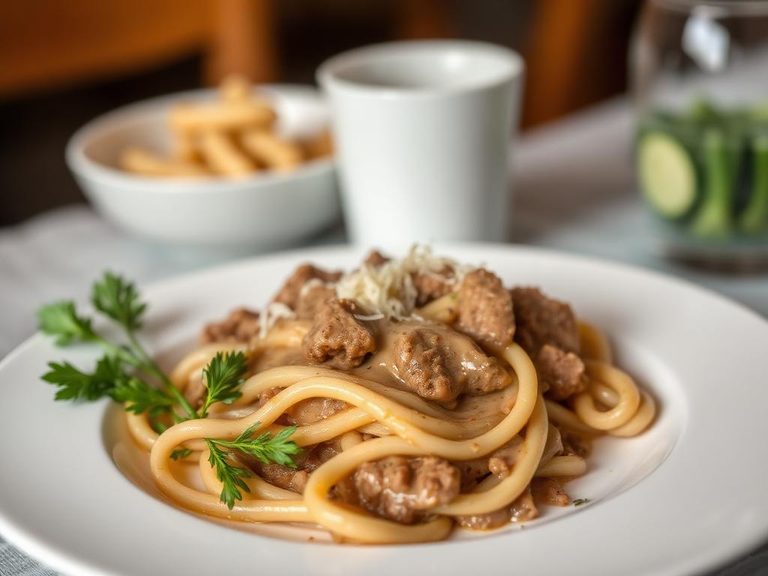
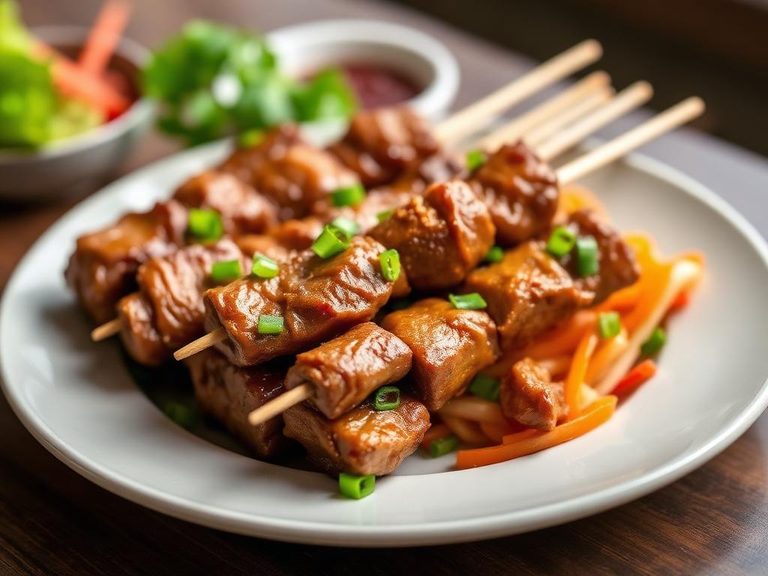
🌍 Where it's eaten
💡 Did you know?
The 'mock tender' is actually a muscle from the chuck shoulder that mimics the tenderness of a filet mignon when broiled correctly, earning it the nickname 'petite tender' or 'beef tenderloin of the chuck.'
Full nutrition (USDA data · scales with serving)
| Water | 65.6 g |
| Energy | 161 kcal |
| Energy | 675 kj |
| Protein | 25.7 g |
| Total lipid (fat) | 5.7 g |
| Ash | 1.5 g |
| Carbohydrate, by difference | 0.00 g |
| Fiber, total dietary | 0.00 g |
| Total Sugars | 0.00 g |
| Calcium, Ca | 8.0 mg |
| Iron, Fe | 3.0 mg |
| Magnesium, Mg | 23.0 mg |
| Phosphorus, P | 234 mg |
| Potassium, K | 293 mg |
| Sodium, Na | 73.0 mg |
| Zinc, Zn | 7.8 mg |
| Copper, Cu | 0.12 mg |
| Selenium, Se | 25.2 ug |
| Vitamin C, total ascorbic acid | 0.00 mg |
| Thiamin | 0.11 mg |
| Riboflavin | 0.23 mg |
| Niacin | 3.6 mg |
| Vitamin B-6 | 0.32 mg |
| Folate, total | 8.0 ug |
| Folic acid | 0.00 ug |
| Folate, food | 8.0 ug |
| Folate, DFE | 8.0 ug |
| Choline, total | 98.0 mg |
| Vitamin B-12 | 3.4 ug |
| Vitamin B-12, added | 0.00 ug |
| Vitamin A, RAE | 0.00 ug |
| Retinol | 0.00 ug |
| Carotene, beta | 0.00 ug |
| Carotene, alpha | 0.00 ug |
| Cryptoxanthin, beta | 0.00 ug |
| Vitamin A, IU | 0.00 iu |
| Lycopene | 0.00 ug |
| Lutein + zeaxanthin | 0.00 ug |
| Vitamin E (alpha-tocopherol) | 0.16 mg |
| Vitamin E, added | 0.00 mg |
| Alcohol, ethyl | 0.00 g |
| Caffeine | 0.00 mg |
| Theobromine | 0.00 mg |
Fat & fatty acid profile (per 100g)
| Fatty acids, total saturated | 1.7 g |
| SFA 4:0 | 0.00 g |
| SFA 6:0 | 0.00 g |
| SFA 8:0 | 0.00 g |
| SFA 12:0 | 0.00 g |
| SFA 14:0 | 0.07 g |
| SFA 16:0 | 1.0 g |
| SFA 18:0 | 0.61 g |
| SFA 20:0 | 0.01 g |
| Fatty acids, total monounsaturated | 2.7 g |
| MUFA 14:1 | 0.04 g |
| MUFA 16:1 | 0.14 g |
| MUFA 18:1 | 2.5 g |
| Fatty acids, total polyunsaturated | 0.40 g |
| PUFA 18:2 | 0.30 g |
| PUFA 18:3 | 0.04 g |
| PUFA 18:4 | 0.00 g |
| PUFA 20:4 | 0.06 g |
| Cholesterol | 94.0 mg |
Amino acid profile (per 100g)
| Tryptophan | 0.28 g |
| Threonine | 1.2 g |
| Isoleucine | 1.3 g |
| Leucine | 2.3 g |
| Lysine | 2.4 g |
| Methionine | 0.73 g |
| Cystine | 0.28 g |
| Phenylalanine | 1.1 g |
| Tyrosine | 0.94 g |
| Valine | 1.4 g |
| Arginine | 1.7 g |
| Histidine | 0.83 g |
| Alanine | 1.6 g |
| Aspartic acid | 2.6 g |
| Glutamic acid | 4.1 g |
| Glycine | 1.2 g |
| Proline | 1.1 g |
| Serine | 1.0 g |
| Hydroxyproline | 0.12 g |
FAQ
How do I prevent it from being tough?
Marinate for 30-60 minutes, cook to medium-rare (135°F internal temp), and slice against the grain to shorten muscle fibers.
Is this cut suitable for slow cooking?
It's better suited for quick, high-heat methods like broiling or grilling; slow cooking can make it mushy since it's lean.
What's the best way to store leftovers?
Refrigerate in an airtight container for up to 3 days, or freeze for 2-3 months; reheat gently to avoid drying out.
Nutrient density (calculated · NRF9.3)
Nutrient Rich Foods index: beneficial nutrients (protein, fiber, vitamins, minerals) minus saturated fat, added sugar & sodium, per 100 kcal.
NRF9.3 index — Fulgoni, Keast & Drewnowski, 2009. Computed from USDA nutrients.
Weight-loss friendliness (composite index)
Energy density 1.61 kcal/g · 64% calories from protein · 0.0 g fiber · 0.0 g sugar per 100 g.
Composite of energy density (Rolls et al., 1999), protein & fiber satiety, minus sugar. A calculated heuristic — ranks satiety-per-calorie, not a clinical measure.
Dietary load (calculated from USDA values)
Potential renal acid load. Positive = acid-forming, negative = alkaline-forming.
Sodium-to-potassium ratio: 0.25 (lower is better — aim for ≤ 1)
Sodium:potassium per WHO potassium guidance. Computed from USDA nutrients.