

Beef, Australian, imported, Wagyu, rib, small end rib steak/roast, boneless, separable lean only, Aust. marble score 9, raw
Whole food · Beef Products

Photo: Wikipedia
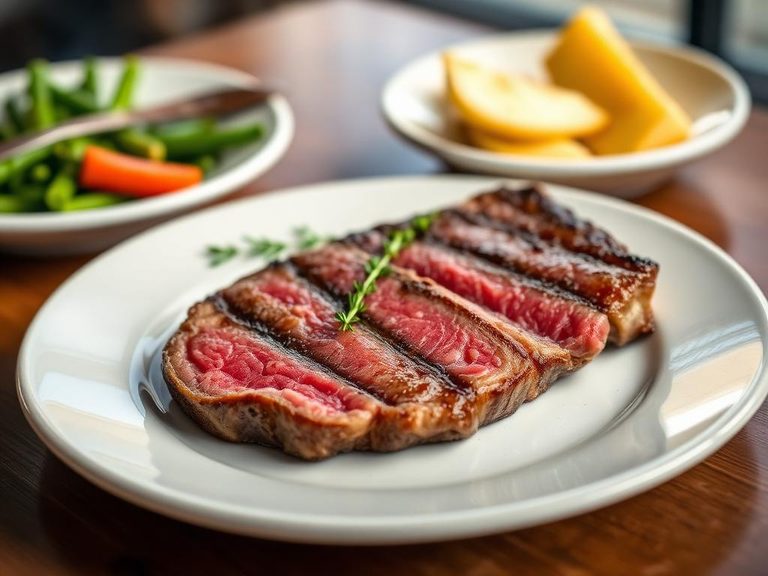
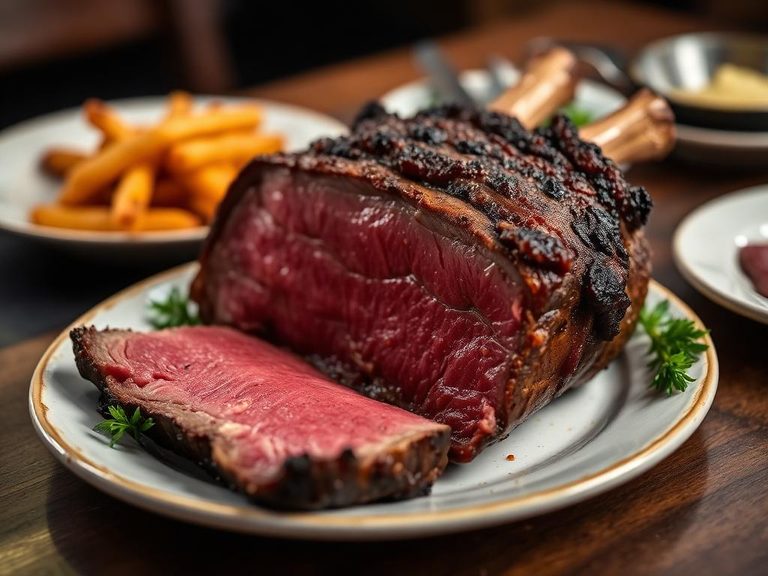
This is a premium cut of Australian Wagyu beef, specifically a boneless rib steak or roast from the small end of the rib, graded at a high Australian Marble Score of 9. It is renowned for its extraordinary intramuscular fat, which creates a buttery, rich flavor and a melt-in-the-mouth texture that is exceptionally tender. Nutritionally, it is a dense source of protein and fat, providing substantial energy with virtually no carbohydrates.
Calorie split: 21% protein · 1% carbs · 78% fat
↓ Full nutrition💚 Why it's loved
People love it for its unparalleled richness and tenderness, where the marbling dissolves during cooking to baste the meat from within, creating a deep, umami-forward flavor. It is a celebratory centerpiece in both Japanese and modern Western cuisine, prized for its ability to turn a simple steak into a luxurious experience.
⚠️ Watch-outs & how to enjoy it better
Its very high fat content, while flavorful, makes it a very calorie-dense food that should be consumed in moderation, especially by those monitoring fat intake or managing heart health. To balance a rich meal, pair it with fiber-rich vegetables like asparagus or a crisp salad, and practice portion control by serving a smaller cut alongside other nutrient-dense sides.
Key benefits
- Exceptionally high in protein for muscle maintenance.
- Rich in monounsaturated fats, particularly oleic acid.
- Provides essential minerals like iron and zinc.
- Offers a high caloric density for energy needs.
- Contains conjugated linoleic acid (CLA), a naturally occurring fatty acid.
🍽️ Popular dishes
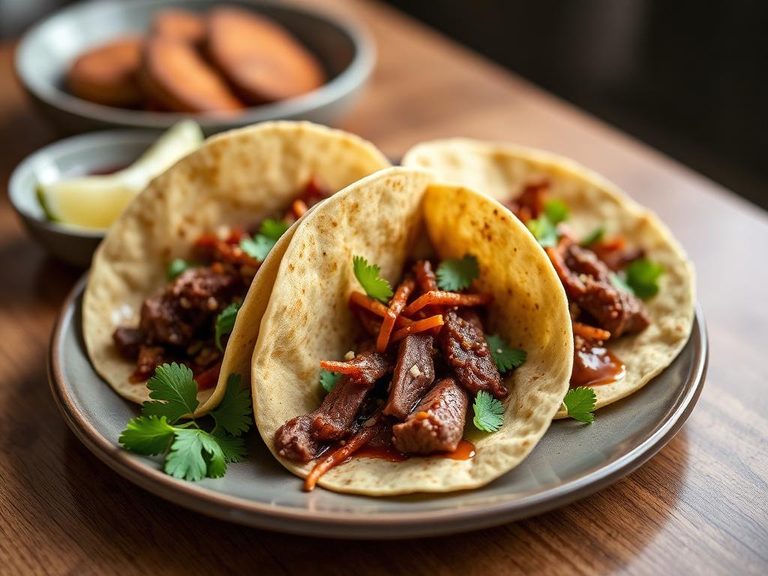
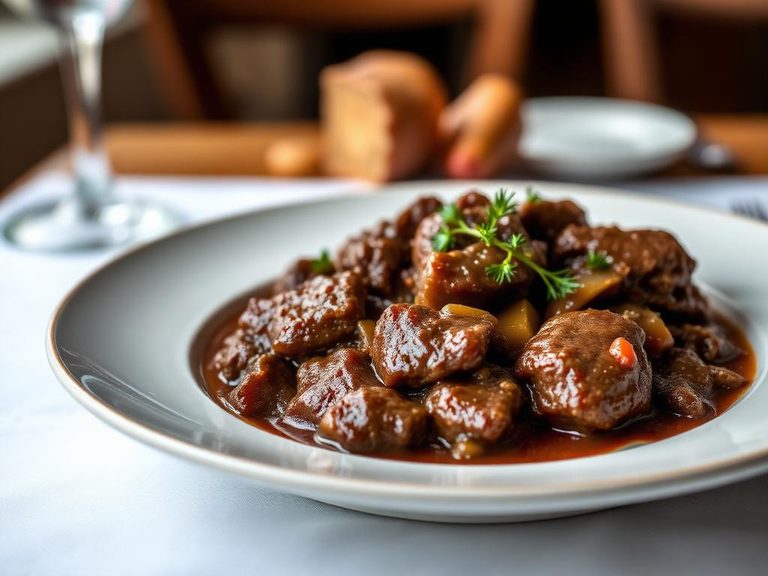
🌍 Where it's eaten
💡 Did you know?
The 'Australian Marble Score 9' is part of the AUS-MEAT grading system, which is distinct from the Japanese BMS scale; a score of 9 indicates a very high level of marbling, making it one of the most premium grades available from Australian Wagyu producers.
Full nutrition (USDA data · scales with serving)
| Water | 52.6 g |
| Energy | 330 kcal |
| Energy | 1380 kj |
| Protein | 17.6 g |
| Total lipid (fat) | 28.6 g |
| Ash | 0.73 g |
| Carbohydrate, by difference | 0.46 g |
| Fiber, total dietary | 0.00 g |
| Total Sugars | 0.00 g |
| Calcium, Ca | 4.0 mg |
| Iron, Fe | 2.1 mg |
| Sodium, Na | 65.0 mg |
| Vitamin C, total ascorbic acid | 0.00 mg |
| Vitamin A, RAE | 0.00 ug |
| Carotene, beta | 0.00 ug |
| Carotene, alpha | 0.00 ug |
| Cryptoxanthin, beta | 0.00 ug |
| Vitamin A, IU | 0.00 iu |
| Lycopene | 0.00 ug |
| Lutein + zeaxanthin | 0.00 ug |
| Alcohol, ethyl | 0.00 g |
| Caffeine | 0.00 mg |
| Theobromine | 0.00 mg |
Fat & fatty acid profile (per 100g)
| Fatty acids, total saturated | 11.1 g |
| SFA 4:0 | 0.00 g |
| SFA 6:0 | 0.00 g |
| SFA 8:0 | 0.00 g |
| SFA 10:0 | 0.01 g |
| SFA 12:0 | 0.02 g |
| SFA 14:0 | 0.86 g |
| SFA 15:0 | 0.11 g |
| SFA 16:0 | 7.1 g |
| SFA 17:0 | 0.26 g |
| SFA 18:0 | 2.8 g |
| SFA 20:0 | 0.02 g |
| SFA 22:0 | 0.01 g |
| Fatty acids, total monounsaturated | 14.3 g |
| MUFA 14:1 | 0.29 g |
| MUFA 16:1 | 1.1 g |
| MUFA 18:1 | 12.8 g |
| MUFA 18:1 c | 12.1 g |
| MUFA 20:1 | 0.07 g |
| Fatty acids, total polyunsaturated | 0.79 g |
| PUFA 18:2 | 0.68 g |
| PUFA 18:2 n-6 c,c | 0.54 g |
| PUFA 18:3 | 0.05 g |
| PUFA 18:3 n-3 c,c,c (ALA) | 0.03 g |
| PUFA 18:3i | 0.03 g |
| PUFA 18:4 | 0.00 g |
| PUFA 20:2 n-6 c,c | 0.01 g |
| PUFA 20:4 | 0.04 g |
| PUFA 20:5 n-3 (EPA) | 0.01 g |
| PUFA 22:5 n-3 (DPA) | 0.01 g |
| Fatty acids, total trans | 0.91 g |
| Fatty acids, total trans-monoenoic | 0.74 g |
| TFA 18:1 t | 0.74 g |
| TFA 18:2 t not further defined | 0.14 g |
| Fatty acids, total trans-polyenoic | 0.17 g |
| Cholesterol | 77.0 mg |
Amino acid profile (per 100g)
| Tryptophan | 0.20 g |
| Threonine | 0.80 g |
| Isoleucine | 0.77 g |
| Leucine | 1.5 g |
| Lysine | 1.6 g |
| Methionine | 0.51 g |
| Cystine | 0.19 g |
| Phenylalanine | 0.69 g |
| Tyrosine | 0.63 g |
| Valine | 0.81 g |
| Arginine | 1.2 g |
| Histidine | 0.58 g |
| Alanine | 1.0 g |
| Aspartic acid | 1.6 g |
| Glutamic acid | 2.9 g |
| Glycine | 0.78 g |
| Proline | 0.72 g |
| Serine | 0.69 g |
| Hydroxyproline | 0.09 g |
FAQ
What is the difference between Australian and Japanese Wagyu?
Australian Wagyu typically refers to cattle that are crossbred (often with Angus) and raised in Australia, while Japanese Wagyu is purebred (like Japanese Black) and raised in Japan. The marbling grades (like the Australian Marble Score) are also different systems.
How should I cook this cut to preserve its tenderness?
Due to its high marbling, it's best cooked quickly at high heat, like searing or grilling, to render the fat without overcooking. For a roast, slow-roasting at a lower temperature allows the fat to melt evenly.
Is this cut suitable for a low-fat diet?
No, this is a very high-fat cut of meat. While it contains healthy monounsaturated fats, it is not suitable for low-fat diets due to its significant calorie and fat content per serving.
What is the best way to store it?
Store it in the refrigerator for up to 3-5 days, or freeze it for up to 6 months. For best quality, wrap it tightly in plastic wrap and then aluminum foil to prevent freezer burn.
Nutrient density (calculated · NRF9.3)
Nutrient Rich Foods index: beneficial nutrients (protein, fiber, vitamins, minerals) minus saturated fat, added sugar & sodium, per 100 kcal.
NRF9.3 index — Fulgoni, Keast & Drewnowski, 2009. Computed from USDA nutrients.
Weight-loss friendliness (composite index)
Energy density 3.30 kcal/g · 21% calories from protein · 0.0 g fiber · 0.0 g sugar per 100 g.
Composite of energy density (Rolls et al., 1999), protein & fiber satiety, minus sugar. A calculated heuristic — ranks satiety-per-calorie, not a clinical measure.