

Japanese Teppanyaki
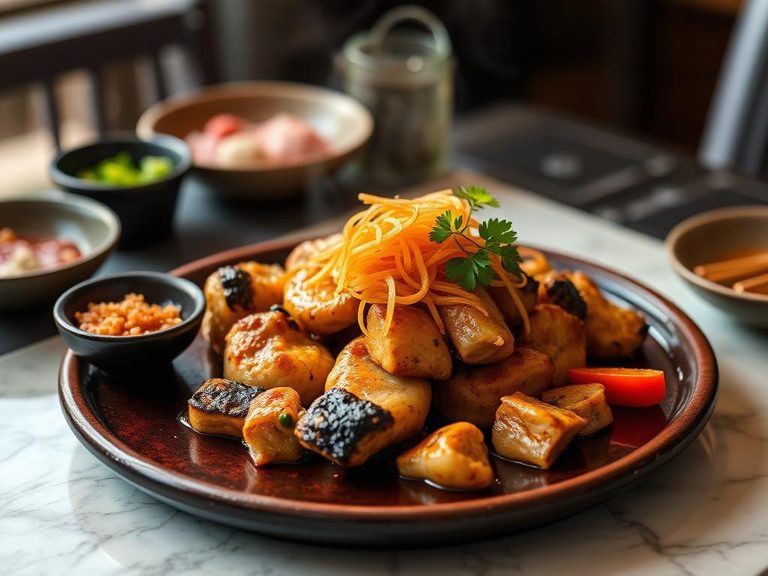
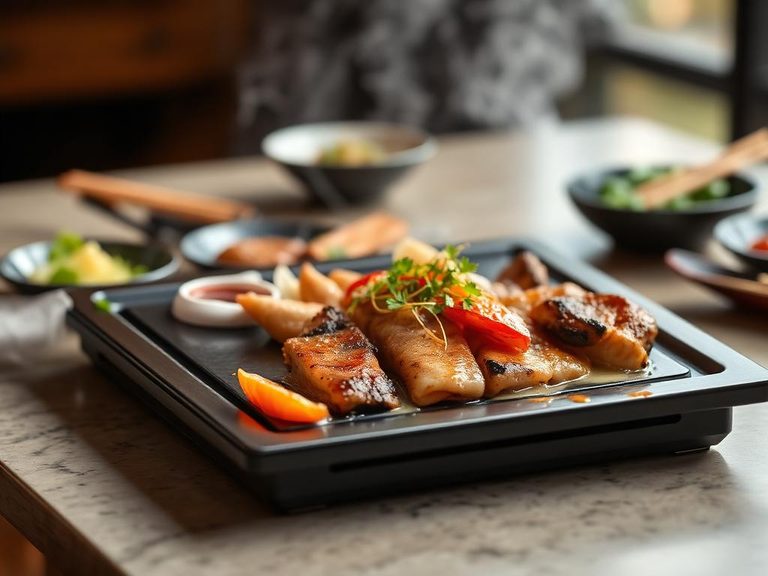
Japanese Teppanyaki is a style of Japanese cuisine where a skilled chef cooks food on a large, flat iron griddle called a teppan, right in front of diners. It typically features high-quality ingredients like steak, shrimp, chicken, and vegetables, often seasoned with soy sauce, garlic, and butter. Originating in Japan, it has become a global dining experience known for its theatrical presentation.
🍽️ Nutrition at a glance
Teppanyaki meals are generally high in protein from the meats and seafood, with moderate to high fat content depending on the cuts and cooking oils used. A typical serving can range from 500 to 1,000 calories, providing key nutrients like iron, zinc, and B vitamins from the animal proteins, along with vitamins and fiber from the accompanying vegetables.
Nutrition breakdown
| Calories | 450 kcal |
| Protein | 30 g |
| Carbs | 25 g |
| Fat | 25 g |
| Fiber | 3 g |
| Sugar | 5 g |
| Sodium | 800 mg |
| Iron | 4 mg |
| Calcium | 60 mg |
| Potassium | 500 mg |
| Vitamin A | 150 mcg |
| Vitamin C | 15 mg |
| Vitamin B12 | 2.5 mcg |
| Zinc | 5 mg |
| Magnesium | 40 mg |
Per 1 typical serving (350 g) · estimated, varies by recipe
💡 What's interesting
Culturally, Teppanyaki is as much about entertainment as it is about food, with chefs performing knife skills, juggling utensils, and creating fiery displays. Nutritionally, the quick, high-heat cooking method helps retain the nutrients and natural flavors of the ingredients, making it a relatively balanced meal when paired with vegetables.
🍽️ Related dishes
AI estimate may be inaccurate · Terms