

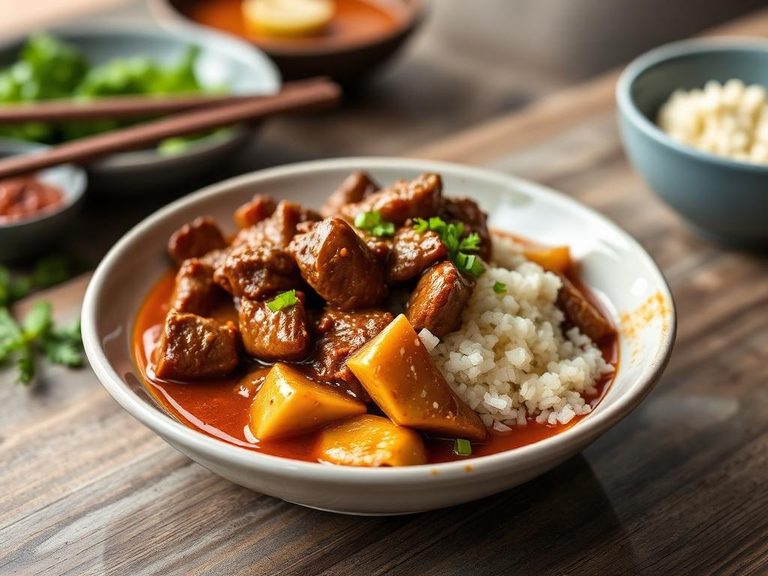
Japanese Beef Teppanyaki
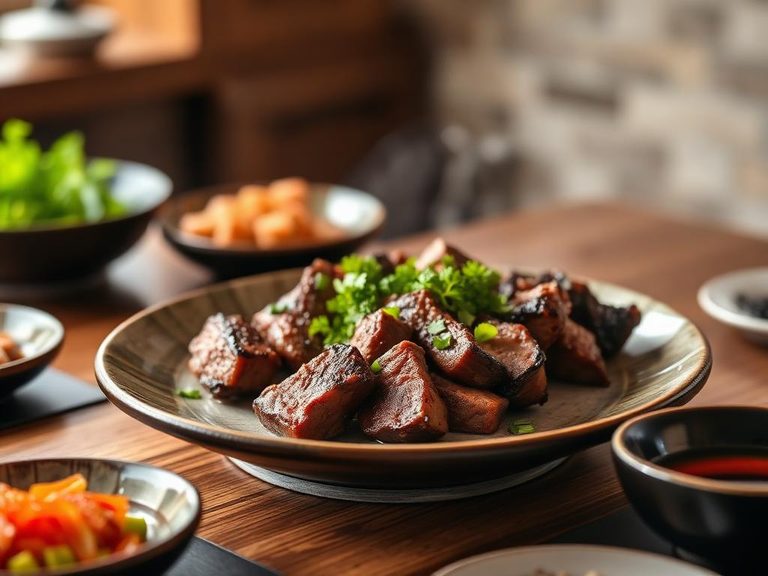
Japanese Beef Teppanyaki is a dish where high-quality beef, typically tenderloin or ribeye, is grilled on a large iron griddle (teppan) in front of diners. It is often accompanied by vegetables like onions, mushrooms, and bean sprouts, and seasoned with a savory sauce or simple salt and pepper. The style originated in Japan in the mid-20th century, blending Western grilling techniques with Japanese culinary presentation.
🍽️ Nutrition at a glance
This dish is high in protein and fat, with minimal carbohydrates unless served with rice or noodles. It provides key nutrients like iron, zinc, and B vitamins from the beef, along with some fiber and vitamins from the vegetables. A typical serving of just the beef and vegetables (without rice) contains roughly 400-600 calories.
Nutrition breakdown
| Calories | 500 kcal |
| Protein | 35 g |
| Carbs | 10 g |
| Fat | 38 g |
| Fiber | 3 g |
| Sugar | 4 g |
| Sodium | 600 mg |
| Iron | 4.5 mg |
| Zinc | 8 mg |
| Vitamin B12 | 2.5 mcg |
| Niacin (B3) | 10 mg |
| Selenium | 25 mcg |
| Phosphorus | 280 mg |
| Potassium | 450 mg |
| Vitamin B6 | 0.6 mg |
Per 1 serving (250 g) of beef and mixed vegetables · estimated, varies by recipe
💡 What's interesting
Teppanyaki is as much a performance as it is a meal, with chefs showcasing knife skills and theatrical cooking techniques. Nutritionally, the high-heat, quick-searing method helps retain the beef's juiciness and nutrients, while the interactive dining experience makes it a popular choice for celebrations and group outings.
🍽️ Related dishes
AI estimate may be inaccurate · Terms