

Teppanyaki
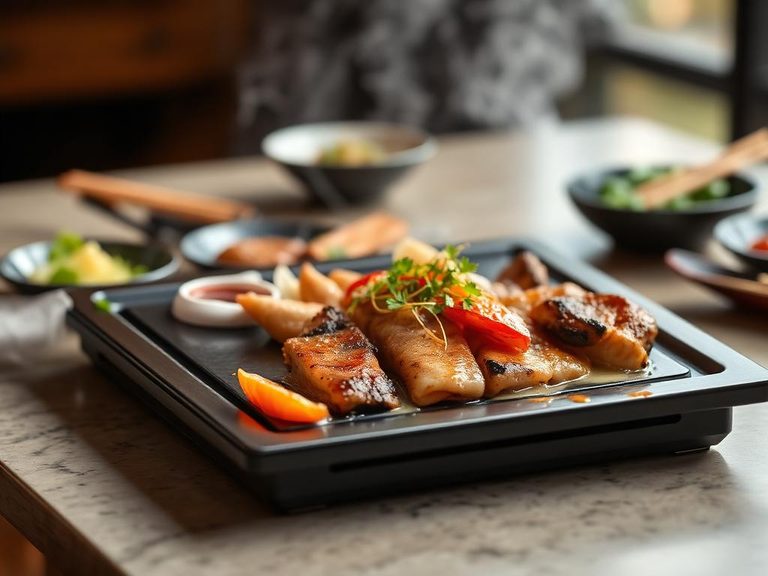
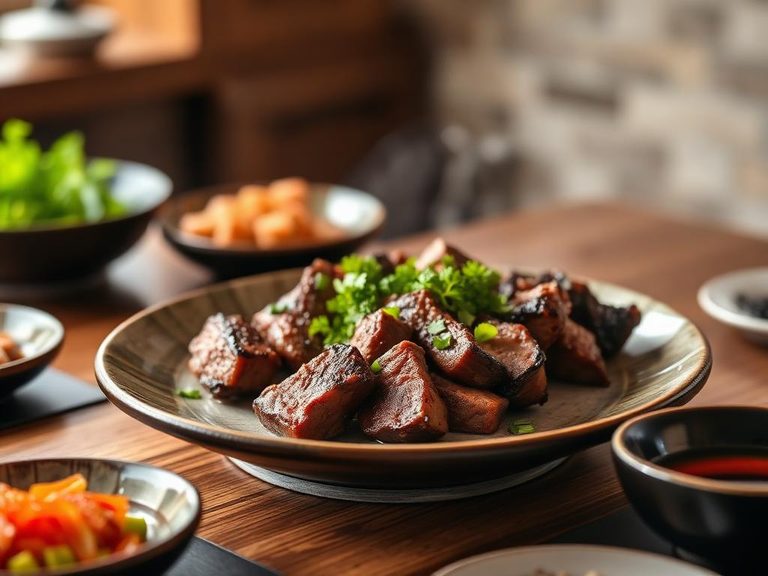
Teppanyaki is a Japanese style of cooking where food is prepared on a large, flat iron griddle called a teppan. It typically features a mix of proteins like steak, chicken, or shrimp, alongside vegetables such as onions, zucchini, and bean sprouts, all seasoned with soy sauce, garlic, and butter. The dish is famously associated with interactive dining, where chefs perform entertaining cooking techniques right at your table.
🍽️ Nutrition at a glance
A typical teppanyaki meal is high in protein from the meat and seafood, with a moderate amount of fat from cooking oils and butter. It provides a good balance of vitamins and minerals from the vegetables, with a rough calorie range of 600-900 kcal per full serving depending on the ingredients chosen.
Nutrition breakdown
| Calories | 750 kcal |
| Protein | 45 g |
| Carbs | 40 g |
| Fat | 42 g |
| Fiber | 5 g |
| Sugar | 8 g |
| Sodium | 1200 mg |
| Iron | 6 mg |
| Vitamin C | 30 mg |
| Vitamin A | 500 IU |
| Calcium | 80 mg |
| Potassium | 600 mg |
| Zinc | 5 mg |
| Vitamin B12 | 2.5 mcg |
| Magnesium | 40 mg |
Per 1 full serving (approx. 400 g) · estimated, varies by recipe
💡 What's interesting
Teppanyaki is culturally unique as it transforms cooking into a theatrical performance, blending culinary skill with entertainment. Nutritionally, it can be a balanced meal if you focus on lean proteins and load up on the grilled vegetables, making it a customizable option for various dietary preferences.
🍽️ Related dishes
AI estimate may be inaccurate · Terms