

Beef, Australian, imported, Wagyu, rib, small end rib steak/roast, boneless, separable lean and fat, Aust. marble score 4/5, raw
Whole food · Beef Products

Photo: Wikipedia
This is a premium cut of Australian Wagyu beef from the small end of the rib, prized for its exceptional intramuscular fat (marbling) that melts during cooking, yielding a buttery, intensely beefy flavor and a tender, almost velvety texture. Nutritionally, it's a dense source of protein and energy, with over half its calories coming from fat, including heart-healthy monounsaturated fats.
Calorie split: 22% protein · 0% carbs · 78% fat
↓ Full nutrition💚 Why it's loved
People adore it for the unparalleled, luxurious eating experience—the way the intricate web of fat renders into a rich, savory juice that coats the palate. It's a celebratory centerpiece in modern cuisine, valued for its ability to impress with minimal seasoning, letting the quality of the beef shine.
⚠️ Watch-outs & how to enjoy it better
The high fat content makes it very calorie-dense, which may be a concern for those managing weight or specific dietary fat intake. To enjoy it mindfully, practice strict portion control (see portions below) and pair it with fiber-rich, non-starchy vegetables like roasted asparagus or a crisp salad to add volume and balance the meal without spiking blood sugar.
Key benefits
- Excellent source of high-quality protein for muscle maintenance.
- Rich in monounsaturated fats (oleic acid), similar to olive oil.
- Provides essential minerals like zinc and iron.
- Marbling score 4/5 indicates high-quality, flavorful fat distribution.
- Carbohydrate-free, suitable for ketogenic and carnivore diets.
🍽️ Popular dishes
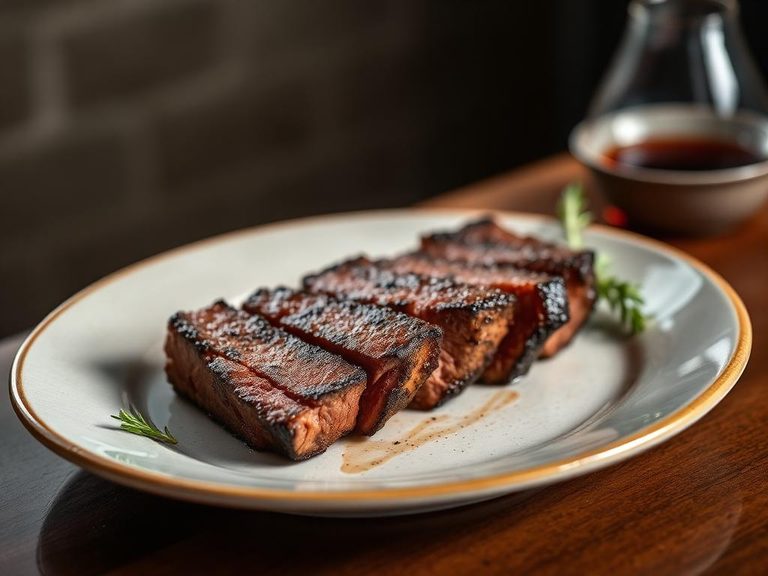
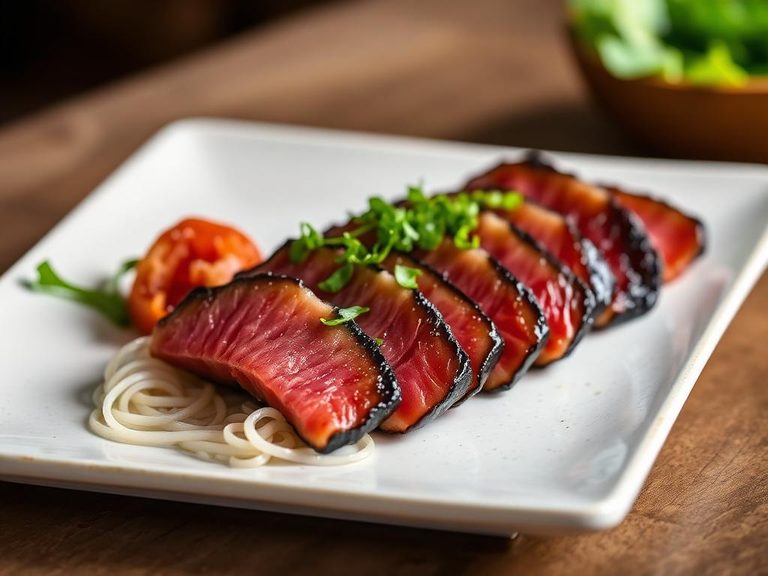
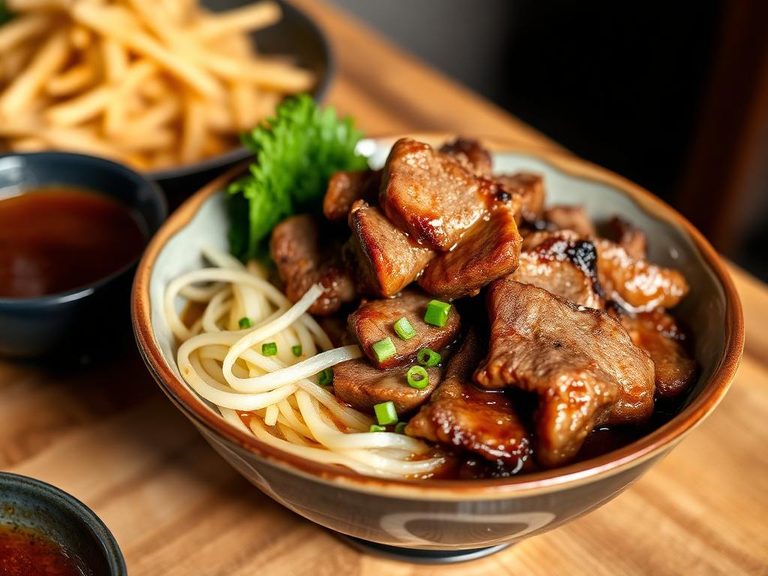
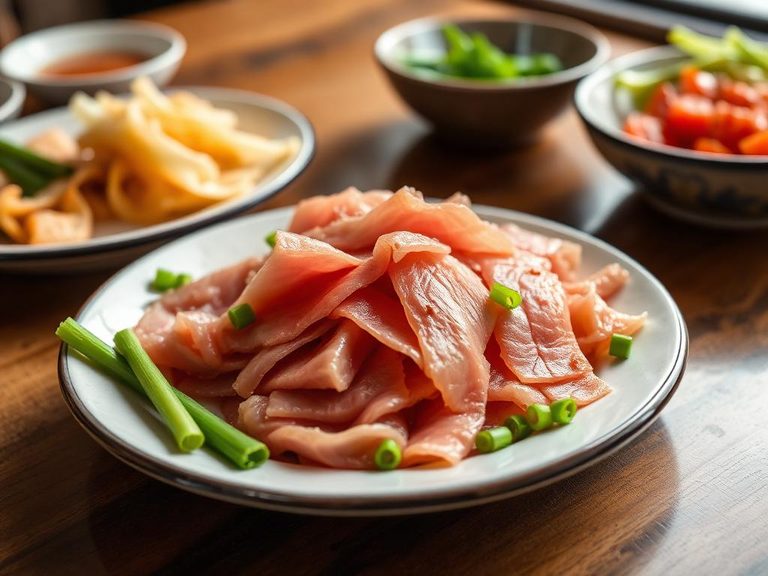
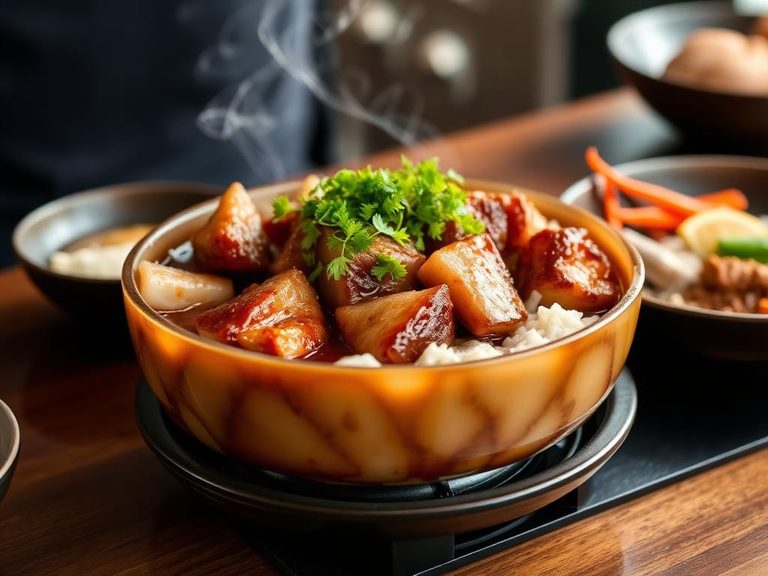
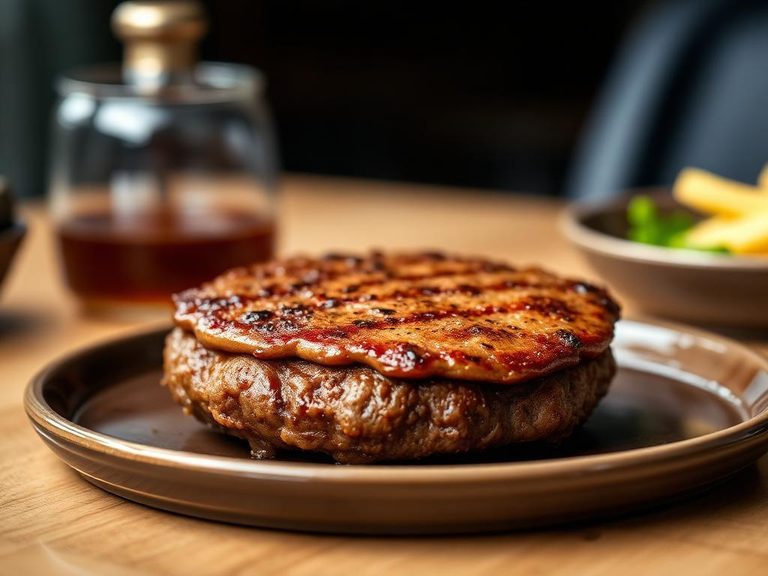
🌍 Where it's eaten
💡 Did you know?
The marbling in Wagyu beef is so fine and evenly distributed that it has a lower melting point than other beef fats, which is why it literally begins to melt at room temperature and gives that signature 'melt-in-your-mouth' sensation.
Full nutrition (USDA data · scales with serving)
| Water | 54.6 g |
| Energy | 317 kcal |
| Energy | 1327 kj |
| Protein | 17.1 g |
| Total lipid (fat) | 27.6 g |
| Ash | 0.78 g |
| Carbohydrate, by difference | 0.00 g |
| Fiber, total dietary | 0.00 g |
| Total Sugars | 0.00 g |
| Sucrose | 0.00 g |
| Glucose | 0.00 g |
| Fructose | 0.00 g |
| Lactose | 0.00 g |
| Maltose | 0.00 g |
| Galactose | 0.00 g |
| Calcium, Ca | 4.0 mg |
| Iron, Fe | 1.7 mg |
| Sodium, Na | 52.0 mg |
| Vitamin C, total ascorbic acid | 0.00 mg |
| Vitamin A, RAE | 5.0 ug |
| Retinol | 5.0 ug |
| Carotene, beta | 0.00 ug |
| Carotene, alpha | 0.00 ug |
| Cryptoxanthin, beta | 0.00 ug |
| Vitamin A, IU | 17.0 iu |
| Lycopene | 0.00 ug |
| Lutein + zeaxanthin | 0.00 ug |
| Vitamin E (alpha-tocopherol) | 0.00 mg |
| Vitamin E, added | 0.00 mg |
| Alcohol, ethyl | 0.00 g |
| Caffeine | 0.00 mg |
| Theobromine | 0.00 mg |
Fat & fatty acid profile (per 100g)
| Fatty acids, total saturated | 10.3 g |
| SFA 4:0 | 0.00 g |
| SFA 6:0 | 0.00 g |
| SFA 8:0 | 0.00 g |
| SFA 10:0 | 0.01 g |
| SFA 12:0 | 0.02 g |
| SFA 14:0 | 0.75 g |
| SFA 15:0 | 0.12 g |
| SFA 16:0 | 6.0 g |
| SFA 17:0 | 0.33 g |
| SFA 18:0 | 3.0 g |
| SFA 20:0 | 0.02 g |
| SFA 22:0 | 0.01 g |
| SFA 24:0 | 0.00 g |
| Fatty acids, total monounsaturated | 13.7 g |
| MUFA 14:1 | 0.22 g |
| MUFA 16:1 | 1.0 g |
| MUFA 18:1 | 12.4 g |
| MUFA 18:1-11 t (18:1t n-7) | 0.59 g |
| MUFA 20:1 | 0.07 g |
| Fatty acids, total polyunsaturated | 0.76 g |
| PUFA 18:2 | 0.65 g |
| PUFA 18:3 | 0.06 g |
| PUFA 18:4 | 0.00 g |
| PUFA 20:2 n-6 c,c | 0.01 g |
| PUFA 20:3 | 0.00 g |
| PUFA 20:4 | 0.04 g |
| PUFA 20:5 n-3 (EPA) | 0.01 g |
| PUFA 22:5 n-3 (DPA) | 0.01 g |
| Fatty acids, total trans | 1.4 g |
| Cholesterol | 76.0 mg |
Amino acid profile (per 100g)
| Tryptophan | 0.18 g |
| Threonine | 0.71 g |
| Isoleucine | 0.69 g |
| Leucine | 1.3 g |
| Lysine | 1.4 g |
| Methionine | 0.46 g |
| Cystine | 0.17 g |
| Phenylalanine | 0.61 g |
| Tyrosine | 0.56 g |
| Valine | 0.72 g |
| Arginine | 1.1 g |
| Histidine | 0.52 g |
| Alanine | 0.90 g |
| Aspartic acid | 1.4 g |
| Glutamic acid | 2.5 g |
| Glycine | 0.70 g |
| Proline | 0.64 g |
| Serine | 0.61 g |
| Hydroxyproline | 0.08 g |
FAQ
What does 'Aust. marble score 4/5' mean?
It refers to the Australian Wagyu Association's marbling scale. A score of 4/5 indicates a high degree of fine, white intramuscular fat streaks throughout the meat, promising excellent flavor and tenderness.
How is this different from regular ribeye?
While both come from the rib section, Wagyu has significantly more intramuscular fat (marbling) than a standard ribeye, resulting in a richer taste, softer texture, and higher fat content per gram.
What's the best way to cook this cut?
Due to its high fat content, it's best cooked quickly over high heat (grilling, pan-searing) to medium-rare or medium. This allows the fat to render and baste the meat without overcooking the lean portions.
Nutrient density (calculated · NRF9.3)
Nutrient Rich Foods index: beneficial nutrients (protein, fiber, vitamins, minerals) minus saturated fat, added sugar & sodium, per 100 kcal.
NRF9.3 index — Fulgoni, Keast & Drewnowski, 2009. Computed from USDA nutrients.
Weight-loss friendliness (composite index)
Energy density 3.17 kcal/g · 22% calories from protein · 0.0 g fiber · 0.0 g sugar per 100 g.
Composite of energy density (Rolls et al., 1999), protein & fiber satiety, minus sugar. A calculated heuristic — ranks satiety-per-calorie, not a clinical measure.