

Beef, Australian, imported, Wagyu, loin, top loin steak/roast, boneless, separable lean only, Aust. marble score 4/5, raw
Whole food · Beef Products

Photo: Wikipedia
This is a premium cut of Australian Wagyu beef, specifically the boneless top loin steak or roast from the loin primal. It boasts a rich, buttery flavor with a tender, melt-in-your-mouth texture due to its fine, consistent marbling (marble score 4/5). Nutritionally, it's a high-protein, high-fat cut with virtually no carbohydrates.
Calorie split: 36% protein · 0% carbs · 63% fat
↓ Full nutrition💚 Why it's loved
People love it for the luxurious, umami-rich flavor and exceptionally tender, juicy texture that Wagyu marbling delivers. It's revered in culinary circles for its ability to be cooked simply (like a perfect sear) and still deliver a restaurant-quality experience.
⚠️ Watch-outs & how to enjoy it better
The primary downside is its high total fat and saturated fat content, which may concern those monitoring cholesterol or calorie intake. Concrete tip: Practice strict portion control (see portions below) and balance the meal by filling half your plate with non-starchy vegetables like steamed broccoli or a fresh salad to add fiber and volume.
Key benefits
- Excellent source of complete, high-quality protein for muscle maintenance.
- Rich in monounsaturated fats, including oleic acid, which is heart-healthy.
- Provides essential minerals like iron (heme iron, highly absorbable) and zinc.
- Contains B vitamins, particularly B12, crucial for nerve function and energy metabolism.
- Marbling ensures juiciness and flavor without needing heavy sauces.
🍽️ Popular dishes
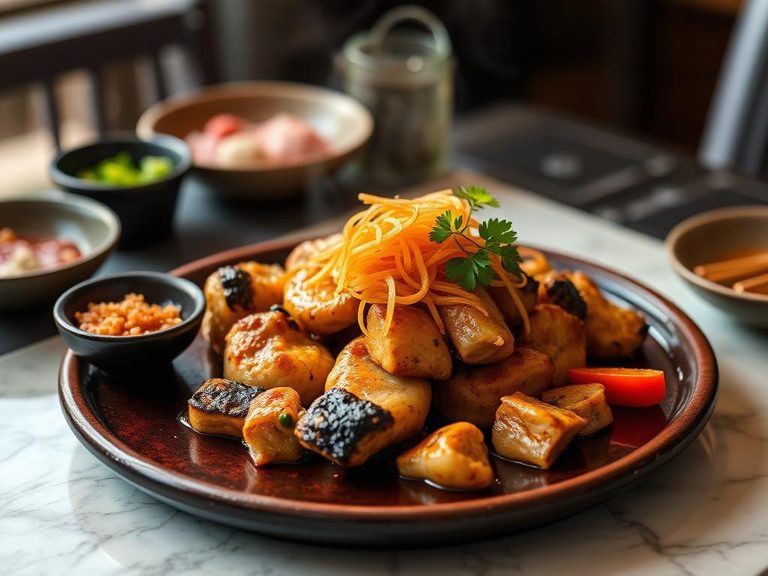
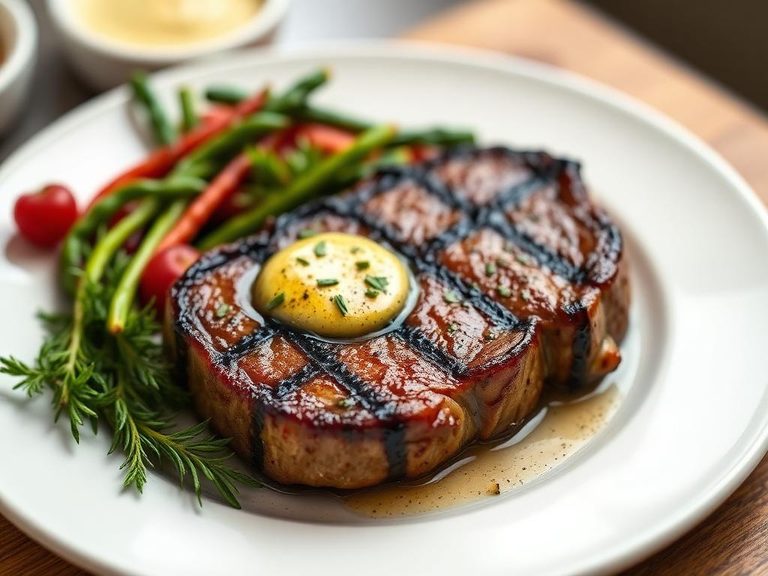
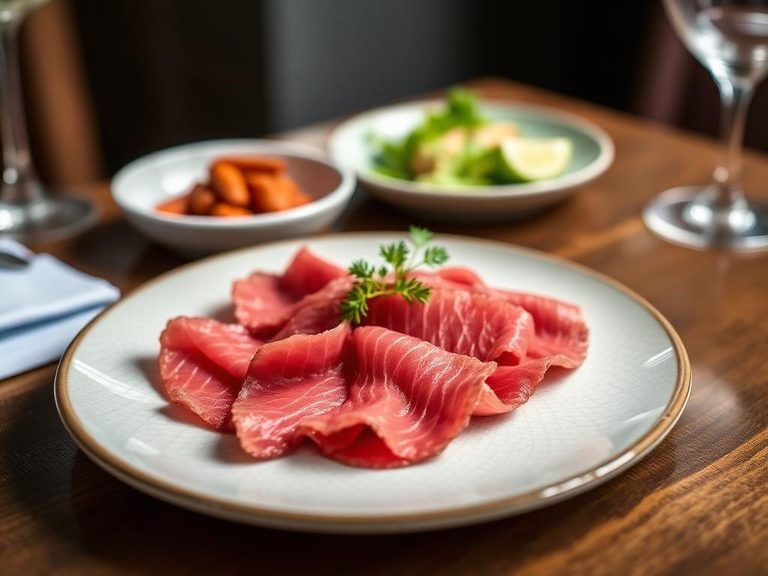
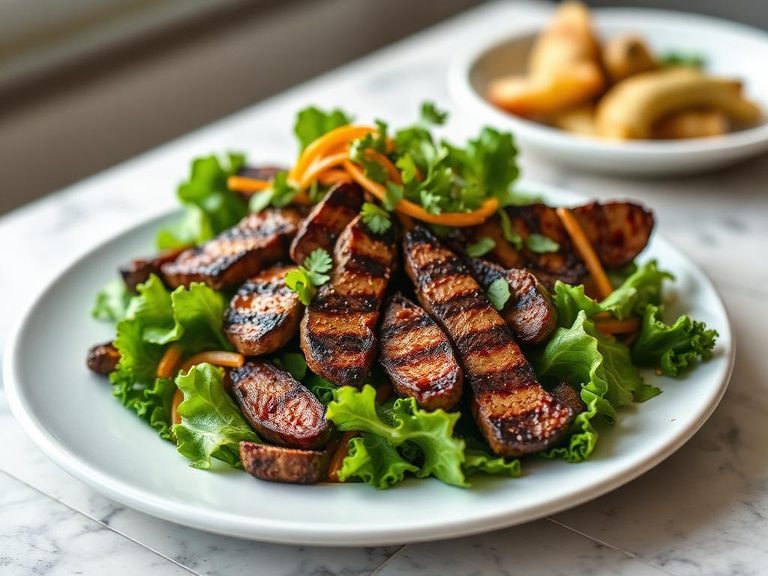
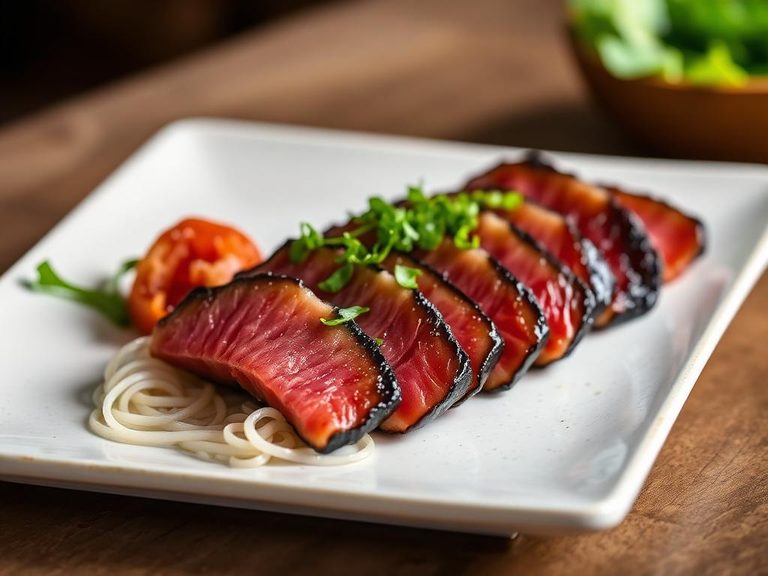
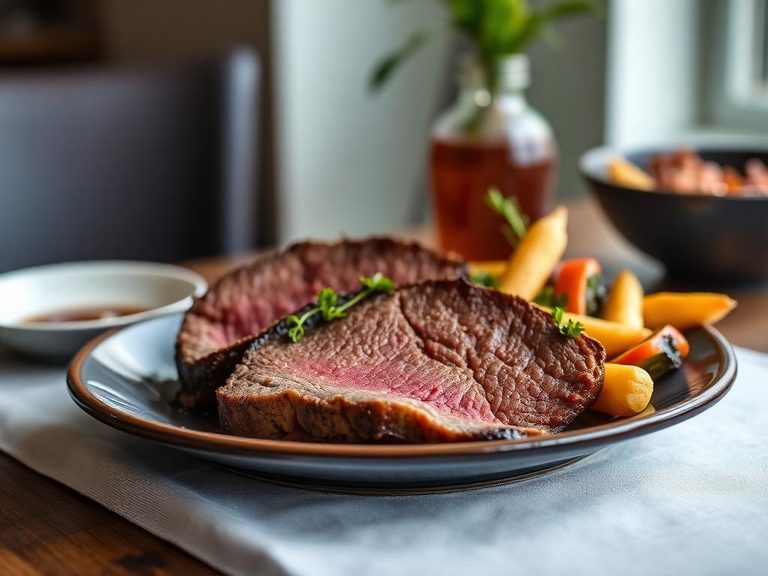
🌍 Where it's eaten
💡 Did you know?
The 'marble score' system (like 4/5) is an Australian grading method that visually assesses the amount and distribution of intramuscular fat, with higher scores indicating more luxurious marbling.
Full nutrition (USDA data · scales with serving)
| Water | 63.1 g |
| Energy | 223 kcal |
| Energy | 931 kj |
| Protein | 20.1 g |
| Total lipid (fat) | 15.7 g |
| Ash | 0.89 g |
| Carbohydrate, by difference | 0.20 g |
| Fiber, total dietary | 0.00 g |
| Total Sugars | 0.00 g |
| Calcium, Ca | 4.0 mg |
| Iron, Fe | 1.9 mg |
| Sodium, Na | 61.0 mg |
| Vitamin C, total ascorbic acid | 0.00 mg |
| Vitamin A, RAE | 0.00 ug |
| Carotene, beta | 0.00 ug |
| Carotene, alpha | 0.00 ug |
| Cryptoxanthin, beta | 0.00 ug |
| Vitamin A, IU | 0.00 iu |
| Lycopene | 0.00 ug |
| Lutein + zeaxanthin | 0.00 ug |
| Alcohol, ethyl | 0.00 g |
| Caffeine | 0.00 mg |
| Theobromine | 0.00 mg |
Fat & fatty acid profile (per 100g)
| Fatty acids, total saturated | 5.9 g |
| SFA 4:0 | 0.00 g |
| SFA 6:0 | 0.00 g |
| SFA 8:0 | 0.00 g |
| SFA 10:0 | 0.01 g |
| SFA 12:0 | 0.01 g |
| SFA 14:0 | 0.44 g |
| SFA 15:0 | 0.06 g |
| SFA 16:0 | 3.5 g |
| SFA 17:0 | 0.18 g |
| SFA 18:0 | 1.7 g |
| SFA 20:0 | 0.01 g |
| SFA 22:0 | 0.01 g |
| Fatty acids, total monounsaturated | 8.0 g |
| MUFA 14:1 | 0.13 g |
| MUFA 16:1 | 0.59 g |
| MUFA 18:1 | 7.3 g |
| MUFA 18:1 c | 6.8 g |
| MUFA 20:1 | 0.04 g |
| Fatty acids, total polyunsaturated | 0.44 g |
| PUFA 18:2 | 0.36 g |
| PUFA 18:2 n-6 c,c | 0.30 g |
| PUFA 18:3 | 0.02 g |
| PUFA 18:3 n-3 c,c,c (ALA) | 0.01 g |
| PUFA 18:3i | 0.01 g |
| PUFA 18:4 | 0.00 g |
| PUFA 20:2 n-6 c,c | 0.01 g |
| PUFA 20:4 | 0.04 g |
| PUFA 20:5 n-3 (EPA) | 0.01 g |
| PUFA 22:5 n-3 (DPA) | 0.01 g |
| Fatty acids, total trans | 0.52 g |
| Fatty acids, total trans-monoenoic | 0.45 g |
| TFA 18:1 t | 0.45 g |
| TFA 18:2 t not further defined | 0.07 g |
| Fatty acids, total trans-polyenoic | 0.08 g |
| Cholesterol | 58.0 mg |
Amino acid profile (per 100g)
| Tryptophan | 0.23 g |
| Threonine | 0.91 g |
| Isoleucine | 0.88 g |
| Leucine | 1.7 g |
| Lysine | 1.8 g |
| Methionine | 0.59 g |
| Cystine | 0.21 g |
| Phenylalanine | 0.79 g |
| Tyrosine | 0.71 g |
| Valine | 0.93 g |
| Arginine | 1.4 g |
| Histidine | 0.67 g |
| Alanine | 1.2 g |
| Aspartic acid | 1.9 g |
| Glutamic acid | 3.3 g |
| Glycine | 0.90 g |
| Proline | 0.83 g |
| Serine | 0.79 g |
| Hydroxyproline | 0.10 g |
FAQ
How is Australian Wagyu different from Japanese Wagyu?
Australian Wagyu is typically a crossbreed between Japanese Wagyu cattle (like Black Wagyu) and Australian cattle breeds. This often results in a slightly leaner product than purebred Japanese Wagyu, but with more marbling than standard beef, offering a balance of intense flavor and a firmer texture.
What's the best way to cook this cut to preserve its quality?
Given its tenderness and marbling, high-heat, quick cooking methods are ideal. Pan-searing in a cast-iron skillet or grilling to medium-rare (internal temp 130-135°F / 54-57°C) will render the fat perfectly, creating a flavorful crust while keeping the interior juicy and tender.
Is the high fat content unhealthy?
While it is high in fat, a significant portion of Wagyu fat is monounsaturated (the same heart-healthy fat found in olive oil). The key is moderation. Enjoying a smaller, high-quality portion as part of a balanced diet rich in vegetables and whole grains is a reasonable approach for most people.
Nutrient density (calculated · NRF9.3)
Nutrient Rich Foods index: beneficial nutrients (protein, fiber, vitamins, minerals) minus saturated fat, added sugar & sodium, per 100 kcal.
NRF9.3 index — Fulgoni, Keast & Drewnowski, 2009. Computed from USDA nutrients.
Weight-loss friendliness (composite index)
Energy density 2.23 kcal/g · 36% calories from protein · 0.0 g fiber · 0.0 g sugar per 100 g.
Composite of energy density (Rolls et al., 1999), protein & fiber satiety, minus sugar. A calculated heuristic — ranks satiety-per-calorie, not a clinical measure.