

Babyfood, dessert, cherry vanilla pudding, strained
Whole food · Baby Foods

Photo: Wikipedia
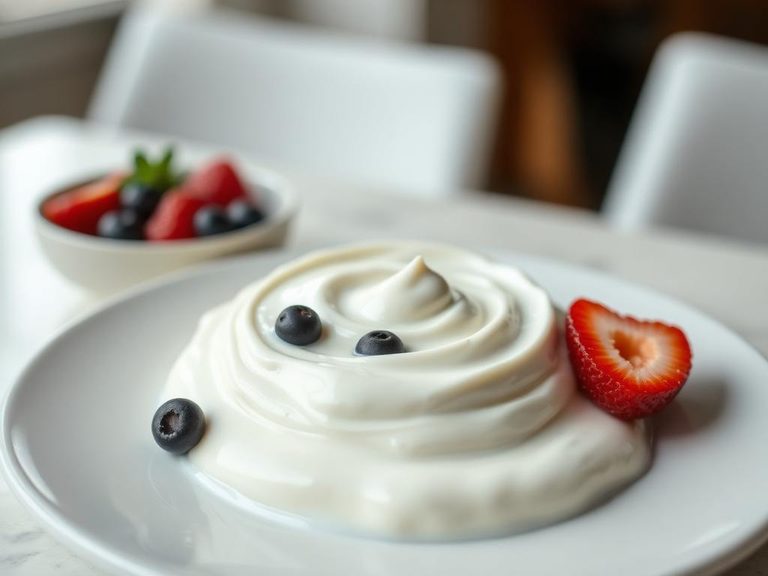
This is a smooth, spoonable dessert purée designed for infants, combining the bright, tart essence of cherries with a mellow, creamy vanilla backdrop. Its texture is uniformly silky, with no chunks, making it easy for babies to swallow. Nutritionally, it is a light treat, primarily providing quick energy from its high carbohydrate content.
Calorie split: 1% protein · 95% carbs · 4% fat
↓ Full nutrition💚 Why it's loved
Parents appreciate it as a fuss-free, mess-free dessert that babies often accept readily due to its familiar sweet taste. The comforting, mild flavor profile is a gentle way to expand a child's palate beyond plain fruits.
⚠️ Watch-outs & how to enjoy it better
The high sugar content (over 9g per 100g) can contribute to a preference for very sweet foods and poses a risk for dental cavities if consumed frequently. To counteract this, serve it as an occasional treat, not a daily staple, and always follow it with a sip of water to rinse the mouth.
Key benefits
- Provides a convenient, ready-to-eat source of energy for active toddlers.
- Introduces the classic flavor pairing of cherry and vanilla early in the diet.
- The smooth, strained texture is ideal for the transition to solid foods.
- Low in fat and protein, making it a light, non-filling snack option.
🍽️ Popular dishes
🌍 Where it's eaten
💡 Did you know?
Commercial baby food cherries are often a blend of sweet and tart varieties to achieve a balanced flavor, as pure tart cherries can be too acidic for an infant's palate.
Full nutrition (USDA data · scales with serving)
| Water | 81.5 g |
| Energy | 68.0 kcal |
| Energy | 285 kj |
| Protein | 0.20 g |
| Total lipid (fat) | 0.30 g |
| Ash | 0.20 g |
| Carbohydrate, by difference | 17.8 g |
| Fiber, total dietary | 0.30 g |
| Total Sugars | 9.2 g |
| Calcium, Ca | 5.0 mg |
| Iron, Fe | 0.19 mg |
| Magnesium, Mg | 2.0 mg |
| Phosphorus, P | 7.0 mg |
| Potassium, K | 34.0 mg |
| Sodium, Na | 0.00 mg |
| Zinc, Zn | 0.04 mg |
| Copper, Cu | 0.05 mg |
| Selenium, Se | 0.60 ug |
| Vitamin C, total ascorbic acid | 1.1 mg |
| Thiamin | 0.01 mg |
| Riboflavin | 0.01 mg |
| Niacin | 0.04 mg |
| Vitamin B-6 | 0.01 mg |
| Folate, total | 0.00 ug |
| Folic acid | 0.00 ug |
| Folate, food | 0.00 ug |
| Folate, DFE | 0.00 ug |
| Choline, total | 4.7 mg |
| Vitamin B-12 | 0.01 ug |
| Vitamin B-12, added | 0.00 ug |
| Vitamin A, RAE | 18.0 ug |
| Retinol | 6.0 ug |
| Carotene, beta | 145 ug |
| Carotene, alpha | 0.00 ug |
| Cryptoxanthin, beta | 0.00 ug |
| Vitamin A, IU | 261 iu |
| Lycopene | 0.00 ug |
| Lutein + zeaxanthin | 9.0 ug |
| Vitamin E (alpha-tocopherol) | 0.01 mg |
| Vitamin E, added | 0.00 mg |
| Vitamin D (D2 + D3), International Units | 1.0 iu |
| Vitamin D (D2 + D3) | 0.00 ug |
| Vitamin D3 (cholecalciferol) | 0.00 ug |
| Vitamin K (phylloquinone) | 0.20 ug |
| Alcohol, ethyl | 0.00 g |
| Caffeine | 0.00 mg |
| Theobromine | 0.00 mg |
Fat & fatty acid profile (per 100g)
| Fatty acids, total saturated | 0.09 g |
| SFA 4:0 | 0.00 g |
| SFA 6:0 | 0.00 g |
| SFA 8:0 | 0.00 g |
| SFA 10:0 | 0.00 g |
| SFA 12:0 | 0.00 g |
| SFA 14:0 | 0.00 g |
| SFA 16:0 | 0.06 g |
| SFA 18:0 | 0.02 g |
| Fatty acids, total monounsaturated | 0.10 g |
| MUFA 16:1 | 0.01 g |
| MUFA 18:1 | 0.10 g |
| MUFA 20:1 | 0.00 g |
| MUFA 22:1 | 0.00 g |
| Fatty acids, total polyunsaturated | 0.05 g |
| PUFA 18:2 | 0.04 g |
| PUFA 18:3 | 0.01 g |
| PUFA 18:4 | 0.00 g |
| PUFA 20:4 | 0.00 g |
| PUFA 20:5 n-3 (EPA) | 0.00 g |
| PUFA 22:5 n-3 (DPA) | 0.00 g |
| PUFA 22:6 n-3 (DHA) | 0.00 g |
| Cholesterol | 10.0 mg |
Amino acid profile (per 100g)
Estimated from Babyfood, grape juice, no sugar, canned — USDA does not publish this profile for Babyfood.
| Threonine | 0.02 g |
| Isoleucine | 0.01 g |
| Leucine | 0.02 g |
| Lysine | 0.02 g |
| Methionine | 0.03 g |
| Cystine | 0.01 g |
| Phenylalanine | 0.02 g |
| Tyrosine | 0.02 g |
| Valine | 0.02 g |
| Arginine | 0.06 g |
| Histidine | 0.03 g |
| Alanine | 0.04 g |
| Aspartic acid | 0.10 g |
| Glutamic acid | 0.18 g |
| Glycine | 0.03 g |
| Proline | 0.03 g |
| Serine | 0.04 g |
FAQ
Is this a good first food for a 6-month-old?
It's generally recommended to start with single-ingredient, low-sugar foods like plain vegetable or meat purées. This dessert, with its added sugars and mixed flavors, is better introduced after the baby is accustomed to a variety of basic tastes.
Can I mix it with other baby foods?
Yes, it can be mixed with plain cereals, oatmeal, or unsweetened yogurt to dilute the sweetness and add nutritional balance with fiber, protein, or healthy fats.
How does it compare to homemade cherry vanilla pudding?
Homemade versions allow you to control sugar, use whole milk or yogurt for added protein and fat, and avoid any preservatives. The texture may be less uniformly smooth.
Nutrient density (calculated · NRF9.3)
Nutrient Rich Foods index: beneficial nutrients (protein, fiber, vitamins, minerals) minus saturated fat, added sugar & sodium, per 100 kcal.
NRF9.3 index — Fulgoni, Keast & Drewnowski, 2009. Computed from USDA nutrients.
Weight-loss friendliness (composite index)
Energy density 0.68 kcal/g · 1% calories from protein · 0.3 g fiber · 9.2 g sugar per 100 g.
Composite of energy density (Rolls et al., 1999), protein & fiber satiety, minus sugar. A calculated heuristic — ranks satiety-per-calorie, not a clinical measure.
Dietary load (calculated from USDA values)
Potential renal acid load. Positive = acid-forming, negative = alkaline-forming.
Sodium-to-potassium ratio: 0.00 (lower is better — aim for ≤ 1)
Sodium:potassium per WHO potassium guidance. Computed from USDA nutrients.