

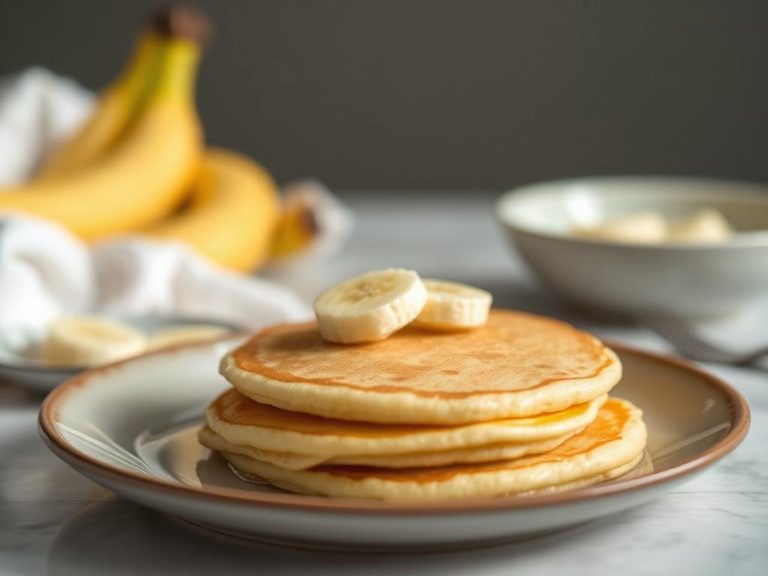
Babyfood, banana juice with low fat yogurt
Whole food · Baby Foods

Photo: Wikipedia
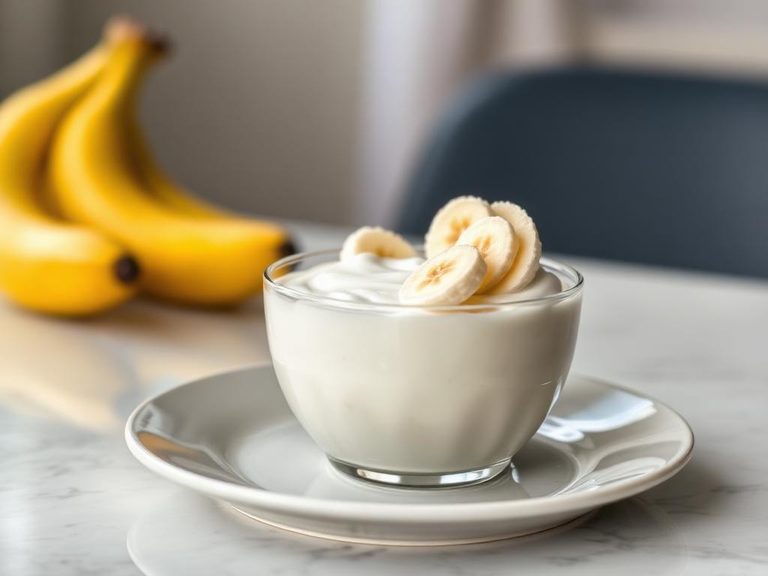
A smooth, creamy blend of ripe banana purée and low-fat yogurt, this baby food offers a naturally sweet, mild flavor with a velvety texture. It's a gentle introduction to solid foods, providing a quick source of energy from carbohydrates and a touch of protein for growing bodies.
Calorie split: 11% protein · 80% carbs · 8% fat
↓ Full nutrition💚 Why it's loved
Parents love it for its simplicity and the fact that it's a two-ingredient food that babies often accept readily. The familiar, comforting sweetness of banana pairs perfectly with the subtle tang of yogurt, making it a reliable mealtime win.
⚠️ Watch-outs & how to enjoy it better
The high natural sugar content (13.28g per 100g) can cause rapid blood sugar spikes, especially in toddlers. To counteract this, always serve it alongside a source of protein or healthy fat, like a sprinkle of chia seeds or a side of soft scrambled egg, to slow sugar absorption.
Key benefits
- Provides quick energy from natural fruit sugars.
- Contains probiotics from yogurt for gut health.
- Offers a mild, palatable first food for infants.
- Naturally sweet without added sugars.
- Good source of potassium from banana.
🍽️ Popular dishes
🌍 Where it's eaten
💡 Did you know?
The banana and yogurt combination is a classic 'stage 1' baby food in many Western countries, but the concept of fermented dairy with fruit is ancient, with roots in Central Asian and Middle Eastern cuisines.
Full nutrition (USDA data · scales with serving)
| Water | 78.5 g |
| Energy | 86.0 kcal |
| Energy | 358 kj |
| Protein | 2.5 g |
| Total lipid (fat) | 0.80 g |
| Ash | 0.66 g |
| Carbohydrate, by difference | 17.5 g |
| Fiber, total dietary | 0.40 g |
| Total Sugars | 13.3 g |
| Calcium, Ca | 79.0 mg |
| Iron, Fe | 0.20 mg |
| Magnesium, Mg | 10.0 mg |
| Phosphorus, P | 65.0 mg |
| Potassium, K | 160 mg |
| Sodium, Na | 37.0 mg |
| Zinc, Zn | 0.14 mg |
| Copper, Cu | 0.03 mg |
| Selenium, Se | 1.6 ug |
| Vitamin C, total ascorbic acid | 33.9 mg |
| Thiamin | 0.03 mg |
| Riboflavin | 0.10 mg |
| Niacin | 0.27 mg |
| Vitamin B-6 | 0.12 mg |
| Folate, total | 6.0 ug |
| Folic acid | 0.00 ug |
| Folate, food | 6.0 ug |
| Folate, DFE | 6.0 ug |
| Choline, total | 11.4 mg |
| Vitamin B-12 | 0.43 ug |
| Vitamin B-12, added | 0.00 ug |
| Vitamin A, RAE | 6.0 ug |
| Retinol | 5.0 ug |
| Carotene, beta | 5.0 ug |
| Carotene, alpha | 3.0 ug |
| Cryptoxanthin, beta | 0.00 ug |
| Vitamin A, IU | 28.0 iu |
| Lycopene | 0.00 ug |
| Lutein + zeaxanthin | 16.0 ug |
| Vitamin E (alpha-tocopherol) | 0.05 mg |
| Vitamin E, added | 0.00 mg |
| Vitamin D (D2 + D3), International Units | 1.0 iu |
| Vitamin D (D2 + D3) | 0.00 ug |
| Vitamin D3 (cholecalciferol) | 0.00 ug |
| Vitamin K (phylloquinone) | 0.40 ug |
| Alcohol, ethyl | 0.00 g |
| Caffeine | 0.00 mg |
| Theobromine | 0.00 mg |
Fat & fatty acid profile (per 100g)
| Fatty acids, total saturated | 0.52 g |
| SFA 4:0 | 0.03 g |
| SFA 6:0 | 0.02 g |
| SFA 8:0 | 0.01 g |
| SFA 10:0 | 0.02 g |
| SFA 12:0 | 0.03 g |
| SFA 14:0 | 0.08 g |
| SFA 16:0 | 0.22 g |
| SFA 18:0 | 0.08 g |
| Fatty acids, total monounsaturated | 0.22 g |
| MUFA 16:1 | 0.02 g |
| MUFA 18:1 | 0.18 g |
| MUFA 20:1 | 0.00 g |
| MUFA 22:1 | 0.00 g |
| Fatty acids, total polyunsaturated | 0.02 g |
| PUFA 18:2 | 0.01 g |
| PUFA 18:3 | 0.01 g |
| PUFA 18:4 | 0.00 g |
| PUFA 20:4 | 0.00 g |
| PUFA 20:5 n-3 (EPA) | 0.00 g |
| PUFA 22:5 n-3 (DPA) | 0.00 g |
| PUFA 22:6 n-3 (DHA) | 0.00 g |
| Cholesterol | 3.0 mg |
Amino acid profile (per 100g)
Estimated from Babyfood, grape juice, no sugar, canned — USDA does not publish this profile for Babyfood.
| Threonine | 0.02 g |
| Isoleucine | 0.01 g |
| Leucine | 0.02 g |
| Lysine | 0.02 g |
| Methionine | 0.03 g |
| Cystine | 0.01 g |
| Phenylalanine | 0.02 g |
| Tyrosine | 0.02 g |
| Valine | 0.02 g |
| Arginine | 0.06 g |
| Histidine | 0.03 g |
| Alanine | 0.04 g |
| Aspartic acid | 0.10 g |
| Glutamic acid | 0.18 g |
| Glycine | 0.03 g |
| Proline | 0.03 g |
| Serine | 0.04 g |
FAQ
Can I make this at home?
Yes, simply mash a very ripe banana and stir it into plain, unsweetened low-fat yogurt. This avoids any additives and lets you control the texture.
Is this a good source of protein for my baby?
At 2.5g per 100g, it provides some protein, but it's not a primary source. It's best paired with other protein-rich foods like pureed meats, legumes, or eggs as part of a balanced diet.
When can I introduce this to my baby?
It's typically introduced around 6 months, when a baby starts solids. Always consult your pediatrician first, especially if there's a family history of dairy allergies.
Nutrient density (calculated · NRF9.3)
Nutrient Rich Foods index: beneficial nutrients (protein, fiber, vitamins, minerals) minus saturated fat, added sugar & sodium, per 100 kcal.
NRF9.3 index — Fulgoni, Keast & Drewnowski, 2009. Computed from USDA nutrients.
Weight-loss friendliness (composite index)
Energy density 0.86 kcal/g · 12% calories from protein · 0.4 g fiber · 13.3 g sugar per 100 g.
Composite of energy density (Rolls et al., 1999), protein & fiber satiety, minus sugar. A calculated heuristic — ranks satiety-per-calorie, not a clinical measure.
Dietary load (calculated from USDA values)
Potential renal acid load. Positive = acid-forming, negative = alkaline-forming.
Sodium-to-potassium ratio: 0.23 (lower is better — aim for ≤ 1)
Sodium:potassium per WHO potassium guidance. Computed from USDA nutrients.