

Baby Toddler prunes
Common food

Photo: Wikipedia
These are soft, pitted, and often pureed or finely chopped dried plums, specifically prepared for babies and toddlers. They have a naturally sweet, deep, and slightly tangy flavor with a smooth, sticky, or jam-like texture that's easy for little mouths to manage. Nutritionally, they are a concentrated source of quick energy from natural sugars and provide a notable boost of dietary fiber for their size.
Calorie split: 4% protein · 94% carbs · 2% fat
↓ Full nutrition💚 Why it's loved
Parents love it as a trusted, gentle first food and a natural way to support a toddler's digestion. The intense, jammy sweetness is a hit with kids, making it a reliable snack for on-the-go energy.
⚠️ Watch-outs & how to enjoy it better
The high natural sugar content (14g per 100g) can contribute to blood sugar spikes if eaten in large, isolated portions. To counteract this, pair it with a source of protein or fat, like a few bites of cheese or a smear of nut butter on a cracker, to slow sugar absorption. The sticky texture also poses a choking hazard for very young babies; always serve in an age-appropriate form, such as a smooth puree or very finely minced.
Key benefits
- Excellent source of dietary fiber for digestive regularity.
- Provides quick, natural energy from carbohydrates.
- Contains potassium, an essential electrolyte.
- No added sugars or artificial ingredients in pure forms.
- A convenient, portable, and mess-free snack.
🍽️ Popular dishes
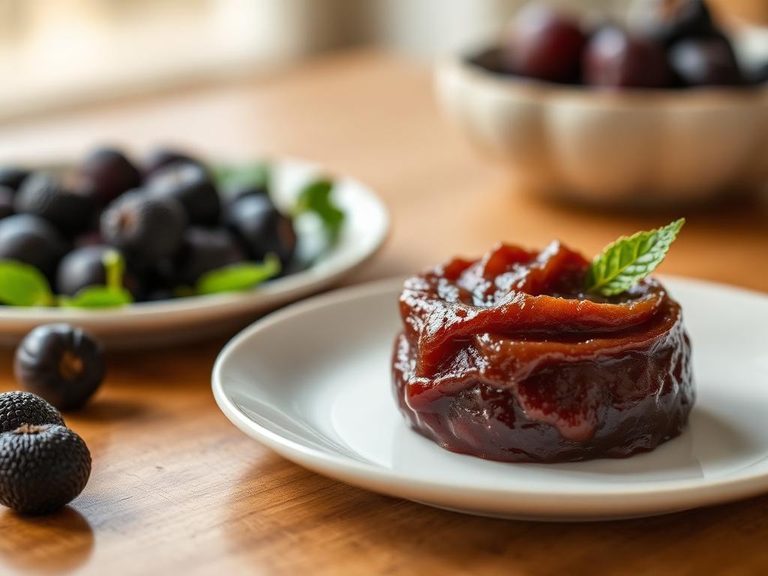
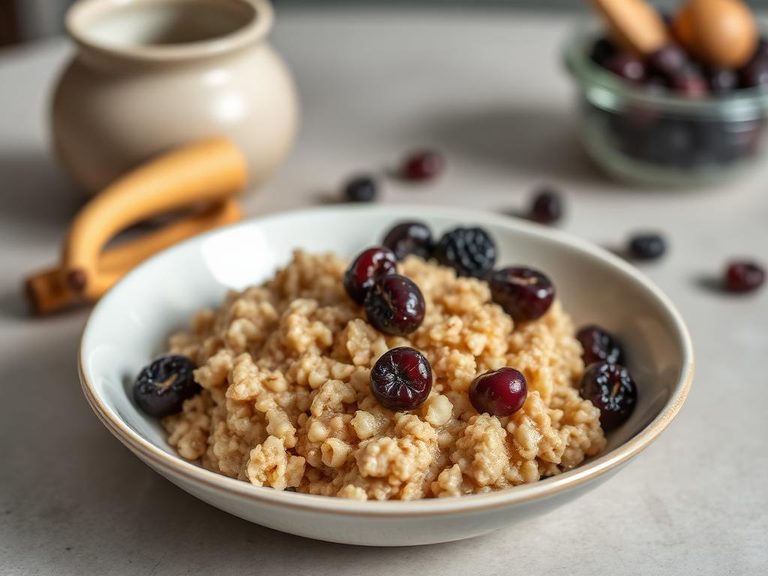
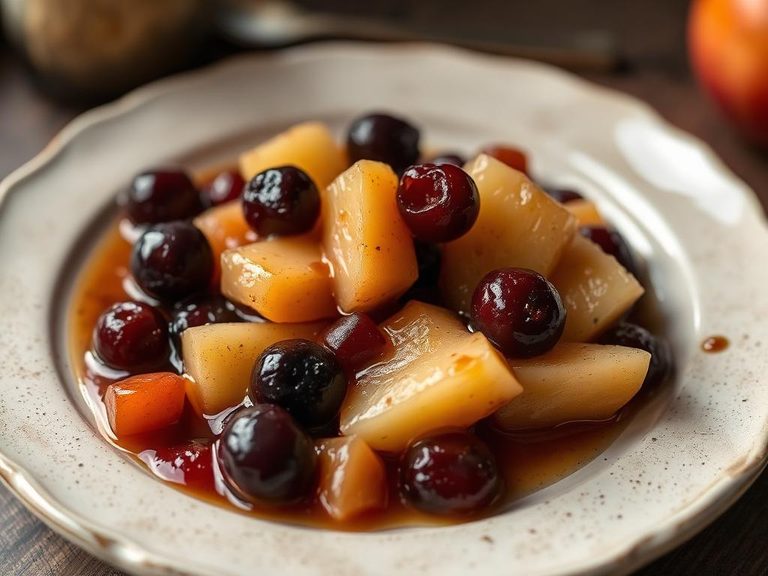
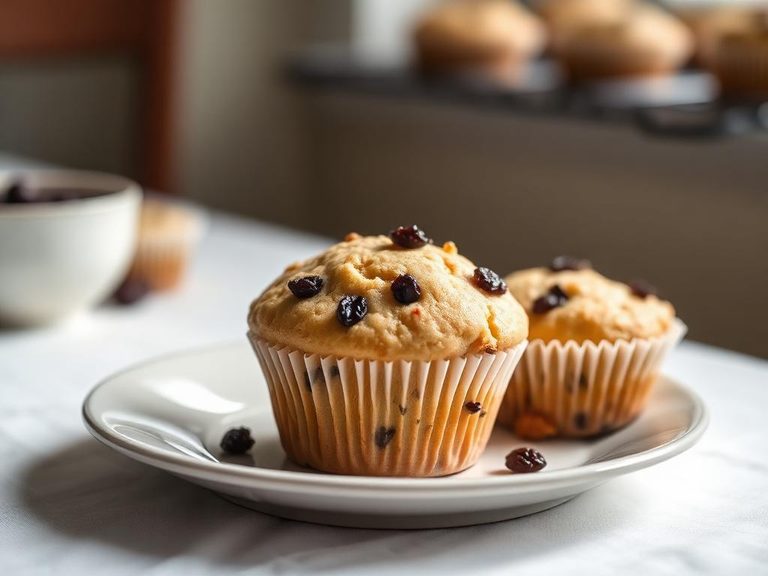
🌍 Where it's eaten
💡 Did you know?
The name 'prune' for the dried plum is thought to derive from the Latin word 'pruna,' which itself came from the Greek 'proumnon.'
Full nutrition (USDA data · scales with serving)
| Water | 74.3 g |
| Energy | 100 kcal |
| Protein | 1.0 g |
| Total lipid (fat) | 0.20 g |
| Carbohydrate, by difference | 23.5 g |
| Fiber, total dietary | 2.7 g |
| Total Sugars | 14.3 g |
| Calcium, Ca | 21.0 mg |
| Iron, Fe | 0.40 mg |
| Magnesium, Mg | 17.0 mg |
| Phosphorus, P | 30.0 mg |
| Potassium, K | 306 mg |
| Sodium, Na | 1.0 mg |
| Zinc, Zn | 0.20 mg |
| Copper, Cu | 0.16 mg |
| Selenium, Se | 0.80 ug |
| Vitamin C, total ascorbic acid | 1.3 mg |
| Thiamin | 0.02 mg |
| Riboflavin | 0.21 mg |
| Niacin | 0.72 mg |
| Vitamin B-6 | 0.11 mg |
| Folate, total | 1.0 ug |
| Folic acid | 0.00 ug |
| Folate, food | 1.0 ug |
| Folate, DFE | 1.0 ug |
| Choline, total | 3.7 mg |
| Vitamin B-12 | 0.00 ug |
| Vitamin B-12, added | 0.00 ug |
| Vitamin A, RAE | 3.0 ug |
| Retinol | 0.00 ug |
| Carotene, beta | 30.0 ug |
| Carotene, alpha | 4.0 ug |
| Cryptoxanthin, beta | 7.0 ug |
| Lycopene | 0.00 ug |
| Lutein + zeaxanthin | 55.0 ug |
| Vitamin E (alpha-tocopherol) | 0.55 mg |
| Vitamin E, added | 0.00 mg |
| Vitamin D (D2 + D3) | 0.00 ug |
| Vitamin K (phylloquinone) | 22.1 ug |
| Alcohol, ethyl | 0.00 g |
| Caffeine | 0.00 mg |
| Theobromine | 0.00 mg |
Fat & fatty acid profile (per 100g)
| Fatty acids, total saturated | 0.02 g |
| SFA 4:0 | 0.00 g |
| SFA 6:0 | 0.00 g |
| SFA 8:0 | 0.00 g |
| SFA 10:0 | 0.00 g |
| SFA 12:0 | 0.00 g |
| SFA 14:0 | 0.00 g |
| SFA 16:0 | 0.01 g |
| SFA 18:0 | 0.00 g |
| Fatty acids, total monounsaturated | 0.13 g |
| MUFA 16:1 | 0.00 g |
| MUFA 18:1 | 0.13 g |
| MUFA 20:1 | 0.00 g |
| MUFA 22:1 | 0.00 g |
| Fatty acids, total polyunsaturated | 0.04 g |
| PUFA 18:2 | 0.04 g |
| PUFA 18:3 | 0.00 g |
| PUFA 18:4 | 0.00 g |
| PUFA 20:4 | 0.00 g |
| PUFA 20:5 n-3 (EPA) | 0.00 g |
| PUFA 22:5 n-3 (DPA) | 0.00 g |
| PUFA 22:6 n-3 (DHA) | 0.00 g |
| Cholesterol | 0.00 mg |
Amino acid profile (per 100g)
Estimated from Babyfood, dinner, chicken stew, toddler — USDA does not publish this profile for Baby Toddler prunes.
| Tryptophan | 0.06 g |
| Threonine | 0.22 g |
| Isoleucine | 0.26 g |
| Leucine | 0.41 g |
| Lysine | 0.41 g |
| Methionine | 0.11 g |
| Cystine | 0.05 g |
| Phenylalanine | 0.21 g |
| Tyrosine | 0.17 g |
| Valine | 0.29 g |
| Arginine | 0.33 g |
| Histidine | 0.13 g |
| Alanine | 0.30 g |
| Aspartic acid | 0.47 g |
| Glutamic acid | 0.90 g |
| Glycine | 0.29 g |
| Proline | 0.35 g |
| Serine | 0.21 g |
FAQ
At what age can I introduce baby prunes?
Prune puree is often introduced around 6 months, when a baby starts solids. It's a common first food due to its smooth texture and natural sweetness. Always consult your pediatrician.
Are baby prunes just regular prunes?
Not exactly. Baby prunes are typically pitted, steamed, and pureed or finely minced to a very soft consistency without added sugars, salts, or preservatives. Regular dried prunes are whole and can be chewy.
How should I store opened baby prunes?
Transfer any unused portion from the jar or pouch to a clean, airtight container. Refrigerate immediately and use within 2-3 days. For pouches, you can also freeze individual portions in ice cube trays.
Nutrient density (calculated · NRF9.3)
Nutrient Rich Foods index: beneficial nutrients (protein, fiber, vitamins, minerals) minus saturated fat, added sugar & sodium, per 100 kcal.
NRF9.3 index — Fulgoni, Keast & Drewnowski, 2009. Computed from USDA nutrients.
Weight-loss friendliness (composite index)
Energy density 1.00 kcal/g · 4% calories from protein · 2.7 g fiber · 14.3 g sugar per 100 g.
Composite of energy density (Rolls et al., 1999), protein & fiber satiety, minus sugar. A calculated heuristic — ranks satiety-per-calorie, not a clinical measure.
Dietary load (calculated from USDA values)
Potential renal acid load. Positive = acid-forming, negative = alkaline-forming.
Sodium-to-potassium ratio: 0.00 (lower is better — aim for ≤ 1)
Sodium:potassium per WHO potassium guidance. Computed from USDA nutrients.