

Prune Puree
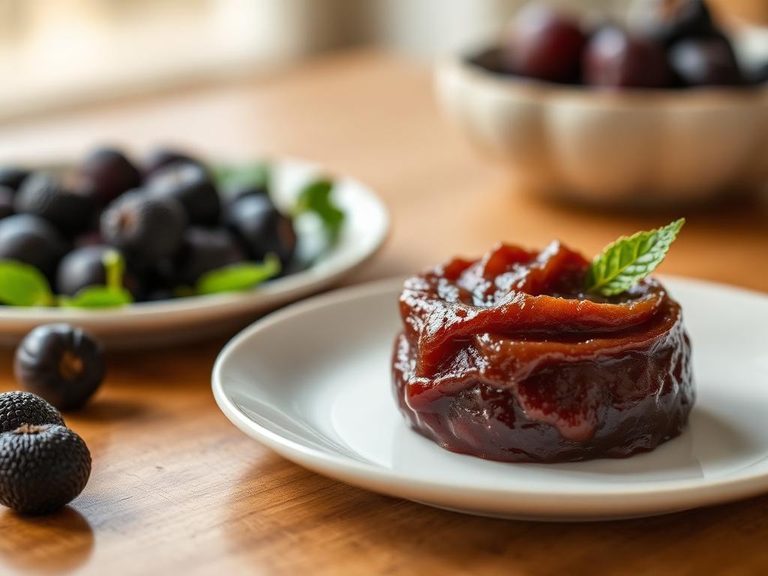
Prune puree is a smooth, thick paste made from cooked and blended dried prunes (plums), often sweetened with a touch of sugar or lemon juice. It's a staple ingredient in baking, used as a natural sweetener, fat substitute, or digestive aid, and is also enjoyed as a simple, fiber-rich spread or baby food. The dish has roots in European and American home cooking, particularly in health-conscious and vintage recipes.
🍽️ Nutrition at a glance
Prune puree is high in carbohydrates, primarily from natural sugars and fiber, with negligible fat and a small amount of protein. A typical serving provides significant dietary fiber, potassium, and antioxidants like vitamin A.
Nutrition breakdown
| Calories | 130 kcal |
| Protein | 1.5 g |
| Carbs | 32 g |
| Fat | 0 g |
| Fiber | 4 g |
| Sugar | 22 g |
| Sodium | 2 mg |
| Potassium | 350 mg |
| Vitamin A | 450 IU |
| Vitamin K | 12 mcg |
| Iron | 1.0 mg |
| Magnesium | 20 mg |
| Vitamin B6 | 0.1 mg |
| Manganese | 0.2 mg |
| Copper | 0.1 mg |
Per 1/4 cup (60 g) · estimated, varies by recipe
💡 What's interesting
Culturally, prune puree is a classic 'secret ingredient' in baking, famously used to replace butter or oil in brownies and cakes for a moist texture. Nutritionally, it's renowned for its high sorbitol content, a natural sugar alcohol that acts as a gentle laxative, making it a traditional home remedy for digestive health.
🍽️ Related dishes

AI estimate may be inaccurate · Terms