

Almonds, flavored
Common food

Photo: Wikipedia
Flavored almonds are whole or sliced almonds coated in a variety of sweet or savory seasonings, from honey-roasted to wasabi. They offer a satisfying crunch with a burst of added flavor, transforming a simple nut into an indulgent snack. Nutritionally, they remain a dense source of healthy fats and protein, though the coating adds extra carbohydrates and calories.
Calorie split: 13% protein · 13% carbs · 75% fat
↓ Full nutrition💚 Why it's loved
People love them for the addictive combination of a satisfying crunch and bold, often sweet or spicy, flavors that make healthy snacking feel like a treat. They are a versatile pantry staple, perfect for snacking, topping salads, or adding to trail mix.
⚠️ Watch-outs & how to enjoy it better
The added coatings, often high in sugar and sodium, can contribute to blood sugar spikes and excess calorie intake, which is a concern for those managing weight or blood sugar. As a common allergen, they are unsafe for those with tree nut allergies. To mitigate, practice strict portion control (stick to 1 oz/28g) and pair with a source of protein or fat (like cheese or Greek yogurt) to slow sugar absorption.
Key benefits
- Excellent source of monounsaturated fats for heart health.
- Provides a substantial 20g of plant-based protein per 100g.
- High in fiber (10.4g) to promote satiety and digestive health.
- Rich in vitamin E, an important antioxidant.
- Offers a convenient, portable source of energy and nutrients.
🍽️ Popular dishes
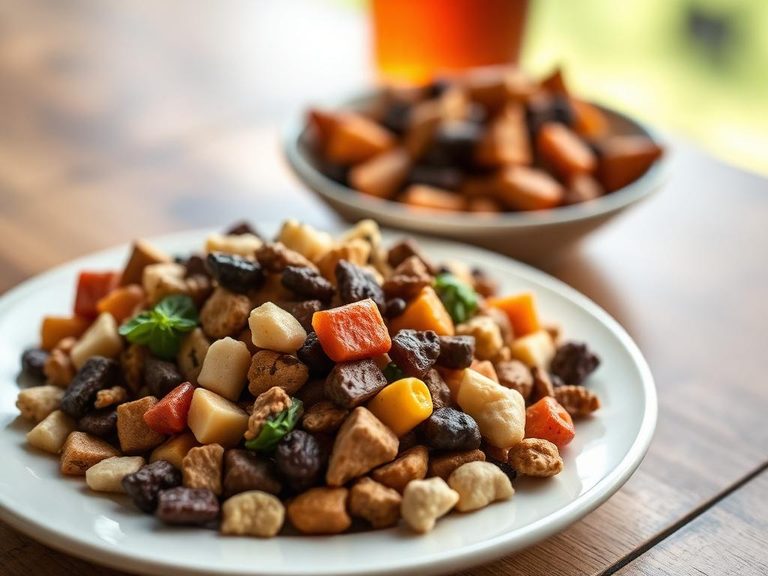

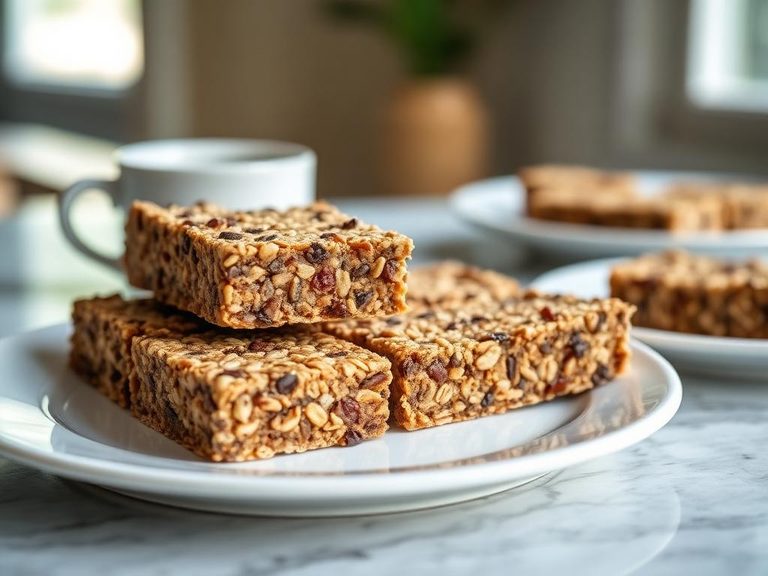
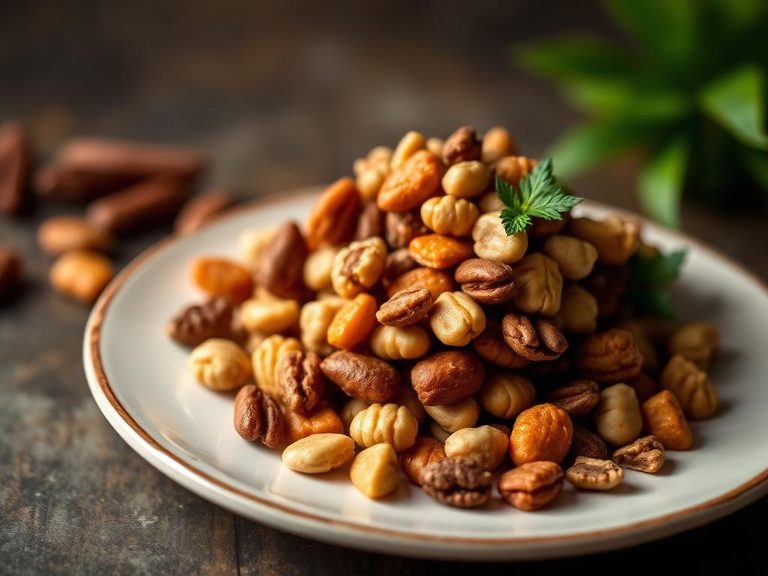
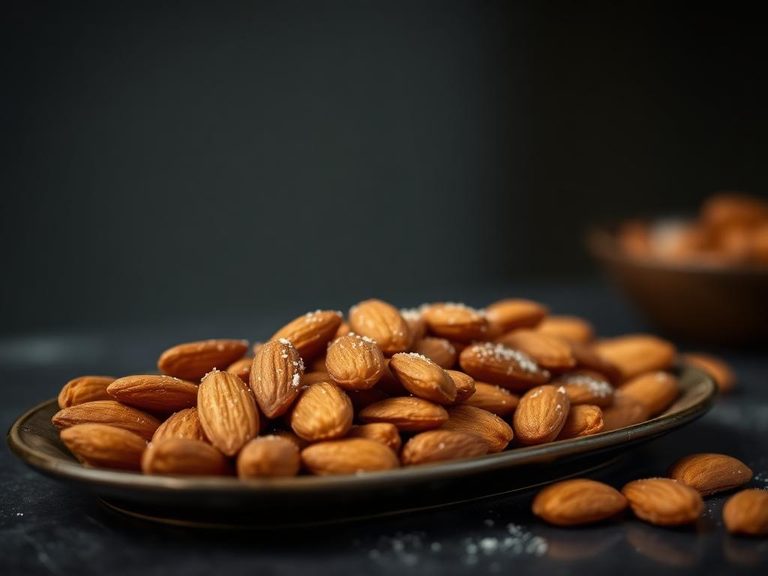

🌍 Where it's eaten
💡 Did you know?
Almonds are technically not true nuts but are the seeds of a fruit, and they are one of the earliest domesticated tree nuts, with evidence of cultivation dating back to 3000 BCE in the Near East.
Full nutrition (USDA data · scales with serving)
| Water | 2.3 g |
| Energy | 599 kcal |
| Protein | 20.1 g |
| Total lipid (fat) | 53.3 g |
| Carbohydrate, by difference | 20.1 g |
| Fiber, total dietary | 10.4 g |
| Total Sugars | 4.7 g |
| Calcium, Ca | 257 mg |
| Iron, Fe | 3.6 mg |
| Magnesium, Mg | 267 mg |
| Phosphorus, P | 451 mg |
| Potassium, K | 683 mg |
| Sodium, Na | 500 mg |
| Zinc, Zn | 3.2 mg |
| Copper, Cu | 1.1 mg |
| Selenium, Se | 1.9 ug |
| Vitamin C, total ascorbic acid | 0.00 mg |
| Thiamin | 0.07 mg |
| Riboflavin | 1.1 mg |
| Niacin | 3.5 mg |
| Vitamin B-6 | 0.13 mg |
| Folate, total | 53.0 ug |
| Folic acid | 0.00 ug |
| Folate, food | 53.0 ug |
| Folate, DFE | 53.0 ug |
| Choline, total | 49.9 mg |
| Vitamin B-12 | 0.00 ug |
| Vitamin B-12, added | 0.00 ug |
| Vitamin A, RAE | 0.00 ug |
| Retinol | 0.00 ug |
| Carotene, beta | 1.0 ug |
| Carotene, alpha | 0.00 ug |
| Cryptoxanthin, beta | 0.00 ug |
| Lycopene | 0.00 ug |
| Lutein + zeaxanthin | 1.0 ug |
| Vitamin E (alpha-tocopherol) | 23.4 mg |
| Vitamin E, added | 0.00 mg |
| Vitamin D (D2 + D3) | 0.00 ug |
| Vitamin K (phylloquinone) | 3.0 ug |
| Alcohol, ethyl | 0.00 g |
| Caffeine | 0.00 mg |
| Theobromine | 0.00 mg |
Fat & fatty acid profile (per 100g)
| Fatty acids, total saturated | 4.3 g |
| SFA 4:0 | 0.00 g |
| SFA 6:0 | 0.00 g |
| SFA 8:0 | 0.00 g |
| SFA 10:0 | 0.00 g |
| SFA 12:0 | 0.00 g |
| SFA 14:0 | 0.02 g |
| SFA 16:0 | 3.5 g |
| SFA 18:0 | 0.76 g |
| Fatty acids, total monounsaturated | 32.9 g |
| MUFA 16:1 | 0.26 g |
| MUFA 18:1 | 32.6 g |
| MUFA 20:1 | 0.03 g |
| MUFA 22:1 | 0.00 g |
| Fatty acids, total polyunsaturated | 13.5 g |
| PUFA 18:2 | 13.4 g |
| PUFA 18:3 | 0.14 g |
| PUFA 18:4 | 0.00 g |
| PUFA 20:4 | 0.00 g |
| PUFA 20:5 n-3 (EPA) | 0.00 g |
| PUFA 22:5 n-3 (DPA) | 0.00 g |
| PUFA 22:6 n-3 (DHA) | 0.00 g |
| Cholesterol | 0.00 mg |
Amino acid profile (per 100g)
Estimated from Nuts, almonds, honey roasted, unblanched — USDA does not publish this profile for Almonds.
| Tryptophan | 0.28 g |
| Threonine | 0.57 g |
| Isoleucine | 0.68 g |
| Leucine | 1.2 g |
| Lysine | 0.52 g |
| Methionine | 0.18 g |
| Cystine | 0.28 g |
| Phenylalanine | 0.87 g |
| Tyrosine | 0.55 g |
| Valine | 0.80 g |
| Arginine | 1.9 g |
| Histidine | 0.43 g |
| Alanine | 0.74 g |
| Aspartic acid | 1.8 g |
| Glutamic acid | 4.6 g |
| Glycine | 0.96 g |
| Proline | 0.98 g |
| Serine | 0.70 g |
FAQ
Are flavored almonds as healthy as plain almonds?
While they retain the core nutrients of almonds (healthy fats, protein, fiber), the coatings add significant sugar, salt, and sometimes unhealthy fats, making them a less healthy choice than plain almonds, especially in large quantities.
How can I make flavored almonds at home?
You can toss plain almonds with a small amount of oil (like olive or avocado oil), your chosen spices (e.g., cinnamon, paprika, garlic powder), and a touch of sweetener (like maple syrup or honey), then roast them at 350°F (175°C) for 10-15 minutes.
What is the best way to store flavored almonds?
Store them in an airtight container in a cool, dry place. For longer shelf life, especially for sweet varieties, you can refrigerate them to prevent the oils from going rancid and to keep the coating fresh.
Nutrient density (calculated · NRF9.3)
Nutrient Rich Foods index: beneficial nutrients (protein, fiber, vitamins, minerals) minus saturated fat, added sugar & sodium, per 100 kcal.
NRF9.3 index — Fulgoni, Keast & Drewnowski, 2009. Computed from USDA nutrients.
Weight-loss friendliness (composite index)
Energy density 5.99 kcal/g · 13% calories from protein · 10.4 g fiber · 4.7 g sugar per 100 g.
Composite of energy density (Rolls et al., 1999), protein & fiber satiety, minus sugar. A calculated heuristic — ranks satiety-per-calorie, not a clinical measure.
Dietary load (calculated from USDA values)
Potential renal acid load. Positive = acid-forming, negative = alkaline-forming.
Sodium-to-potassium ratio: 0.73 (lower is better — aim for ≤ 1)
Sodium:potassium per WHO potassium guidance. Computed from USDA nutrients.