

Yogurt, whole milk, fruit
Common food
Whole milk fruit yogurt is a creamy, cultured dairy product blended with fruit puree or pieces, offering a sweet-tart balance and a smooth, spoonable texture. It provides a notable 3.34g of protein per 100g, alongside a significant 14.43g of carbohydrates, mostly from the natural milk sugars (lactose) and added fruit sugars. The whole milk base contributes a rich mouthfeel and 3.86g of fat, which helps with the absorption of fat-soluble vitamins.
Calorie split: 13% protein · 55% carbs · 33% fat
↓ Full nutrition💚 Why it's loved
People love it for the harmonious marriage of tangy, fermented dairy and bright, sweet fruit flavors, making it a comforting yet refreshing treat. Its versatility is key—it’s a go-to breakfast, a portable snack, or a base for smoothies and desserts, deeply embedded in daily routines from school lunches to post-workout recovery.
⚠️ Watch-outs & how to enjoy it better
The high sugar content (10.31g per 100g) can cause rapid blood-sugar spikes, which is a concern for those managing diabetes or insulin resistance. As a dairy product, it contains lactose and milk proteins (casein, whey), common allergens for some individuals. To mitigate sugar spikes, pair a smaller portion with a source of fiber (like nuts or seeds) or additional protein to slow digestion.
Key benefits
- Provides calcium and phosphorus for bone health.
- Contains probiotics from live active cultures, supporting gut microbiome.
- Offers a complete protein source with all essential amino acids.
- The fat content aids in satiety and nutrient absorption.
- A convenient source of quick energy from carbohydrates.
🍽️ Popular dishes
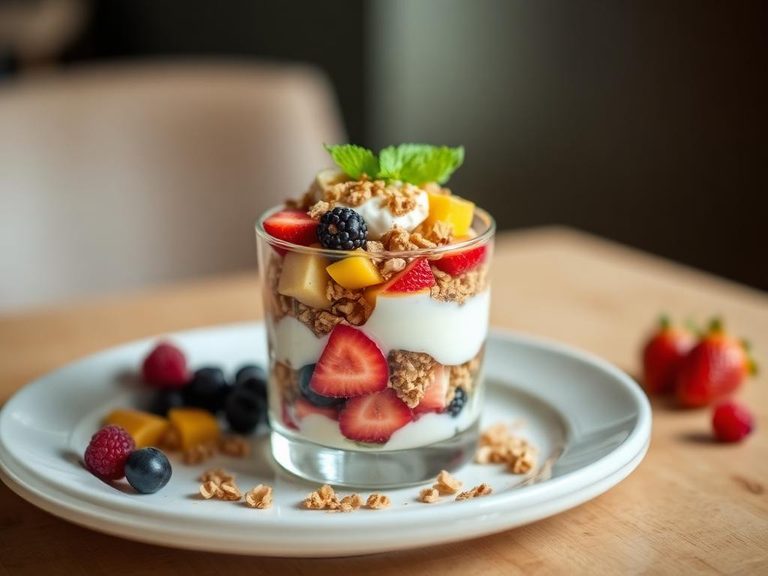
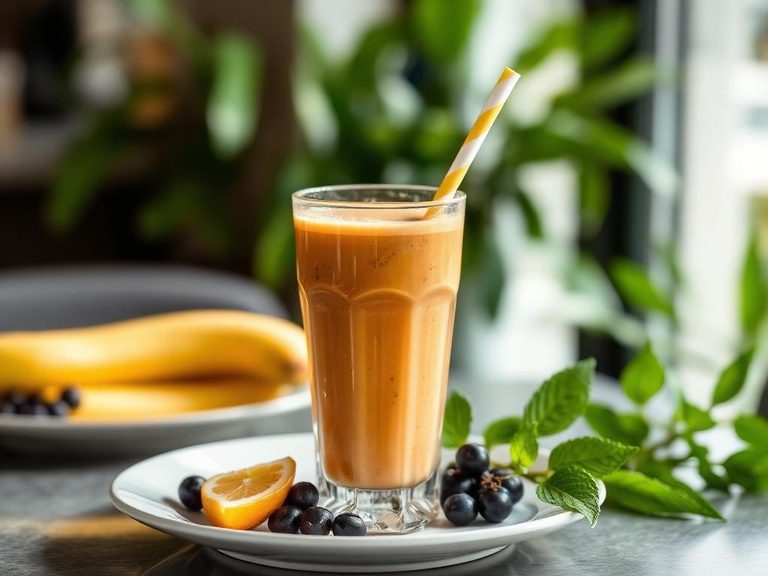

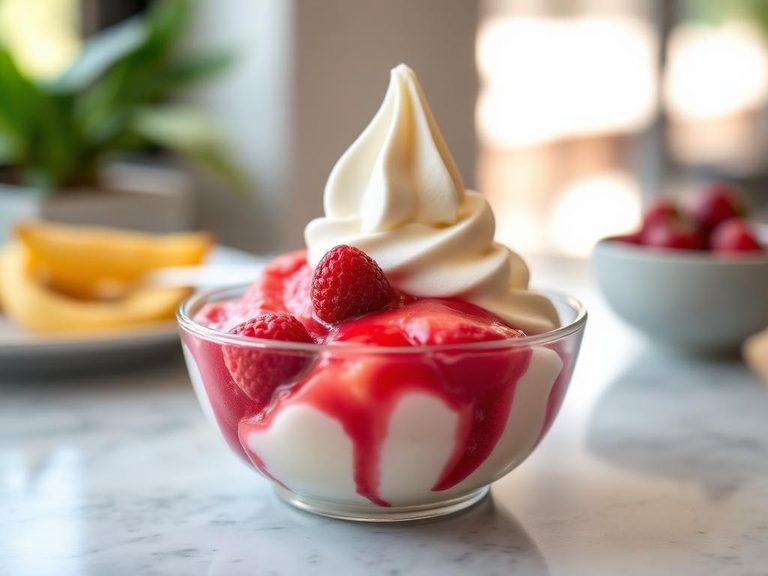
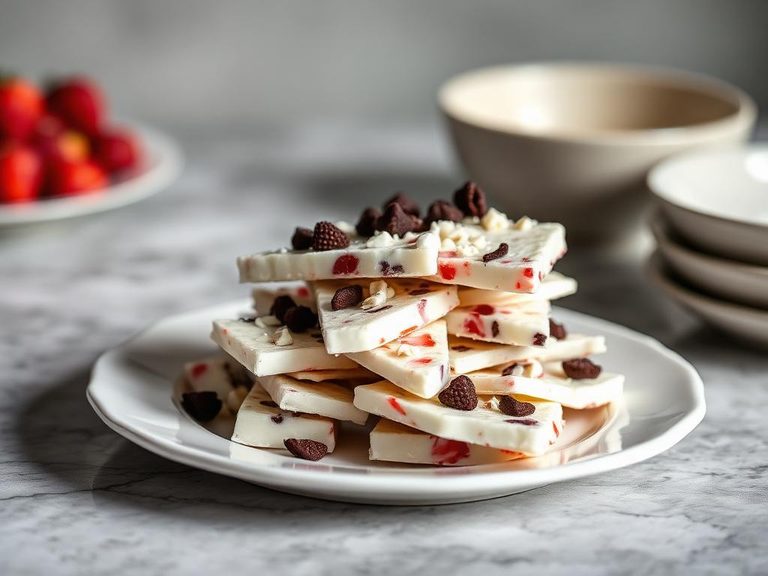
🌍 Where it's eaten
💡 Did you know?
The fruit at the bottom of many commercial yogurts was originally a marketing innovation from the 1940s by Danone, designed to keep the fruit fresh and the yogurt creamy until the consumer stirred it.
Full nutrition (USDA data · scales with serving)
| Water | 77.6 g |
| Energy | 106 kcal |
| Protein | 3.3 g |
| Total lipid (fat) | 3.9 g |
| Carbohydrate, by difference | 14.4 g |
| Fiber, total dietary | 0.20 g |
| Total Sugars | 10.3 g |
| Calcium, Ca | 112 mg |
| Iron, Fe | 0.07 mg |
| Magnesium, Mg | 10.0 mg |
| Phosphorus, P | 90.0 mg |
| Potassium, K | 152 mg |
| Sodium, Na | 41.0 mg |
| Zinc, Zn | 0.38 mg |
| Copper, Cu | 0.02 mg |
| Selenium, Se | 2.2 ug |
| Vitamin C, total ascorbic acid | 1.7 mg |
| Thiamin | 0.05 mg |
| Riboflavin | 0.22 mg |
| Niacin | 0.12 mg |
| Vitamin B-6 | 0.04 mg |
| Folate, total | 8.0 ug |
| Folic acid | 0.00 ug |
| Folate, food | 8.0 ug |
| Folate, DFE | 8.0 ug |
| Choline, total | 14.5 mg |
| Vitamin B-12 | 0.32 ug |
| Vitamin B-12, added | 0.00 ug |
| Vitamin A, RAE | 41.0 ug |
| Retinol | 41.0 ug |
| Carotene, beta | 0.00 ug |
| Carotene, alpha | 0.00 ug |
| Cryptoxanthin, beta | 0.00 ug |
| Lycopene | 0.00 ug |
| Lutein + zeaxanthin | 0.00 ug |
| Vitamin E (alpha-tocopherol) | 0.07 mg |
| Vitamin E, added | 0.00 mg |
| Vitamin D (D2 + D3) | 1.2 ug |
| Vitamin K (phylloquinone) | 0.20 ug |
| Alcohol, ethyl | 0.00 g |
| Caffeine | 0.00 mg |
| Theobromine | 0.00 mg |
Fat & fatty acid profile (per 100g)
| Fatty acids, total saturated | 2.0 g |
| SFA 4:0 | 0.08 g |
| SFA 6:0 | 0.06 g |
| SFA 8:0 | 0.04 g |
| SFA 10:0 | 0.08 g |
| SFA 12:0 | 0.10 g |
| SFA 14:0 | 0.33 g |
| SFA 16:0 | 0.92 g |
| SFA 18:0 | 0.32 g |
| Fatty acids, total monounsaturated | 0.76 g |
| MUFA 16:1 | 0.06 g |
| MUFA 18:1 | 0.66 g |
| MUFA 20:1 | 0.00 g |
| MUFA 22:1 | 0.00 g |
| Fatty acids, total polyunsaturated | 0.08 g |
| PUFA 18:2 | 0.07 g |
| PUFA 18:3 | 0.02 g |
| PUFA 18:4 | 0.00 g |
| PUFA 20:4 | 0.00 g |
| PUFA 20:5 n-3 (EPA) | 0.00 g |
| PUFA 22:5 n-3 (DPA) | 0.00 g |
| PUFA 22:6 n-3 (DHA) | 0.00 g |
| Cholesterol | 12.0 mg |
Amino acid profile (per 100g)
Estimated from Frozen yogurts, vanilla, soft-serve — USDA does not publish this profile for Yogurt.
| Tryptophan | 0.05 g |
| Threonine | 0.17 g |
| Isoleucine | 0.23 g |
| Leucine | 0.37 g |
| Lysine | 0.30 g |
| Methionine | 0.09 g |
| Cystine | 0.04 g |
| Phenylalanine | 0.18 g |
| Tyrosine | 0.18 g |
| Valine | 0.25 g |
| Arginine | 0.14 g |
| Histidine | 0.10 g |
| Alanine | 0.13 g |
| Aspartic acid | 0.28 g |
| Glutamic acid | 0.79 g |
| Glycine | 0.08 g |
| Proline | 0.36 g |
| Serine | 0.20 g |
FAQ
Is the sugar in fruit yogurt all added sugar?
No. The sugar content is a combination of naturally occurring lactose from the milk and fructose from the fruit, plus any added cane sugar or sweeteners. The label will break this down into 'total sugars' and 'added sugars.'
Why does the texture vary between brands?
Texture differences come from the fermentation time, the specific bacterial cultures used, and processing methods like straining (to make Greek-style) or homogenization. Some brands also add thickeners like pectin or gelatin.
Can I use this yogurt in cooking if it's not plain?
Yes, but the added sugar and fruit flavor will influence the dish. It works well in sweet applications like marinades for fruit glazes, baking into muffins, or as a topping, but is less suitable for savory dishes like curries or dressings where plain yogurt is preferred.
Nutrient density (calculated · NRF9.3)
Nutrient Rich Foods index: beneficial nutrients (protein, fiber, vitamins, minerals) minus saturated fat, added sugar & sodium, per 100 kcal.
NRF9.3 index — Fulgoni, Keast & Drewnowski, 2009. Computed from USDA nutrients.
Weight-loss friendliness (composite index)
Energy density 1.06 kcal/g · 13% calories from protein · 0.2 g fiber · 10.3 g sugar per 100 g.
Composite of energy density (Rolls et al., 1999), protein & fiber satiety, minus sugar. A calculated heuristic — ranks satiety-per-calorie, not a clinical measure.
Dietary load (calculated from USDA values)
Potential renal acid load. Positive = acid-forming, negative = alkaline-forming.
Sodium-to-potassium ratio: 0.27 (lower is better — aim for ≤ 1)
Sodium:potassium per WHO potassium guidance. Computed from USDA nutrients.