

Yogurt, whole milk, flavors other than fruit
Common food
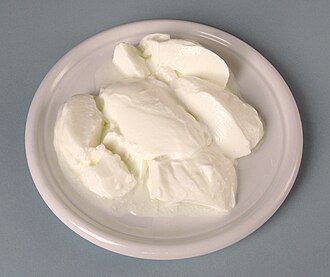
Photo: Wikipedia
This is a thick, creamy, and tangy fermented dairy product, with a smooth, spoonable texture that coats the palate. Its flavor profile is a balanced dance of mild sweetness and a pleasant lactic tartness, derived from whole milk. Nutritionally, it's a compact package of high-quality protein and calcium, with a notable sugar content from both natural lactose and added sweeteners.
Calorie split: 14% protein · 49% carbs · 37% fat
↓ Full nutrition💚 Why it's loved
People adore its versatile, creamy canvas that can be both a tangy standalone snack and a sweet dessert base. It's deeply embedded in culinary traditions worldwide, from a breakfast staple to a cooling side for spicy dishes.
⚠️ Watch-outs & how to enjoy it better
The primary downside is its natural sugar (lactose) and often added sugars, which can cause blood-sugar spikes if consumed in large, unbalanced portions. Those with lactose intolerance or a milk allergy must avoid it. To mitigate sugar impact, pair it with a source of fiber (like berries) or extra protein (like nuts or seeds) to slow digestion.
Key benefits
- Excellent source of high-quality protein for muscle maintenance.
- Rich in calcium and phosphorus for bone and dental health.
- Contains live probiotics (in many brands) that support gut microbiome balance.
- Provides vitamin B12 and riboflavin for energy metabolism.
- The fat content aids in the absorption of fat-soluble vitamins like A and D.
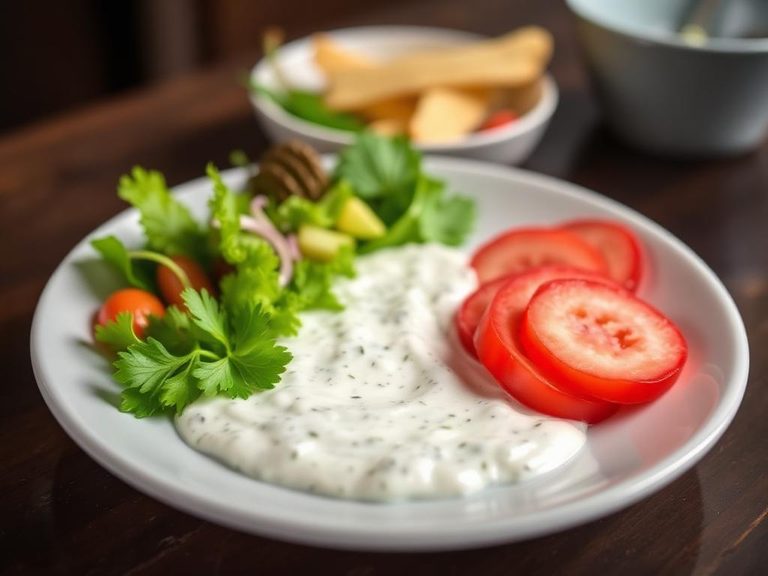
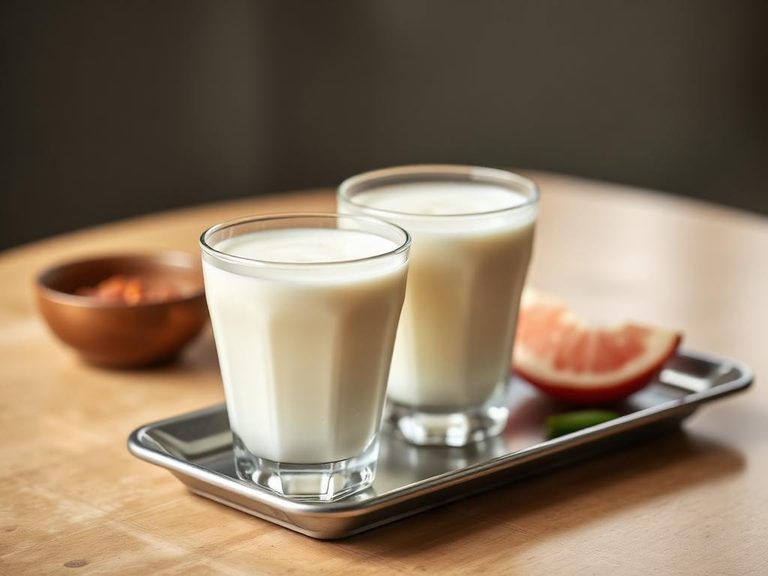
🍽️ Popular dishes




🌍 Where it's eaten
💡 Did you know?
The word 'yogurt' comes from the Turkish word 'yoğurmak,' which means 'to thicken' or 'to curdle,' reflecting the ancient method of its preparation.
Full nutrition (USDA data · scales with serving)
| Water | 80.3 g |
| Energy | 95.0 kcal |
| Protein | 3.3 g |
| Total lipid (fat) | 3.9 g |
| Carbohydrate, by difference | 11.8 g |
| Fiber, total dietary | 0.00 g |
| Total Sugars | 10.5 g |
| Calcium, Ca | 109 mg |
| Iron, Fe | 0.00 mg |
| Magnesium, Mg | 10.0 mg |
| Phosphorus, P | 87.0 mg |
| Potassium, K | 141 mg |
| Sodium, Na | 36.0 mg |
| Zinc, Zn | 0.37 mg |
| Copper, Cu | 0.00 mg |
| Selenium, Se | 1.9 ug |
| Vitamin C, total ascorbic acid | 0.40 mg |
| Thiamin | 0.05 mg |
| Riboflavin | 0.21 mg |
| Niacin | 0.12 mg |
| Vitamin B-6 | 0.04 mg |
| Folate, total | 6.0 ug |
| Folic acid | 0.00 ug |
| Folate, food | 6.0 ug |
| Folate, DFE | 6.0 ug |
| Choline, total | 13.1 mg |
| Vitamin B-12 | 0.32 ug |
| Vitamin B-12, added | 0.00 ug |
| Vitamin A, RAE | 41.0 ug |
| Retinol | 41.0 ug |
| Carotene, beta | 0.00 ug |
| Carotene, alpha | 0.00 ug |
| Cryptoxanthin, beta | 0.00 ug |
| Lycopene | 0.00 ug |
| Lutein + zeaxanthin | 0.00 ug |
| Vitamin E (alpha-tocopherol) | 0.05 mg |
| Vitamin E, added | 0.00 mg |
| Vitamin D (D2 + D3) | 1.2 ug |
| Vitamin K (phylloquinone) | 0.20 ug |
| Alcohol, ethyl | 0.00 g |
| Caffeine | 0.00 mg |
| Theobromine | 0.00 mg |
Fat & fatty acid profile (per 100g)
| Fatty acids, total saturated | 2.0 g |
| SFA 4:0 | 0.08 g |
| SFA 6:0 | 0.06 g |
| SFA 8:0 | 0.04 g |
| SFA 10:0 | 0.08 g |
| SFA 12:0 | 0.10 g |
| SFA 14:0 | 0.33 g |
| SFA 16:0 | 0.92 g |
| SFA 18:0 | 0.32 g |
| Fatty acids, total monounsaturated | 0.75 g |
| MUFA 16:1 | 0.06 g |
| MUFA 18:1 | 0.66 g |
| MUFA 20:1 | 0.00 g |
| MUFA 22:1 | 0.00 g |
| Fatty acids, total polyunsaturated | 0.08 g |
| PUFA 18:2 | 0.07 g |
| PUFA 18:3 | 0.02 g |
| PUFA 18:4 | 0.00 g |
| PUFA 20:4 | 0.00 g |
| PUFA 20:5 n-3 (EPA) | 0.00 g |
| PUFA 22:5 n-3 (DPA) | 0.00 g |
| PUFA 22:6 n-3 (DHA) | 0.00 g |
| Cholesterol | 12.0 mg |
Amino acid profile (per 100g)
Estimated from Frozen yogurts, vanilla, soft-serve — USDA does not publish this profile for Yogurt.
| Tryptophan | 0.05 g |
| Threonine | 0.17 g |
| Isoleucine | 0.23 g |
| Leucine | 0.37 g |
| Lysine | 0.30 g |
| Methionine | 0.09 g |
| Cystine | 0.04 g |
| Phenylalanine | 0.18 g |
| Tyrosine | 0.18 g |
| Valine | 0.25 g |
| Arginine | 0.14 g |
| Histidine | 0.10 g |
| Alanine | 0.13 g |
| Aspartic acid | 0.28 g |
| Glutamic acid | 0.79 g |
| Glycine | 0.08 g |
| Proline | 0.36 g |
| Serine | 0.20 g |
FAQ
Is the sugar in flavored yogurt natural or added?
It's a combination. Plain whole milk yogurt contains about 5g of natural sugar (lactose) per 100g. The 10.5g listed here means roughly 5.5g of sugar has been added as a sweetener.
Why is the protein content important?
At 3.28g per 100g, this yogurt provides a substantial amount of complete protein, which is essential for building and repairing tissues, and helps promote satiety.
Can I use this in cooking?
Absolutely. Its tanginess and fat content make it excellent for marinades (tenderizing meat), creamy sauces, baking (as a substitute for sour cream or buttermilk), and as a base for dressings.
Nutrient density (calculated · NRF9.3)
Nutrient Rich Foods index: beneficial nutrients (protein, fiber, vitamins, minerals) minus saturated fat, added sugar & sodium, per 100 kcal.
NRF9.3 index — Fulgoni, Keast & Drewnowski, 2009. Computed from USDA nutrients.
Weight-loss friendliness (composite index)
Energy density 0.95 kcal/g · 14% calories from protein · 0.0 g fiber · 10.5 g sugar per 100 g.
Composite of energy density (Rolls et al., 1999), protein & fiber satiety, minus sugar. A calculated heuristic — ranks satiety-per-calorie, not a clinical measure.
Dietary load (calculated from USDA values)
Potential renal acid load. Positive = acid-forming, negative = alkaline-forming.
Sodium-to-potassium ratio: 0.26 (lower is better — aim for ≤ 1)
Sodium:potassium per WHO potassium guidance. Computed from USDA nutrients.