

Water, tonic
Common food

Photo: Wikipedia
Tonic water is a carbonated soft drink infused with quinine, derived from the bark of the cinchona tree, giving it a distinctive, slightly bitter flavor profile balanced by added sugar. Its effervescent, crisp texture makes it a refreshing standalone beverage or a versatile mixer. Nutritionally, it's primarily a source of simple carbohydrates from its sugar content, offering quick energy but little else.
Calorie split: 0% protein · 100% carbs · 0% fat
↓ Full nutrition💚 Why it's loved
People love tonic water for its unique, sophisticated bitter-sweet balance and lively fizz, which elevates it from a simple soda to a grown-up beverage. Its iconic role in cocktails like the Gin & Tonic has cemented its place in social and culinary culture worldwide.
⚠️ Watch-outs & how to enjoy it better
The high sugar content (8.8g per 100g) can contribute to blood sugar spikes and is a consideration for those monitoring calorie or sugar intake. Some individuals may be sensitive to quinine, experiencing headaches or digestive upset. **Tip:** Opt for diet or low-sugar tonic varieties, or use it sparingly as a mixer to control sugar consumption.
Key benefits
- Provides quick energy from carbohydrates.
- Quinine historically used to prevent muscle cramps.
- Versatile base for classic cocktails like the Gin & Tonic.
- The bitterness can stimulate appetite and digestion.
- Offers a refreshing, calorie-containing alternative to plain water.
🍽️ Popular dishes
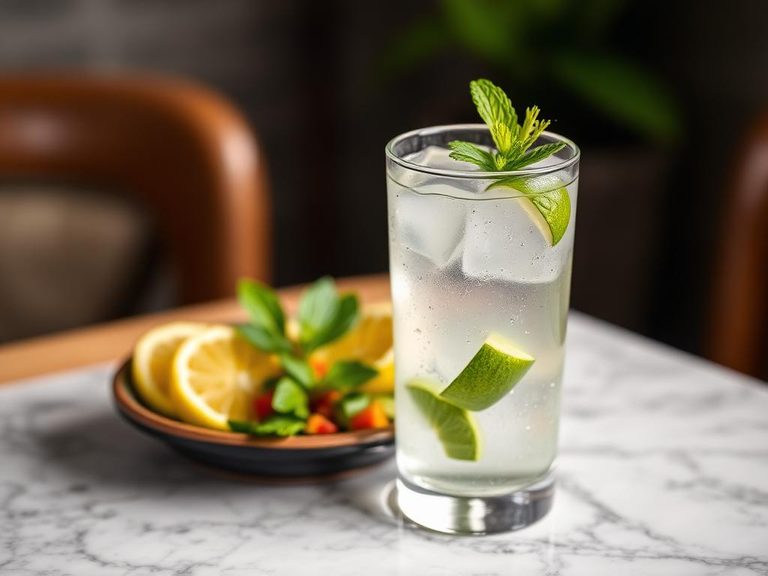
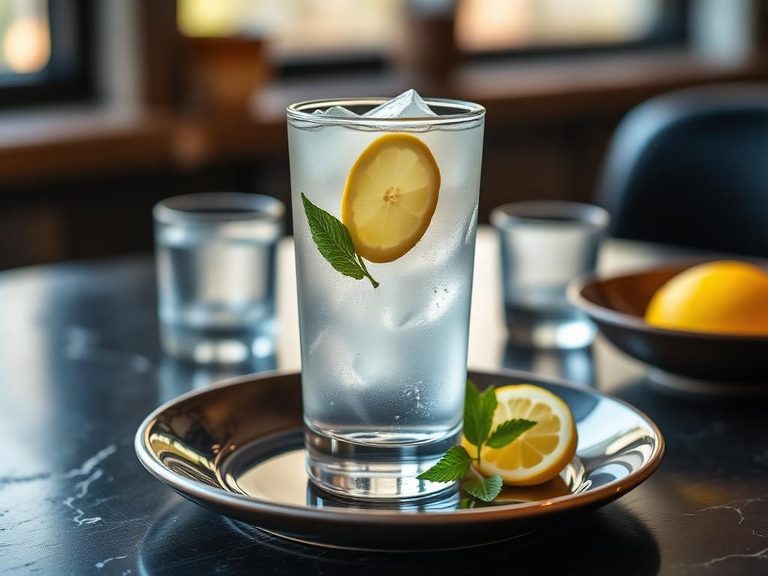
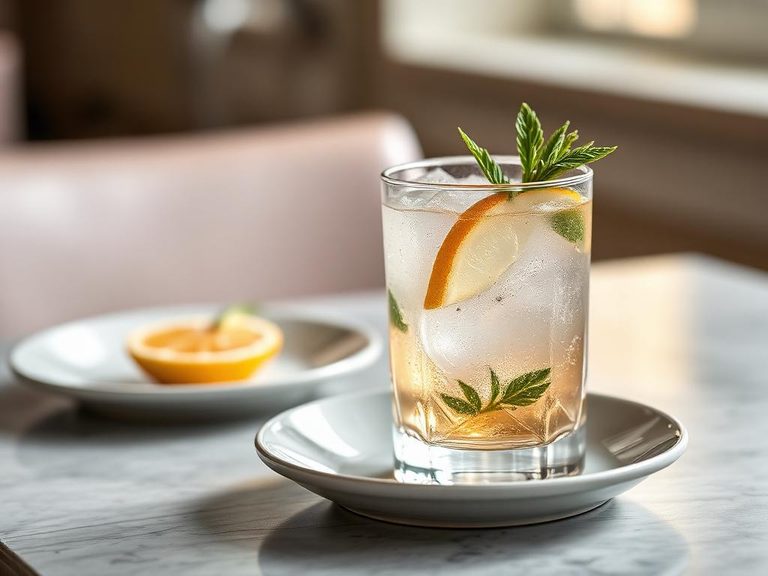
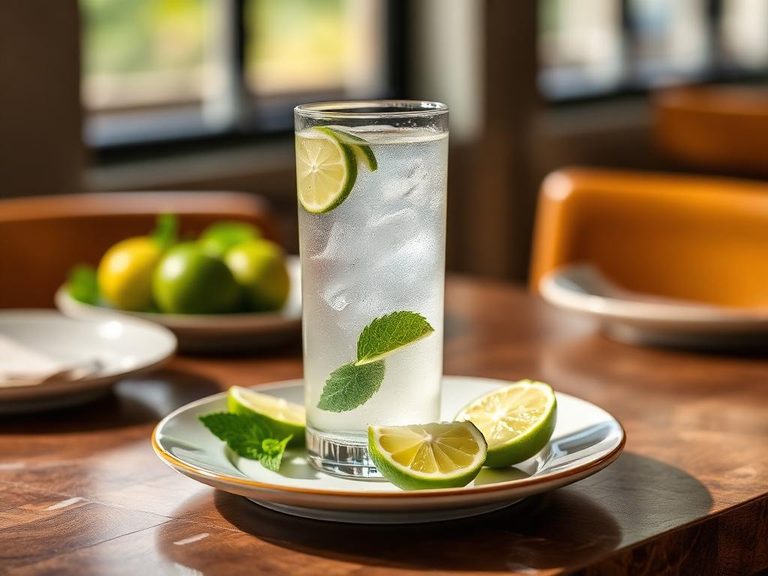
🌍 Where it's eaten
💡 Did you know?
The quinine in tonic water was originally added to malaria-prone regions like British India not for taste, but as a prophylactic medication; the sugar was included to make the bitter medicine more palatable.
Full nutrition (USDA data · scales with serving)
| Water | 91.1 g |
| Energy | 34.0 kcal |
| Protein | 0.00 g |
| Total lipid (fat) | 0.00 g |
| Carbohydrate, by difference | 8.8 g |
| Fiber, total dietary | 0.00 g |
| Total Sugars | 8.8 g |
| Calcium, Ca | 1.0 mg |
| Iron, Fe | 0.01 mg |
| Magnesium, Mg | 0.00 mg |
| Phosphorus, P | 0.00 mg |
| Potassium, K | 0.00 mg |
| Sodium, Na | 12.0 mg |
| Zinc, Zn | 0.10 mg |
| Copper, Cu | 0.01 mg |
| Selenium, Se | 0.00 ug |
| Vitamin C, total ascorbic acid | 0.00 mg |
| Thiamin | 0.00 mg |
| Riboflavin | 0.00 mg |
| Niacin | 0.00 mg |
| Vitamin B-6 | 0.00 mg |
| Folate, total | 0.00 ug |
| Folic acid | 0.00 ug |
| Folate, food | 0.00 ug |
| Folate, DFE | 0.00 ug |
| Choline, total | 0.00 mg |
| Vitamin B-12 | 0.00 ug |
| Vitamin B-12, added | 0.00 ug |
| Vitamin A, RAE | 0.00 ug |
| Retinol | 0.00 ug |
| Carotene, beta | 0.00 ug |
| Carotene, alpha | 0.00 ug |
| Cryptoxanthin, beta | 0.00 ug |
| Lycopene | 0.00 ug |
| Lutein + zeaxanthin | 0.00 ug |
| Vitamin E (alpha-tocopherol) | 0.00 mg |
| Vitamin E, added | 0.00 mg |
| Vitamin D (D2 + D3) | 0.00 ug |
| Vitamin K (phylloquinone) | 0.00 ug |
| Alcohol, ethyl | 0.00 g |
| Caffeine | 0.00 mg |
| Theobromine | 0.00 mg |
Fat & fatty acid profile (per 100g)
| Fatty acids, total saturated | 0.00 g |
| SFA 4:0 | 0.00 g |
| SFA 6:0 | 0.00 g |
| SFA 8:0 | 0.00 g |
| SFA 10:0 | 0.00 g |
| SFA 12:0 | 0.00 g |
| SFA 14:0 | 0.00 g |
| SFA 16:0 | 0.00 g |
| SFA 18:0 | 0.00 g |
| Fatty acids, total monounsaturated | 0.00 g |
| MUFA 16:1 | 0.00 g |
| MUFA 18:1 | 0.00 g |
| MUFA 20:1 | 0.00 g |
| MUFA 22:1 | 0.00 g |
| Fatty acids, total polyunsaturated | 0.00 g |
| PUFA 18:2 | 0.00 g |
| PUFA 18:3 | 0.00 g |
| PUFA 18:4 | 0.00 g |
| PUFA 20:4 | 0.00 g |
| PUFA 20:5 n-3 (EPA) | 0.00 g |
| PUFA 22:5 n-3 (DPA) | 0.00 g |
| PUFA 22:6 n-3 (DHA) | 0.00 g |
| Cholesterol | 0.00 mg |
Amino acid profile (per 100g)
Estimated from Beverages, carbonated, tonic water — USDA does not publish this profile for Water.
| Tryptophan | 0.00 g |
| Threonine | 0.00 g |
| Isoleucine | 0.00 g |
| Leucine | 0.00 g |
| Lysine | 0.00 g |
| Methionine | 0.00 g |
| Cystine | 0.00 g |
| Phenylalanine | 0.00 g |
| Tyrosine | 0.00 g |
| Valine | 0.00 g |
| Arginine | 0.00 g |
| Histidine | 0.00 g |
| Alanine | 0.00 g |
| Aspartic acid | 0.00 g |
| Glutamic acid | 0.00 g |
| Glycine | 0.00 g |
| Proline | 0.00 g |
| Serine | 0.00 g |
FAQ
Does tonic water really help with muscle cramps?
The quinine in tonic water has been used medicinally to treat cramps, but the concentration in commercial beverages is very low and may not be therapeutically effective. It's not a recommended treatment.
Is tonic water the same as soda water or club soda?
No. Soda water or club soda is simply carbonated water, sometimes with added minerals for taste. Tonic water contains quinine and sugar (or sweeteners), giving it a distinct bitter flavor.
Why does tonic water glow under a black light?
The quinine molecule naturally fluoresces. When exposed to ultraviolet (UV) light, it absorbs the energy and re-emits it as visible blue light, creating a glowing effect.
Nutrient density (calculated · NRF9.3)
Nutrient Rich Foods index: beneficial nutrients (protein, fiber, vitamins, minerals) minus saturated fat, added sugar & sodium, per 100 kcal.
NRF9.3 index — Fulgoni, Keast & Drewnowski, 2009. Computed from USDA nutrients.
Weight-loss friendliness (composite index)
Energy density 0.34 kcal/g · 0% calories from protein · 0.0 g fiber · 8.8 g sugar per 100 g.
Composite of energy density (Rolls et al., 1999), protein & fiber satiety, minus sugar. A calculated heuristic — ranks satiety-per-calorie, not a clinical measure.
Dietary load (calculated from USDA values)
Potential renal acid load. Positive = acid-forming, negative = alkaline-forming.
Sodium:potassium per WHO potassium guidance. Computed from USDA nutrients.