

Vodka and tonic
Common food

Photo: Wikipedia
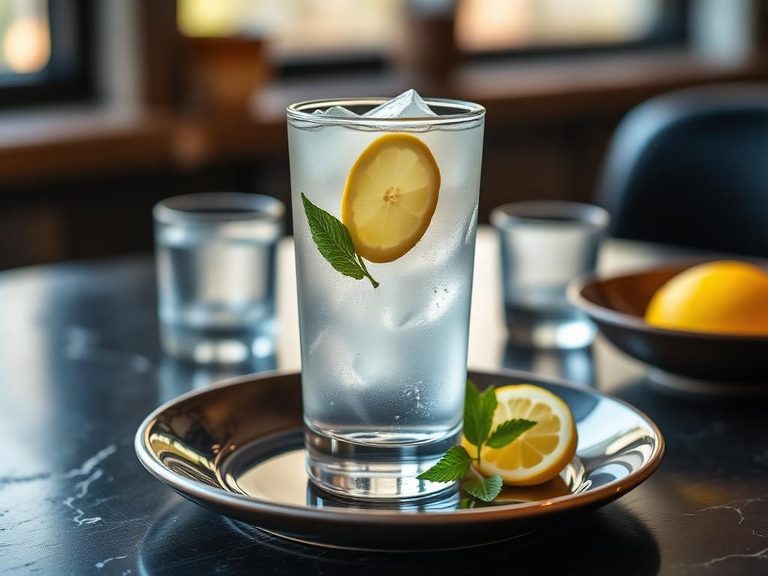
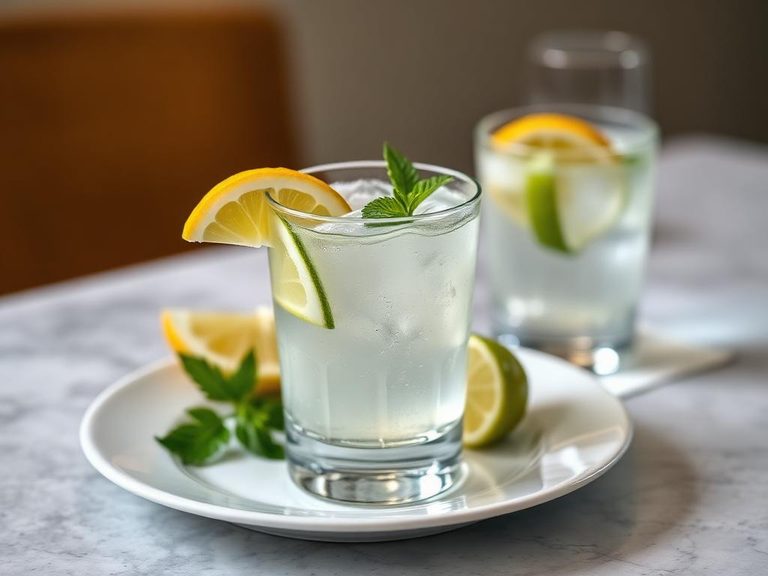
A crisp, effervescent cocktail blending the clean, neutral bite of vodka with the bitter-sweet, aromatic fizz of tonic water. Served over ice, typically in a highball glass with a lime wedge, its signature bubbles and botanical notes from quinine create a refreshing, palate-cleansing experience. Nutritionally, it's a low-calorie, sugar-containing alcoholic beverage with no protein, fat, or fiber.
Calorie split: 0% protein · 100% carbs · 0% fat
↓ Full nutrition💚 Why it's loved
People love it for its perfect balance of bitter, sweet, and clean flavors, offering a sophisticated yet simple refreshment. Its versatility allows for endless variations with different gins, vodkas, and garnishes, making it a staple in social and cultural settings.
⚠️ Watch-outs & how to enjoy it better
The sugar content (from tonic) can contribute to blood sugar spikes, and the alcohol is a depressant. Those monitoring sugar intake or with alcohol sensitivities should be cautious. Tip: Use diet tonic to reduce sugar, or pair with a protein-rich snack to moderate blood sugar impact.
Key benefits
- Low in calories compared to many cocktails
- Contains quinine from tonic water, historically used to prevent malaria
- Quick to prepare with minimal ingredients
- Refreshing and hydrating due to carbonation
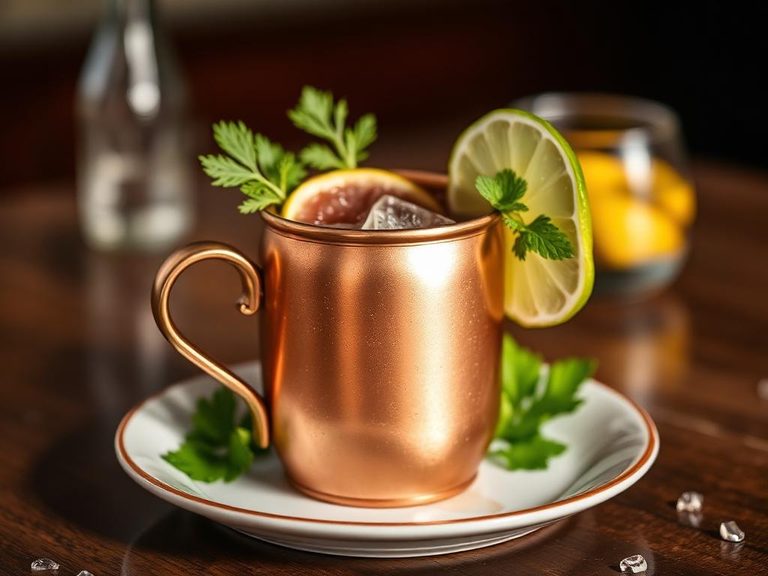
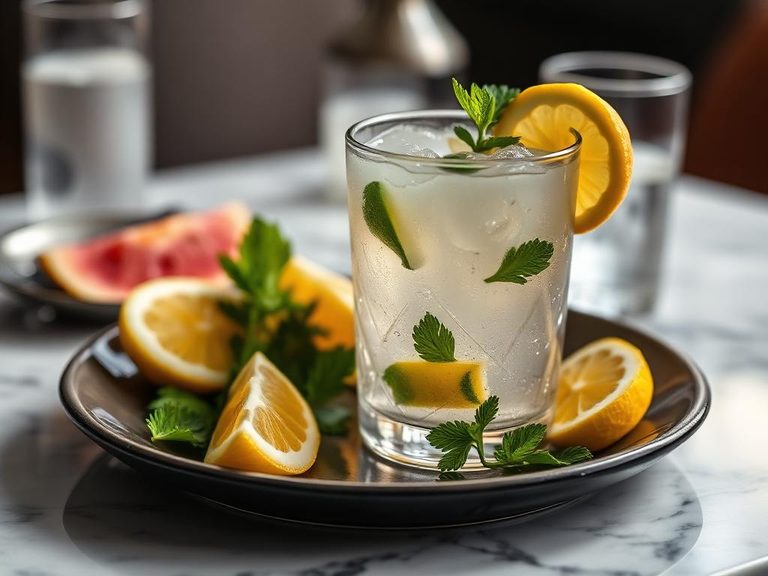
🍽️ Popular dishes

🌍 Where it's eaten
💡 Did you know?
Tonic water's quinine was originally derived from the bark of the South American cinchona tree and was used by British colonial officers in India to prevent malaria, leading to the popularization of the gin and tonic.
Full nutrition (USDA data · scales with serving)
| Water | 84.9 g |
| Energy | 84.0 kcal |
| Protein | 0.00 g |
| Total lipid (fat) | 0.00 g |
| Carbohydrate, by difference | 6.6 g |
| Fiber, total dietary | 0.00 g |
| Total Sugars | 6.6 g |
| Calcium, Ca | 1.0 mg |
| Iron, Fe | 0.02 mg |
| Magnesium, Mg | 0.00 mg |
| Phosphorus, P | 1.0 mg |
| Potassium, K | 1.0 mg |
| Sodium, Na | 9.0 mg |
| Zinc, Zn | 0.08 mg |
| Copper, Cu | 0.01 mg |
| Selenium, Se | 0.00 ug |
| Vitamin C, total ascorbic acid | 0.00 mg |
| Thiamin | 0.00 mg |
| Riboflavin | 0.00 mg |
| Niacin | 0.00 mg |
| Vitamin B-6 | 0.00 mg |
| Folate, total | 0.00 ug |
| Folic acid | 0.00 ug |
| Folate, food | 0.00 ug |
| Folate, DFE | 0.00 ug |
| Choline, total | 0.00 mg |
| Vitamin B-12 | 0.00 ug |
| Vitamin B-12, added | 0.00 ug |
| Vitamin A, RAE | 0.00 ug |
| Retinol | 0.00 ug |
| Carotene, beta | 0.00 ug |
| Carotene, alpha | 0.00 ug |
| Cryptoxanthin, beta | 0.00 ug |
| Lycopene | 0.00 ug |
| Lutein + zeaxanthin | 0.00 ug |
| Vitamin E (alpha-tocopherol) | 0.00 mg |
| Vitamin E, added | 0.00 mg |
| Vitamin D (D2 + D3) | 0.00 ug |
| Vitamin K (phylloquinone) | 0.00 ug |
| Alcohol, ethyl | 8.5 g |
| Caffeine | 0.00 mg |
| Theobromine | 0.00 mg |
Fat & fatty acid profile (per 100g)
| Fatty acids, total saturated | 0.00 g |
| SFA 4:0 | 0.00 g |
| SFA 6:0 | 0.00 g |
| SFA 8:0 | 0.00 g |
| SFA 10:0 | 0.00 g |
| SFA 12:0 | 0.00 g |
| SFA 14:0 | 0.00 g |
| SFA 16:0 | 0.00 g |
| SFA 18:0 | 0.00 g |
| Fatty acids, total monounsaturated | 0.00 g |
| MUFA 16:1 | 0.00 g |
| MUFA 18:1 | 0.00 g |
| MUFA 20:1 | 0.00 g |
| MUFA 22:1 | 0.00 g |
| Fatty acids, total polyunsaturated | 0.00 g |
| PUFA 18:2 | 0.00 g |
| PUFA 18:3 | 0.00 g |
| PUFA 18:4 | 0.00 g |
| PUFA 20:4 | 0.00 g |
| PUFA 20:5 n-3 (EPA) | 0.00 g |
| PUFA 22:5 n-3 (DPA) | 0.00 g |
| PUFA 22:6 n-3 (DHA) | 0.00 g |
| Cholesterol | 0.00 mg |
FAQ
Is vodka and tonic gluten-free?
Generally, yes. Vodka distilled from grains like corn, potatoes, or grapes is typically gluten-free, and tonic water is also gluten-free. However, always check labels for specific brands.
How does the calorie count compare to a gin and tonic?
They are very similar. The calories come mostly from the alcohol and the sugar in the tonic water, not the spirit itself, so swapping vodka for gin makes little difference.
Can I make a non-alcoholic version?
Absolutely. Simply omit the vodka and use extra tonic water or a non-alcoholic spirit alternative. Garnish with lime or cucumber for the same refreshing effect.
Nutrient density (calculated · NRF9.3)
Nutrient Rich Foods index: beneficial nutrients (protein, fiber, vitamins, minerals) minus saturated fat, added sugar & sodium, per 100 kcal.
NRF9.3 index — Fulgoni, Keast & Drewnowski, 2009. Computed from USDA nutrients.
Weight-loss friendliness (composite index)
Energy density 0.84 kcal/g · 0% calories from protein · 0.0 g fiber · 6.6 g sugar per 100 g.
Composite of energy density (Rolls et al., 1999), protein & fiber satiety, minus sugar. A calculated heuristic — ranks satiety-per-calorie, not a clinical measure.
Dietary load (calculated from USDA values)
Potential renal acid load. Positive = acid-forming, negative = alkaline-forming.
Sodium-to-potassium ratio: 9.00 (lower is better — aim for ≤ 1)
Sodium:potassium per WHO potassium guidance. Computed from USDA nutrients.