

Turnip greens and turnips, frozen, cooked, boiled, drained, with salt
Whole food · Vegetables and Vegetable Products

Photo: Wikipedia
Turnip greens and turnips, frozen, cooked, boiled, and drained with salt, offer a hearty, slightly peppery, and earthy flavor with a tender, leafy texture. This low-calorie vegetable is a nutritional powerhouse, particularly rich in vitamin K, vitamin A, and fiber, providing substantial nutrients without adding significant calories to a meal.
Calorie split: 35% protein · 55% carbs · 10% fat
↓ Full nutrition💚 Why it's loved
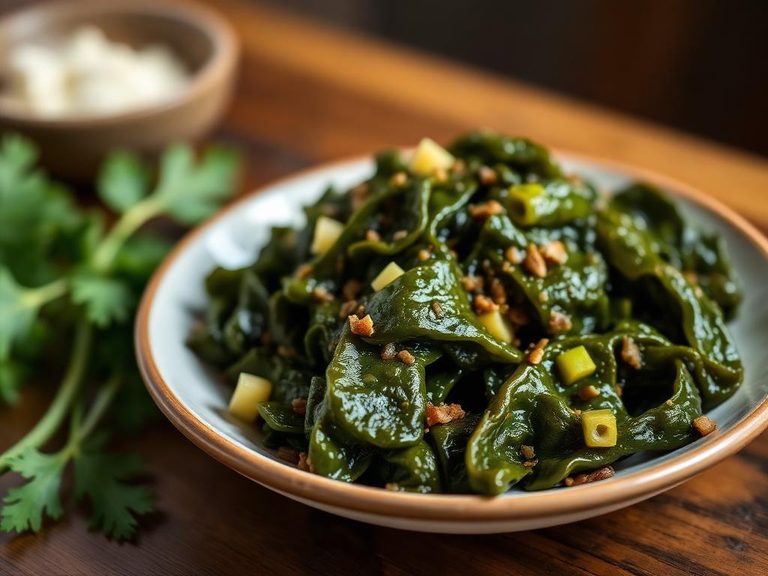
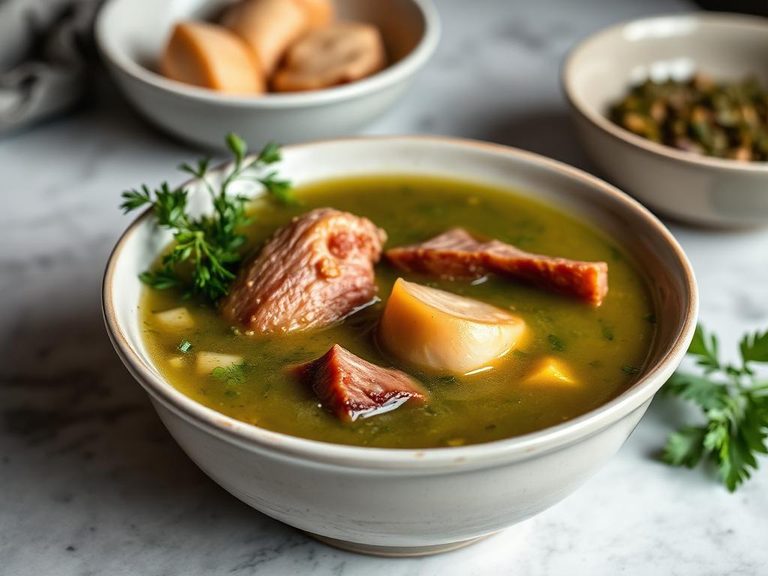
People love turnip greens for their robust, slightly bitter flavor that pairs beautifully with savory, smoky ingredients like bacon or ham hock. They are a versatile staple in Southern U.S. cuisine, often served as a comforting side dish or incorporated into stews and soups.
⚠️ Watch-outs & how to enjoy it better
The high oxalate content in turnip greens can be a concern for individuals prone to kidney stones, as oxalates can bind with calcium. To counteract this, pair them with a calcium-rich food like cheese or yogurt, which can help bind the oxalates in the digestive tract before they are absorbed. Additionally, the added salt means those monitoring sodium intake should be mindful of portion sizes or opt for unsalted varieties.
Key benefits
- Excellent source of vitamin K for bone health and blood clotting
- High in vitamin A and beta-carotene for eye and immune function
- Good source of dietary fiber to support digestive health
- Very low in calories, making it ideal for weight management
- Contains glucosinolates, compounds studied for potential health benefits
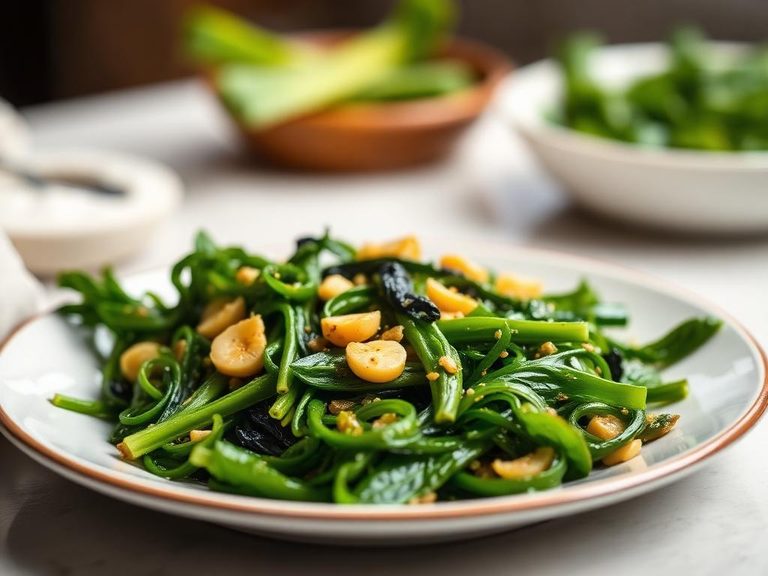
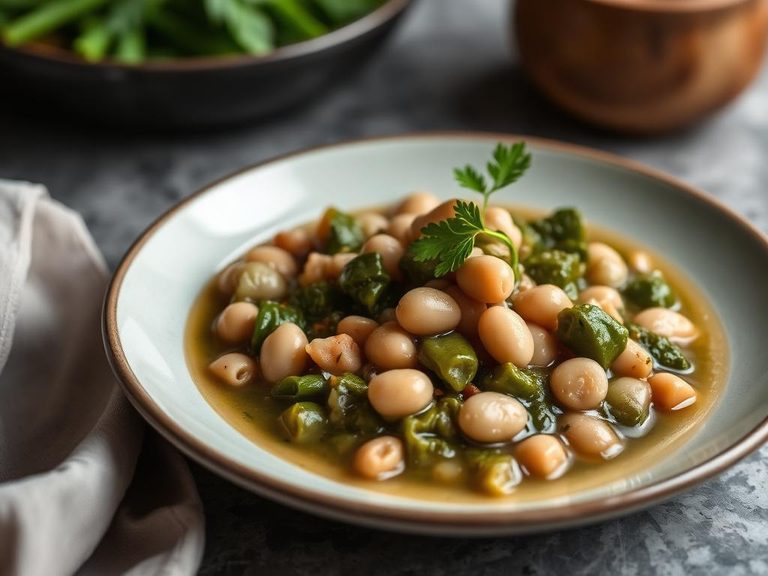
🍽️ Popular dishes
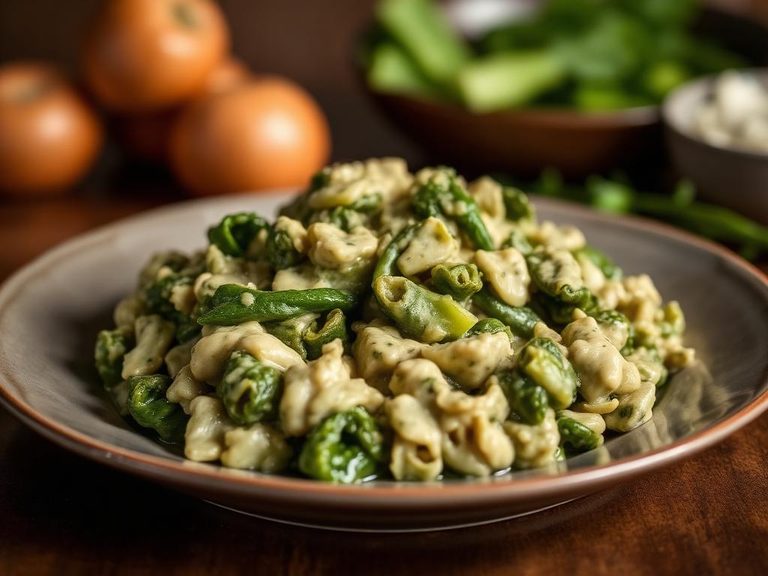
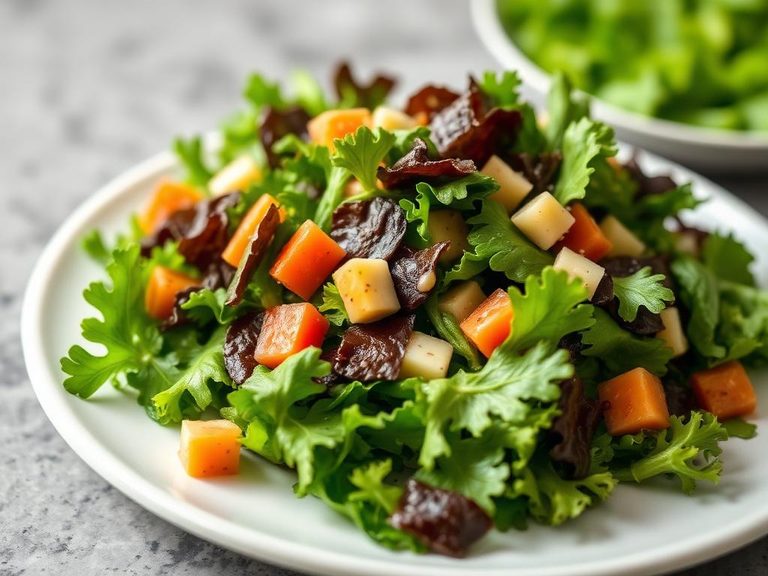
🌍 Where it's eaten
💡 Did you know?
Turnip greens are one of the best natural sources of vitamin K, with a single cooked cup providing over 500% of the daily recommended intake, which is crucial for proper blood clotting and bone metabolism.
Full nutrition (USDA data · scales with serving)
| Water | 91.0 g |
| Energy | 34.0 kcal |
| Energy | 144 kj |
| Protein | 3.0 g |
| Total lipid (fat) | 0.38 g |
| Ash | 0.85 g |
| Carbohydrate, by difference | 4.7 g |
| Fiber, total dietary | 3.1 g |
| Total Sugars | 0.95 g |
| Calcium, Ca | 128 mg |
| Iron, Fe | 1.8 mg |
| Magnesium, Mg | 24.0 mg |
| Phosphorus, P | 32.0 mg |
| Potassium, K | 216 mg |
| Sodium, Na | 255 mg |
| Zinc, Zn | 0.37 mg |
| Copper, Cu | 0.13 mg |
| Manganese, Mn | 0.40 mg |
| Selenium, Se | 1.1 ug |
| Vitamin C, total ascorbic acid | 18.2 mg |
| Thiamin | 0.05 mg |
| Riboflavin | 0.07 mg |
| Niacin | 0.49 mg |
| Pantothenic acid | 0.08 mg |
| Vitamin B-6 | 0.07 mg |
| Folate, total | 33.0 ug |
| Folic acid | 0.00 ug |
| Folate, food | 33.0 ug |
| Folate, DFE | 33.0 ug |
| Choline, total | 2.1 mg |
| Vitamin B-12 | 0.00 ug |
| Vitamin B-12, added | 0.00 ug |
| Vitamin A, RAE | 431 ug |
| Retinol | 0.00 ug |
| Carotene, beta | 5167 ug |
| Carotene, alpha | 0.00 ug |
| Cryptoxanthin, beta | 0.00 ug |
| Vitamin A, IU | 8612 iu |
| Lycopene | 0.00 ug |
| Lutein + zeaxanthin | 9532 ug |
| Vitamin E (alpha-tocopherol) | 2.1 mg |
| Vitamin E, added | 0.00 mg |
| Vitamin D (D2 + D3), International Units | 0.00 iu |
| Vitamin D (D2 + D3) | 0.00 ug |
| Vitamin K (phylloquinone) | 415 ug |
| Caffeine | 0.00 mg |
| Theobromine | 0.00 mg |
Fat & fatty acid profile (per 100g)
| Fatty acids, total saturated | 0.09 g |
| SFA 8:0 | 0.00 g |
| SFA 10:0 | 0.00 g |
| SFA 12:0 | 0.00 g |
| SFA 14:0 | 0.00 g |
| SFA 16:0 | 0.07 g |
| SFA 18:0 | 0.01 g |
| Fatty acids, total monounsaturated | 0.02 g |
| MUFA 16:1 | 0.02 g |
| MUFA 18:1 | 0.01 g |
| Fatty acids, total polyunsaturated | 0.16 g |
| PUFA 18:2 | 0.05 g |
| PUFA 18:3 | 0.11 g |
| Fatty acids, total trans | 0.00 g |
| Cholesterol | 0.00 mg |
Amino acid profile (per 100g)
| Tryptophan | 0.05 g |
| Threonine | 0.16 g |
| Isoleucine | 0.15 g |
| Leucine | 0.26 g |
| Lysine | 0.19 g |
| Methionine | 0.07 g |
| Cystine | 0.03 g |
| Phenylalanine | 0.17 g |
| Tyrosine | 0.11 g |
| Valine | 0.19 g |
| Arginine | 0.18 g |
| Histidine | 0.07 g |
| Alanine | 0.20 g |
| Aspartic acid | 0.30 g |
| Glutamic acid | 0.41 g |
| Glycine | 0.17 g |
| Proline | 0.14 g |
| Serine | 0.12 g |
FAQ
Are turnip greens and turnips the same as collard greens?
No, they are different plants, though they are often used interchangeably in Southern cooking. Turnip greens come from the turnip plant (Brassica rapa), while collard greens are from a different variety of cabbage (Brassica oleracea). They have similar nutritional profiles and cooking methods.
How do I reduce the bitterness of turnip greens?
Bitterness can be mellowed by boiling the greens in a large amount of water and then draining them, a process called blanching. You can also add a small amount of sugar or a splash of vinegar during cooking to balance the flavor, or pair them with rich, fatty ingredients like bacon fat or butter.
Is it okay to eat the turnip root along with the greens?
Yes, the turnip root is edible and nutritious, but it has a different texture and flavor—more crisp and mildly sweet. When cooking, you might need to add the root pieces to the pot earlier than the greens, as they take longer to become tender.
Nutrient density (calculated · NRF9.3)
Nutrient Rich Foods index: beneficial nutrients (protein, fiber, vitamins, minerals) minus saturated fat, added sugar & sodium, per 100 kcal.
NRF9.3 index — Fulgoni, Keast & Drewnowski, 2009. Computed from USDA nutrients.
Weight-loss friendliness (composite index)
Energy density 0.34 kcal/g · 35% calories from protein · 3.1 g fiber · 0.9 g sugar per 100 g.
Composite of energy density (Rolls et al., 1999), protein & fiber satiety, minus sugar. A calculated heuristic — ranks satiety-per-calorie, not a clinical measure.
Dietary load (calculated from USDA values)
Potential renal acid load. Positive = acid-forming, negative = alkaline-forming.
Sodium-to-potassium ratio: 1.18 (lower is better — aim for ≤ 1)
Sodium:potassium per WHO potassium guidance. Computed from USDA nutrients.