

Strudel, cherry
Common food

Photo: Wikipedia
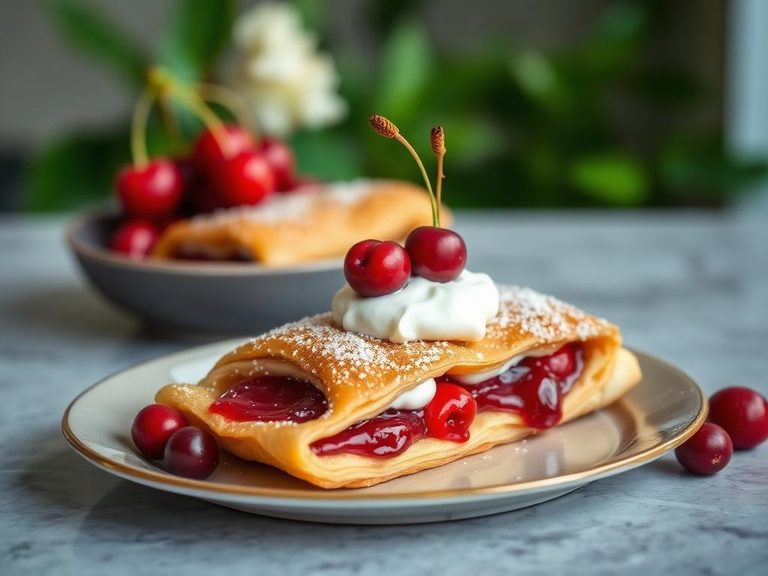
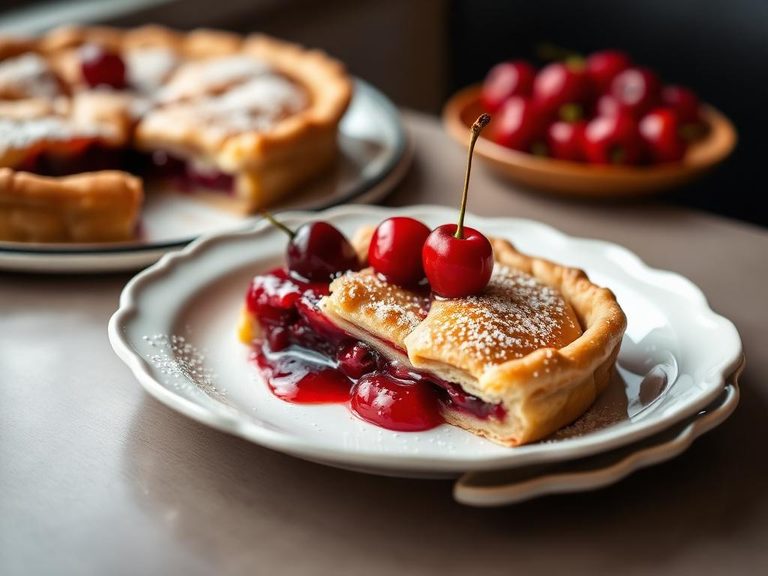
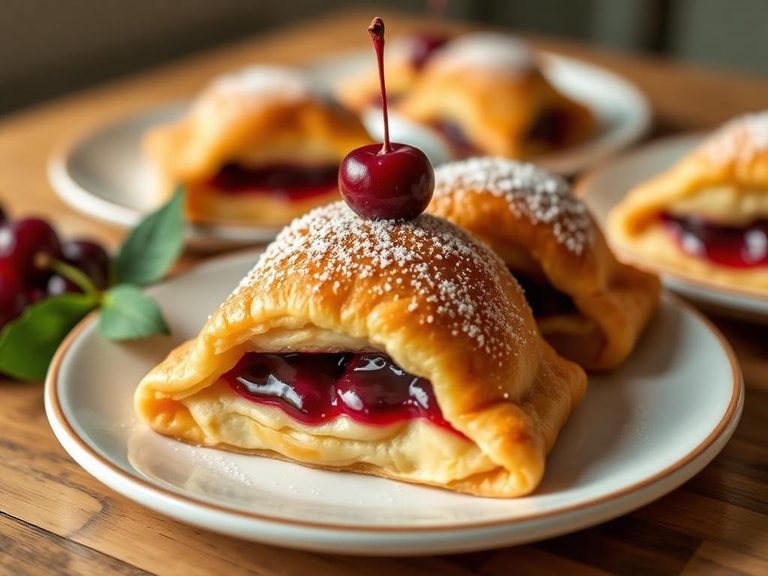
Cherry strudel is a delicate, flaky pastry of paper-thin dough wrapped around a sweet-tart filling of juicy cherries, often dusted with powdered sugar. The layers shatter on the first bite, giving way to a jammy, fragrant center. Nutritionally, it's a high-energy treat, primarily delivering quick carbohydrates from the pastry and fruit sugars.
Calorie split: 3% protein · 55% carbs · 43% fat
↓ Full nutrition💚 Why it's loved
People adore it for the perfect contrast between the buttery, crisp layers of dough and the warm, bursting cherry filling. It's a beloved centerpiece in Central European bakeries and a symbol of festive, homemade indulgence.
⚠️ Watch-outs & how to enjoy it better
This is a high-sugar, high-fat pastry that can cause rapid blood sugar spikes, especially for those with insulin sensitivity. To enjoy it more mindfully, pair a small slice with a source of protein or fat (like Greek yogurt or a handful of nuts) to slow sugar absorption, and practice strict portion control.
Key benefits
- Provides quick energy from carbohydrates
- Cherries contain natural antioxidants and vitamins
- A traditional source of comfort and celebration
- Can be made with fresh or preserved fruit for seasonal enjoyment
🍽️ Popular dishes



🌍 Where it's eaten
💡 Did you know?
The traditional dough for strudel is stretched so thin that a newspaper should be readable through it, a technique requiring skill and patience passed down through generations.
Full nutrition (USDA data · scales with serving)
| Water | 42.3 g |
| Energy | 296 kcal |
| Protein | 2.2 g |
| Total lipid (fat) | 14.1 g |
| Carbohydrate, by difference | 40.7 g |
| Fiber, total dietary | 1.0 g |
| Total Sugars | 24.8 g |
| Calcium, Ca | 12.0 mg |
| Iron, Fe | 0.35 mg |
| Magnesium, Mg | 9.0 mg |
| Phosphorus, P | 30.0 mg |
| Potassium, K | 89.0 mg |
| Sodium, Na | 131 mg |
| Zinc, Zn | 0.20 mg |
| Copper, Cu | 0.07 mg |
| Selenium, Se | 1.1 ug |
| Vitamin C, total ascorbic acid | 0.90 mg |
| Thiamin | 0.03 mg |
| Riboflavin | 0.02 mg |
| Niacin | 0.35 mg |
| Vitamin B-6 | 0.03 mg |
| Folate, total | 28.0 ug |
| Folic acid | 19.0 ug |
| Folate, food | 9.0 ug |
| Folate, DFE | 42.0 ug |
| Choline, total | 6.8 mg |
| Vitamin B-12 | 0.00 ug |
| Vitamin B-12, added | 0.00 ug |
| Vitamin A, RAE | 129 ug |
| Retinol | 124 ug |
| Carotene, beta | 69.0 ug |
| Carotene, alpha | 0.00 ug |
| Cryptoxanthin, beta | 1.0 ug |
| Lycopene | 0.00 ug |
| Lutein + zeaxanthin | 25.0 ug |
| Vitamin E (alpha-tocopherol) | 0.10 mg |
| Vitamin E, added | 0.00 mg |
| Vitamin D (D2 + D3) | 0.10 ug |
| Vitamin K (phylloquinone) | 1.8 ug |
| Alcohol, ethyl | 0.00 g |
| Caffeine | 0.00 mg |
| Theobromine | 0.00 mg |
Fat & fatty acid profile (per 100g)
| Fatty acids, total saturated | 7.6 g |
| SFA 4:0 | 0.34 g |
| SFA 6:0 | 0.24 g |
| SFA 8:0 | 0.14 g |
| SFA 10:0 | 0.32 g |
| SFA 12:0 | 0.36 g |
| SFA 14:0 | 1.2 g |
| SFA 16:0 | 3.6 g |
| SFA 18:0 | 1.2 g |
| Fatty acids, total monounsaturated | 2.8 g |
| MUFA 16:1 | 0.17 g |
| MUFA 18:1 | 2.5 g |
| MUFA 20:1 | 0.02 g |
| MUFA 22:1 | 0.00 g |
| Fatty acids, total polyunsaturated | 0.51 g |
| PUFA 18:2 | 0.45 g |
| PUFA 18:3 | 0.07 g |
| PUFA 18:4 | 0.00 g |
| PUFA 20:4 | 0.02 g |
| PUFA 20:5 n-3 (EPA) | 0.00 g |
| PUFA 22:5 n-3 (DPA) | 0.01 g |
| PUFA 22:6 n-3 (DHA) | 0.00 g |
| Cholesterol | 39.0 mg |
Amino acid profile (per 100g)
Estimated from Strudel, apple — USDA does not publish this profile for Strudel.
| Tryptophan | 0.04 g |
| Threonine | 0.12 g |
| Isoleucine | 0.15 g |
| Leucine | 0.26 g |
| Lysine | 0.15 g |
| Methionine | 0.07 g |
| Cystine | 0.06 g |
| Phenylalanine | 0.15 g |
| Tyrosine | 0.12 g |
| Valine | 0.16 g |
| Arginine | 0.14 g |
| Histidine | 0.08 g |
| Alanine | 0.12 g |
| Aspartic acid | 0.21 g |
| Glutamic acid | 0.85 g |
| Glycine | 0.10 g |
| Proline | 0.30 g |
| Serine | 0.18 g |
FAQ
Is cherry strudel the same as cherry pie?
No. Strudel uses a very thin, layered, unleavened dough (like phyllo but elastic) that is stretched and rolled, while pie uses a thicker, flakier pastry crust. The texture is distinctly different—strudel is more delicate and layered.
Can I use canned cherries for strudel?
Yes, but drain them very well and pat dry to prevent the filling from becoming too watery and making the pastry soggy. Frozen cherries, also thawed and drained, are another good option.
Why is my cherry strudel filling runny?
This is often due to excess juice from the cherries. To counteract it, toss the cherries with a small amount of cornstarch or breadcrumbs before filling, and ensure they are thoroughly drained.
Nutrient density (calculated · NRF9.3)
Nutrient Rich Foods index: beneficial nutrients (protein, fiber, vitamins, minerals) minus saturated fat, added sugar & sodium, per 100 kcal.
NRF9.3 index — Fulgoni, Keast & Drewnowski, 2009. Computed from USDA nutrients.
Weight-loss friendliness (composite index)
Energy density 2.96 kcal/g · 3% calories from protein · 1.0 g fiber · 24.8 g sugar per 100 g.
Composite of energy density (Rolls et al., 1999), protein & fiber satiety, minus sugar. A calculated heuristic — ranks satiety-per-calorie, not a clinical measure.
Dietary load (calculated from USDA values)
Potential renal acid load. Positive = acid-forming, negative = alkaline-forming.
Sodium-to-potassium ratio: 1.47 (lower is better — aim for ≤ 1)
Sodium:potassium per WHO potassium guidance. Computed from USDA nutrients.