

Strudel, cheese
Common food

Photo: Wikipedia
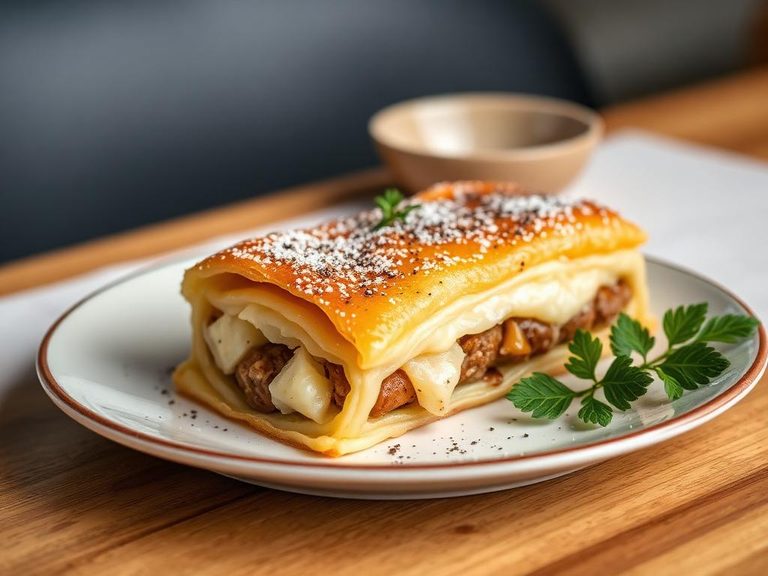
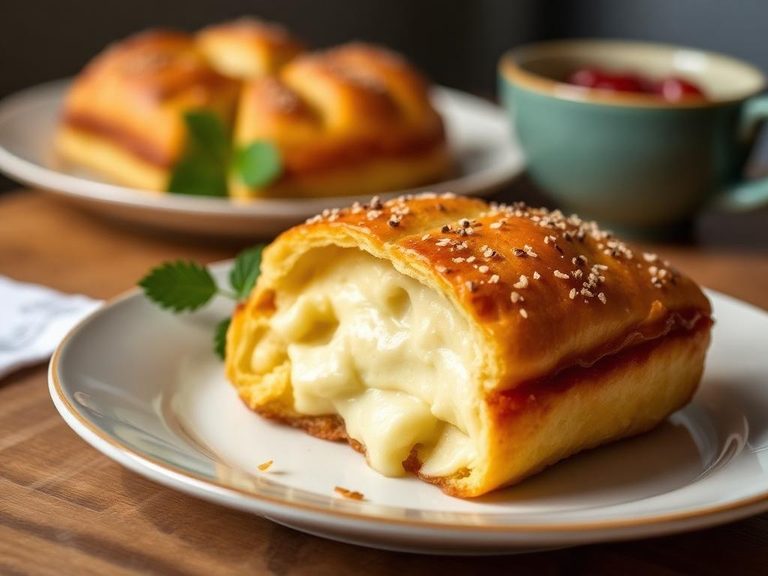
Cheese strudel is a flaky, golden pastry filled with a rich, savory-sweet cheese mixture, often featuring quark or farmer's cheese. Its texture is a delightful contrast between the crisp, buttery layers of dough and the creamy, slightly tangy filling. Nutritionally, it's a calorie-dense treat, offering a good balance of fat and protein, but with significant carbohydrates and sugar.
Calorie split: 7% protein · 44% carbs · 50% fat
↓ Full nutrition💚 Why it's loved
People love cheese strudel for its irresistible combination of buttery, flaky pastry and the rich, creamy, often sweetened cheese filling. It's a beloved comfort food that bridges the gap between dessert and a savory snack, deeply embedded in Central European culinary tradition.
⚠️ Watch-outs & how to enjoy it better
The high sugar and refined carbohydrate content can lead to blood-sugar spikes, making it less ideal for those managing diabetes or seeking low-glycemic foods. To counteract this, enjoy a smaller portion alongside a source of protein or healthy fat (like a handful of nuts) to slow sugar absorption. Also, be mindful of potential allergens like gluten and dairy.
Key benefits
- Provides a quick energy boost from carbohydrates and fats.
- Contains a moderate amount of protein from the cheese filling.
- Offers a satisfying, indulgent sensory experience.
- Can be a source of calcium from the dairy filling.
- A traditional comfort food in many cultures.
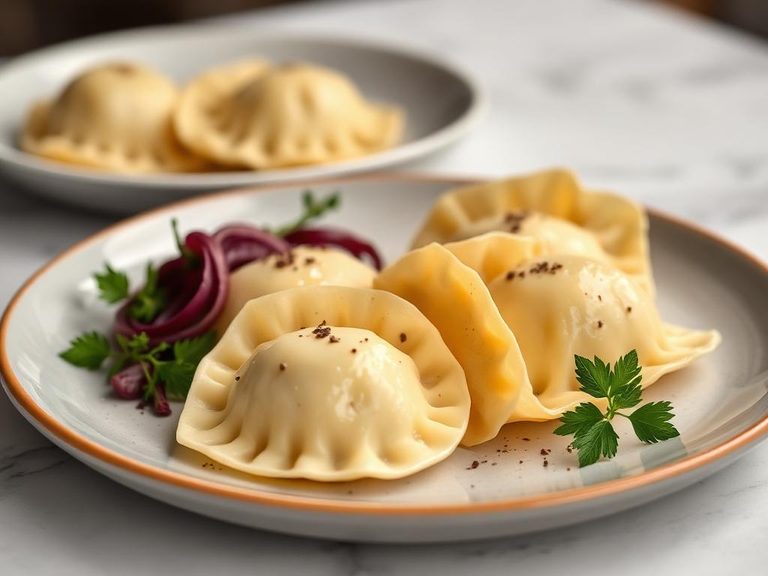
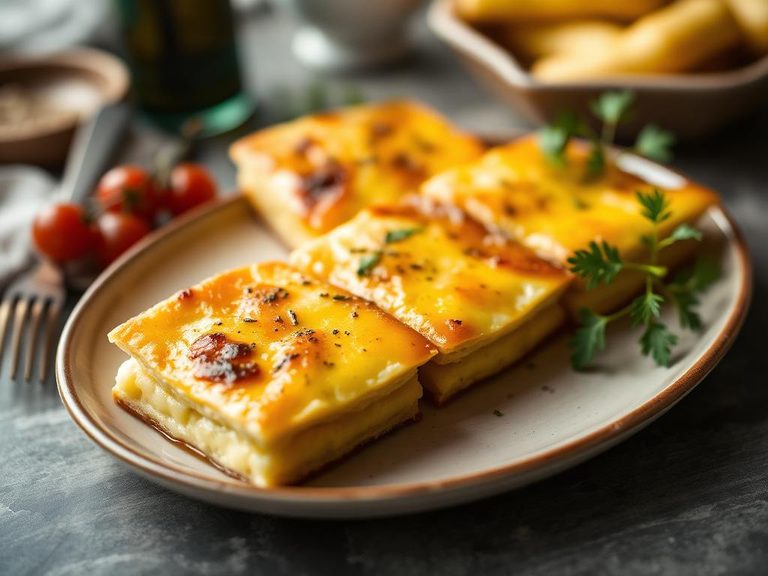
🍽️ Popular dishes

🌍 Where it's eaten
💡 Did you know?
The traditional dough for strudel is stretched so thin you can read a newspaper through it before being filled and baked.
Full nutrition (USDA data · scales with serving)
| Water | 34.0 g |
| Energy | 358 kcal |
| Protein | 5.8 g |
| Total lipid (fat) | 19.8 g |
| Carbohydrate, by difference | 39.1 g |
| Fiber, total dietary | 0.40 g |
| Total Sugars | 19.4 g |
| Calcium, Ca | 103 mg |
| Iron, Fe | 0.32 mg |
| Magnesium, Mg | 12.0 mg |
| Phosphorus, P | 94.0 mg |
| Potassium, K | 105 mg |
| Sodium, Na | 190 mg |
| Zinc, Zn | 0.55 mg |
| Copper, Cu | 0.05 mg |
| Selenium, Se | 5.5 ug |
| Vitamin C, total ascorbic acid | 0.00 mg |
| Thiamin | 0.04 mg |
| Riboflavin | 0.10 mg |
| Niacin | 0.25 mg |
| Vitamin B-6 | 0.03 mg |
| Folate, total | 33.0 ug |
| Folic acid | 22.0 ug |
| Folate, food | 11.0 ug |
| Folate, DFE | 49.0 ug |
| Choline, total | 10.7 mg |
| Vitamin B-12 | 0.11 ug |
| Vitamin B-12, added | 0.00 ug |
| Vitamin A, RAE | 190 ug |
| Retinol | 187 ug |
| Carotene, beta | 36.0 ug |
| Carotene, alpha | 0.00 ug |
| Cryptoxanthin, beta | 2.0 ug |
| Lycopene | 0.00 ug |
| Lutein + zeaxanthin | 1.0 ug |
| Vitamin E (alpha-tocopherol) | 0.07 mg |
| Vitamin E, added | 0.00 mg |
| Vitamin D (D2 + D3) | 0.10 ug |
| Vitamin K (phylloquinone) | 1.7 ug |
| Alcohol, ethyl | 0.00 g |
| Caffeine | 0.00 mg |
| Theobromine | 0.00 mg |
Fat & fatty acid profile (per 100g)
| Fatty acids, total saturated | 11.0 g |
| SFA 4:0 | 0.49 g |
| SFA 6:0 | 0.33 g |
| SFA 8:0 | 0.20 g |
| SFA 10:0 | 0.46 g |
| SFA 12:0 | 0.51 g |
| SFA 14:0 | 1.7 g |
| SFA 16:0 | 5.2 g |
| SFA 18:0 | 1.8 g |
| Fatty acids, total monounsaturated | 4.2 g |
| MUFA 16:1 | 0.29 g |
| MUFA 18:1 | 3.7 g |
| MUFA 20:1 | 0.03 g |
| MUFA 22:1 | 0.00 g |
| Fatty acids, total polyunsaturated | 0.69 g |
| PUFA 18:2 | 0.62 g |
| PUFA 18:3 | 0.09 g |
| PUFA 18:4 | 0.00 g |
| PUFA 20:4 | 0.02 g |
| PUFA 20:5 n-3 (EPA) | 0.01 g |
| PUFA 22:5 n-3 (DPA) | 0.01 g |
| PUFA 22:6 n-3 (DHA) | 0.00 g |
| Cholesterol | 60.0 mg |
Amino acid profile (per 100g)
Estimated from Strudel, apple — USDA does not publish this profile for Strudel.
| Tryptophan | 0.04 g |
| Threonine | 0.12 g |
| Isoleucine | 0.15 g |
| Leucine | 0.26 g |
| Lysine | 0.15 g |
| Methionine | 0.07 g |
| Cystine | 0.06 g |
| Phenylalanine | 0.15 g |
| Tyrosine | 0.12 g |
| Valine | 0.16 g |
| Arginine | 0.14 g |
| Histidine | 0.08 g |
| Alanine | 0.12 g |
| Aspartic acid | 0.21 g |
| Glutamic acid | 0.85 g |
| Glycine | 0.10 g |
| Proline | 0.30 g |
| Serine | 0.18 g |
FAQ
Is cheese strudel the same as apple strudel?
No, while both use similar flaky pastry dough, cheese strudel is filled with a sweetened cheese mixture (like quark), whereas apple strudel is filled with spiced apples and often raisins.
What type of cheese is typically used in cheese strudel?
The most traditional cheese used is quark, a fresh, tangy dairy product. Farmer's cheese or ricotta can also be used as substitutes.
Can I freeze cheese strudel?
Yes, cheese strudel freezes well. Wrap it tightly in plastic wrap and foil, then freeze for up to 3 months. Thaw in the refrigerator before reheating in the oven to maintain crispness.
Nutrient density (calculated · NRF9.3)
Nutrient Rich Foods index: beneficial nutrients (protein, fiber, vitamins, minerals) minus saturated fat, added sugar & sodium, per 100 kcal.
NRF9.3 index — Fulgoni, Keast & Drewnowski, 2009. Computed from USDA nutrients.
Weight-loss friendliness (composite index)
Energy density 3.58 kcal/g · 7% calories from protein · 0.4 g fiber · 19.4 g sugar per 100 g.
Composite of energy density (Rolls et al., 1999), protein & fiber satiety, minus sugar. A calculated heuristic — ranks satiety-per-calorie, not a clinical measure.
Dietary load (calculated from USDA values)
Potential renal acid load. Positive = acid-forming, negative = alkaline-forming.
Sodium-to-potassium ratio: 1.81 (lower is better — aim for ≤ 1)
Sodium:potassium per WHO potassium guidance. Computed from USDA nutrients.