

Starfruit, raw
Common food

Photo: Wikipedia
Starfruit, or carambola, is a tropical fruit with distinctive ridges that form a star shape when sliced. Its crisp, juicy texture offers a refreshing mix of sweet and tart flavors, often compared to a blend of apple, grape, and citrus. Nutritionally, it's a low-calorie, high-fiber snack rich in vitamin C and antioxidants.
Calorie split: 12% protein · 79% carbs · 9% fat
↓ Full nutrition💚 Why it's loved
People love starfruit for its unique, eye-catching star shape that instantly elevates salads and garnishes, and for its perfectly balanced sweet-tart flavor that is both refreshing and versatile in both sweet and savory dishes.
⚠️ Watch-outs & how to enjoy it better
Individuals with kidney issues must avoid starfruit due to high levels of oxalates and a neurotoxin that healthy kidneys can clear but compromised ones cannot. For others, the high oxalate content can contribute to kidney stone formation; counteract this by staying well-hydrated and pairing it with calcium-rich foods like yogurt or cheese to bind oxalates in the gut.
Key benefits
- Very low in calories and fat, aiding weight management.
- Good source of dietary fiber, supporting digestive health.
- High in vitamin C, boosting immune function and skin health.
- Contains antioxidants like quercetin and epicatechin.
- High water content helps with hydration.
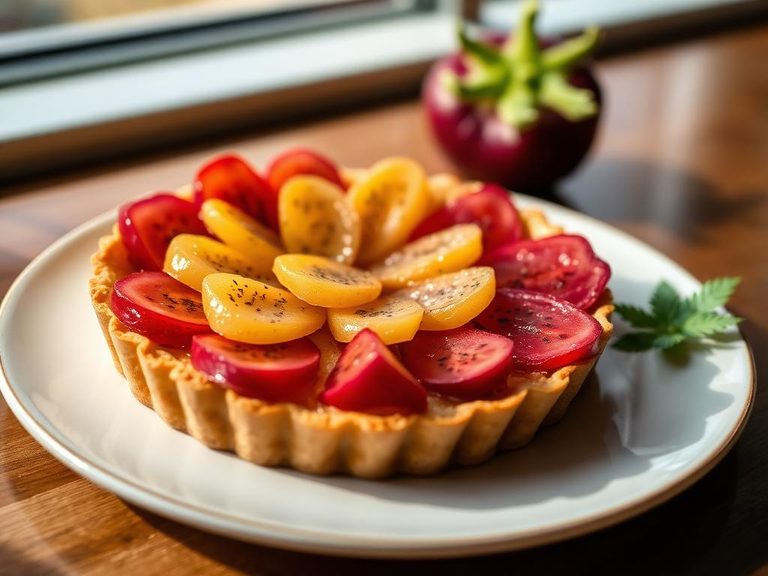
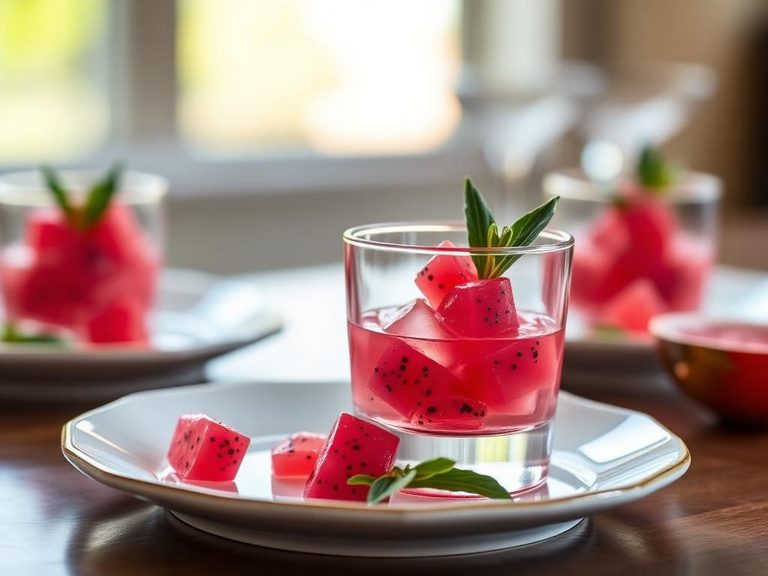
🍽️ Popular dishes
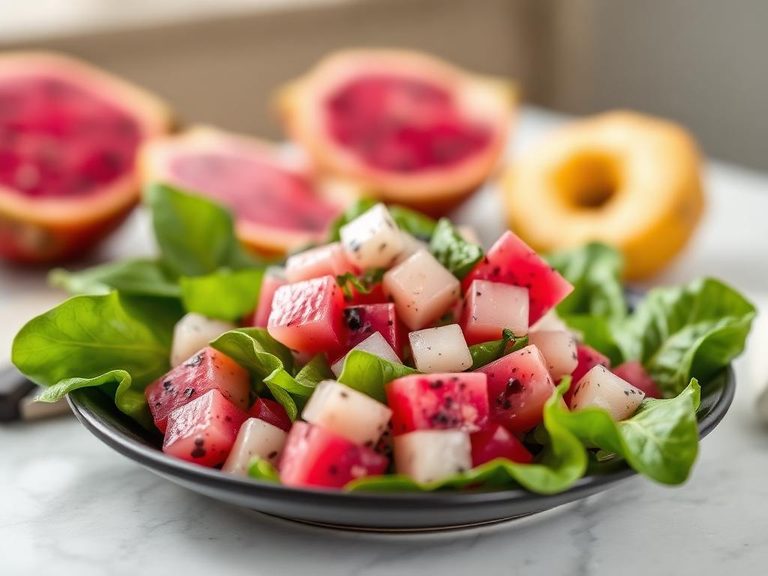
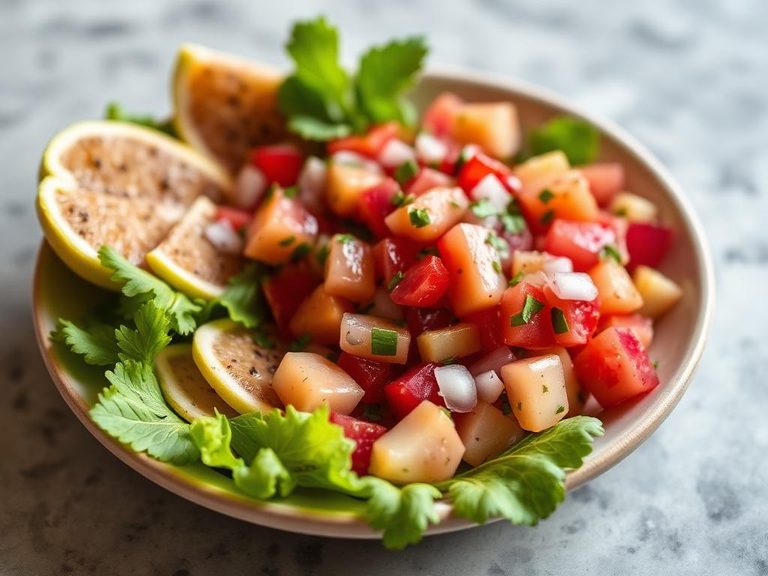
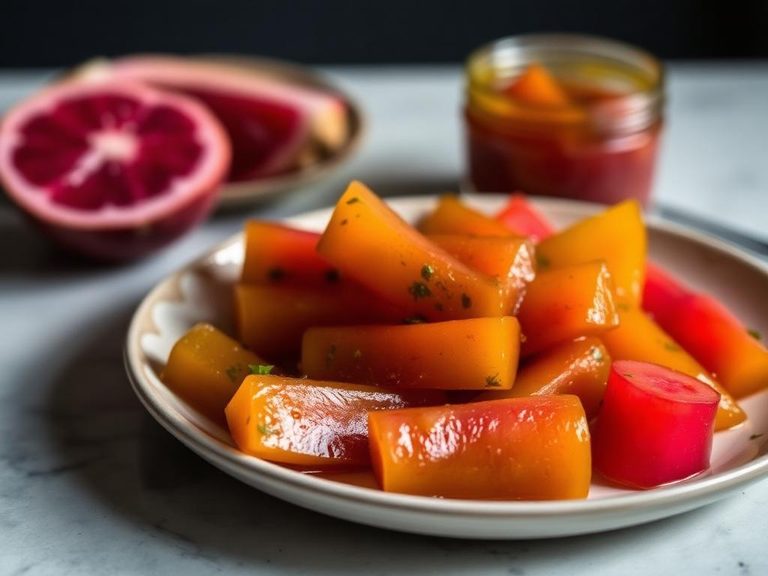
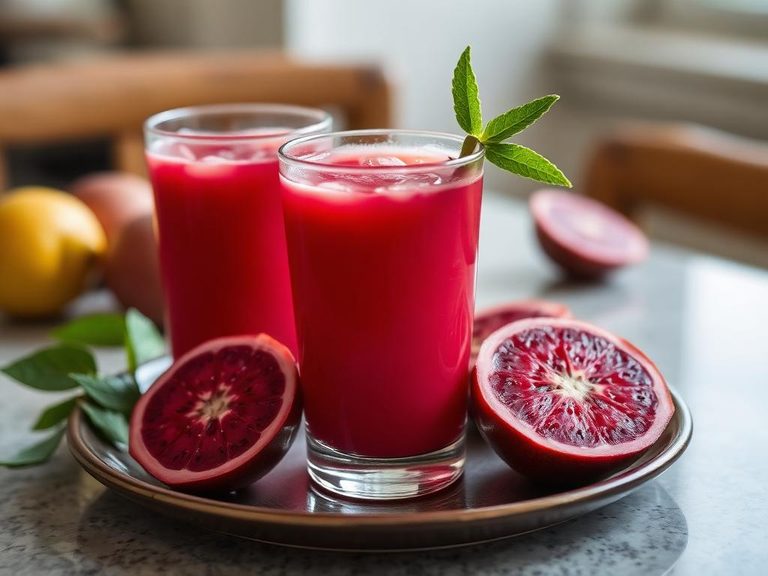
🌍 Where it's eaten
💡 Did you know?
The entire starfruit is edible, including the thin, waxy skin and seeds, though the ridges can become slightly more bitter when fully ripe.
Full nutrition (USDA data · scales with serving)
| Water | 91.4 g |
| Energy | 31.0 kcal |
| Protein | 1.0 g |
| Total lipid (fat) | 0.33 g |
| Carbohydrate, by difference | 6.7 g |
| Fiber, total dietary | 2.8 g |
| Total Sugars | 4.0 g |
| Calcium, Ca | 3.0 mg |
| Iron, Fe | 0.08 mg |
| Magnesium, Mg | 10.0 mg |
| Phosphorus, P | 12.0 mg |
| Potassium, K | 133 mg |
| Sodium, Na | 2.0 mg |
| Zinc, Zn | 0.12 mg |
| Copper, Cu | 0.14 mg |
| Selenium, Se | 0.60 ug |
| Vitamin C, total ascorbic acid | 34.4 mg |
| Thiamin | 0.01 mg |
| Riboflavin | 0.02 mg |
| Niacin | 0.37 mg |
| Vitamin B-6 | 0.02 mg |
| Folate, total | 12.0 ug |
| Folic acid | 0.00 ug |
| Folate, food | 12.0 ug |
| Folate, DFE | 12.0 ug |
| Choline, total | 7.6 mg |
| Vitamin B-12 | 0.00 ug |
| Vitamin B-12, added | 0.00 ug |
| Vitamin A, RAE | 3.0 ug |
| Retinol | 0.00 ug |
| Carotene, beta | 25.0 ug |
| Carotene, alpha | 24.0 ug |
| Cryptoxanthin, beta | 0.00 ug |
| Lycopene | 0.00 ug |
| Lutein + zeaxanthin | 66.0 ug |
| Vitamin E (alpha-tocopherol) | 0.15 mg |
| Vitamin E, added | 0.00 mg |
| Vitamin D (D2 + D3) | 0.00 ug |
| Vitamin K (phylloquinone) | 0.00 ug |
| Alcohol, ethyl | 0.00 g |
| Caffeine | 0.00 mg |
| Theobromine | 0.00 mg |
Fat & fatty acid profile (per 100g)
| Fatty acids, total saturated | 0.02 g |
| SFA 4:0 | 0.00 g |
| SFA 6:0 | 0.00 g |
| SFA 8:0 | 0.00 g |
| SFA 10:0 | 0.00 g |
| SFA 12:0 | 0.00 g |
| SFA 14:0 | 0.00 g |
| SFA 16:0 | 0.01 g |
| SFA 18:0 | 0.01 g |
| Fatty acids, total monounsaturated | 0.03 g |
| MUFA 16:1 | 0.00 g |
| MUFA 18:1 | 0.03 g |
| MUFA 20:1 | 0.00 g |
| MUFA 22:1 | 0.00 g |
| Fatty acids, total polyunsaturated | 0.18 g |
| PUFA 18:2 | 0.16 g |
| PUFA 18:3 | 0.03 g |
| PUFA 18:4 | 0.00 g |
| PUFA 20:4 | 0.00 g |
| PUFA 20:5 n-3 (EPA) | 0.00 g |
| PUFA 22:5 n-3 (DPA) | 0.00 g |
| PUFA 22:6 n-3 (DHA) | 0.00 g |
| Cholesterol | 0.00 mg |
Amino acid profile (per 100g)
Estimated from Carambola, (starfruit), raw — USDA does not publish this profile for Starfruit.
| Tryptophan | 0.01 g |
| Threonine | 0.04 g |
| Isoleucine | 0.04 g |
| Leucine | 0.08 g |
| Lysine | 0.08 g |
| Methionine | 0.02 g |
| Phenylalanine | 0.04 g |
| Tyrosine | 0.04 g |
| Valine | 0.05 g |
| Arginine | 0.02 g |
| Histidine | 0.01 g |
| Alanine | 0.07 g |
| Aspartic acid | 0.10 g |
| Glutamic acid | 0.15 g |
| Glycine | 0.05 g |
| Proline | 0.05 g |
| Serine | 0.08 g |
FAQ
How do I choose a ripe starfruit?
Look for fruit that is mostly yellow with slight green tinges at the ridges. It should be firm but give slightly to gentle pressure, and have a sweet, fragrant aroma at the stem end.
Can I eat the skin and seeds?
Yes, the entire fruit is edible. The skin is thin and waxy, and the small, pale seeds are generally not removed, though some people prefer to scoop them out for a smoother texture.
How should I store it?
Store whole, unripe starfruit at room temperature until it yellows. Once ripe, it can be refrigerated in a plastic bag for up to a week. Sliced starfruit should be consumed within a day or two.
Nutrient density (calculated · NRF9.3)
Nutrient Rich Foods index: beneficial nutrients (protein, fiber, vitamins, minerals) minus saturated fat, added sugar & sodium, per 100 kcal.
NRF9.3 index — Fulgoni, Keast & Drewnowski, 2009. Computed from USDA nutrients.
Weight-loss friendliness (composite index)
Energy density 0.31 kcal/g · 13% calories from protein · 2.8 g fiber · 4.0 g sugar per 100 g.
Composite of energy density (Rolls et al., 1999), protein & fiber satiety, minus sugar. A calculated heuristic — ranks satiety-per-calorie, not a clinical measure.
Dietary load (calculated from USDA values)
Potential renal acid load. Positive = acid-forming, negative = alkaline-forming.
Sodium-to-potassium ratio: 0.02 (lower is better — aim for ≤ 1)
Sodium:potassium per WHO potassium guidance. Computed from USDA nutrients.