

Soy sauce, reduced sodium, made from hydrolyzed vegetable protein
Whole food · Legumes and Legume Products

Photo: Wikipedia
This is a savory, umami-packed liquid seasoning made by breaking down plant proteins to create a deep, complex flavor base. It has a thin, watery texture and a rich brown color, delivering a potent salty-sweet taste with significantly less sodium than traditional soy sauce. Nutritionally, it's a low-fat, calorie-conscious way to add a major flavor boost to dishes.
Calorie split: 35% protein · 62% carbs · 3% fat
↓ Full nutrition💚 Why it's loved
People love it for its ability to instantly elevate the savory profile of a dish, making it a staple in quick weeknight cooking and Asian-inspired cuisine. Its reduced sodium content makes it a favored choice for those monitoring salt intake without sacrificing flavor.
⚠️ Watch-outs & how to enjoy it better
Despite being 'reduced sodium,' it is still a significant source of salt and can contribute to excessive sodium intake if used liberally. The hydrolyzed vegetable protein may contain wheat, making it a concern for those with celiac disease or gluten sensitivity. Tip: Use it as a finishing sauce rather than a cooking base to control portions, and always check the label for gluten-free certification if needed.
Key benefits
- Provides a concentrated umami flavor with about 30% less sodium than regular soy sauce.
- Adds depth and savory notes without significant fat or calories.
- A versatile flavor enhancer for marinades, stir-fries, and dipping sauces.
- Contains plant-based protein from the hydrolyzed vegetable source.
🍽️ Popular dishes
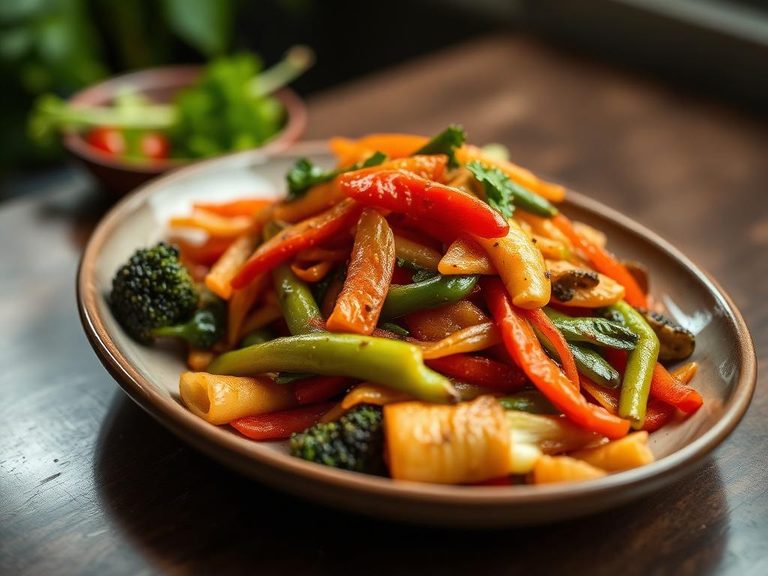
🌍 Where it's eaten
💡 Did you know?
Hydrolyzed vegetable protein (HVP) is often made from corn, soy, or wheat and is produced by boiling these foods in acid to break down the protein into free amino acids, which is what creates the intense savory, 'meaty' flavor.
Full nutrition (USDA data · scales with serving)
| Water | 63.3 g |
| Energy | 90.0 kcal |
| Energy | 375 kj |
| Protein | 8.2 g |
| Total lipid (fat) | 0.31 g |
| Ash | 13.7 g |
| Carbohydrate, by difference | 14.4 g |
| Fiber, total dietary | 0.30 g |
| Total Sugars | 5.6 g |
| Sucrose | 0.08 g |
| Glucose | 3.0 g |
| Fructose | 0.10 g |
| Lactose | 0.00 g |
| Maltose | 2.4 g |
| Galactose | 0.00 g |
| Calcium, Ca | 11.0 mg |
| Iron, Fe | 0.43 mg |
| Magnesium, Mg | 34.0 mg |
| Phosphorus, P | 89.0 mg |
| Potassium, K | 3098 mg |
| Sodium, Na | 2890 mg |
| Zinc, Zn | 0.25 mg |
| Copper, Cu | 0.05 mg |
| Manganese, Mn | 0.15 mg |
| Selenium, Se | 0.90 ug |
| Vitamin C, total ascorbic acid | 0.00 mg |
| Thiamin | 0.03 mg |
| Riboflavin | 0.04 mg |
| Niacin | 0.45 mg |
| Pantothenic acid | 0.15 mg |
| Vitamin B-6 | 0.04 mg |
| Folate, total | 4.0 ug |
| Folate, food | 4.0 ug |
| Choline, total | 31.6 mg |
| Betaine | 0.60 mg |
| Vitamin B-12 | 0.00 ug |
| Vitamin B-12, added | 0.00 ug |
| Vitamin A, RAE | 0.00 ug |
| Retinol | 0.00 ug |
| Carotene, beta | 0.00 ug |
| Carotene, alpha | 0.00 ug |
| Cryptoxanthin, beta | 0.00 ug |
| Vitamin A, IU | 0.00 iu |
| Lycopene | 0.00 ug |
| Lutein + zeaxanthin | 0.00 ug |
| Vitamin E (alpha-tocopherol) | 0.00 mg |
| Vitamin E, added | 0.00 mg |
| Tocopherol, beta | 0.00 mg |
| Tocopherol, gamma | 0.00 mg |
| Tocopherol, delta | 0.00 mg |
| Tocotrienol, alpha | 0.00 mg |
| Tocotrienol, beta | 0.00 mg |
| Tocotrienol, gamma | 0.00 mg |
| Tocotrienol, delta | 0.00 mg |
| Vitamin D (D2 + D3), International Units | 0.00 iu |
| Vitamin D (D2 + D3) | 0.00 ug |
| Vitamin K (phylloquinone) | 0.00 ug |
| Vitamin K (Dihydrophylloquinone) | 0.00 ug |
| Alcohol, ethyl | 0.00 g |
| Caffeine | 0.00 mg |
| Theobromine | 0.00 mg |
Fat & fatty acid profile (per 100g)
| Fatty acids, total saturated | 0.02 g |
| SFA 4:0 | 0.00 g |
| SFA 6:0 | 0.00 g |
| SFA 8:0 | 0.00 g |
| SFA 10:0 | 0.00 g |
| SFA 12:0 | 0.00 g |
| SFA 14:0 | 0.00 g |
| SFA 16:0 | 0.02 g |
| SFA 18:0 | 0.00 g |
| Fatty acids, total monounsaturated | 0.03 g |
| MUFA 16:1 | 0.00 g |
| MUFA 18:1 | 0.03 g |
| MUFA 20:1 | 0.00 g |
| MUFA 22:1 | 0.00 g |
| Fatty acids, total polyunsaturated | 0.09 g |
| PUFA 18:2 | 0.08 g |
| PUFA 18:3 | 0.01 g |
| PUFA 18:4 | 0.00 g |
| PUFA 20:4 | 0.00 g |
| PUFA 20:5 n-3 (EPA) | 0.00 g |
| PUFA 22:5 n-3 (DPA) | 0.00 g |
| PUFA 22:6 n-3 (DHA) | 0.00 g |
| Fatty acids, total trans | 0.00 g |
| Cholesterol | 0.00 mg |
Amino acid profile (per 100g)
| Hydroxyproline | 0.00 g |
FAQ
How does it differ from traditional soy sauce?
Traditional soy sauce is brewed from fermented soybeans and wheat, while this product is made by chemically hydrolyzing vegetable proteins. This process is faster and creates a similar flavor profile but with a different, often sharper, taste and a lower sodium content.
Is it gluten-free?
Not necessarily. Since it's made from hydrolyzed vegetable protein, the source vegetable (like wheat) determines if it contains gluten. You must check the specific product label for gluten-free certification.
Can I use it as a 1:1 replacement for regular soy sauce?
You can, but be aware the flavor is slightly different and less complex due to the lack of fermentation. You may need to adjust quantities, and the final dish will have less sodium.
Nutrient density (calculated · NRF9.3)
Nutrient Rich Foods index: beneficial nutrients (protein, fiber, vitamins, minerals) minus saturated fat, added sugar & sodium, per 100 kcal.
NRF9.3 index — Fulgoni, Keast & Drewnowski, 2009. Computed from USDA nutrients.
Weight-loss friendliness (composite index)
Energy density 0.90 kcal/g · 36% calories from protein · 0.3 g fiber · 5.6 g sugar per 100 g.
Composite of energy density (Rolls et al., 1999), protein & fiber satiety, minus sugar. A calculated heuristic — ranks satiety-per-calorie, not a clinical measure.
Dietary load (calculated from USDA values)
Potential renal acid load. Positive = acid-forming, negative = alkaline-forming.
Sodium-to-potassium ratio: 0.93 (lower is better — aim for ≤ 1)
Sodium:potassium per WHO potassium guidance. Computed from USDA nutrients.