

Rolls, gluten-free, white, made with brown rice flour, tapioca starch, and sorghum flour
Whole food · Baked Products
A light, airy roll with a tender crumb and mild, slightly sweet flavor, crafted from a gluten-free blend of brown rice flour, tapioca starch, and sorghum flour. It offers a satisfying, soft texture without the grittiness sometimes found in gluten-free baked goods. With 40g of carbs per 100g, it's a moderate-energy staple, but its 2.9g of fiber and 5.65g of protein help provide more sustained fuel than a typical white bread roll.
Calorie split: 9% protein · 63% carbs · 29% fat
↓ Full nutrition💚 Why it's loved
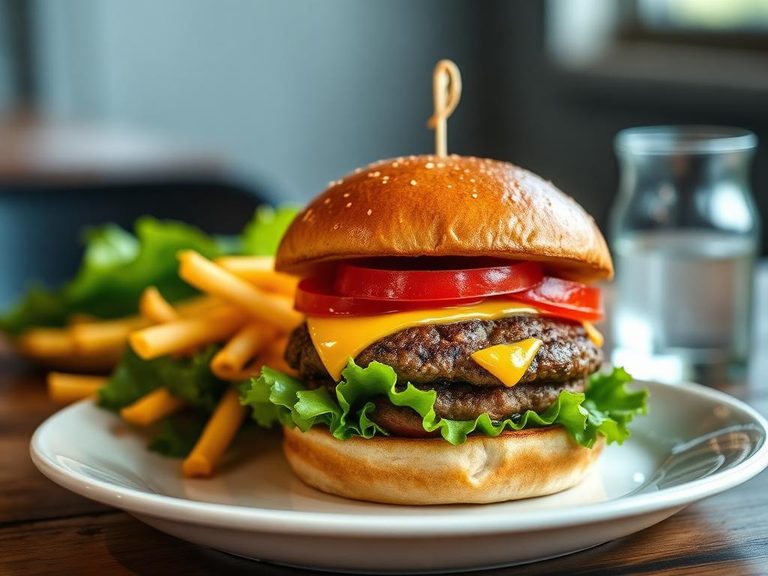
People love it for its remarkably close-to-traditional texture, making sandwiches and burgers enjoyable again for those avoiding gluten. Its mild flavor makes it a versatile canvas for both savory fillings and a simple smear of butter.
⚠️ Watch-outs & how to enjoy it better
The high carbohydrate content (40.24g per 100g) can lead to blood-sugar spikes if eaten alone, especially for those with insulin resistance. To counteract this, always pair it with protein (like turkey or eggs) and healthy fats (like avocado or cheese) to slow digestion. Also, check labels for added sodium, which can be high in commercial gluten-free breads.
Key benefits
- Naturally gluten-free, safe for celiac disease or gluten sensitivity.
- Brown rice flour and sorghum provide B vitamins and minerals like magnesium.
- Tapioca starch contributes to a light, chewy texture and quick energy.
- Good source of plant-based protein (5.65g per 100g) for a roll.
- Contains dietary fiber (2.9g per 100g) to support digestive health.
🍽️ Popular dishes


🌍 Where it's eaten
💡 Did you know?
Sorghum, one of its key flours, is a drought-resistant ancient grain that's the fifth most important cereal crop worldwide, often used in African and Indian cuisines before becoming a star in modern gluten-free baking.
Full nutrition (USDA data · scales with serving)
| Water | 44.6 g |
| Energy | 257 kcal |
| Energy | 1077 kj |
| Protein | 5.7 g |
| Total lipid (fat) | 8.2 g |
| Ash | 1.3 g |
| Carbohydrate, by difference | 40.2 g |
| Fiber, total dietary | 2.9 g |
| Total Sugars | 3.0 g |
| Sucrose | 0.00 g |
| Glucose | 1.3 g |
| Fructose | 1.6 g |
| Lactose | 0.00 g |
| Maltose | 0.18 g |
| Galactose | 0.00 g |
| Starch | 34.3 g |
| Calcium, Ca | 41.0 mg |
| Iron, Fe | 0.89 mg |
| Magnesium, Mg | 42.0 mg |
| Phosphorus, P | 128 mg |
| Potassium, K | 165 mg |
| Sodium, Na | 544 mg |
| Zinc, Zn | 0.77 mg |
| Copper, Cu | 0.11 mg |
| Manganese, Mn | 0.67 mg |
| Selenium, Se | 9.2 ug |
| Thiamin | 0.25 mg |
| Vitamin B-6 | 0.14 mg |
| Folate, total | 31.0 ug |
| Folate, food | 31.0 ug |
| Vitamin E (alpha-tocopherol) | 0.52 mg |
| Tocopherol, beta | 0.00 mg |
| Tocopherol, gamma | 2.7 mg |
| Tocopherol, delta | 0.00 mg |
| Tocotrienol, alpha | 0.00 mg |
| Tocotrienol, beta | 0.00 mg |
| Tocotrienol, gamma | 0.00 mg |
| Tocotrienol, delta | 0.00 mg |
Fat & fatty acid profile (per 100g)
Estimated from Rolls, dinner, rye — USDA does not publish this profile for Rolls.
| Fatty acids, total saturated | 0.60 g |
| SFA 4:0 | 0.00 g |
| SFA 6:0 | 0.00 g |
| SFA 8:0 | 0.00 g |
| SFA 10:0 | 0.00 g |
| SFA 12:0 | 0.00 g |
| SFA 14:0 | 0.01 g |
| SFA 16:0 | 0.37 g |
| SFA 18:0 | 0.23 g |
| Fatty acids, total monounsaturated | 1.2 g |
| MUFA 16:1 | 0.01 g |
| MUFA 18:1 | 1.2 g |
| MUFA 20:1 | 0.00 g |
| MUFA 22:1 | 0.00 g |
| Fatty acids, total polyunsaturated | 0.71 g |
| PUFA 18:2 | 0.66 g |
| PUFA 18:3 | 0.05 g |
| PUFA 18:4 | 0.00 g |
| PUFA 20:4 | 0.00 g |
| PUFA 20:5 n-3 (EPA) | 0.00 g |
| PUFA 22:5 n-3 (DPA) | 0.00 g |
| PUFA 22:6 n-3 (DHA) | 0.00 g |
| Cholesterol | 0.00 mg |
Amino acid profile (per 100g)
Estimated from Rolls, dinner, rye — USDA does not publish this profile for Rolls.
| Tryptophan | 0.12 g |
| Threonine | 0.31 g |
| Isoleucine | 0.40 g |
| Leucine | 0.71 g |
| Lysine | 0.28 g |
| Methionine | 0.17 g |
| Cystine | 0.21 g |
| Phenylalanine | 0.51 g |
| Tyrosine | 0.26 g |
| Valine | 0.47 g |
| Arginine | 0.40 g |
| Histidine | 0.22 g |
| Alanine | 0.36 g |
| Aspartic acid | 0.53 g |
| Glutamic acid | 3.2 g |
| Glycine | 0.37 g |
| Proline | 1.1 g |
| Serine | 0.51 g |
FAQ
How does the texture differ from regular wheat rolls?
It's typically softer and slightly chewier due to the tapioca starch, with a tender crumb. It may lack the exact elasticity of gluten but is designed to be non-crumbly.
Is it suitable for a low-carb diet?
No. At over 40g of carbohydrates per 100g, it is a high-carb food. Those on low-carb or keto diets should look for alternatives made with almond or coconut flour.
Can I freeze these rolls?
Yes, they freeze very well. Wrap them individually in plastic wrap and place in a freezer bag. Thaw at room temperature or toast directly from frozen for the best texture.
Nutrient density (calculated · NRF9.3)
Nutrient Rich Foods index: beneficial nutrients (protein, fiber, vitamins, minerals) minus saturated fat, added sugar & sodium, per 100 kcal.
NRF9.3 index — Fulgoni, Keast & Drewnowski, 2009. Computed from USDA nutrients.
Weight-loss friendliness (composite index)
Energy density 2.57 kcal/g · 9% calories from protein · 2.9 g fiber · 3.0 g sugar per 100 g.
Composite of energy density (Rolls et al., 1999), protein & fiber satiety, minus sugar. A calculated heuristic — ranks satiety-per-calorie, not a clinical measure.
Dietary load (calculated from USDA values)
Potential renal acid load. Positive = acid-forming, negative = alkaline-forming.
Sodium-to-potassium ratio: 3.30 (lower is better — aim for ≤ 1)
Sodium:potassium per WHO potassium guidance. Computed from USDA nutrients.