

Rice, brown, with carrots, fat added
Common food

Photo: Wikipedia
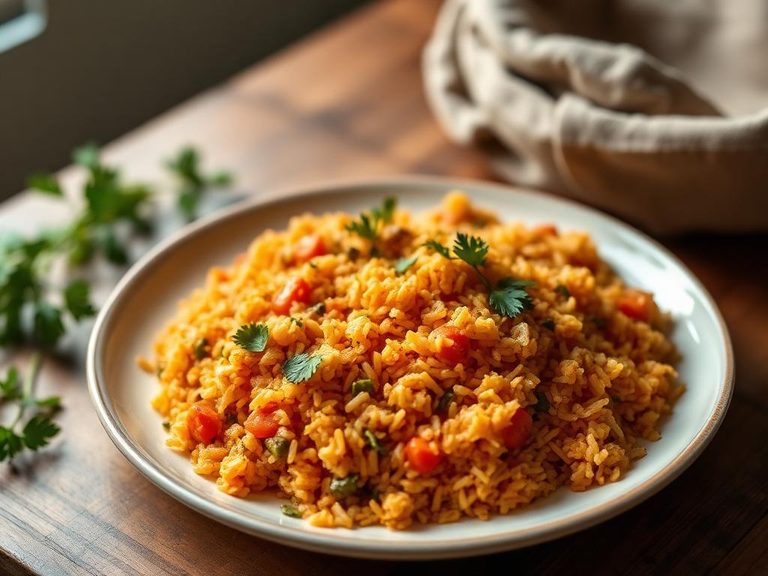
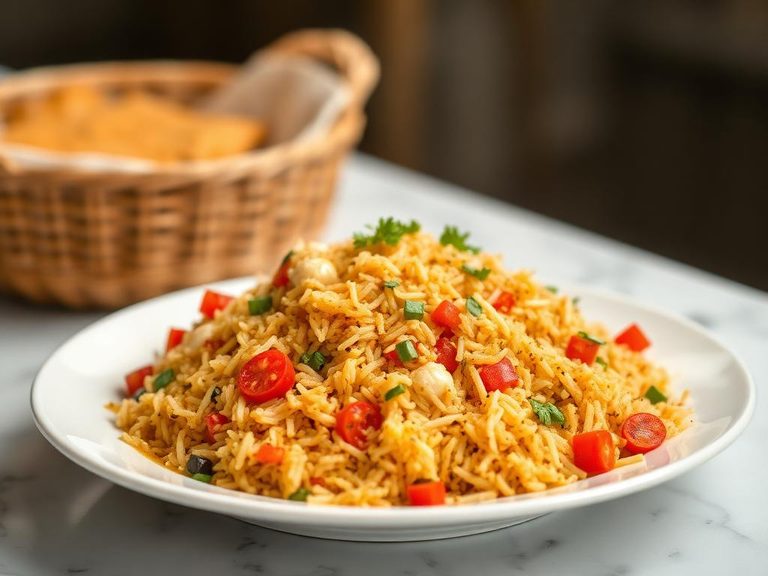
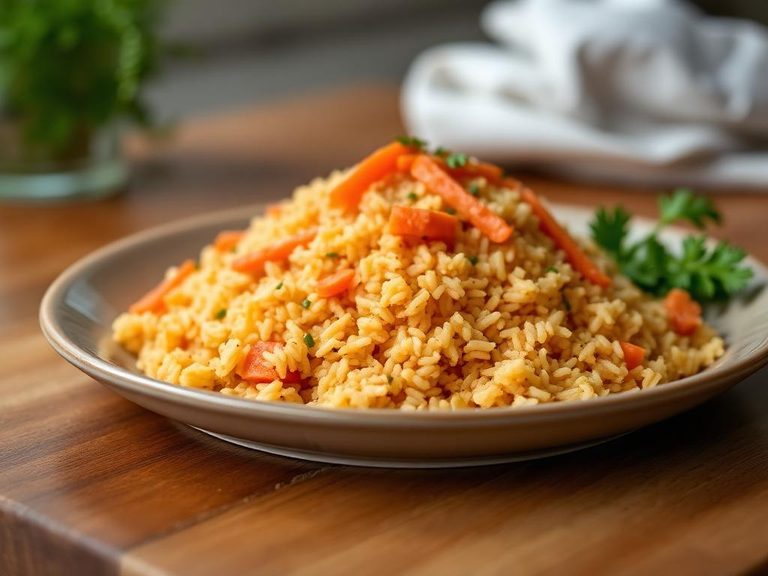
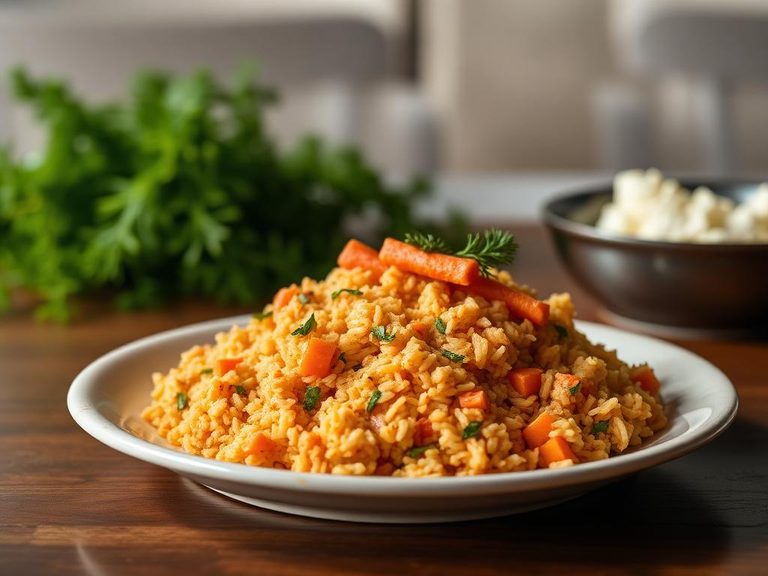
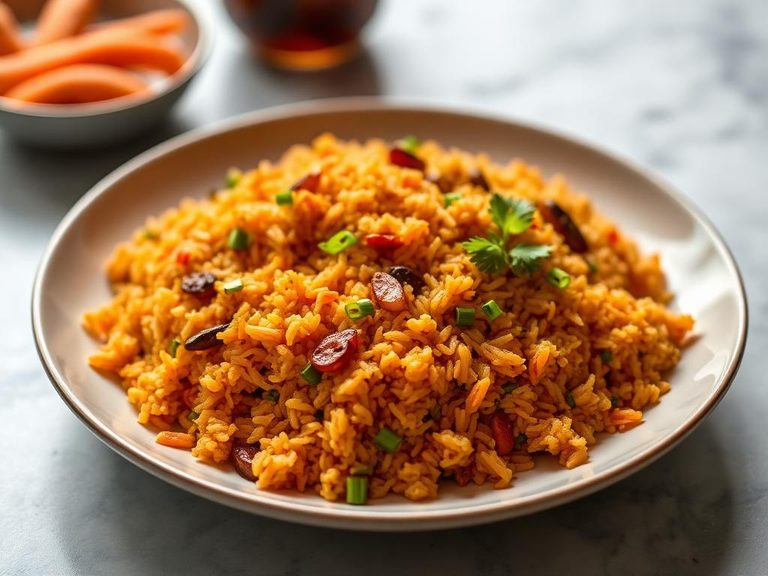
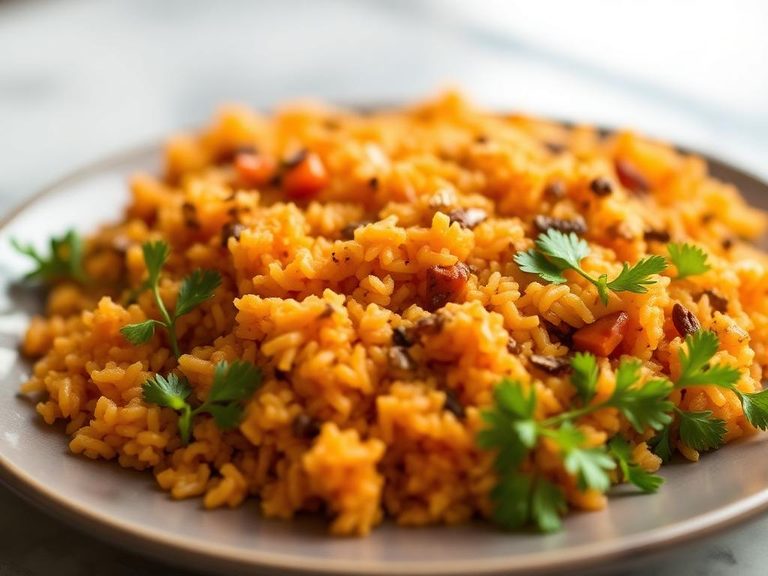
A comforting staple of nutty, chewy brown rice studded with sweet, tender carrot pieces and lightly enriched with a touch of fat. Its texture is pleasantly hearty with a subtle earthy sweetness from the carrots, making it more flavorful than plain steamed rice. Nutritionally, it offers a solid fiber boost and balanced energy from complex carbs, making it a satisfying base for any meal.
Calorie split: 8% protein · 72% carbs · 20% fat
↓ Full nutrition💚 Why it's loved
People love it for its comforting, home-cooked flavor that balances nutty grains with the natural sweetness of carrots. It is a beloved, versatile side dish that complements everything from stir-fries to stews across many cultures.
⚠️ Watch-outs & how to enjoy it better
The natural sugars in carrots and the carbohydrate density can cause blood sugar spikes if eaten in large portions without protein or fat. To counteract this, pair it with a source of protein (like beans or chicken) and healthy fats, and practice portion control. Also, brown rice contains phytic acid, which can reduce mineral absorption; soaking or sprouting the rice before cooking can help mitigate this.
Key benefits
- Provides sustained energy from complex carbohydrates and fiber
- Contains beta-carotene from carrots, supporting eye health
- The added fat improves absorption of fat-soluble vitamins like vitamin A
- Higher in fiber and minerals than white rice due to the bran layer
- A versatile, low-sodium base that pairs well with many proteins and vegetables
🍽️ Popular dishes
🌍 Where it's eaten
💡 Did you know?
The beta-carotene in carrots, which gives them their orange color, is a provitamin that your body converts into vitamin A—essential for night vision and immune function.
Full nutrition (USDA data · scales with serving)
| Water | 72.8 g |
| Energy | 119 kcal |
| Protein | 2.3 g |
| Total lipid (fat) | 2.6 g |
| Carbohydrate, by difference | 21.4 g |
| Fiber, total dietary | 1.9 g |
| Total Sugars | 0.90 g |
| Calcium, Ca | 9.0 mg |
| Iron, Fe | 0.50 mg |
| Magnesium, Mg | 32.0 mg |
| Phosphorus, P | 86.0 mg |
| Potassium, K | 115 mg |
| Sodium, Na | 168 mg |
| Zinc, Zn | 0.59 mg |
| Copper, Cu | 0.09 mg |
| Selenium, Se | 4.6 ug |
| Vitamin C, total ascorbic acid | 0.70 mg |
| Thiamin | 0.15 mg |
| Riboflavin | 0.06 mg |
| Niacin | 2.1 mg |
| Vitamin B-6 | 0.13 mg |
| Folate, total | 10.0 ug |
| Folic acid | 0.00 ug |
| Folate, food | 10.0 ug |
| Folate, DFE | 10.0 ug |
| Choline, total | 8.9 mg |
| Vitamin B-12 | 0.00 ug |
| Vitamin B-12, added | 0.00 ug |
| Vitamin A, RAE | 175 ug |
| Retinol | 0.00 ug |
| Carotene, beta | 1715 ug |
| Carotene, alpha | 777 ug |
| Cryptoxanthin, beta | 0.00 ug |
| Lycopene | 0.00 ug |
| Lutein + zeaxanthin | 141 ug |
| Vitamin E (alpha-tocopherol) | 0.69 mg |
| Vitamin E, added | 0.00 mg |
| Vitamin D (D2 + D3) | 0.00 ug |
| Vitamin K (phylloquinone) | 4.8 ug |
| Alcohol, ethyl | 0.00 g |
| Caffeine | 0.00 mg |
| Theobromine | 0.00 mg |
Fat & fatty acid profile (per 100g)
| Fatty acids, total saturated | 0.45 g |
| SFA 4:0 | 0.00 g |
| SFA 6:0 | 0.00 g |
| SFA 8:0 | 0.00 g |
| SFA 10:0 | 0.01 g |
| SFA 12:0 | 0.00 g |
| SFA 14:0 | 0.01 g |
| SFA 16:0 | 0.34 g |
| SFA 18:0 | 0.07 g |
| Fatty acids, total monounsaturated | 1.1 g |
| MUFA 16:1 | 0.01 g |
| MUFA 18:1 | 1.0 g |
| MUFA 20:1 | 0.01 g |
| MUFA 22:1 | 0.00 g |
| Fatty acids, total polyunsaturated | 1.0 g |
| PUFA 18:2 | 0.92 g |
| PUFA 18:3 | 0.09 g |
| PUFA 18:4 | 0.00 g |
| PUFA 20:4 | 0.00 g |
| PUFA 20:5 n-3 (EPA) | 0.00 g |
| PUFA 22:5 n-3 (DPA) | 0.00 g |
| PUFA 22:6 n-3 (DHA) | 0.00 g |
| Cholesterol | 0.00 mg |
Amino acid profile (per 100g)
Estimated from Snacks, rice cakes, brown rice, sesame seed — USDA does not publish this profile for Rice.
| Tryptophan | 0.10 g |
| Threonine | 0.28 g |
| Isoleucine | 0.32 g |
| Leucine | 0.63 g |
| Lysine | 0.29 g |
| Methionine | 0.17 g |
| Cystine | 0.09 g |
| Phenylalanine | 0.39 g |
| Tyrosine | 0.29 g |
| Valine | 0.44 g |
| Arginine | 0.59 g |
| Histidine | 0.19 g |
| Alanine | 0.44 g |
| Aspartic acid | 0.71 g |
| Glutamic acid | 1.6 g |
| Glycine | 0.38 g |
| Proline | 0.35 g |
| Serine | 0.39 g |
FAQ
Is brown rice with carrots healthy?
Yes, it is a nutritious choice. Brown rice provides fiber, magnesium, and B vitamins, while carrots add beta-carotene and natural sweetness. The added fat helps your body absorb fat-soluble vitamins from the carrots.
How does this differ from white rice with carrots?
Brown rice retains its bran and germ layers, making it higher in fiber, vitamins, and minerals than white rice. It has a chewier texture and nuttier flavor, and its complex carbohydrates provide more sustained energy.
Can I make this dish vegan or gluten-free?
Yes, it is naturally vegan and gluten-free as long as you use a plant-based fat (like olive oil) and avoid any cross-contamination with gluten-containing ingredients.
Nutrient density (calculated · NRF9.3)
Nutrient Rich Foods index: beneficial nutrients (protein, fiber, vitamins, minerals) minus saturated fat, added sugar & sodium, per 100 kcal.
NRF9.3 index — Fulgoni, Keast & Drewnowski, 2009. Computed from USDA nutrients.
Weight-loss friendliness (composite index)
Energy density 1.19 kcal/g · 8% calories from protein · 1.9 g fiber · 0.9 g sugar per 100 g.
Composite of energy density (Rolls et al., 1999), protein & fiber satiety, minus sugar. A calculated heuristic — ranks satiety-per-calorie, not a clinical measure.
Dietary load (calculated from USDA values)
Potential renal acid load. Positive = acid-forming, negative = alkaline-forming.
Sodium-to-potassium ratio: 1.46 (lower is better — aim for ≤ 1)
Sodium:potassium per WHO potassium guidance. Computed from USDA nutrients.