

Quinoa, no added fat
Common food

Photo: Wikipedia
Quinoa is a tiny, bead-like seed that cooks into a fluffy, slightly chewy grain with a delicate, nutty flavor. It's a complete protein, packing all nine essential amino acids, and its mild taste makes it a versatile canvas for both savory and sweet dishes.
Calorie split: 15% protein · 71% carbs · 14% fat
↓ Full nutrition💚 Why it's loved
People love quinoa for its incredible versatility—it absorbs flavors beautifully and serves as a hearty base for salads, bowls, or a substitute for rice. Its satisfying texture and nutritional completeness make it a staple in health-conscious and plant-based kitchens worldwide.
⚠️ Watch-outs & how to enjoy it better
Some find quinoa's natural saponin coating can impart a bitter, soapy taste if not rinsed thoroughly. To counteract this, always rinse it under cold water in a fine-mesh strainer before cooking. Its high fiber content may cause digestive discomfort for those not accustomed to it; start with smaller portions and increase gradually.
Key benefits
- Complete plant-based protein source
- High in fiber for digestive health
- Naturally gluten-free
- Rich in minerals like magnesium and iron
- Low glycemic index for steady energy
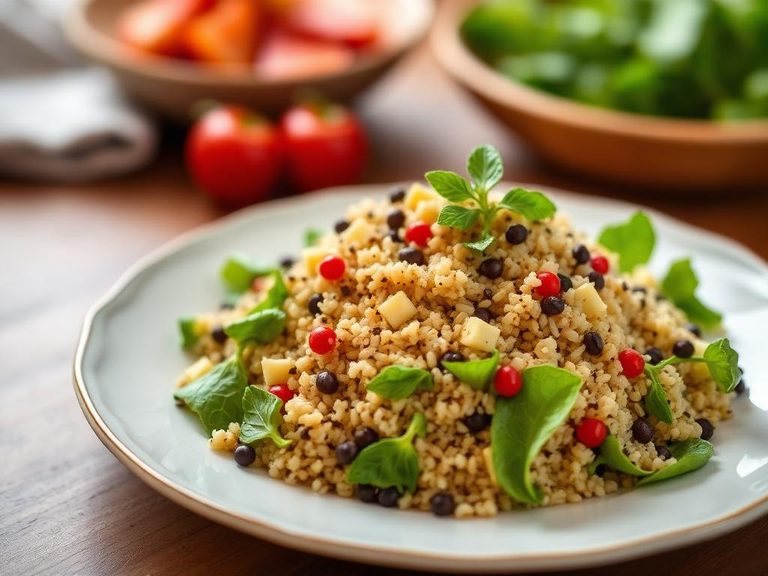
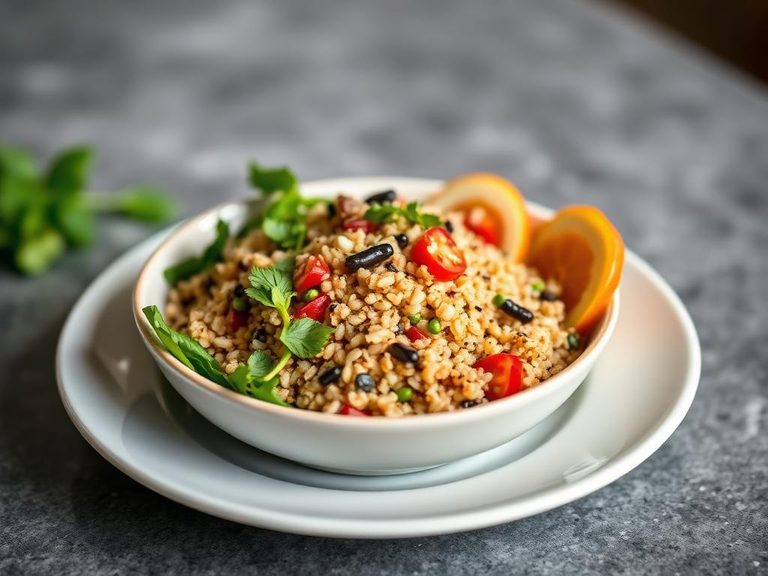
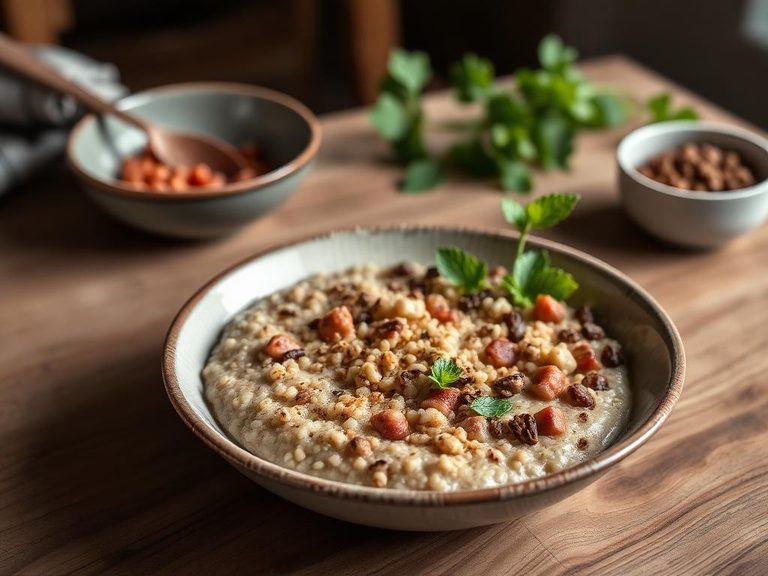
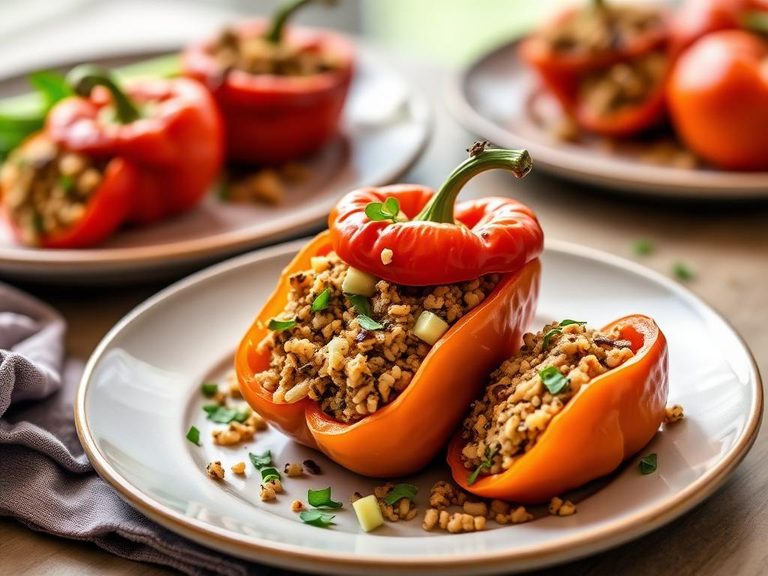
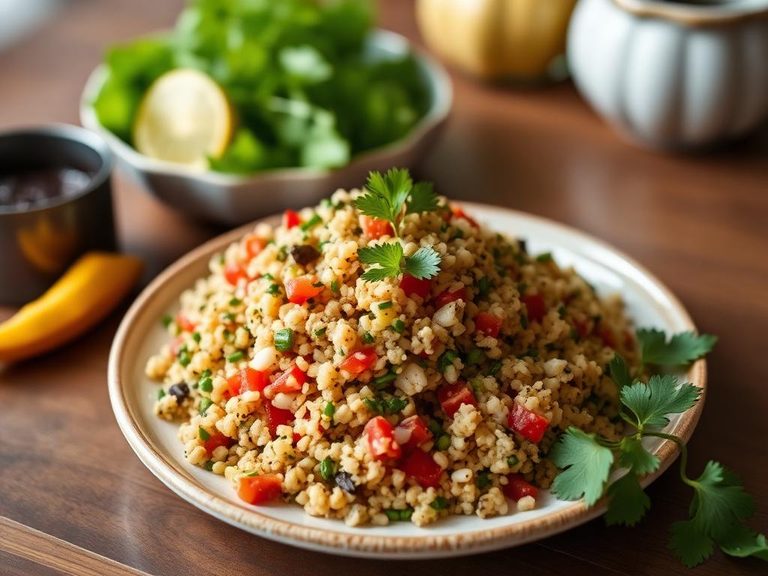
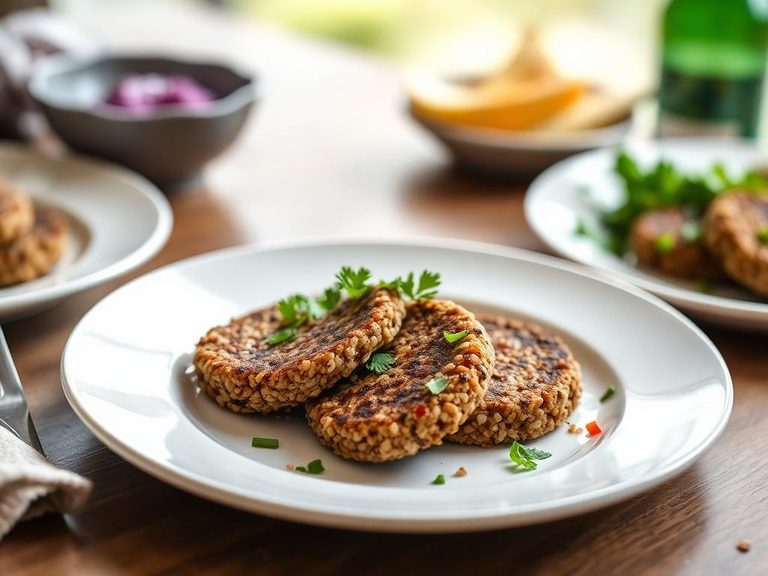
🍽️ Popular dishes
🌍 Where it's eaten
💡 Did you know?
NASA has considered quinoa a top candidate for long-duration space missions due to its exceptional nutritional density and ease of cultivation in controlled environments.
Full nutrition (USDA data · scales with serving)
| Water | 71.3 g |
| Energy | 120 kcal |
| Protein | 4.4 g |
| Total lipid (fat) | 1.9 g |
| Carbohydrate, by difference | 21.2 g |
| Fiber, total dietary | 2.8 g |
| Total Sugars | 0.87 g |
| Calcium, Ca | 17.0 mg |
| Iron, Fe | 1.5 mg |
| Magnesium, Mg | 64.0 mg |
| Phosphorus, P | 151 mg |
| Potassium, K | 171 mg |
| Sodium, Na | 163 mg |
| Zinc, Zn | 1.1 mg |
| Copper, Cu | 0.19 mg |
| Selenium, Se | 2.8 ug |
| Vitamin C, total ascorbic acid | 0.00 mg |
| Thiamin | 0.11 mg |
| Riboflavin | 0.11 mg |
| Niacin | 0.41 mg |
| Vitamin B-6 | 0.12 mg |
| Folate, total | 42.0 ug |
| Folic acid | 0.00 ug |
| Folate, food | 42.0 ug |
| Folate, DFE | 42.0 ug |
| Choline, total | 22.9 mg |
| Vitamin B-12 | 0.00 ug |
| Vitamin B-12, added | 0.00 ug |
| Vitamin A, RAE | 0.00 ug |
| Retinol | 0.00 ug |
| Carotene, beta | 3.0 ug |
| Carotene, alpha | 0.00 ug |
| Cryptoxanthin, beta | 0.00 ug |
| Lycopene | 0.00 ug |
| Lutein + zeaxanthin | 53.0 ug |
| Vitamin E (alpha-tocopherol) | 0.63 mg |
| Vitamin E, added | 0.00 mg |
| Vitamin D (D2 + D3) | 0.00 ug |
| Vitamin K (phylloquinone) | 0.00 ug |
| Alcohol, ethyl | 0.00 g |
| Caffeine | 0.00 mg |
| Theobromine | 0.00 mg |
Fat & fatty acid profile (per 100g)
| Fatty acids, total saturated | 0.23 g |
| SFA 4:0 | 0.00 g |
| SFA 6:0 | 0.00 g |
| SFA 8:0 | 0.00 g |
| SFA 10:0 | 0.00 g |
| SFA 12:0 | 0.00 g |
| SFA 14:0 | 0.00 g |
| SFA 16:0 | 0.20 g |
| SFA 18:0 | 0.01 g |
| Fatty acids, total monounsaturated | 0.53 g |
| MUFA 16:1 | 0.00 g |
| MUFA 18:1 | 0.46 g |
| MUFA 20:1 | 0.03 g |
| MUFA 22:1 | 0.03 g |
| Fatty acids, total polyunsaturated | 1.1 g |
| PUFA 18:2 | 0.97 g |
| PUFA 18:3 | 0.09 g |
| PUFA 18:4 | 0.00 g |
| PUFA 20:4 | 0.00 g |
| PUFA 20:5 n-3 (EPA) | 0.00 g |
| PUFA 22:5 n-3 (DPA) | 0.00 g |
| PUFA 22:6 n-3 (DHA) | 0.01 g |
| Cholesterol | 0.00 mg |
Amino acid profile (per 100g)
Estimated from Quinoa, uncooked — USDA does not publish this profile for Quinoa.
| Tryptophan | 0.17 g |
| Threonine | 0.42 g |
| Isoleucine | 0.50 g |
| Leucine | 0.84 g |
| Lysine | 0.77 g |
| Methionine | 0.31 g |
| Cystine | 0.20 g |
| Phenylalanine | 0.59 g |
| Tyrosine | 0.27 g |
| Valine | 0.59 g |
| Arginine | 1.1 g |
| Histidine | 0.41 g |
| Alanine | 0.59 g |
| Aspartic acid | 1.1 g |
| Glutamic acid | 1.9 g |
| Glycine | 0.69 g |
| Proline | 0.77 g |
| Serine | 0.57 g |
FAQ
How do I cook quinoa to avoid bitterness?
Always rinse quinoa thoroughly under cold water for 1-2 minutes using a fine-mesh strainer to remove the natural saponin coating. You can also toast it in a dry pan for a few minutes before adding liquid to enhance its nutty flavor.
Is quinoa a grain or a seed?
Quinoa is technically a seed from a leafy plant related to spinach and beets, but it's prepared and eaten like a whole grain. It's often called a 'pseudo-cereal' for this reason.
What's the difference between white, red, and black quinoa?
White quinoa is the most common with a mild flavor and light texture. Red and black varieties have a slightly earthier taste, chewier texture, and retain their color after cooking, making them visually striking in dishes.
Nutrient density (calculated · NRF9.3)
Nutrient Rich Foods index: beneficial nutrients (protein, fiber, vitamins, minerals) minus saturated fat, added sugar & sodium, per 100 kcal.
NRF9.3 index — Fulgoni, Keast & Drewnowski, 2009. Computed from USDA nutrients.
Weight-loss friendliness (composite index)
Energy density 1.20 kcal/g · 15% calories from protein · 2.8 g fiber · 0.9 g sugar per 100 g.
Composite of energy density (Rolls et al., 1999), protein & fiber satiety, minus sugar. A calculated heuristic — ranks satiety-per-calorie, not a clinical measure.
Dietary load (calculated from USDA values)
Potential renal acid load. Positive = acid-forming, negative = alkaline-forming.
Sodium-to-potassium ratio: 0.95 (lower is better — aim for ≤ 1)
Sodium:potassium per WHO potassium guidance. Computed from USDA nutrients.