

Quinoa, fat added
Common food

Photo: Wikipedia
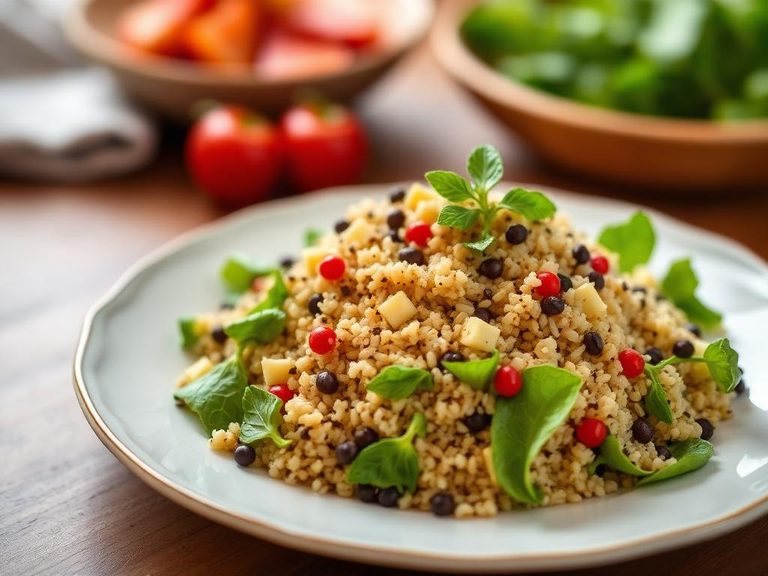
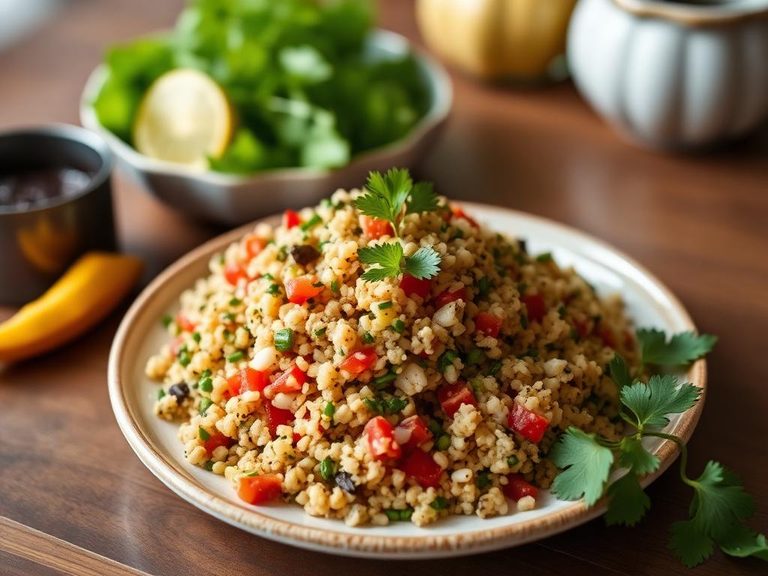
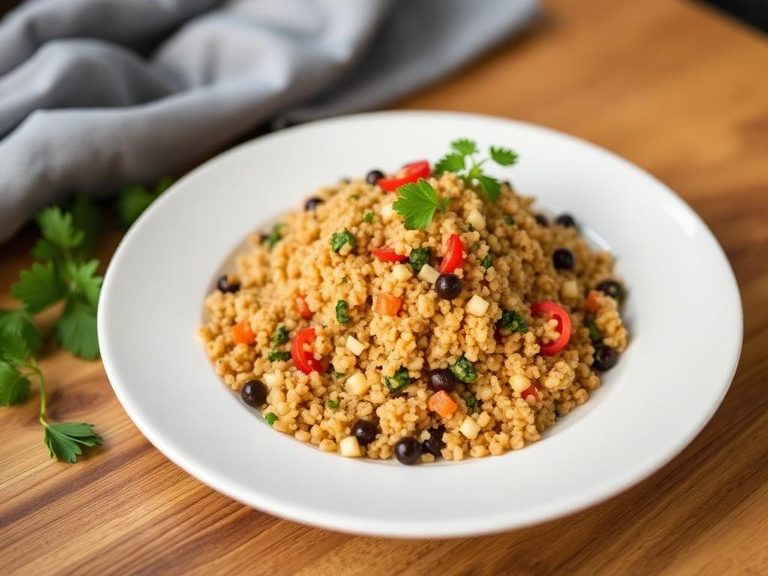
Quinoa with fat added is a fluffy, nutty pseudo-grain that pops with a slight crunch. The added oil gives it a richer mouthfeel and a subtle sheen, enhancing its earthy, mildly grassy flavor. Nutritionally, it's a solid plant-based protein source with a good dose of fiber and healthy fats.
Calorie split: 11% protein · 55% carbs · 33% fat
↓ Full nutrition💚 Why it's loved
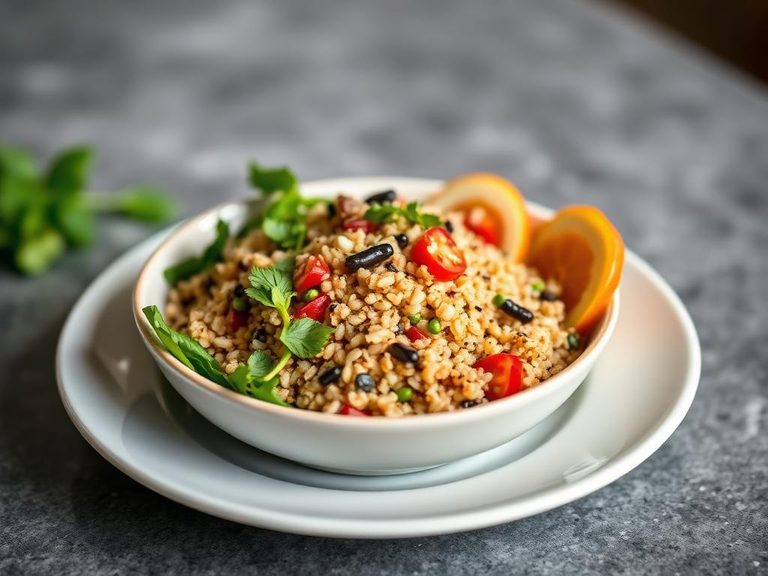
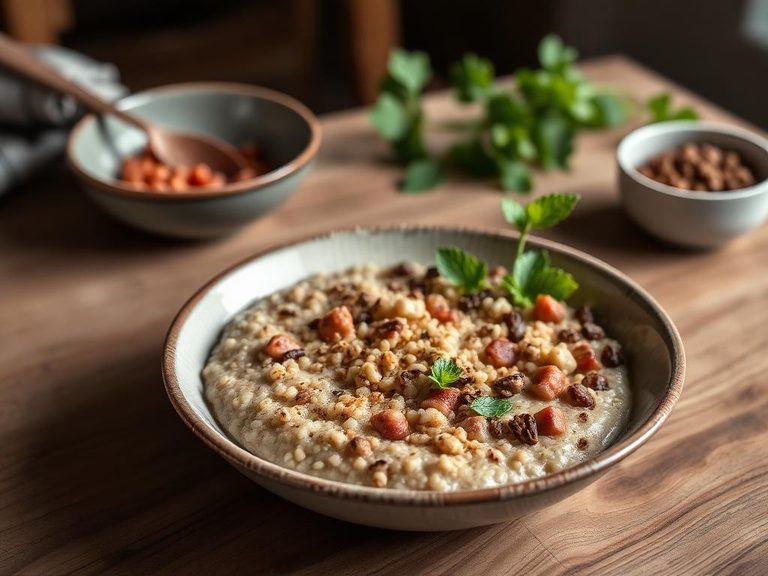
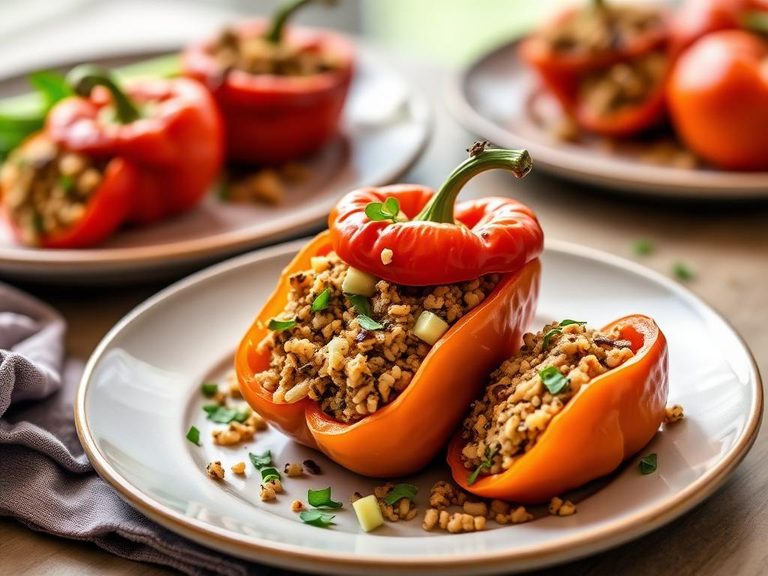
People love its versatile, mild nutty taste that absorbs dressings and spices beautifully. Its satisfying, slightly chewy texture makes it a hearty base for everything from salads to grain bowls.
⚠️ Watch-outs & how to enjoy it better
The natural saponin coating can taste bitter or soapy if not rinsed well. For those monitoring blood sugar, its carb content (20g/100g) is notable, so pairing with extra vegetables or lean protein can help moderate the glycemic response.
Key benefits
- Complete protein with all 9 essential amino acids
- High in fiber for digestive health and satiety
- Good source of plant-based iron and magnesium
- Naturally gluten-free, suitable for celiac diets
- The added fat can aid absorption of fat-soluble vitamins.
🍽️ Popular dishes
🌍 Where it's eaten
💡 Did you know?
Quinoa isn't technically a grain but a seed from a plant related to spinach and beets.
Full nutrition (USDA data · scales with serving)
| Water | 69.0 g |
| Energy | 146 kcal |
| Protein | 4.2 g |
| Total lipid (fat) | 5.4 g |
| Carbohydrate, by difference | 20.2 g |
| Fiber, total dietary | 2.7 g |
| Total Sugars | 0.84 g |
| Calcium, Ca | 17.0 mg |
| Iron, Fe | 1.4 mg |
| Magnesium, Mg | 61.0 mg |
| Phosphorus, P | 145 mg |
| Potassium, K | 164 mg |
| Sodium, Na | 184 mg |
| Zinc, Zn | 1.0 mg |
| Copper, Cu | 0.18 mg |
| Selenium, Se | 2.7 ug |
| Vitamin C, total ascorbic acid | 0.00 mg |
| Thiamin | 0.10 mg |
| Riboflavin | 0.10 mg |
| Niacin | 0.39 mg |
| Vitamin B-6 | 0.17 mg |
| Folate, total | 40.0 ug |
| Folic acid | 0.00 ug |
| Folate, food | 40.0 ug |
| Folate, DFE | 40.0 ug |
| Choline, total | 22.6 mg |
| Vitamin B-12 | 0.00 ug |
| Vitamin B-12, added | 0.00 ug |
| Vitamin A, RAE | 37.0 ug |
| Retinol | 36.0 ug |
| Carotene, beta | 19.0 ug |
| Carotene, alpha | 0.00 ug |
| Cryptoxanthin, beta | 0.00 ug |
| Lycopene | 0.00 ug |
| Lutein + zeaxanthin | 50.0 ug |
| Vitamin E (alpha-tocopherol) | 0.94 mg |
| Vitamin E, added | 0.00 mg |
| Vitamin D (D2 + D3) | 0.10 ug |
| Vitamin K (phylloquinone) | 2.1 ug |
| Alcohol, ethyl | 0.00 g |
| Caffeine | 0.00 mg |
| Theobromine | 0.00 mg |
Fat & fatty acid profile (per 100g)
| Fatty acids, total saturated | 1.8 g |
| SFA 4:0 | 0.06 g |
| SFA 6:0 | 0.04 g |
| SFA 8:0 | 0.02 g |
| SFA 10:0 | 0.06 g |
| SFA 12:0 | 0.07 g |
| SFA 14:0 | 0.21 g |
| SFA 16:0 | 0.93 g |
| SFA 18:0 | 0.32 g |
| Fatty acids, total monounsaturated | 1.4 g |
| MUFA 16:1 | 0.03 g |
| MUFA 18:1 | 1.3 g |
| MUFA 20:1 | 0.04 g |
| MUFA 22:1 | 0.03 g |
| Fatty acids, total polyunsaturated | 1.6 g |
| PUFA 18:2 | 1.4 g |
| PUFA 18:3 | 0.14 g |
| PUFA 18:4 | 0.00 g |
| PUFA 20:4 | 0.01 g |
| PUFA 20:5 n-3 (EPA) | 0.00 g |
| PUFA 22:5 n-3 (DPA) | 0.00 g |
| PUFA 22:6 n-3 (DHA) | 0.01 g |
| Cholesterol | 7.0 mg |
Amino acid profile (per 100g)
Estimated from Quinoa, uncooked — USDA does not publish this profile for Quinoa.
| Tryptophan | 0.17 g |
| Threonine | 0.42 g |
| Isoleucine | 0.50 g |
| Leucine | 0.84 g |
| Lysine | 0.77 g |
| Methionine | 0.31 g |
| Cystine | 0.20 g |
| Phenylalanine | 0.59 g |
| Tyrosine | 0.27 g |
| Valine | 0.59 g |
| Arginine | 1.1 g |
| Histidine | 0.41 g |
| Alanine | 0.59 g |
| Aspartic acid | 1.1 g |
| Glutamic acid | 1.9 g |
| Glycine | 0.69 g |
| Proline | 0.77 g |
| Serine | 0.57 g |
FAQ
Why is it called a pseudo-cereal?
Because it's a seed prepared and eaten like a true cereal grain (like wheat or rice), but it comes from a broadleaf plant, not a grass.
What's the deal with saponins?
Saponins are a natural, bitter coating on quinoa seeds that protect them from pests. Most commercial quinoa is pre-rinsed, but a quick rinse under cold water before cooking ensures any residual bitterness is removed.
How does the added fat affect nutrition?
The added fat increases the calorie and fat content slightly but can make the meal more satisfying and help your body absorb fat-soluble nutrients like vitamin E from the quinoa itself.
Nutrient density (calculated · NRF9.3)
Nutrient Rich Foods index: beneficial nutrients (protein, fiber, vitamins, minerals) minus saturated fat, added sugar & sodium, per 100 kcal.
NRF9.3 index — Fulgoni, Keast & Drewnowski, 2009. Computed from USDA nutrients.
Weight-loss friendliness (composite index)
Energy density 1.46 kcal/g · 12% calories from protein · 2.7 g fiber · 0.8 g sugar per 100 g.
Composite of energy density (Rolls et al., 1999), protein & fiber satiety, minus sugar. A calculated heuristic — ranks satiety-per-calorie, not a clinical measure.
Dietary load (calculated from USDA values)
Potential renal acid load. Positive = acid-forming, negative = alkaline-forming.
Sodium-to-potassium ratio: 1.12 (lower is better — aim for ≤ 1)
Sodium:potassium per WHO potassium guidance. Computed from USDA nutrients.