

Prune juice, canned
Whole food · Fruits and Fruit Juices

Photo: Wikipedia
Prune juice is a thick, dark, and intensely sweet beverage made from dried plums. Its flavor is a deep, caramel-like sweetness with a distinct tartness and a smooth, slightly viscous texture. Nutritionally, it's a concentrated source of carbohydrates and sugar, but also provides a notable amount of dietary fiber.
Calorie split: 3% protein · 96% carbs · 0% fat
↓ Full nutrition💚 Why it's loved
People love its robust, sweet-tart flavor that stands up well in both drinks and cooking. It's a nostalgic staple in many households, valued for its comforting taste and perceived health benefits.
⚠️ Watch-outs & how to enjoy it better
Its high sugar content (16.45g per 100g) can cause rapid blood-sugar spikes, making it a concern for diabetics or those monitoring sugar intake. To counteract this, pair it with a source of protein or healthy fat (like a handful of nuts) and stick to a small, controlled portion (e.g., 4-6 oz).
Key benefits
- High in dietary fiber (1g per 100g)
- Rich in potassium and antioxidants
- Natural source of iron and B vitamins
- Traditional aid for digestive regularity
🍽️ Popular dishes
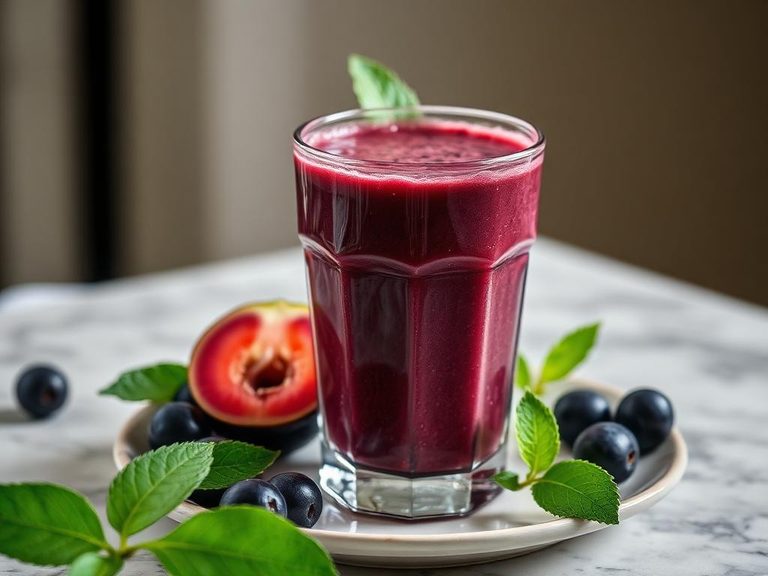
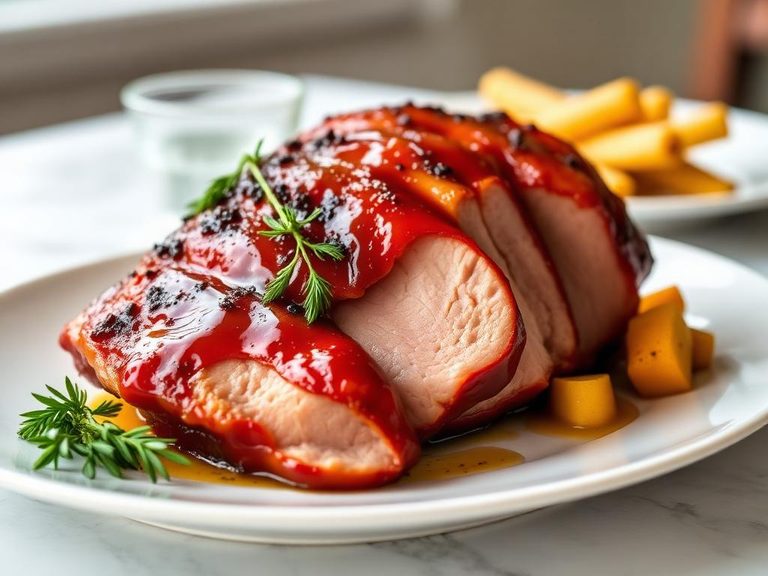
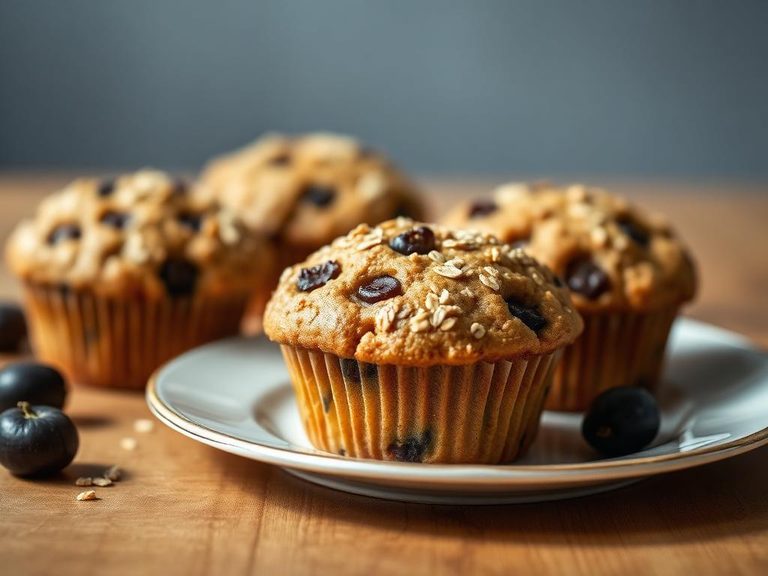
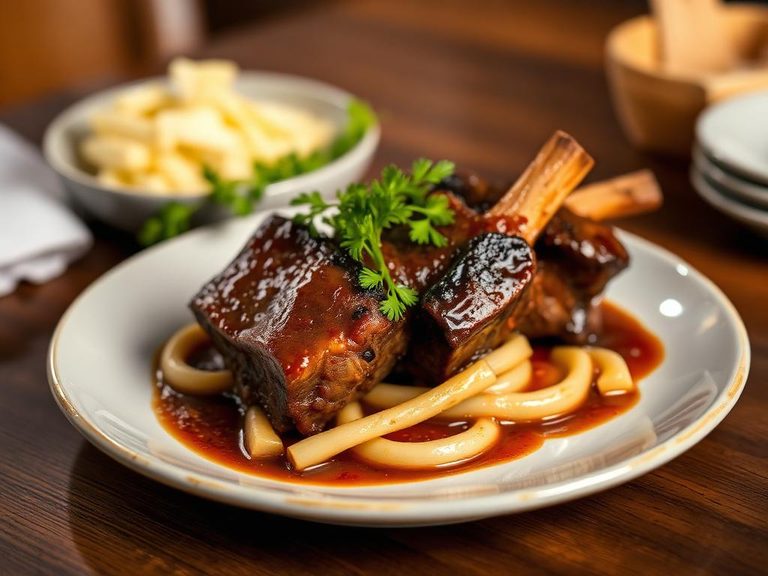
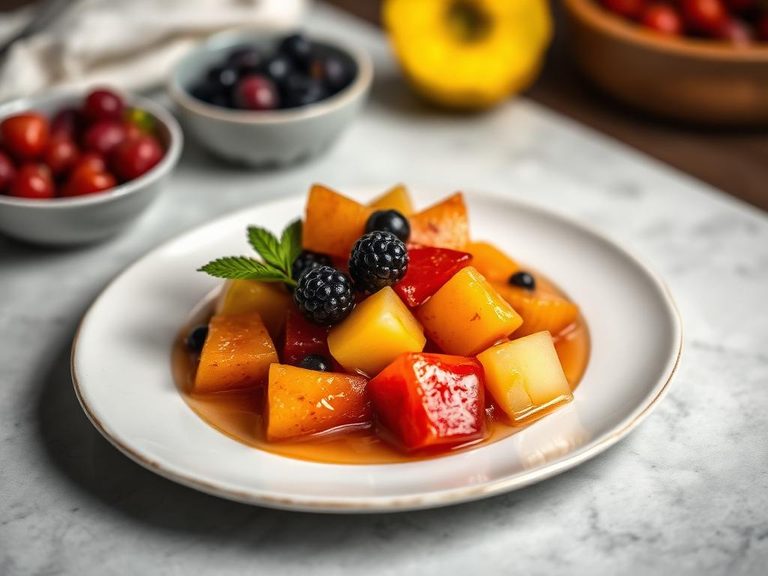
🌍 Where it's eaten
💡 Did you know?
The name 'prune' comes from the Latin 'pruna,' meaning 'plum,' and the juice was once famously marketed in the U.S. under the slogan 'The juice that does a body good!'
Full nutrition (USDA data · scales with serving)
| Water | 81.2 g |
| Energy | 71.0 kcal |
| Energy | 297 kj |
| Protein | 0.61 g |
| Total lipid (fat) | 0.03 g |
| Ash | 0.68 g |
| Carbohydrate, by difference | 17.4 g |
| Fiber, total dietary | 1.0 g |
| Total Sugars | 16.4 g |
| Calcium, Ca | 12.0 mg |
| Iron, Fe | 1.2 mg |
| Magnesium, Mg | 14.0 mg |
| Phosphorus, P | 25.0 mg |
| Potassium, K | 276 mg |
| Sodium, Na | 4.0 mg |
| Zinc, Zn | 0.21 mg |
| Copper, Cu | 0.07 mg |
| Manganese, Mn | 0.15 mg |
| Selenium, Se | 0.60 ug |
| Fluoride, F | 60.2 ug |
| Vitamin C, total ascorbic acid | 4.1 mg |
| Thiamin | 0.02 mg |
| Riboflavin | 0.07 mg |
| Niacin | 0.79 mg |
| Pantothenic acid | 0.11 mg |
| Vitamin B-6 | 0.22 mg |
| Folate, total | 0.00 ug |
| Folic acid | 0.00 ug |
| Folate, food | 0.00 ug |
| Folate, DFE | 0.00 ug |
| Choline, total | 2.7 mg |
| Vitamin B-12 | 0.00 ug |
| Vitamin B-12, added | 0.00 ug |
| Vitamin A, RAE | 0.00 ug |
| Retinol | 0.00 ug |
| Carotene, beta | 2.0 ug |
| Carotene, alpha | 0.00 ug |
| Cryptoxanthin, beta | 0.00 ug |
| Vitamin A, IU | 3.0 iu |
| Lycopene | 0.00 ug |
| Lutein + zeaxanthin | 40.0 ug |
| Vitamin E (alpha-tocopherol) | 0.12 mg |
| Vitamin E, added | 0.00 mg |
| Tocopherol, beta | 0.00 mg |
| Tocopherol, delta | 0.00 mg |
| Tocotrienol, alpha | 0.00 mg |
| Tocotrienol, beta | 0.00 mg |
| Tocotrienol, gamma | 0.00 mg |
| Tocotrienol, delta | 0.00 mg |
| Vitamin D (D2 + D3), International Units | 0.00 iu |
| Vitamin D (D2 + D3) | 0.00 ug |
| Vitamin K (phylloquinone) | 3.4 ug |
| Alcohol, ethyl | 0.00 g |
| Caffeine | 0.00 mg |
| Theobromine | 0.00 mg |
Fat & fatty acid profile (per 100g)
| Fatty acids, total saturated | 0.00 g |
| SFA 4:0 | 0.00 g |
| SFA 6:0 | 0.00 g |
| SFA 8:0 | 0.00 g |
| SFA 10:0 | 0.00 g |
| SFA 12:0 | 0.00 g |
| SFA 14:0 | 0.00 g |
| SFA 16:0 | 0.00 g |
| SFA 18:0 | 0.00 g |
| Fatty acids, total monounsaturated | 0.02 g |
| MUFA 16:1 | 0.00 g |
| MUFA 18:1 | 0.02 g |
| MUFA 20:1 | 0.00 g |
| MUFA 22:1 | 0.00 g |
| Fatty acids, total polyunsaturated | 0.01 g |
| PUFA 18:2 | 0.01 g |
| PUFA 18:3 | 0.00 g |
| PUFA 18:4 | 0.00 g |
| PUFA 20:4 | 0.00 g |
| PUFA 20:5 n-3 (EPA) | 0.00 g |
| PUFA 22:5 n-3 (DPA) | 0.00 g |
| PUFA 22:6 n-3 (DHA) | 0.00 g |
| Fatty acids, total trans | 0.00 g |
| Cholesterol | 0.00 mg |
FAQ
Is prune juice the same as plum juice?
Not exactly. Prune juice is specifically made from dried plums (prunes), which concentrates their sugars and flavors. Plum juice is typically made from fresh plums and has a lighter, more delicate taste.
Why is prune juice good for digestion?
It contains sorbitol, a natural sugar alcohol that draws water into the intestines, and fiber, which helps promote bowel movements. This combination is why it's a traditional home remedy for constipation.
Can I use prune juice in baking?
Yes, it's excellent for adding moisture, sweetness, and a rich flavor to cakes, muffins, and breads. It can also be used to make glazes for meats or to deglaze a pan for savory sauces.
Nutrient density (calculated · NRF9.3)
Nutrient Rich Foods index: beneficial nutrients (protein, fiber, vitamins, minerals) minus saturated fat, added sugar & sodium, per 100 kcal.
NRF9.3 index — Fulgoni, Keast & Drewnowski, 2009. Computed from USDA nutrients.
Weight-loss friendliness (composite index)
Energy density 0.71 kcal/g · 3% calories from protein · 1.0 g fiber · 16.4 g sugar per 100 g.
Composite of energy density (Rolls et al., 1999), protein & fiber satiety, minus sugar. A calculated heuristic — ranks satiety-per-calorie, not a clinical measure.
Dietary load (calculated from USDA values)
Potential renal acid load. Positive = acid-forming, negative = alkaline-forming.
Sodium-to-potassium ratio: 0.01 (lower is better — aim for ≤ 1)
Sodium:potassium per WHO potassium guidance. Computed from USDA nutrients.