

Pretzels, soft, unsalted
Whole food · Snacks

Photo: Wikipedia
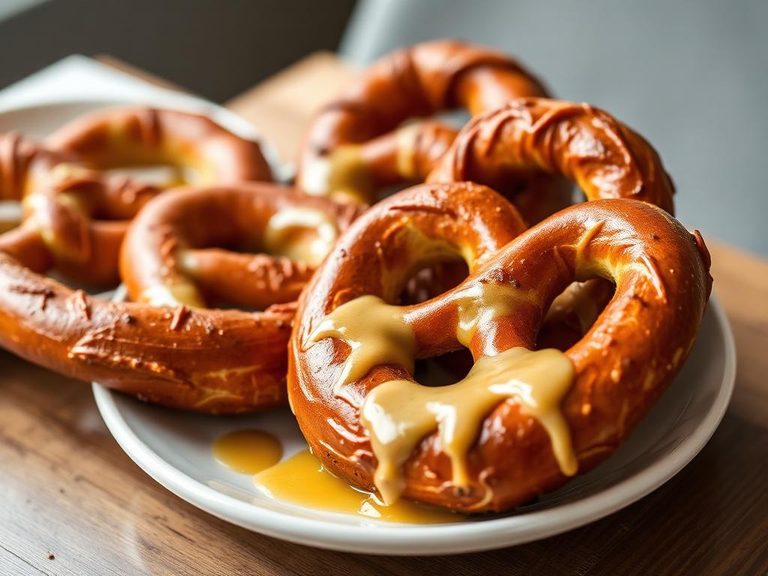
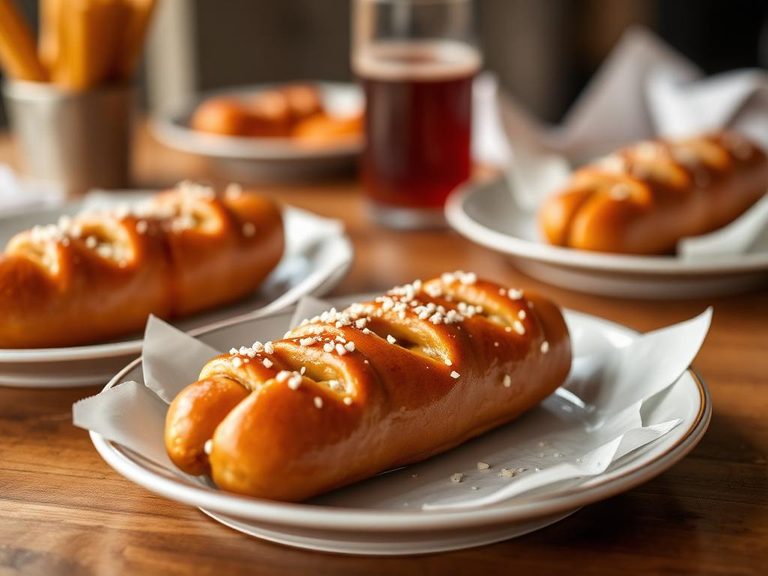
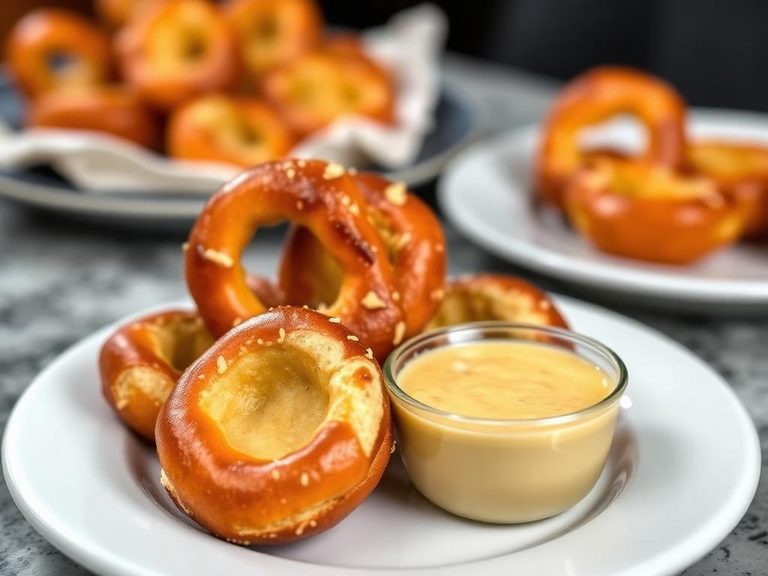
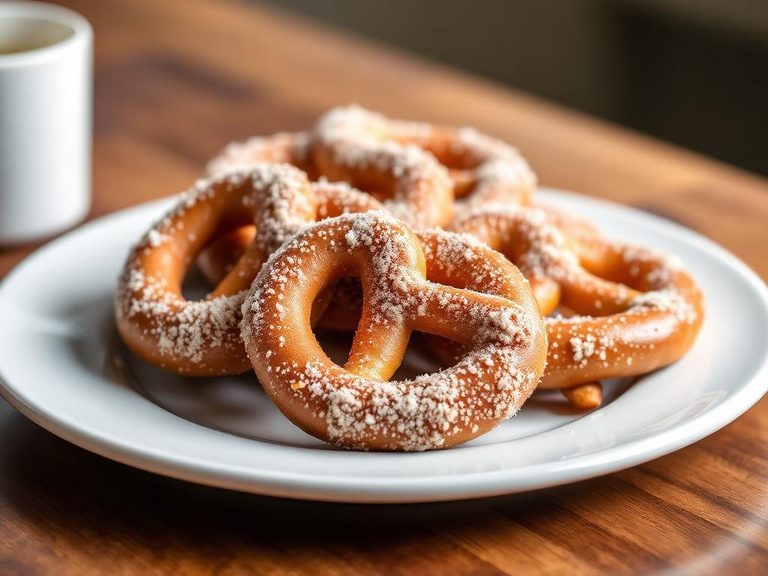
Soft, unsalted pretzels are golden-brown, chewy breadsticks with a distinctive knotted shape and a smooth, slightly glossy crust. Their interior is pillowy and mild, with a subtle wheat flavor that makes them a perfect canvas for dipping or topping. Nutritionally, they are a high-carbohydrate energy source, providing about 71g of carbs per 100g, with minimal fat and a modest amount of protein.
Calorie split: 10% protein · 82% carbs · 8% fat
↓ Full nutrition💚 Why it's loved
People love the comforting, nostalgic chew and mild flavor of soft pretzels, which serve as a blank canvas for everything from spicy mustard to cinnamon sugar. Their iconic shape and association with German and American snack culture make them a beloved, shareable treat at fairs, stadiums, and bakeries.
⚠️ Watch-outs & how to enjoy it better
The high carbohydrate content can cause rapid blood-sugar spikes, especially when eaten alone, which is a consideration for those managing blood sugar. Being a wheat-based product, it contains gluten, a common allergen. To counteract this, pair the pretzel with a protein or fat source like hummus, cheese, or nut butter to slow digestion and add nutritional balance.
Key benefits
- Quick source of energy from complex carbohydrates
- Low in fat and contains no added sugar
- Provides a small amount of plant-based protein
- Simple ingredient list, often just flour, water, yeast, and salt
- Versatile base for both sweet and savory toppings
🍽️ Popular dishes

🌍 Where it's eaten
💡 Did you know?
The distinctive brown crust of a pretzel is created by dipping the shaped dough in a lye (sodium hydroxide) solution before baking, which triggers a powerful Maillard reaction.
Full nutrition (USDA data · scales with serving)
| Water | 15.0 g |
| Energy | 345 kcal |
| Energy | 1443 kj |
| Protein | 8.2 g |
| Total lipid (fat) | 3.1 g |
| Ash | 2.7 g |
| Carbohydrate, by difference | 71.0 g |
| Fiber, total dietary | 1.7 g |
| Total Sugars | 0.25 g |
| Calcium, Ca | 23.0 mg |
| Iron, Fe | 3.9 mg |
| Magnesium, Mg | 21.0 mg |
| Phosphorus, P | 79.0 mg |
| Potassium, K | 88.0 mg |
| Sodium, Na | 252 mg |
| Zinc, Zn | 0.94 mg |
| Copper, Cu | 0.13 mg |
| Selenium, Se | 17.2 ug |
| Vitamin C, total ascorbic acid | 0.00 mg |
| Thiamin | 0.41 mg |
| Riboflavin | 0.29 mg |
| Niacin | 4.3 mg |
| Vitamin B-6 | 0.02 mg |
| Folate, total | 24.0 ug |
| Folic acid | 0.00 ug |
| Folate, food | 24.0 ug |
| Folate, DFE | 24.0 ug |
| Choline, total | 17.7 mg |
| Vitamin B-12 | 0.00 ug |
| Vitamin B-12, added | 0.00 ug |
| Vitamin A, RAE | 0.00 ug |
| Retinol | 0.00 ug |
| Carotene, beta | 0.00 ug |
| Carotene, alpha | 0.00 ug |
| Cryptoxanthin, beta | 0.00 ug |
| Vitamin A, IU | 0.00 iu |
| Lycopene | 0.00 ug |
| Lutein + zeaxanthin | 17.0 ug |
| Vitamin E (alpha-tocopherol) | 0.54 mg |
| Vitamin E, added | 0.00 mg |
| Vitamin D (D2 + D3), International Units | 0.00 iu |
| Vitamin D (D2 + D3) | 0.00 ug |
| Vitamin K (phylloquinone) | 2.7 ug |
| Alcohol, ethyl | 0.00 g |
| Caffeine | 0.00 mg |
| Theobromine | 0.00 mg |
Fat & fatty acid profile (per 100g)
| Fatty acids, total saturated | 0.69 g |
| SFA 4:0 | 0.00 g |
| SFA 6:0 | 0.00 g |
| SFA 8:0 | 0.00 g |
| SFA 10:0 | 0.00 g |
| SFA 12:0 | 0.00 g |
| SFA 14:0 | 0.01 g |
| SFA 16:0 | 0.45 g |
| SFA 18:0 | 0.24 g |
| Fatty acids, total monounsaturated | 1.1 g |
| MUFA 16:1 | 0.00 g |
| MUFA 18:1 | 1.1 g |
| MUFA 20:1 | 0.00 g |
| MUFA 22:1 | 0.00 g |
| Fatty acids, total polyunsaturated | 0.95 g |
| PUFA 18:2 | 0.89 g |
| PUFA 18:3 | 0.06 g |
| PUFA 18:4 | 0.00 g |
| PUFA 20:4 | 0.00 g |
| PUFA 20:5 n-3 (EPA) | 0.00 g |
| PUFA 22:5 n-3 (DPA) | 0.00 g |
| PUFA 22:6 n-3 (DHA) | 0.00 g |
| Cholesterol | 0.00 mg |
Amino acid profile (per 100g)
Estimated from Snacks, pretzels, hard, confectioner's coating, chocolate-flavor — USDA does not publish this profile for Pretzels.
| Tryptophan | 0.10 g |
| Threonine | 0.25 g |
| Isoleucine | 0.29 g |
| Leucine | 0.53 g |
| Lysine | 0.25 g |
| Methionine | 0.13 g |
| Cystine | 0.15 g |
| Phenylalanine | 0.36 g |
| Tyrosine | 0.23 g |
| Valine | 0.33 g |
| Arginine | 0.31 g |
| Histidine | 0.16 g |
| Alanine | 0.27 g |
| Aspartic acid | 0.42 g |
| Glutamic acid | 2.2 g |
| Glycine | 0.27 g |
| Proline | 0.74 g |
| Serine | 0.36 g |
FAQ
What's the difference between a soft pretzel and a hard pretzel?
Soft pretzels are chewy and bread-like, made from a yeast dough and typically eaten fresh. Hard pretzels are baked longer to remove moisture, resulting in a crunchy, shelf-stable snack.
Why are pretzels shaped like a knot?
The traditional shape is said to represent a child's arms folded in prayer, with the three holes symbolizing the Holy Trinity, reflecting the pretzel's origins in European monasteries.
Are soft pretzels a good post-workout snack?
They can be, as their high carbohydrate content helps replenish glycogen stores. However, pairing them with a protein source like Greek yogurt or a hard-boiled egg would make for a more complete recovery meal.
Nutrient density (calculated · NRF9.3)
Nutrient Rich Foods index: beneficial nutrients (protein, fiber, vitamins, minerals) minus saturated fat, added sugar & sodium, per 100 kcal.
NRF9.3 index — Fulgoni, Keast & Drewnowski, 2009. Computed from USDA nutrients.
Weight-loss friendliness (composite index)
Energy density 3.45 kcal/g · 10% calories from protein · 1.7 g fiber · 0.3 g sugar per 100 g.
Composite of energy density (Rolls et al., 1999), protein & fiber satiety, minus sugar. A calculated heuristic — ranks satiety-per-calorie, not a clinical measure.
Dietary load (calculated from USDA values)
Potential renal acid load. Positive = acid-forming, negative = alkaline-forming.
Sodium-to-potassium ratio: 2.86 (lower is better — aim for ≤ 1)
Sodium:potassium per WHO potassium guidance. Computed from USDA nutrients.