

Pretzels, soft, ready-to-eat, unsalted, buttered
Common food

Photo: Wikipedia
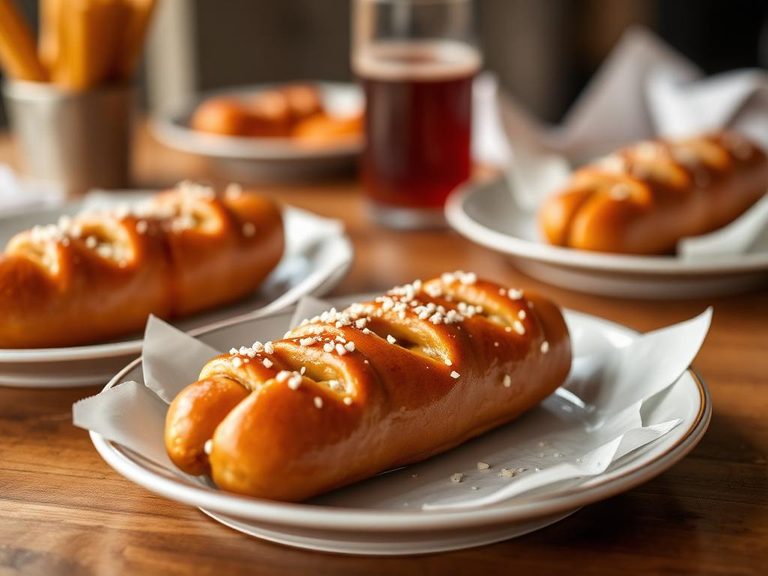
A soft, pillowy pretzel with a golden, butter-brushed crust that offers a mild, slightly sweet wheat flavor and a tender, chewy bite. Nutritionally, it's a high-carb, low-fat energy source, delivering over 70g of carbohydrates per 100g for quick fuel.
Calorie split: 9% protein · 80% carbs · 10% fat
↓ Full nutrition💚 Why it's loved
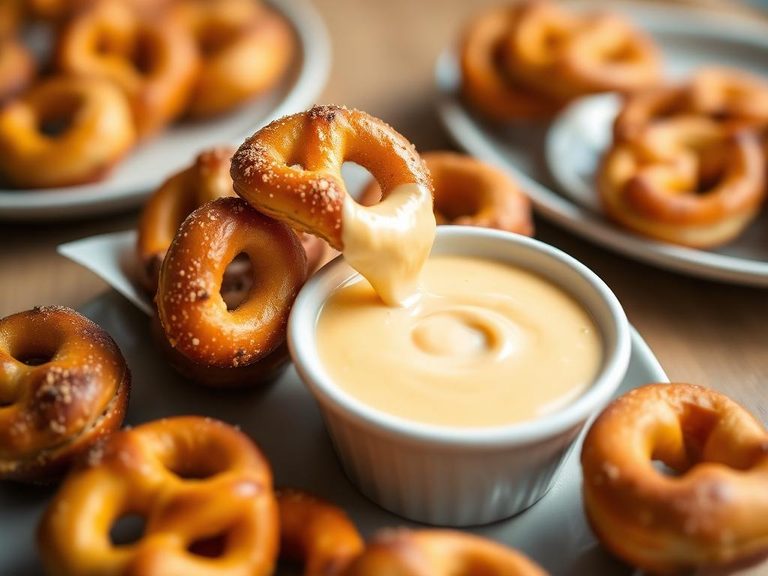
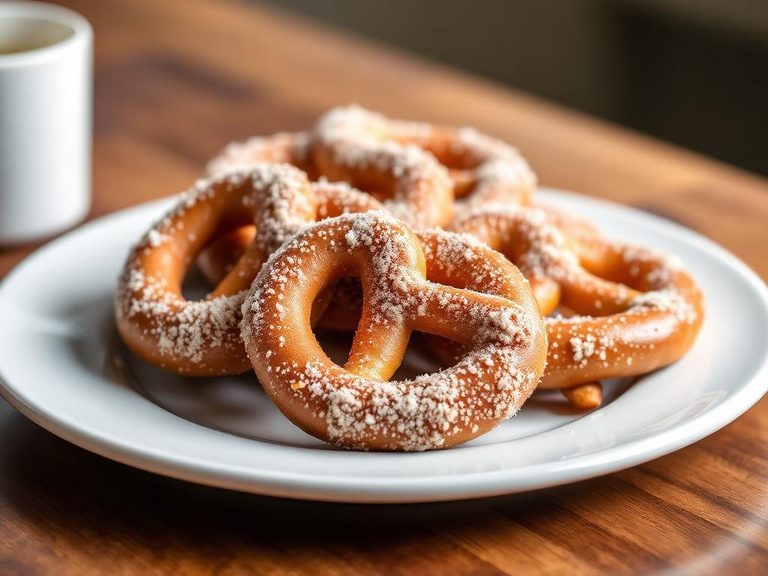
People adore its comforting, nostalgic taste and satisfyingly soft texture, which makes it a perfect blank canvas for everything from mustard to cinnamon sugar. It's a beloved staple at sports events, street fairs, and as a quick, filling snack.
⚠️ Watch-outs & how to enjoy it better
Its high carbohydrate content can lead to rapid blood sugar spikes, especially for those with insulin sensitivity. To mitigate this, pair it with a protein (like cheese or hummus) or healthy fat (like avocado) to slow digestion. As a wheat product, it contains gluten, a common allergen.
Key benefits
- Provides quick energy from complex carbohydrates
- Low in fat, making it a lighter snack option
- Contains a modest amount of plant-based protein
- Versatile base for both sweet and savory toppings
- Simple ingredient profile with minimal processing
🍽️ Popular dishes

🌍 Where it's eaten
💡 Did you know?
The traditional pretzel shape is said to represent a child's arms folded in prayer, a legend that dates back to medieval European monasteries.
Full nutrition (USDA data · scales with serving)
| Water | 14.8 g |
| Energy | 350 kcal |
| Protein | 8.1 g |
| Total lipid (fat) | 4.0 g |
| Carbohydrate, by difference | 70.3 g |
| Fiber, total dietary | 1.7 g |
| Total Sugars | 0.25 g |
| Calcium, Ca | 23.0 mg |
| Iron, Fe | 3.9 mg |
| Magnesium, Mg | 21.0 mg |
| Phosphorus, P | 78.0 mg |
| Potassium, K | 87.0 mg |
| Sodium, Na | 250 mg |
| Zinc, Zn | 0.93 mg |
| Copper, Cu | 0.13 mg |
| Selenium, Se | 17.0 ug |
| Vitamin C, total ascorbic acid | 0.00 mg |
| Thiamin | 0.41 mg |
| Riboflavin | 0.29 mg |
| Niacin | 4.2 mg |
| Vitamin B-6 | 0.02 mg |
| Folate, total | 24.0 ug |
| Folic acid | 0.00 ug |
| Folate, food | 24.0 ug |
| Folate, DFE | 24.0 ug |
| Choline, total | 17.7 mg |
| Vitamin B-12 | 0.00 ug |
| Vitamin B-12, added | 0.00 ug |
| Vitamin A, RAE | 8.0 ug |
| Retinol | 8.0 ug |
| Carotene, beta | 2.0 ug |
| Carotene, alpha | 0.00 ug |
| Cryptoxanthin, beta | 0.00 ug |
| Lycopene | 0.00 ug |
| Lutein + zeaxanthin | 17.0 ug |
| Vitamin E (alpha-tocopherol) | 0.56 mg |
| Vitamin E, added | 0.00 mg |
| Vitamin D (D2 + D3) | 0.00 ug |
| Vitamin K (phylloquinone) | 2.8 ug |
| Alcohol, ethyl | 0.00 g |
| Caffeine | 0.00 mg |
| Theobromine | 0.00 mg |
Fat & fatty acid profile (per 100g)
| Fatty acids, total saturated | 1.3 g |
| SFA 4:0 | 0.03 g |
| SFA 6:0 | 0.02 g |
| SFA 8:0 | 0.01 g |
| SFA 10:0 | 0.03 g |
| SFA 12:0 | 0.03 g |
| SFA 14:0 | 0.11 g |
| SFA 16:0 | 0.70 g |
| SFA 18:0 | 0.36 g |
| Fatty acids, total monounsaturated | 1.3 g |
| MUFA 16:1 | 0.02 g |
| MUFA 18:1 | 1.3 g |
| MUFA 20:1 | 0.00 g |
| MUFA 22:1 | 0.00 g |
| Fatty acids, total polyunsaturated | 0.97 g |
| PUFA 18:2 | 0.91 g |
| PUFA 18:3 | 0.07 g |
| PUFA 18:4 | 0.00 g |
| PUFA 20:4 | 0.00 g |
| PUFA 20:5 n-3 (EPA) | 0.00 g |
| PUFA 22:5 n-3 (DPA) | 0.00 g |
| PUFA 22:6 n-3 (DHA) | 0.00 g |
| Cholesterol | 3.0 mg |
Amino acid profile (per 100g)
Estimated from Snacks, pretzels, hard, confectioner's coating, chocolate-flavor — USDA does not publish this profile for Pretzels.
| Tryptophan | 0.10 g |
| Threonine | 0.25 g |
| Isoleucine | 0.29 g |
| Leucine | 0.53 g |
| Lysine | 0.25 g |
| Methionine | 0.13 g |
| Cystine | 0.15 g |
| Phenylalanine | 0.36 g |
| Tyrosine | 0.23 g |
| Valine | 0.33 g |
| Arginine | 0.31 g |
| Histidine | 0.16 g |
| Alanine | 0.27 g |
| Aspartic acid | 0.42 g |
| Glutamic acid | 2.2 g |
| Glycine | 0.27 g |
| Proline | 0.74 g |
| Serine | 0.36 g |
FAQ
How does the unsalted, buttered version differ from a standard soft pretzel?
The primary difference is the crust treatment. Instead of being dipped in a lye solution and sprinkled with coarse salt, this version is brushed with melted butter after baking, giving it a richer flavor and softer crust without the salty crunch.
Is this a good post-workout snack?
It can be, as the high carbohydrate content helps replenish glycogen stores depleted during exercise. However, for optimal recovery, it's best to pair it with a protein source (like a glass of milk or a hard-boiled egg) to aid muscle repair.
Why is the sugar content so low?
The minimal sugar (0.25g per 100g) indicates the dough is made primarily from flour, water, yeast, and salt, with little to no added sweeteners. The butter is applied externally, not incorporated into the dough.
Nutrient density (calculated · NRF9.3)
Nutrient Rich Foods index: beneficial nutrients (protein, fiber, vitamins, minerals) minus saturated fat, added sugar & sodium, per 100 kcal.
NRF9.3 index — Fulgoni, Keast & Drewnowski, 2009. Computed from USDA nutrients.
Weight-loss friendliness (composite index)
Energy density 3.50 kcal/g · 9% calories from protein · 1.7 g fiber · 0.3 g sugar per 100 g.
Composite of energy density (Rolls et al., 1999), protein & fiber satiety, minus sugar. A calculated heuristic — ranks satiety-per-calorie, not a clinical measure.
Dietary load (calculated from USDA values)
Potential renal acid load. Positive = acid-forming, negative = alkaline-forming.
Sodium-to-potassium ratio: 2.87 (lower is better — aim for ≤ 1)
Sodium:potassium per WHO potassium guidance. Computed from USDA nutrients.