

Pretzels, soft, ready-to-eat, salted, buttered
Common food
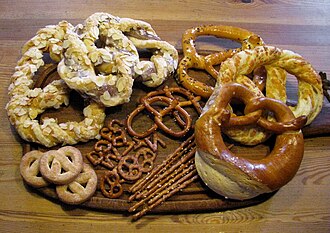
Photo: Wikipedia
A soft, pillowy, elongated bread roll with a golden-brown crust, generously brushed with melted butter and sprinkled with coarse salt. The texture is chewy and tender, with a satisfying pull from the gluten, while the butter adds a rich, savory sheen. Nutritionally, it's a high-carb energy source, providing a quick fuel boost with minimal fat and a modest amount of protein.
Calorie split: 9% protein · 80% carbs · 10% fat
↓ Full nutrition💚 Why it's loved
People adore the comforting, familiar combination of a warm, chewy interior and a salty, buttery crust. It's a nostalgic, portable snack that fits seamlessly into casual meals, from ballpark games to quick breakfasts.
⚠️ Watch-outs & how to enjoy it better
The refined flour and high glycemic load can cause rapid blood-sugar spikes, and the added salt contributes to a high sodium content. Those watching their blood sugar or sodium intake should pair it with a protein (like cheese or hummus) or healthy fat (like avocado) to slow digestion, and practice strict portion control.
Key benefits
- Quick source of energy from complex carbohydrates
- Contains some plant-based protein for muscle maintenance
- Low in fat and sugar, making it a relatively lean baked good
- The chewy texture can promote satiety
- A versatile base for both sweet and savory toppings
🍽️ Popular dishes
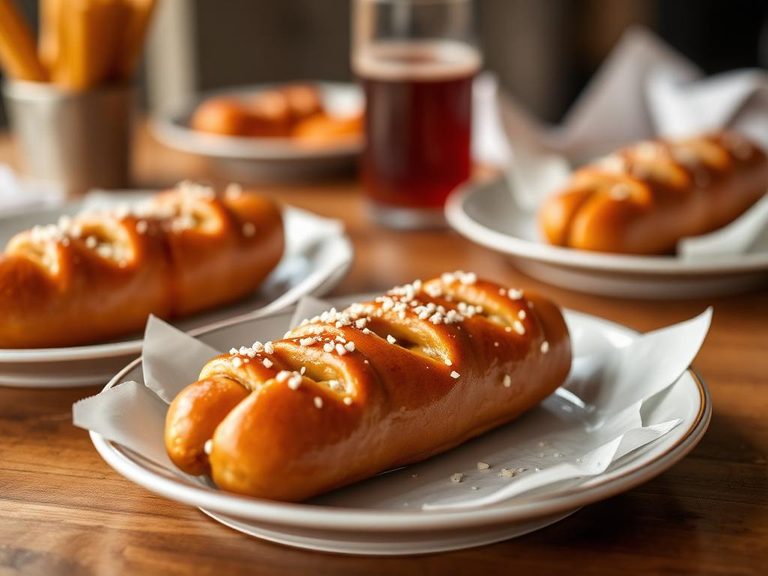
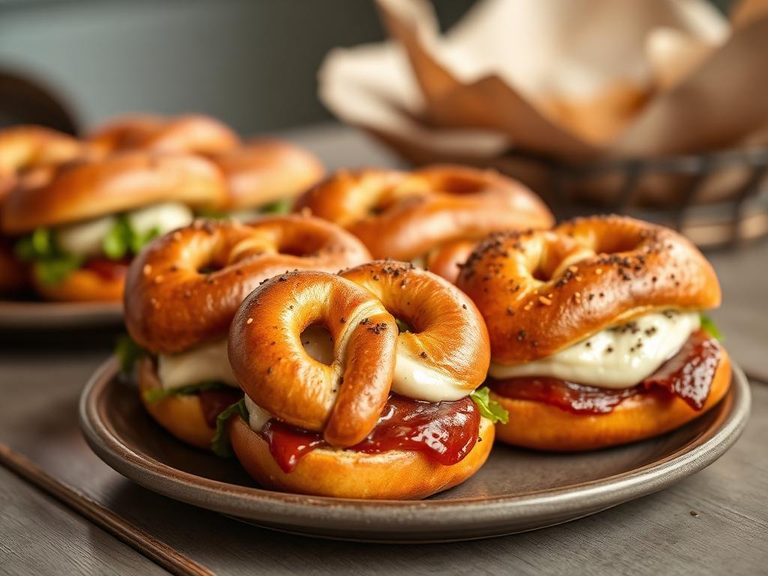
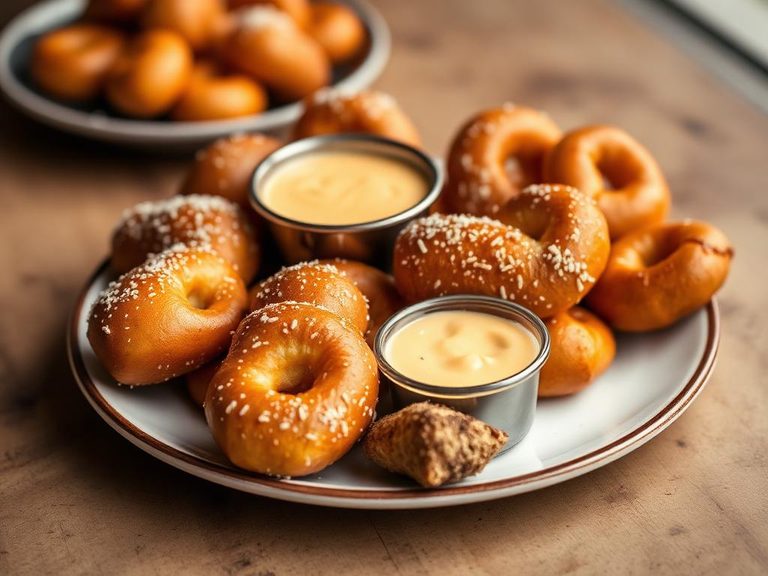
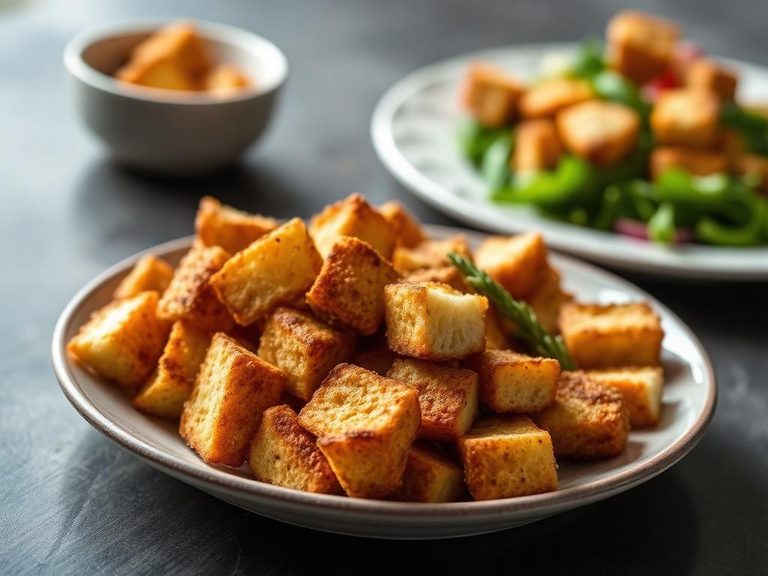
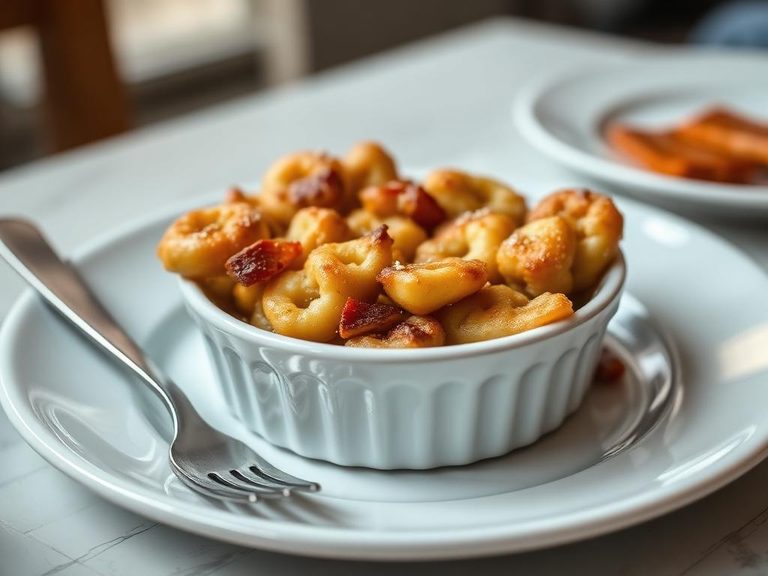
🌍 Where it's eaten
💡 Did you know?
The distinctive knot shape is thought to represent arms crossed in prayer, a tradition dating back to European monasteries where monks baked the bread.
Full nutrition (USDA data · scales with serving)
| Water | 14.7 g |
| Energy | 345 kcal |
| Protein | 8.0 g |
| Total lipid (fat) | 4.0 g |
| Carbohydrate, by difference | 69.4 g |
| Fiber, total dietary | 1.7 g |
| Total Sugars | 0.24 g |
| Calcium, Ca | 23.0 mg |
| Iron, Fe | 3.8 mg |
| Magnesium, Mg | 21.0 mg |
| Phosphorus, P | 77.0 mg |
| Potassium, K | 86.0 mg |
| Sodium, Na | 775 mg |
| Zinc, Zn | 0.92 mg |
| Copper, Cu | 0.12 mg |
| Selenium, Se | 16.8 ug |
| Vitamin C, total ascorbic acid | 0.00 mg |
| Thiamin | 0.40 mg |
| Riboflavin | 0.28 mg |
| Niacin | 4.2 mg |
| Vitamin B-6 | 0.02 mg |
| Folate, total | 23.0 ug |
| Folic acid | 0.00 ug |
| Folate, food | 23.0 ug |
| Folate, DFE | 23.0 ug |
| Choline, total | 17.5 mg |
| Vitamin B-12 | 0.00 ug |
| Vitamin B-12, added | 0.00 ug |
| Vitamin A, RAE | 8.0 ug |
| Retinol | 8.0 ug |
| Carotene, beta | 2.0 ug |
| Carotene, alpha | 0.00 ug |
| Cryptoxanthin, beta | 0.00 ug |
| Lycopene | 0.00 ug |
| Lutein + zeaxanthin | 17.0 ug |
| Vitamin E (alpha-tocopherol) | 0.56 mg |
| Vitamin E, added | 0.00 mg |
| Vitamin D (D2 + D3) | 0.00 ug |
| Vitamin K (phylloquinone) | 2.7 ug |
| Alcohol, ethyl | 0.00 g |
| Caffeine | 0.00 mg |
| Theobromine | 0.00 mg |
Fat & fatty acid profile (per 100g)
| Fatty acids, total saturated | 1.3 g |
| SFA 4:0 | 0.03 g |
| SFA 6:0 | 0.02 g |
| SFA 8:0 | 0.01 g |
| SFA 10:0 | 0.02 g |
| SFA 12:0 | 0.03 g |
| SFA 14:0 | 0.11 g |
| SFA 16:0 | 0.69 g |
| SFA 18:0 | 0.35 g |
| Fatty acids, total monounsaturated | 1.3 g |
| MUFA 16:1 | 0.02 g |
| MUFA 18:1 | 1.3 g |
| MUFA 20:1 | 0.00 g |
| MUFA 22:1 | 0.00 g |
| Fatty acids, total polyunsaturated | 0.96 g |
| PUFA 18:2 | 0.89 g |
| PUFA 18:3 | 0.07 g |
| PUFA 18:4 | 0.00 g |
| PUFA 20:4 | 0.00 g |
| PUFA 20:5 n-3 (EPA) | 0.00 g |
| PUFA 22:5 n-3 (DPA) | 0.00 g |
| PUFA 22:6 n-3 (DHA) | 0.00 g |
| Cholesterol | 2.0 mg |
Amino acid profile (per 100g)
Estimated from Snacks, pretzels, hard, confectioner's coating, chocolate-flavor — USDA does not publish this profile for Pretzels.
| Tryptophan | 0.10 g |
| Threonine | 0.25 g |
| Isoleucine | 0.29 g |
| Leucine | 0.53 g |
| Lysine | 0.25 g |
| Methionine | 0.13 g |
| Cystine | 0.15 g |
| Phenylalanine | 0.36 g |
| Tyrosine | 0.23 g |
| Valine | 0.33 g |
| Arginine | 0.31 g |
| Histidine | 0.16 g |
| Alanine | 0.27 g |
| Aspartic acid | 0.42 g |
| Glutamic acid | 2.2 g |
| Glycine | 0.27 g |
| Proline | 0.74 g |
| Serine | 0.36 g |
FAQ
What is the difference between a soft pretzel and a hard pretzel?
Soft pretzels are bread-like, chewy, and meant to be eaten soon after baking, often with butter or salt. Hard pretzels are baked longer to remove moisture, resulting in a crunchy, shelf-stable snack.
Why are pretzels dipped in a lye or baking soda solution before baking?
This alkaline bath gelatinizes the starch on the dough's surface, which promotes the Maillard reaction during baking. This creates the pretzel's signature deep brown, glossy crust and distinct flavor.
Is a buttered pretzel a good pre-workout snack?
Yes, it can be. The high carbohydrate content provides readily available energy, and the small amount of fat from the butter can help sustain that energy. It's best consumed 1-2 hours before exercise.
Nutrient density (calculated · NRF9.3)
Nutrient Rich Foods index: beneficial nutrients (protein, fiber, vitamins, minerals) minus saturated fat, added sugar & sodium, per 100 kcal.
NRF9.3 index — Fulgoni, Keast & Drewnowski, 2009. Computed from USDA nutrients.
Weight-loss friendliness (composite index)
Energy density 3.45 kcal/g · 9% calories from protein · 1.7 g fiber · 0.2 g sugar per 100 g.
Composite of energy density (Rolls et al., 1999), protein & fiber satiety, minus sugar. A calculated heuristic — ranks satiety-per-calorie, not a clinical measure.
Dietary load (calculated from USDA values)
Potential renal acid load. Positive = acid-forming, negative = alkaline-forming.
Sodium-to-potassium ratio: 9.01 (lower is better — aim for ≤ 1)
Sodium:potassium per WHO potassium guidance. Computed from USDA nutrients.