

Pretzels, soft, gluten free, coated or flavored
Common food

Photo: Wikipedia
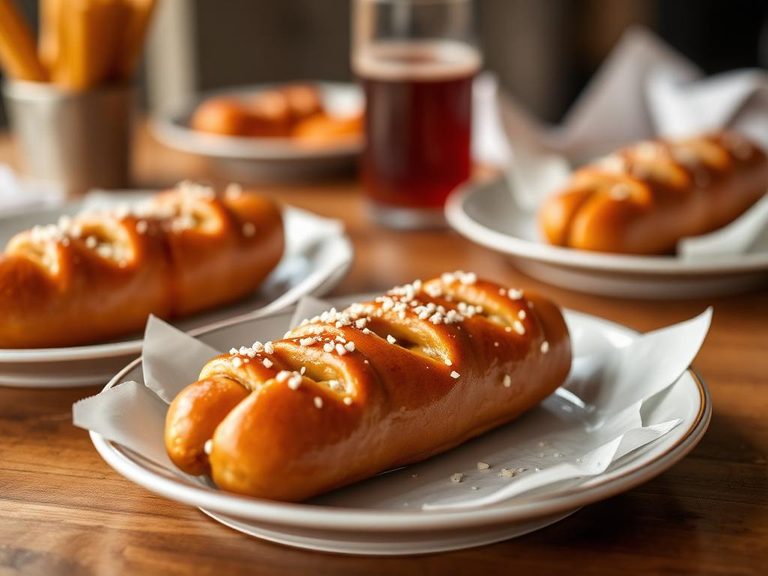
A gluten-free take on the classic soft pretzel, these are often made with rice flour or tapioca starch to mimic the chewy, dense texture of wheat-based versions. They offer a satisfyingly salty, malty flavor profile with a tender interior and a slightly crisp, often seasoned or sweet-coated exterior. Nutritionally, they provide a significant carbohydrate boost with moderate fat, making them a more indulgent snack or meal component.
Calorie split: 5% protein · 66% carbs · 29% fat
↓ Full nutrition💚 Why it's loved
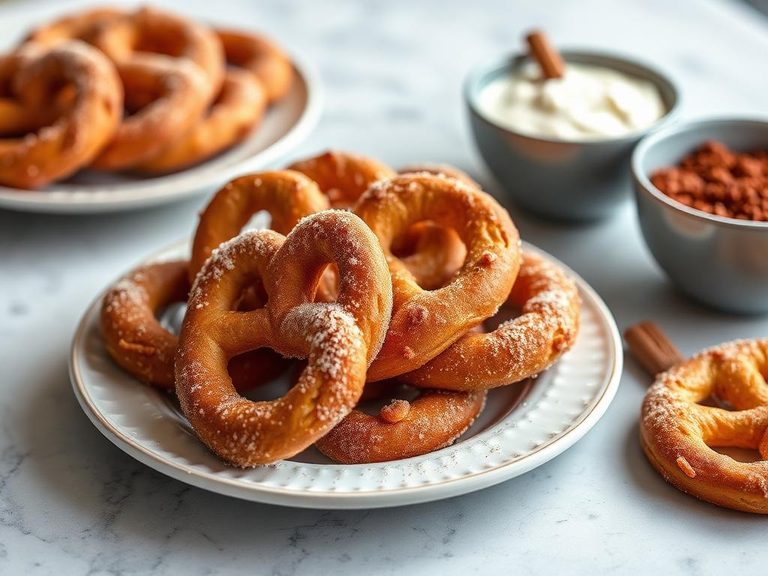
People love them for delivering the nostalgic, comforting taste and chewy texture of a classic pretzel without gluten, making a beloved snack accessible. Their versatility is key—they can be enjoyed plain, dipped in mustard or cheese sauce, or even turned into a sweet treat with cinnamon sugar.
⚠️ Watch-outs & how to enjoy it better
The high carbohydrate load can cause rapid blood sugar spikes, especially if consumed alone. They are often high in sodium, which may be a concern for those monitoring blood pressure. As a processed gluten-free product, they can be low in fiber and protein, leading to less sustained fullness. Tip: Pair with a protein-rich dip like hummus or a fat source like nut butter to slow digestion and improve satiety. Always check labels for sodium content and practice portion control.
Key benefits
- Provides a quick source of energy from carbohydrates
- Offers a gluten-free alternative for those with celiac disease or gluten sensitivity
- Can be a vehicle for nutrient-dense toppings or dips
- The fat content can help with satiety when paired appropriately
- Often fortified with vitamins and minerals in commercial versions
🍽️ Popular dishes

🌍 Where it's eaten
💡 Did you know?
The traditional pretzel knot shape is said to represent a child's arms folded in prayer, a symbol tied to early European monasteries where the snack was first developed.
Full nutrition (USDA data · scales with serving)
| Water | 28.9 g |
| Energy | 326 kcal |
| Protein | 4.1 g |
| Total lipid (fat) | 10.4 g |
| Carbohydrate, by difference | 54.1 g |
| Fiber, total dietary | 3.7 g |
| Total Sugars | 3.6 g |
| Calcium, Ca | 93.0 mg |
| Iron, Fe | 1.8 mg |
| Magnesium, Mg | 10.0 mg |
| Phosphorus, P | 44.0 mg |
| Potassium, K | 71.0 mg |
| Sodium, Na | 808 mg |
| Zinc, Zn | 0.36 mg |
| Copper, Cu | 0.06 mg |
| Selenium, Se | 1.3 ug |
| Vitamin C, total ascorbic acid | 0.10 mg |
| Thiamin | 0.23 mg |
| Riboflavin | 0.31 mg |
| Niacin | 1.8 mg |
| Vitamin B-6 | 0.06 mg |
| Folate, total | 23.0 ug |
| Folic acid | 0.00 ug |
| Folate, food | 23.0 ug |
| Folate, DFE | 23.0 ug |
| Choline, total | 9.9 mg |
| Vitamin B-12 | 0.01 ug |
| Vitamin B-12, added | 0.00 ug |
| Vitamin A, RAE | 42.0 ug |
| Retinol | 41.0 ug |
| Carotene, beta | 9.0 ug |
| Carotene, alpha | 0.00 ug |
| Cryptoxanthin, beta | 0.00 ug |
| Lycopene | 0.00 ug |
| Lutein + zeaxanthin | 0.00 ug |
| Vitamin E (alpha-tocopherol) | 0.86 mg |
| Vitamin E, added | 0.00 mg |
| Vitamin D (D2 + D3) | 0.00 ug |
| Vitamin K (phylloquinone) | 0.80 ug |
| Alcohol, ethyl | 0.00 g |
| Caffeine | 0.00 mg |
| Theobromine | 0.00 mg |
Fat & fatty acid profile (per 100g)
| Fatty acids, total saturated | 4.8 g |
| SFA 4:0 | 0.16 g |
| SFA 6:0 | 0.09 g |
| SFA 8:0 | 0.07 g |
| SFA 10:0 | 0.14 g |
| SFA 12:0 | 0.15 g |
| SFA 14:0 | 0.54 g |
| SFA 16:0 | 2.7 g |
| SFA 18:0 | 0.78 g |
| Fatty acids, total monounsaturated | 3.4 g |
| MUFA 16:1 | 0.12 g |
| MUFA 18:1 | 2.8 g |
| MUFA 20:1 | 0.01 g |
| MUFA 22:1 | 0.00 g |
| Fatty acids, total polyunsaturated | 0.71 g |
| PUFA 18:2 | 0.62 g |
| PUFA 18:3 | 0.08 g |
| PUFA 18:4 | 0.00 g |
| PUFA 20:4 | 0.00 g |
| PUFA 20:5 n-3 (EPA) | 0.00 g |
| PUFA 22:5 n-3 (DPA) | 0.00 g |
| PUFA 22:6 n-3 (DHA) | 0.00 g |
| Cholesterol | 13.0 mg |
Amino acid profile (per 100g)
Estimated from Snacks, pretzels, hard, confectioner's coating, chocolate-flavor — USDA does not publish this profile for Pretzels.
| Tryptophan | 0.10 g |
| Threonine | 0.25 g |
| Isoleucine | 0.29 g |
| Leucine | 0.53 g |
| Lysine | 0.25 g |
| Methionine | 0.13 g |
| Cystine | 0.15 g |
| Phenylalanine | 0.36 g |
| Tyrosine | 0.23 g |
| Valine | 0.33 g |
| Arginine | 0.31 g |
| Histidine | 0.16 g |
| Alanine | 0.27 g |
| Aspartic acid | 0.42 g |
| Glutamic acid | 2.2 g |
| Glycine | 0.27 g |
| Proline | 0.74 g |
| Serine | 0.36 g |
FAQ
Are soft gluten-free pretzels as chewy as traditional ones?
They can be, but the texture often relies on starches like tapioca or potato to mimic chewiness. The result is typically softer and less elastic than wheat-based pretzels, with a more cake-like or gummy interior depending on the recipe.
Why are they often higher in fat than regular pretzels?
Gluten-free doughs lack the protein network of wheat, so manufacturers frequently add more fat (like oils or butter) and sometimes eggs to improve moisture, tenderness, and binding, resulting in a higher fat content per gram.
Can I use them in recipes that call for regular pretzels?
Yes, for most applications like dipping, snacking, or crushing for crusts. However, they may become soggy faster when used in dishes with high moisture (like bread pudding) due to their different starch composition.
Nutrient density (calculated · NRF9.3)
Nutrient Rich Foods index: beneficial nutrients (protein, fiber, vitamins, minerals) minus saturated fat, added sugar & sodium, per 100 kcal.
NRF9.3 index — Fulgoni, Keast & Drewnowski, 2009. Computed from USDA nutrients.
Weight-loss friendliness (composite index)
Energy density 3.26 kcal/g · 5% calories from protein · 3.7 g fiber · 3.6 g sugar per 100 g.
Composite of energy density (Rolls et al., 1999), protein & fiber satiety, minus sugar. A calculated heuristic — ranks satiety-per-calorie, not a clinical measure.
Dietary load (calculated from USDA values)
Potential renal acid load. Positive = acid-forming, negative = alkaline-forming.
Sodium-to-potassium ratio: 11.38 (lower is better — aim for ≤ 1)
Sodium:potassium per WHO potassium guidance. Computed from USDA nutrients.