

Pretzels, soft, ready-to-eat, coated or flavored
Common food

Photo: Wikipedia
This is a soft, chewy, and often salted breadstick, typically baked and then coated in butter and a variety of seasonings, from classic salt to garlic or cinnamon sugar. Its texture is a delightful contrast between a slightly crisp exterior and a tender, doughy interior. Nutritionally, it's a significant source of carbohydrates, providing quick energy, but with a relatively modest protein content for a bread product.
Calorie split: 9% protein · 72% carbs · 19% fat
↓ Full nutrition💚 Why it's loved
People adore the comforting, nostalgic taste and satisfying chew of a warm soft pretzel, often paired with a tangy mustard or rich cheese dip. Its cultural association with German festivals, sports stadiums, and boardwalks makes it a beloved treat tied to fun and social gatherings.
⚠️ Watch-outs & how to enjoy it better
The high refined carbohydrate and potential sodium content can cause blood sugar spikes and contribute to water retention. Those watching their blood sugar or sodium intake should be cautious. To counteract this, pair it with a protein or fat like hummus, cheese, or nuts to slow digestion, and practice strict portion control.
Key benefits
- Provides quick energy from its high carbohydrate content.
- Offers a small but notable amount of plant-based protein.
- A versatile base for both sweet and savory flavor profiles.
- Can be a convenient, portable snack when pre-packaged.
- Often fortified with iron and B vitamins in commercial versions.
🍽️ Popular dishes
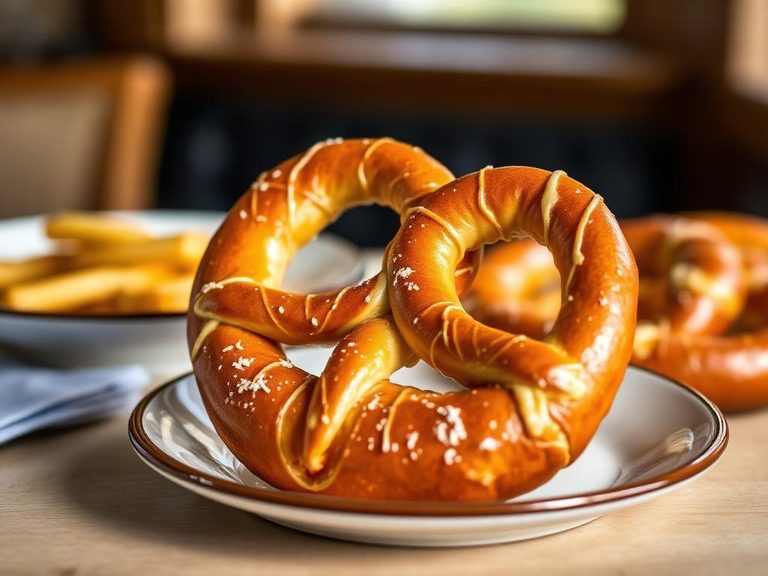
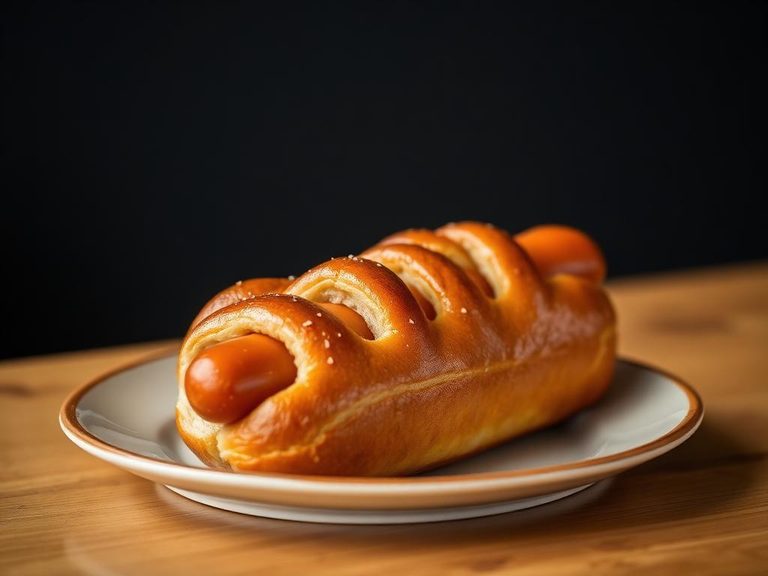
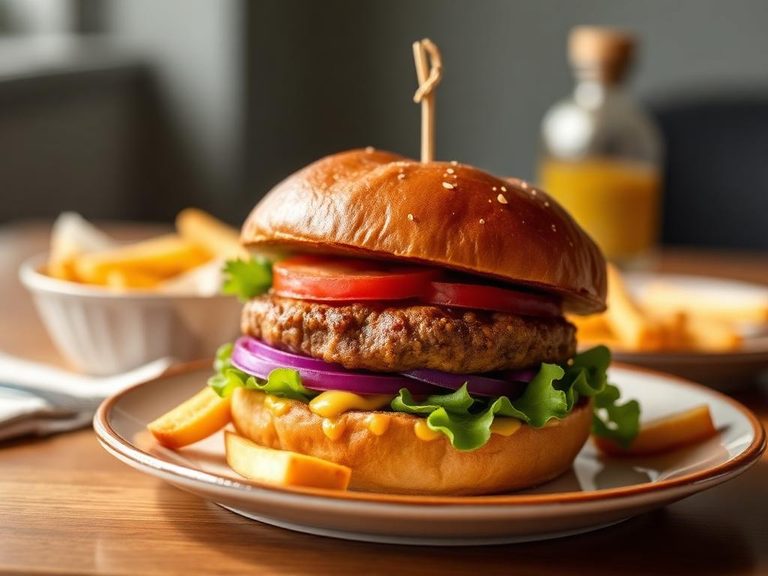
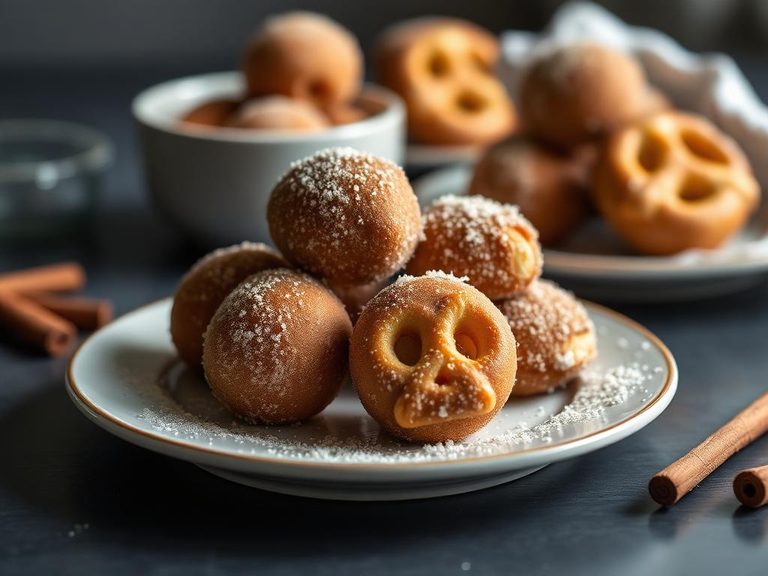
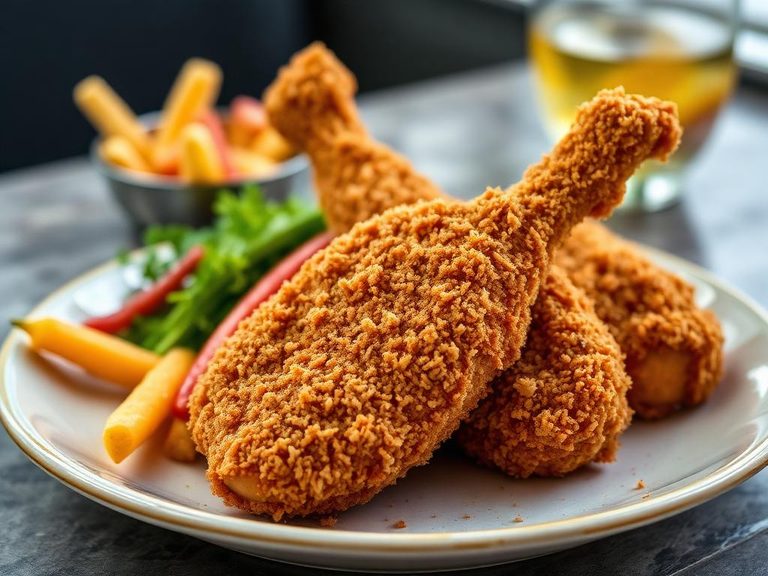
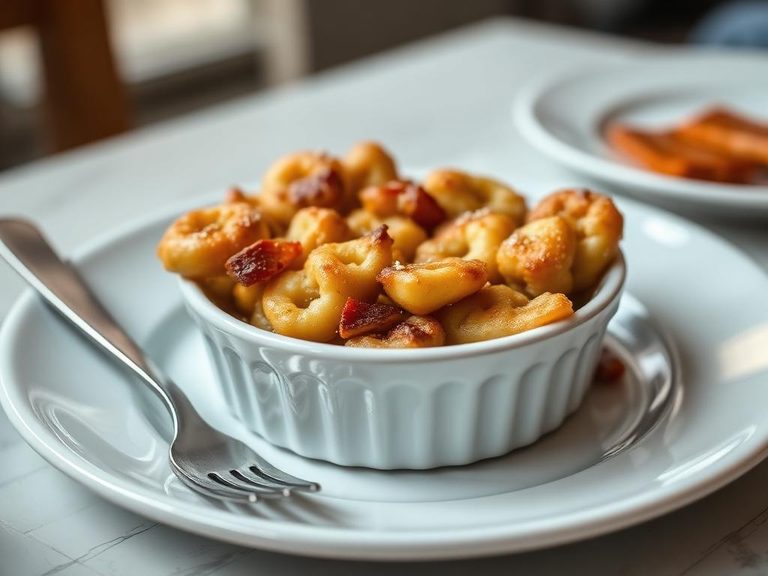
🌍 Where it's eaten
💡 Did you know?
The distinctive dark brown crust of a traditional soft pretzel is achieved by briefly dipping the shaped dough in a lye (sodium hydroxide) or baking soda solution before baking, a process called 'pretzeling' or 'lye-washing'.
Full nutrition (USDA data · scales with serving)
| Water | 14.1 g |
| Energy | 365 kcal |
| Protein | 7.9 g |
| Total lipid (fat) | 7.8 g |
| Carbohydrate, by difference | 66.0 g |
| Fiber, total dietary | 1.6 g |
| Total Sugars | 0.23 g |
| Calcium, Ca | 31.0 mg |
| Iron, Fe | 3.6 mg |
| Magnesium, Mg | 20.0 mg |
| Phosphorus, P | 79.0 mg |
| Potassium, K | 84.0 mg |
| Sodium, Na | 896 mg |
| Zinc, Zn | 0.91 mg |
| Copper, Cu | 0.12 mg |
| Selenium, Se | 16.3 ug |
| Vitamin C, total ascorbic acid | 0.00 mg |
| Thiamin | 0.38 mg |
| Riboflavin | 0.27 mg |
| Niacin | 4.0 mg |
| Vitamin B-6 | 0.02 mg |
| Folate, total | 22.0 ug |
| Folic acid | 0.00 ug |
| Folate, food | 22.0 ug |
| Folate, DFE | 22.0 ug |
| Choline, total | 17.6 mg |
| Vitamin B-12 | 0.01 ug |
| Vitamin B-12, added | 0.00 ug |
| Vitamin A, RAE | 41.0 ug |
| Retinol | 40.0 ug |
| Carotene, beta | 9.0 ug |
| Carotene, alpha | 0.00 ug |
| Cryptoxanthin, beta | 0.00 ug |
| Lycopene | 0.00 ug |
| Lutein + zeaxanthin | 16.0 ug |
| Vitamin E (alpha-tocopherol) | 0.64 mg |
| Vitamin E, added | 0.00 mg |
| Vitamin D (D2 + D3) | 0.00 ug |
| Vitamin K (phylloquinone) | 2.9 ug |
| Alcohol, ethyl | 0.00 g |
| Caffeine | 0.00 mg |
| Theobromine | 0.00 mg |
Fat & fatty acid profile (per 100g)
| Fatty acids, total saturated | 3.7 g |
| SFA 4:0 | 0.15 g |
| SFA 6:0 | 0.09 g |
| SFA 8:0 | 0.05 g |
| SFA 10:0 | 0.12 g |
| SFA 12:0 | 0.14 g |
| SFA 14:0 | 0.49 g |
| SFA 16:0 | 1.7 g |
| SFA 18:0 | 0.81 g |
| Fatty acids, total monounsaturated | 2.4 g |
| MUFA 16:1 | 0.11 g |
| MUFA 18:1 | 2.2 g |
| MUFA 20:1 | 0.00 g |
| MUFA 22:1 | 0.00 g |
| Fatty acids, total polyunsaturated | 1.1 g |
| PUFA 18:2 | 0.94 g |
| PUFA 18:3 | 0.12 g |
| PUFA 18:4 | 0.00 g |
| PUFA 20:4 | 0.00 g |
| PUFA 20:5 n-3 (EPA) | 0.00 g |
| PUFA 22:5 n-3 (DPA) | 0.00 g |
| PUFA 22:6 n-3 (DHA) | 0.00 g |
| Cholesterol | 13.0 mg |
Amino acid profile (per 100g)
Estimated from Snacks, pretzels, hard, confectioner's coating, chocolate-flavor — USDA does not publish this profile for Pretzels.
| Tryptophan | 0.10 g |
| Threonine | 0.25 g |
| Isoleucine | 0.29 g |
| Leucine | 0.53 g |
| Lysine | 0.25 g |
| Methionine | 0.13 g |
| Cystine | 0.15 g |
| Phenylalanine | 0.36 g |
| Tyrosine | 0.23 g |
| Valine | 0.33 g |
| Arginine | 0.31 g |
| Histidine | 0.16 g |
| Alanine | 0.27 g |
| Aspartic acid | 0.42 g |
| Glutamic acid | 2.2 g |
| Glycine | 0.27 g |
| Proline | 0.74 g |
| Serine | 0.36 g |
FAQ
Are soft pretzels healthier than potato chips?
Generally, yes. Per 100g, a soft pretzel typically has less fat and fewer calories than potato chips, though it is higher in carbohydrates. The key is portion control, as it's easy to consume a large pretzel quickly.
Why are soft pretzels shaped like a knot?
The traditional shape is said to represent a child's arms folded in prayer, and the word 'pretzel' may derive from the Latin 'pretiola,' meaning 'little reward.' The shape also helps the pretzel bake evenly and creates a thicker, chewier center.
Can I freeze soft pretzels?
Yes, they freeze very well. Wrap them tightly in plastic wrap and aluminum foil, or store in a freezer bag. Reheat directly from frozen in a 350°F (175°C) oven for 10-15 minutes to restore their texture.
Nutrient density (calculated · NRF9.3)
Nutrient Rich Foods index: beneficial nutrients (protein, fiber, vitamins, minerals) minus saturated fat, added sugar & sodium, per 100 kcal.
NRF9.3 index — Fulgoni, Keast & Drewnowski, 2009. Computed from USDA nutrients.
Weight-loss friendliness (composite index)
Energy density 3.65 kcal/g · 9% calories from protein · 1.6 g fiber · 0.2 g sugar per 100 g.
Composite of energy density (Rolls et al., 1999), protein & fiber satiety, minus sugar. A calculated heuristic — ranks satiety-per-calorie, not a clinical measure.
Dietary load (calculated from USDA values)
Potential renal acid load. Positive = acid-forming, negative = alkaline-forming.
Sodium-to-potassium ratio: 10.67 (lower is better — aim for ≤ 1)
Sodium:potassium per WHO potassium guidance. Computed from USDA nutrients.