

Pretzels, soft, ready-to-eat, cinnamon sugar coated
Common food

Photo: Wikipedia
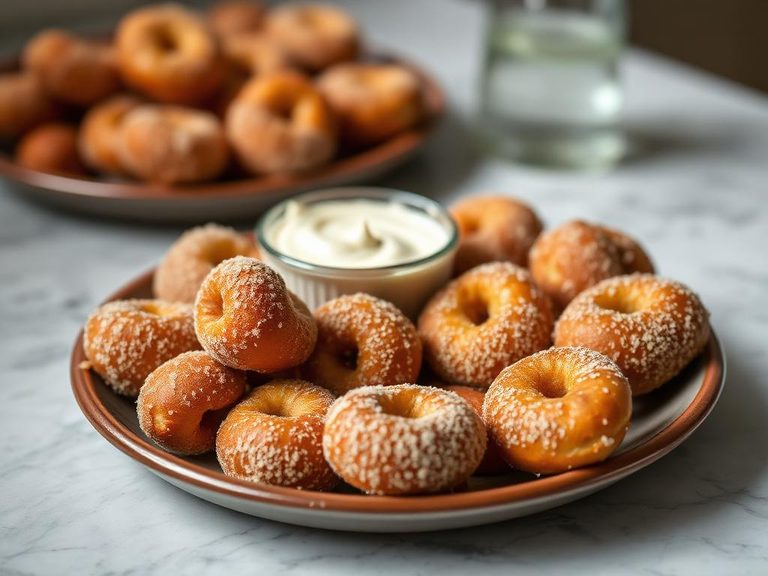
A soft, chewy, bread-like stick coated in a sweet blend of cinnamon and sugar. Its interior is fluffy and yielding, while the exterior offers a slightly gritty, aromatic crunch. Nutritionally, it is a high-carbohydrate energy source, with a significant portion of its calories coming from added sugars.
Calorie split: 7% protein · 79% carbs · 15% fat
↓ Full nutrition💚 Why it's loved
People adore the irresistible combination of warm, yeasty dough with the sweet, spicy kick of cinnamon sugar. It's a beloved comfort food, often associated with mall food courts and childhood treats, offering a perfect balance of soft texture and sweet flavor.
⚠️ Watch-outs & how to enjoy it better
The high sugar and refined carb content can lead to rapid blood sugar spikes and subsequent energy crashes. It is also a common vehicle for high sodium in the dough. To mitigate, pair a single pretzel with a source of protein or healthy fat (like peanut butter or a cheese stick) to slow sugar absorption, and practice strict portion control.
Key benefits
- Provides quick energy from carbohydrates
- Contains a small amount of plant-based protein
- Source of dietary fiber
- Offers a comforting, nostalgic treat
- Convenient ready-to-eat snack
🍽️ Popular dishes
🌍 Where it's eaten
💡 Did you know?
The iconic mall pretzel shop, Auntie Anne's, was founded by a former Amish woman in a Pennsylvania farmer's market in 1988, popularizing the soft pretzel nationwide.
Full nutrition (USDA data · scales with serving)
| Water | 11.4 g |
| Energy | 374 kcal |
| Protein | 6.2 g |
| Total lipid (fat) | 6.1 g |
| Carbohydrate, by difference | 74.0 g |
| Fiber, total dietary | 2.1 g |
| Total Sugars | 19.7 g |
| Calcium, Ca | 32.0 mg |
| Iron, Fe | 3.1 mg |
| Magnesium, Mg | 17.0 mg |
| Phosphorus, P | 60.0 mg |
| Potassium, K | 73.0 mg |
| Sodium, Na | 248 mg |
| Zinc, Zn | 0.74 mg |
| Copper, Cu | 0.10 mg |
| Selenium, Se | 13.1 ug |
| Vitamin C, total ascorbic acid | 0.10 mg |
| Thiamin | 0.31 mg |
| Riboflavin | 0.22 mg |
| Niacin | 3.2 mg |
| Vitamin B-6 | 0.02 mg |
| Folate, total | 18.0 ug |
| Folic acid | 0.00 ug |
| Folate, food | 18.0 ug |
| Folate, DFE | 18.0 ug |
| Choline, total | 14.3 mg |
| Vitamin B-12 | 0.00 ug |
| Vitamin B-12, added | 0.00 ug |
| Vitamin A, RAE | 32.0 ug |
| Retinol | 31.0 ug |
| Carotene, beta | 9.0 ug |
| Carotene, alpha | 0.00 ug |
| Cryptoxanthin, beta | 2.0 ug |
| Lycopene | 0.00 ug |
| Lutein + zeaxanthin | 16.0 ug |
| Vitamin E (alpha-tocopherol) | 0.55 mg |
| Vitamin E, added | 0.00 mg |
| Vitamin D (D2 + D3) | 0.00 ug |
| Vitamin K (phylloquinone) | 2.8 ug |
| Alcohol, ethyl | 0.00 g |
| Caffeine | 0.00 mg |
| Theobromine | 0.00 mg |
Fat & fatty acid profile (per 100g)
| Fatty acids, total saturated | 2.9 g |
| SFA 4:0 | 0.12 g |
| SFA 6:0 | 0.07 g |
| SFA 8:0 | 0.04 g |
| SFA 10:0 | 0.09 g |
| SFA 12:0 | 0.10 g |
| SFA 14:0 | 0.38 g |
| SFA 16:0 | 1.3 g |
| SFA 18:0 | 0.64 g |
| Fatty acids, total monounsaturated | 1.9 g |
| MUFA 16:1 | 0.08 g |
| MUFA 18:1 | 1.7 g |
| MUFA 20:1 | 0.00 g |
| MUFA 22:1 | 0.00 g |
| Fatty acids, total polyunsaturated | 0.85 g |
| PUFA 18:2 | 0.76 g |
| PUFA 18:3 | 0.10 g |
| PUFA 18:4 | 0.00 g |
| PUFA 20:4 | 0.00 g |
| PUFA 20:5 n-3 (EPA) | 0.00 g |
| PUFA 22:5 n-3 (DPA) | 0.00 g |
| PUFA 22:6 n-3 (DHA) | 0.00 g |
| Cholesterol | 10.0 mg |
Amino acid profile (per 100g)
Estimated from Snacks, pretzels, hard, confectioner's coating, chocolate-flavor — USDA does not publish this profile for Pretzels.
| Tryptophan | 0.10 g |
| Threonine | 0.25 g |
| Isoleucine | 0.29 g |
| Leucine | 0.53 g |
| Lysine | 0.25 g |
| Methionine | 0.13 g |
| Cystine | 0.15 g |
| Phenylalanine | 0.36 g |
| Tyrosine | 0.23 g |
| Valine | 0.33 g |
| Arginine | 0.31 g |
| Histidine | 0.16 g |
| Alanine | 0.27 g |
| Aspartic acid | 0.42 g |
| Glutamic acid | 2.2 g |
| Glycine | 0.27 g |
| Proline | 0.74 g |
| Serine | 0.36 g |
FAQ
What's the difference between a soft pretzel and a hard pretzel?
Soft pretzels are made from a yeast-leavened dough, giving them a chewy, bread-like interior. They are typically larger and eaten fresh. Hard pretzels are baked longer to remove moisture, resulting in a crunchy, shelf-stable snack.
Why are soft pretzels dipped in a lye or baking soda solution before baking?
This alkaline bath is crucial. It gelatinizes the starch on the dough's surface, which promotes the Maillard reaction during baking. This creates the pretzel's signature deep brown, glossy crust and distinctive flavor.
Can I make these at home?
Yes. While the process involves making a yeast dough, shaping, a brief alkaline bath, and baking, many recipes simplify the bath using a baking soda solution. The key is not to overwork the dough and to bake at a high temperature for the proper rise and crust.
Nutrient density (calculated · NRF9.3)
Nutrient Rich Foods index: beneficial nutrients (protein, fiber, vitamins, minerals) minus saturated fat, added sugar & sodium, per 100 kcal.
NRF9.3 index — Fulgoni, Keast & Drewnowski, 2009. Computed from USDA nutrients.
Weight-loss friendliness (composite index)
Energy density 3.74 kcal/g · 7% calories from protein · 2.1 g fiber · 19.7 g sugar per 100 g.
Composite of energy density (Rolls et al., 1999), protein & fiber satiety, minus sugar. A calculated heuristic — ranks satiety-per-calorie, not a clinical measure.
Dietary load (calculated from USDA values)
Potential renal acid load. Positive = acid-forming, negative = alkaline-forming.
Sodium-to-potassium ratio: 3.40 (lower is better — aim for ≤ 1)
Sodium:potassium per WHO potassium guidance. Computed from USDA nutrients.