

Pretzels, hard, coated, gluten free
Common food

Photo: Wikipedia
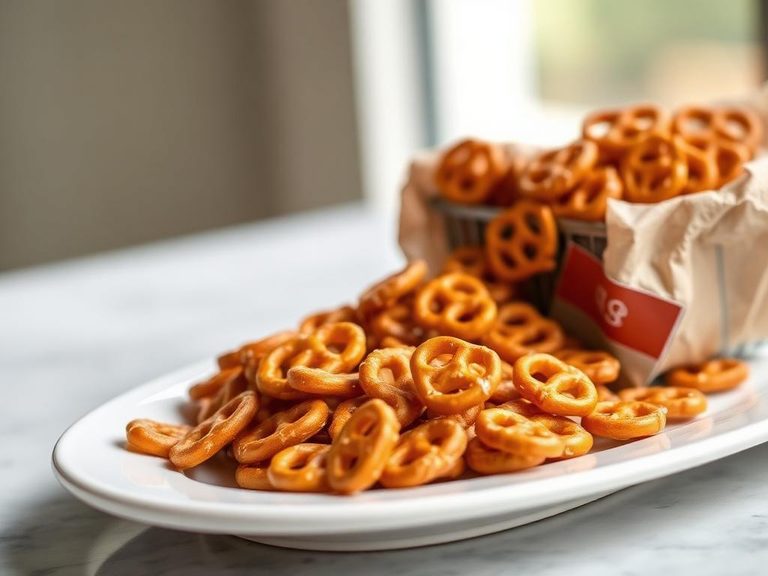
A crunchy, gluten-free snack made from corn or rice flour, often coated in a savory or sweet layer. Its satisfying snap and bold flavor make it a popular alternative to traditional wheat-based pretzels. Despite being gluten-free, it packs a significant calorie load, with over 450 kcal per 100g, primarily from carbohydrates and added sugars.
Calorie split: 3% protein · 66% carbs · 31% fat
↓ Full nutrition💚 Why it's loved
People love it for its intense, satisfying crunch and the ability to deliver bold flavors—like honey mustard, cinnamon sugar, or spicy chili—in a gluten-free format. It's a versatile snack that fits into lunchboxes, party mixes, or as a standalone treat.
⚠️ Watch-outs & how to enjoy it better
The high sugar content (over 45g per 100g) can lead to rapid blood-sugar spikes, making it a poor choice for those managing diabetes or seeking sustained energy. To counteract this, pair it with a source of protein or healthy fat (like nuts or cheese) and practice strict portion control. Also, check labels for sodium, as coatings can be high in salt.
Key benefits
- Gluten-free alternative for celiac or gluten-sensitive individuals
- Provides quick energy from high carbohydrate content
- Often fortified with vitamins and minerals like iron and B vitamins
- Convenient, shelf-stable snack for on-the-go consumption
🍽️ Popular dishes
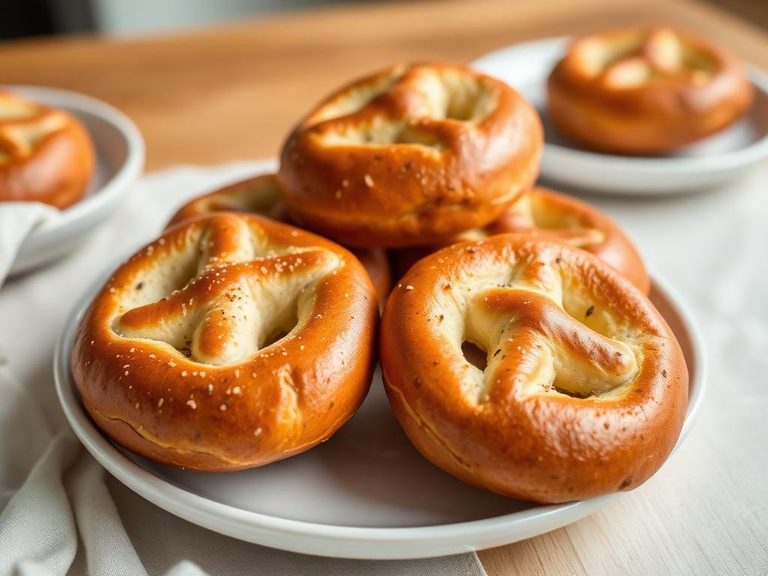
🌍 Where it's eaten
💡 Did you know?
The traditional pretzel shape is said to represent a child's arms folded in prayer, but gluten-free versions often abandon this form for sticks, twists, or nuggets that are easier to coat and package.
Full nutrition (USDA data · scales with serving)
| Water | 3.3 g |
| Energy | 451 kcal |
| Protein | 3.8 g |
| Total lipid (fat) | 15.6 g |
| Carbohydrate, by difference | 75.1 g |
| Fiber, total dietary | 1.4 g |
| Total Sugars | 45.3 g |
| Calcium, Ca | 80.0 mg |
| Iron, Fe | 0.29 mg |
| Magnesium, Mg | 8.0 mg |
| Phosphorus, P | 79.0 mg |
| Potassium, K | 142 mg |
| Sodium, Na | 663 mg |
| Zinc, Zn | 0.33 mg |
| Copper, Cu | 0.05 mg |
| Selenium, Se | 2.8 ug |
| Vitamin C, total ascorbic acid | 0.30 mg |
| Thiamin | 0.03 mg |
| Riboflavin | 0.12 mg |
| Niacin | 0.39 mg |
| Vitamin B-6 | 0.04 mg |
| Folate, total | 4.0 ug |
| Folic acid | 0.00 ug |
| Folate, food | 4.0 ug |
| Folate, DFE | 4.0 ug |
| Choline, total | 13.0 mg |
| Vitamin B-12 | 0.22 ug |
| Vitamin B-12, added | 0.00 ug |
| Vitamin A, RAE | 4.0 ug |
| Retinol | 4.0 ug |
| Carotene, beta | 0.00 ug |
| Carotene, alpha | 0.00 ug |
| Cryptoxanthin, beta | 0.00 ug |
| Lycopene | 0.00 ug |
| Lutein + zeaxanthin | 0.00 ug |
| Vitamin E (alpha-tocopherol) | 0.81 mg |
| Vitamin E, added | 0.00 mg |
| Vitamin D (D2 + D3) | 0.00 ug |
| Vitamin K (phylloquinone) | 3.8 ug |
| Alcohol, ethyl | 0.00 g |
| Caffeine | 0.00 mg |
| Theobromine | 0.00 mg |
Fat & fatty acid profile (per 100g)
| Fatty acids, total saturated | 9.1 g |
| SFA 4:0 | 0.13 g |
| SFA 6:0 | 0.06 g |
| SFA 8:0 | 0.05 g |
| SFA 10:0 | 0.09 g |
| SFA 12:0 | 0.26 g |
| SFA 14:0 | 0.35 g |
| SFA 16:0 | 4.4 g |
| SFA 18:0 | 3.8 g |
| Fatty acids, total monounsaturated | 4.6 g |
| MUFA 16:1 | 0.03 g |
| MUFA 18:1 | 4.5 g |
| MUFA 20:1 | 0.00 g |
| MUFA 22:1 | 0.00 g |
| Fatty acids, total polyunsaturated | 0.66 g |
| PUFA 18:2 | 0.61 g |
| PUFA 18:3 | 0.05 g |
| PUFA 18:4 | 0.00 g |
| PUFA 20:4 | 0.00 g |
| PUFA 20:5 n-3 (EPA) | 0.00 g |
| PUFA 22:5 n-3 (DPA) | 0.00 g |
| PUFA 22:6 n-3 (DHA) | 0.00 g |
| Cholesterol | 8.0 mg |
Amino acid profile (per 100g)
Estimated from Snacks, pretzels, hard, confectioner's coating, chocolate-flavor — USDA does not publish this profile for Pretzels.
| Tryptophan | 0.10 g |
| Threonine | 0.25 g |
| Isoleucine | 0.29 g |
| Leucine | 0.53 g |
| Lysine | 0.25 g |
| Methionine | 0.13 g |
| Cystine | 0.15 g |
| Phenylalanine | 0.36 g |
| Tyrosine | 0.23 g |
| Valine | 0.33 g |
| Arginine | 0.31 g |
| Histidine | 0.16 g |
| Alanine | 0.27 g |
| Aspartic acid | 0.42 g |
| Glutamic acid | 2.2 g |
| Glycine | 0.27 g |
| Proline | 0.74 g |
| Serine | 0.36 g |
FAQ
Is this pretzel truly gluten-free?
Yes, it's made from alternative flours like corn or rice, but always check for cross-contamination warnings if you have celiac disease.
Why is the sugar content so high?
The coating often contains significant added sugars for flavor and texture, which accounts for the high 45g sugar per 100g.
Can I use this in recipes calling for regular pretzels?
Yes, for texture and flavor, but note it may have a different crunch and sweetness level, so adjust seasoning accordingly.
Nutrient density (calculated · NRF9.3)
Nutrient Rich Foods index: beneficial nutrients (protein, fiber, vitamins, minerals) minus saturated fat, added sugar & sodium, per 100 kcal.
NRF9.3 index — Fulgoni, Keast & Drewnowski, 2009. Computed from USDA nutrients.
Weight-loss friendliness (composite index)
Energy density 4.51 kcal/g · 3% calories from protein · 1.4 g fiber · 45.3 g sugar per 100 g.
Composite of energy density (Rolls et al., 1999), protein & fiber satiety, minus sugar. A calculated heuristic — ranks satiety-per-calorie, not a clinical measure.
Dietary load (calculated from USDA values)
Potential renal acid load. Positive = acid-forming, negative = alkaline-forming.
Sodium-to-potassium ratio: 4.67 (lower is better — aim for ≤ 1)
Sodium:potassium per WHO potassium guidance. Computed from USDA nutrients.