

Pretzels, hard, flavored, gluten free
Common food

Photo: Wikipedia
A satisfyingly crunchy, gluten-free twist on the classic snack, these hard pretzels are typically made from rice or corn flour and baked to a deep golden brown. They deliver a bold, savory flavor with a firm, snappy texture that's perfect for dipping. Nutritionally, they are a significant source of carbohydrates for quick energy, with a modest amount of fiber.
Calorie split: 4% protein · 79% carbs · 17% fat
↓ Full nutrition💚 Why it's loved
People love them for delivering the iconic pretzel experience—the salty, malty flavor and hard, satisfying snap—without the gluten. Their sturdy structure makes them an ideal vehicle for dips like hummus or beer cheese, and a nostalgic, portable snack.
⚠️ Watch-outs & how to enjoy it better
As a refined carbohydrate, they can cause a rapid spike in blood sugar, offering limited satiety. They are also often high in sodium. To counteract this, pair them with a protein or fat source like peanut butter or cheese to slow digestion, and practice strict portion control.
Key benefits
- Gluten-free alternative for celiac or gluten-sensitive individuals.
- Provides quick energy from complex carbohydrates.
- Typically low in fat and cholesterol.
- Offers a satisfying, low-calorie crunch for snack cravings.
🍽️ Popular dishes



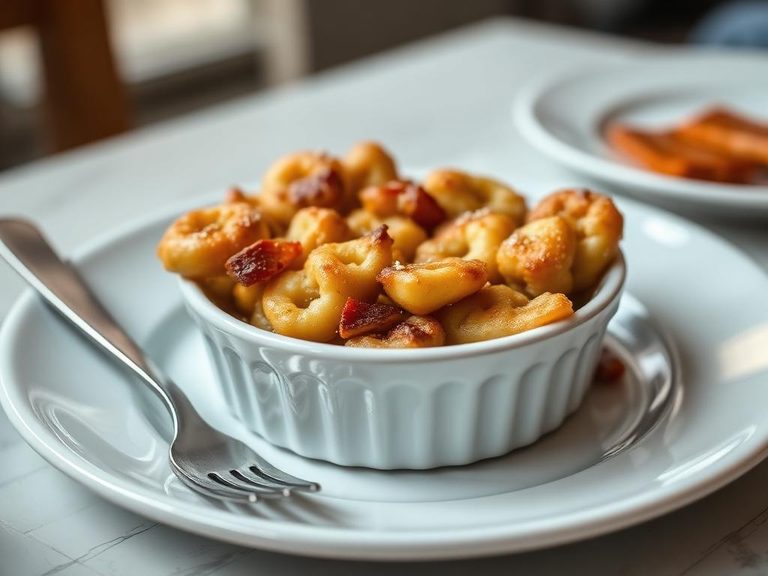
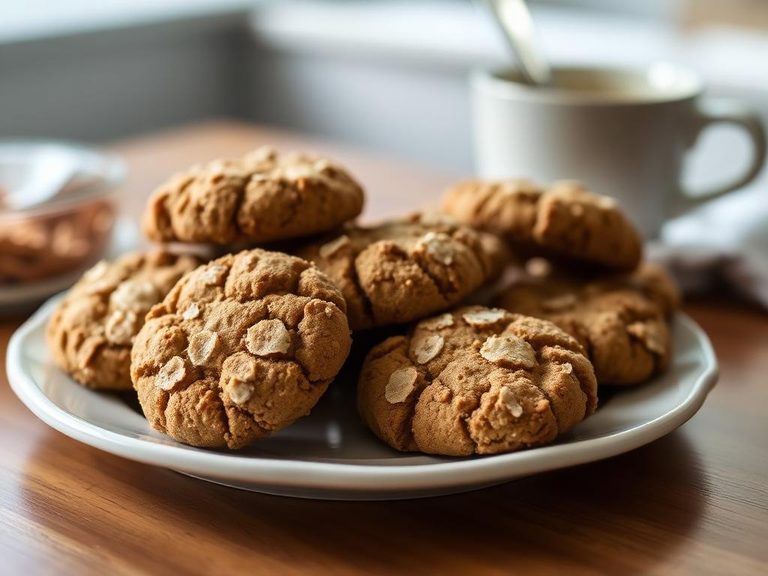
🌍 Where it's eaten
💡 Did you know?
The traditional pretzel shape is said to represent a child's arms folded in prayer, and the word 'pretzel' may derive from the Latin 'pretiola,' meaning 'little reward.'
Full nutrition (USDA data · scales with serving)
| Water | 6.8 g |
| Energy | 393 kcal |
| Protein | 3.5 g |
| Total lipid (fat) | 7.6 g |
| Carbohydrate, by difference | 77.7 g |
| Fiber, total dietary | 3.3 g |
| Total Sugars | 4.2 g |
| Calcium, Ca | 0.00 mg |
| Iron, Fe | 0.46 mg |
| Magnesium, Mg | 7.0 mg |
| Phosphorus, P | 21.0 mg |
| Potassium, K | 68.0 mg |
| Sodium, Na | 1625 mg |
| Zinc, Zn | 0.09 mg |
| Copper, Cu | 0.05 mg |
| Selenium, Se | 2.2 ug |
| Vitamin C, total ascorbic acid | 0.30 mg |
| Thiamin | 0.01 mg |
| Riboflavin | 0.00 mg |
| Niacin | 0.23 mg |
| Vitamin B-6 | 0.05 mg |
| Folate, total | 2.0 ug |
| Folic acid | 0.00 ug |
| Folate, food | 2.0 ug |
| Folate, DFE | 2.0 ug |
| Choline, total | 2.9 mg |
| Vitamin B-12 | 0.00 ug |
| Vitamin B-12, added | 0.00 ug |
| Vitamin A, RAE | 0.00 ug |
| Retinol | 0.00 ug |
| Carotene, beta | 0.00 ug |
| Carotene, alpha | 0.00 ug |
| Cryptoxanthin, beta | 0.00 ug |
| Lycopene | 0.00 ug |
| Lutein + zeaxanthin | 0.00 ug |
| Vitamin E (alpha-tocopherol) | 1.3 mg |
| Vitamin E, added | 0.00 mg |
| Vitamin D (D2 + D3) | 0.00 ug |
| Vitamin K (phylloquinone) | 1.5 ug |
| Alcohol, ethyl | 0.00 g |
| Caffeine | 0.00 mg |
| Theobromine | 0.00 mg |
Fat & fatty acid profile (per 100g)
| Fatty acids, total saturated | 3.4 g |
| SFA 4:0 | 0.00 g |
| SFA 6:0 | 0.00 g |
| SFA 8:0 | 0.00 g |
| SFA 10:0 | 0.00 g |
| SFA 12:0 | 0.01 g |
| SFA 14:0 | 0.07 g |
| SFA 16:0 | 3.0 g |
| SFA 18:0 | 0.32 g |
| Fatty acids, total monounsaturated | 2.8 g |
| MUFA 16:1 | 0.02 g |
| MUFA 18:1 | 2.8 g |
| MUFA 20:1 | 0.01 g |
| MUFA 22:1 | 0.00 g |
| Fatty acids, total polyunsaturated | 1.0 g |
| PUFA 18:2 | 0.94 g |
| PUFA 18:3 | 0.06 g |
| PUFA 18:4 | 0.00 g |
| PUFA 20:4 | 0.00 g |
| PUFA 20:5 n-3 (EPA) | 0.00 g |
| PUFA 22:5 n-3 (DPA) | 0.00 g |
| PUFA 22:6 n-3 (DHA) | 0.00 g |
| Cholesterol | 0.00 mg |
Amino acid profile (per 100g)
Estimated from Snacks, pretzels, hard, confectioner's coating, chocolate-flavor — USDA does not publish this profile for Pretzels.
| Tryptophan | 0.10 g |
| Threonine | 0.25 g |
| Isoleucine | 0.29 g |
| Leucine | 0.53 g |
| Lysine | 0.25 g |
| Methionine | 0.13 g |
| Cystine | 0.15 g |
| Phenylalanine | 0.36 g |
| Tyrosine | 0.23 g |
| Valine | 0.33 g |
| Arginine | 0.31 g |
| Histidine | 0.16 g |
| Alanine | 0.27 g |
| Aspartic acid | 0.42 g |
| Glutamic acid | 2.2 g |
| Glycine | 0.27 g |
| Proline | 0.74 g |
| Serine | 0.36 g |
FAQ
Are hard gluten-free pretzels a good source of fiber?
Generally, no. With about 3.3g of fiber per 100g, they contain some fiber but are not considered a high-fiber food. The fiber content depends on the specific gluten-free flours used (e.g., rice, corn, tapioca).
Can I use these in recipes that call for regular pretzels?
Yes, they often work well as a 1:1 substitute in recipes for crusts, coatings, or mixes, though the texture and flavor may vary slightly. Always check the specific product's flavor profile.
Why are they so high in carbohydrates?
They are primarily made from starches like rice flour or corn flour, which are dense sources of carbohydrates. This is what provides their characteristic energy boost and crunchy texture.
Nutrient density (calculated · NRF9.3)
Nutrient Rich Foods index: beneficial nutrients (protein, fiber, vitamins, minerals) minus saturated fat, added sugar & sodium, per 100 kcal.
NRF9.3 index — Fulgoni, Keast & Drewnowski, 2009. Computed from USDA nutrients.
Weight-loss friendliness (composite index)
Energy density 3.93 kcal/g · 4% calories from protein · 3.3 g fiber · 4.2 g sugar per 100 g.
Composite of energy density (Rolls et al., 1999), protein & fiber satiety, minus sugar. A calculated heuristic — ranks satiety-per-calorie, not a clinical measure.
Dietary load (calculated from USDA values)
Potential renal acid load. Positive = acid-forming, negative = alkaline-forming.
Sodium-to-potassium ratio: 23.90 (lower is better — aim for ≤ 1)
Sodium:potassium per WHO potassium guidance. Computed from USDA nutrients.