

Pretzels, soft, from frozen, unsalted
Common food

Photo: Wikipedia
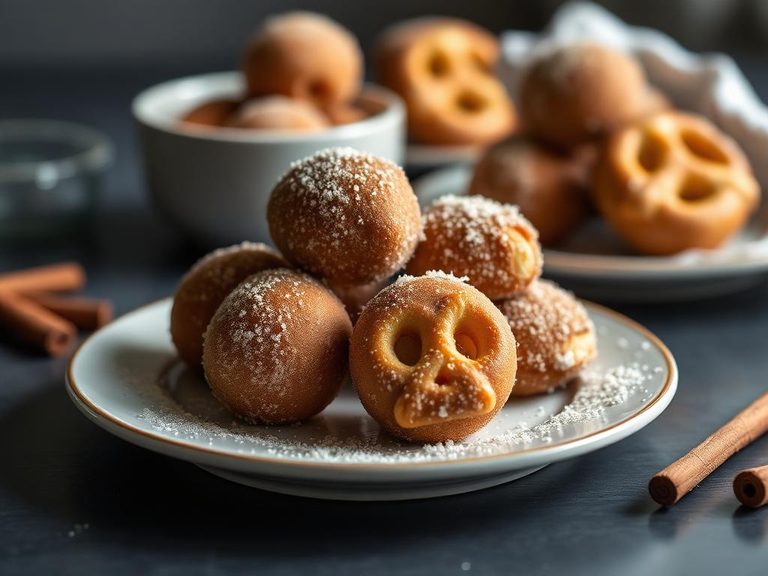
Soft pretzels from frozen are a convenient, ready-to-bake snack with a chewy interior and a classic, slightly crisp, browned crust. Their nutrition is dominated by carbohydrates, providing a quick energy source, with a modest amount of protein. Being unsalted, they offer a blank canvas for flavoring but require careful seasoning.
Calorie split: 10% protein · 82% carbs · 8% fat
↓ Full nutrition💚 Why it's loved
People love them for their comforting, nostalgic chew and the satisfying aroma that fills the kitchen when baked. Their plain, unsalted nature makes them incredibly versatile for both sweet and savory toppings.
⚠️ Watch-outs & how to enjoy it better
The high carbohydrate content can lead to blood sugar spikes if eaten alone, and the lack of sodium means they can taste bland without added seasoning. To counteract this, pair with a protein or fat like mustard, cheese, or hummus, and use portion control. Those watching gluten intake should avoid them as wheat is a primary ingredient.
Key benefits
- Quick source of energy from complex carbohydrates
- Provides some plant-based protein
- Unsalted base allows control over sodium intake
- Convenient and consistent from a frozen format
- Low in fat and sugar
🍽️ Popular dishes
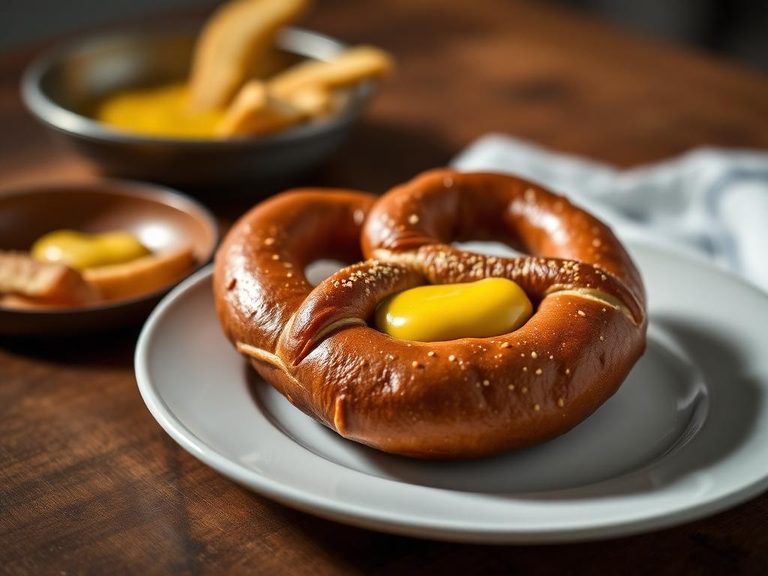
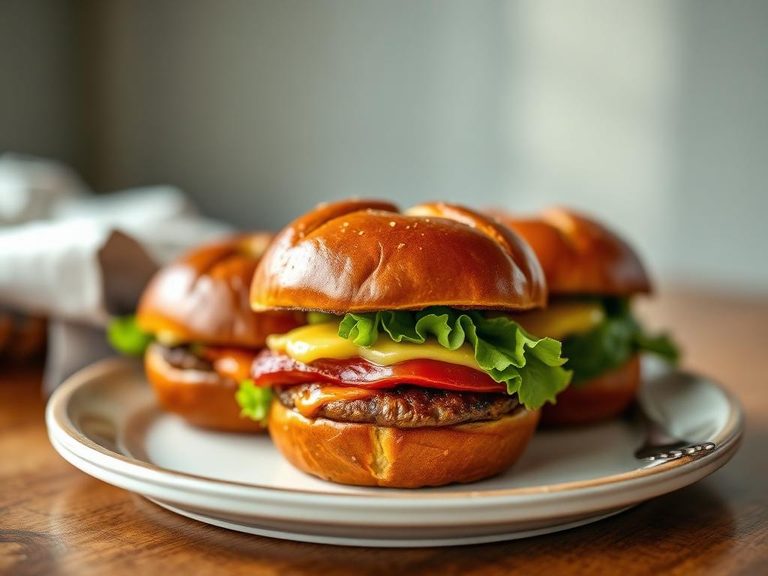
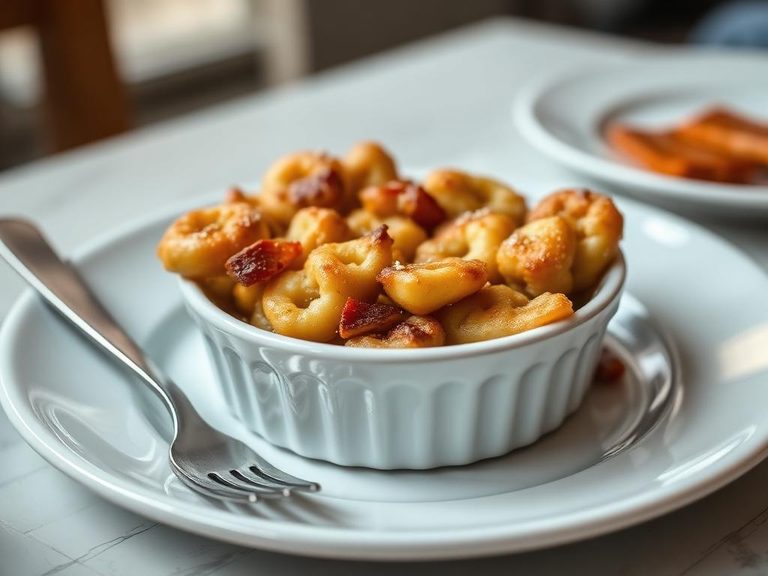

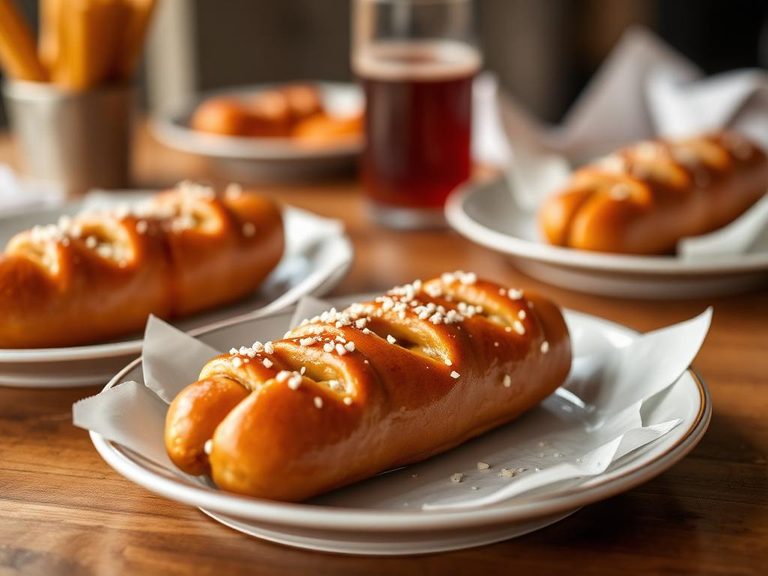
🌍 Where it's eaten
💡 Did you know?
The traditional pretzel shape is said to represent a child's arms folded in prayer, and the name may derive from the Latin 'pretiola,' meaning 'little reward.'
Full nutrition (USDA data · scales with serving)
| Water | 15.0 g |
| Energy | 345 kcal |
| Protein | 8.2 g |
| Total lipid (fat) | 3.1 g |
| Carbohydrate, by difference | 71.0 g |
| Fiber, total dietary | 1.7 g |
| Total Sugars | 0.25 g |
| Calcium, Ca | 23.0 mg |
| Iron, Fe | 3.9 mg |
| Magnesium, Mg | 21.0 mg |
| Phosphorus, P | 79.0 mg |
| Potassium, K | 88.0 mg |
| Sodium, Na | 252 mg |
| Zinc, Zn | 0.94 mg |
| Copper, Cu | 0.13 mg |
| Selenium, Se | 17.2 ug |
| Vitamin C, total ascorbic acid | 0.00 mg |
| Thiamin | 0.41 mg |
| Riboflavin | 0.29 mg |
| Niacin | 4.3 mg |
| Vitamin B-6 | 0.02 mg |
| Folate, total | 24.0 ug |
| Folic acid | 0.00 ug |
| Folate, food | 24.0 ug |
| Folate, DFE | 24.0 ug |
| Choline, total | 17.7 mg |
| Vitamin B-12 | 0.00 ug |
| Vitamin B-12, added | 0.00 ug |
| Vitamin A, RAE | 0.00 ug |
| Retinol | 0.00 ug |
| Carotene, beta | 0.00 ug |
| Carotene, alpha | 0.00 ug |
| Cryptoxanthin, beta | 0.00 ug |
| Lycopene | 0.00 ug |
| Lutein + zeaxanthin | 17.0 ug |
| Vitamin E (alpha-tocopherol) | 0.54 mg |
| Vitamin E, added | 0.00 mg |
| Vitamin D (D2 + D3) | 0.00 ug |
| Vitamin K (phylloquinone) | 2.7 ug |
| Alcohol, ethyl | 0.00 g |
| Caffeine | 0.00 mg |
| Theobromine | 0.00 mg |
Fat & fatty acid profile (per 100g)
| Fatty acids, total saturated | 0.69 g |
| SFA 4:0 | 0.00 g |
| SFA 6:0 | 0.00 g |
| SFA 8:0 | 0.00 g |
| SFA 10:0 | 0.00 g |
| SFA 12:0 | 0.00 g |
| SFA 14:0 | 0.01 g |
| SFA 16:0 | 0.45 g |
| SFA 18:0 | 0.24 g |
| Fatty acids, total monounsaturated | 1.1 g |
| MUFA 16:1 | 0.00 g |
| MUFA 18:1 | 1.1 g |
| MUFA 20:1 | 0.00 g |
| MUFA 22:1 | 0.00 g |
| Fatty acids, total polyunsaturated | 0.95 g |
| PUFA 18:2 | 0.89 g |
| PUFA 18:3 | 0.06 g |
| PUFA 18:4 | 0.00 g |
| PUFA 20:4 | 0.00 g |
| PUFA 20:5 n-3 (EPA) | 0.00 g |
| PUFA 22:5 n-3 (DPA) | 0.00 g |
| PUFA 22:6 n-3 (DHA) | 0.00 g |
| Cholesterol | 0.00 mg |
Amino acid profile (per 100g)
Estimated from Snacks, pretzels, hard, confectioner's coating, chocolate-flavor — USDA does not publish this profile for Pretzels.
| Tryptophan | 0.10 g |
| Threonine | 0.25 g |
| Isoleucine | 0.29 g |
| Leucine | 0.53 g |
| Lysine | 0.25 g |
| Methionine | 0.13 g |
| Cystine | 0.15 g |
| Phenylalanine | 0.36 g |
| Tyrosine | 0.23 g |
| Valine | 0.33 g |
| Arginine | 0.31 g |
| Histidine | 0.16 g |
| Alanine | 0.27 g |
| Aspartic acid | 0.42 g |
| Glutamic acid | 2.2 g |
| Glycine | 0.27 g |
| Proline | 0.74 g |
| Serine | 0.36 g |
FAQ
Why are these pretzels unsalted?
Unsalted frozen pretzels are often sold this way to give consumers control over sodium, making them suitable for low-sodium diets or for custom seasoning before baking.
How do I get the classic pretzel crust at home?
Before baking, dip the thawed pretzel briefly in a baking soda water bath. This alkaline solution promotes the Maillard reaction, creating the signature browned, slightly chewy crust.
Are soft pretzels a healthy snack?
They are a source of energy and some protein but are high in refined carbohydrates. Their healthiness depends on context; pairing with protein or fiber and watching portion size is key.
Nutrient density (calculated · NRF9.3)
Nutrient Rich Foods index: beneficial nutrients (protein, fiber, vitamins, minerals) minus saturated fat, added sugar & sodium, per 100 kcal.
NRF9.3 index — Fulgoni, Keast & Drewnowski, 2009. Computed from USDA nutrients.
Weight-loss friendliness (composite index)
Energy density 3.45 kcal/g · 10% calories from protein · 1.7 g fiber · 0.3 g sugar per 100 g.
Composite of energy density (Rolls et al., 1999), protein & fiber satiety, minus sugar. A calculated heuristic — ranks satiety-per-calorie, not a clinical measure.
Dietary load (calculated from USDA values)
Potential renal acid load. Positive = acid-forming, negative = alkaline-forming.
Sodium-to-potassium ratio: 2.86 (lower is better — aim for ≤ 1)
Sodium:potassium per WHO potassium guidance. Computed from USDA nutrients.