

Potato, roasted, from fresh, peel eaten, made with margarine
Common food

Photo: Wikipedia
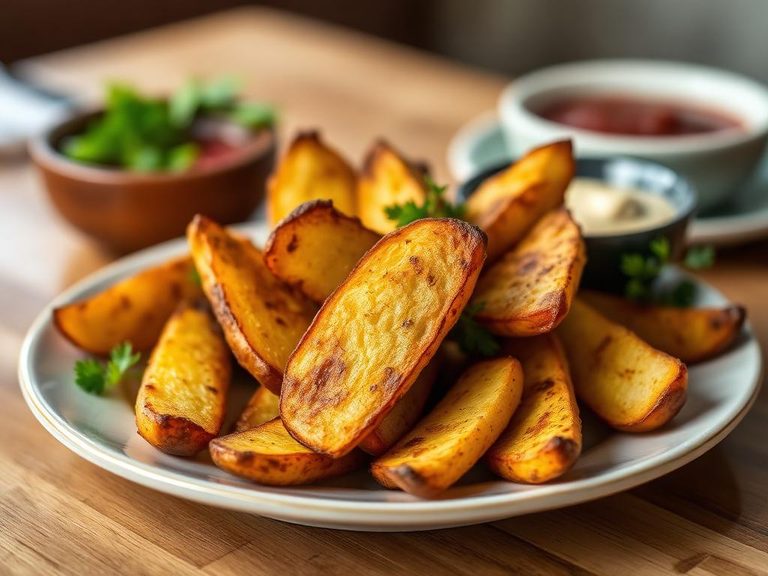
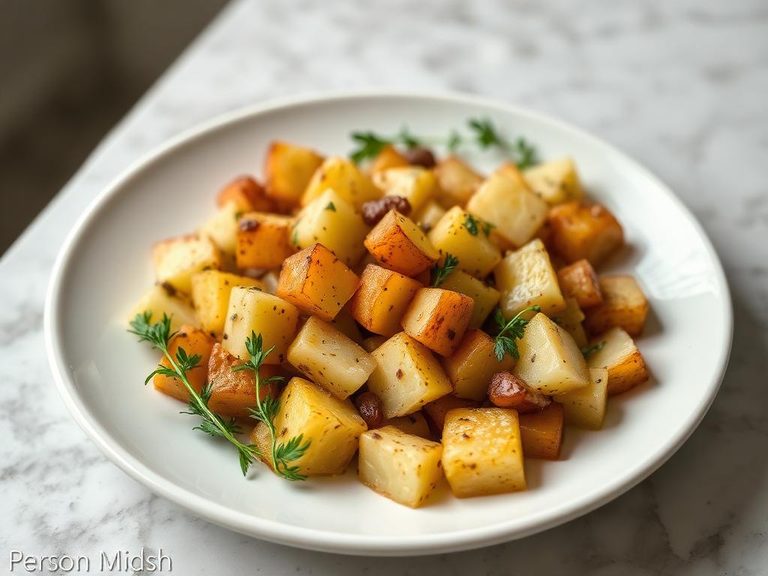
This is a simple, rustic preparation of whole or wedged potatoes roasted in margarine until the skin crisps and the interior turns fluffy and creamy. The margarine adds a rich, savory depth that enhances the potato's natural earthiness, creating a satisfying contrast between the crisp, seasoned peel and the soft flesh. Nutritionally, it's a solid source of complex carbs and fiber, especially with the peel left on.
Calorie split: 8% protein · 68% carbs · 24% fat
↓ Full nutrition💚 Why it's loved
People love it for its comforting, savory flavor and the irresistible texture contrast between the crispy skin and fluffy interior. It's a universally versatile side that pairs with everything from roasted meats to simple salads.
⚠️ Watch-outs & how to enjoy it better
The main downside is its high glycemic index, which can cause blood-sugar spikes, especially for those with insulin resistance. To counteract this, pair it with a source of protein (like grilled chicken) or healthy fat (like avocado) and stick to a moderate portion. Also, be mindful of the sodium content if using pre-salted margarine.
Key benefits
- Provides sustained energy from complex carbohydrates
- Skin-on preparation adds dietary fiber and potassium
- Good source of vitamin C and B6
- Naturally gluten-free and cholesterol-free
🍽️ Popular dishes
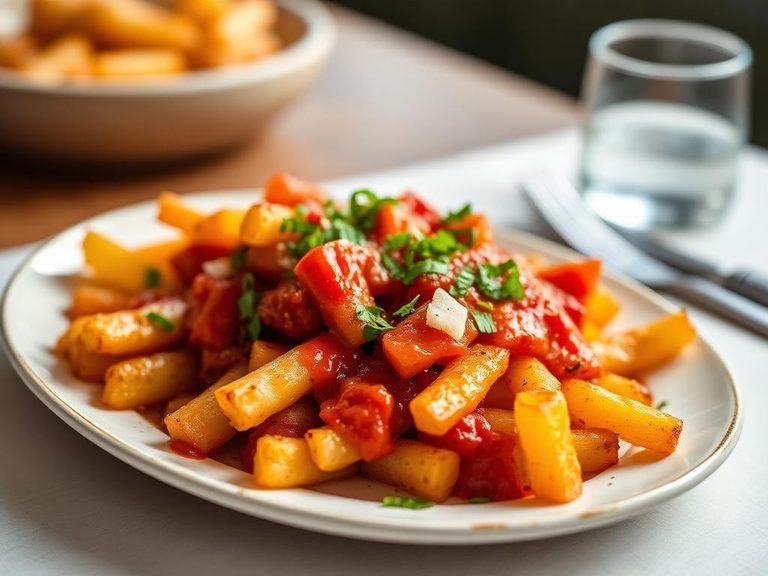
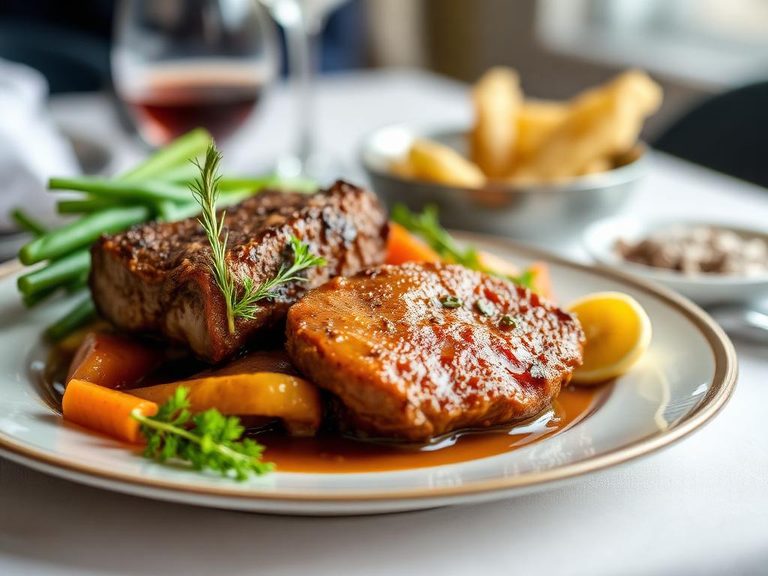
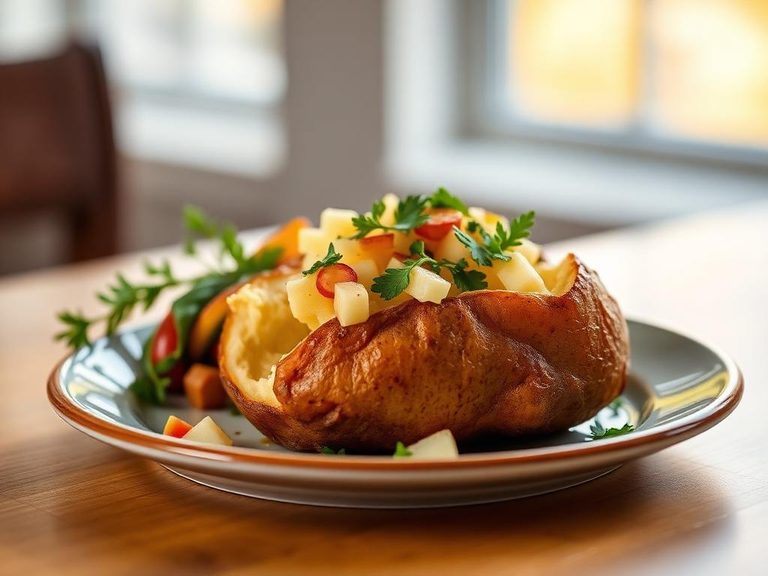
🌍 Where it's eaten
💡 Did you know?
The Maillard reaction, which gives roasted potatoes their deep brown color and complex flavor, begins to occur at temperatures above 285°F (140°C), a process that doesn't happen when boiling.
Full nutrition (USDA data · scales with serving)
| Water | 72.6 g |
| Energy | 116 kcal |
| Protein | 2.4 g |
| Total lipid (fat) | 3.2 g |
| Carbohydrate, by difference | 20.1 g |
| Fiber, total dietary | 2.1 g |
| Total Sugars | 1.1 g |
| Calcium, Ca | 15.0 mg |
| Iron, Fe | 1.0 mg |
| Magnesium, Mg | 27.0 mg |
| Phosphorus, P | 67.0 mg |
| Potassium, K | 509 mg |
| Sodium, Na | 189 mg |
| Zinc, Zn | 0.34 mg |
| Copper, Cu | 0.11 mg |
| Selenium, Se | 0.40 ug |
| Vitamin C, total ascorbic acid | 9.1 mg |
| Thiamin | 0.06 mg |
| Riboflavin | 0.05 mg |
| Niacin | 1.3 mg |
| Vitamin B-6 | 0.43 mg |
| Folate, total | 27.0 ug |
| Folic acid | 0.00 ug |
| Folate, food | 27.0 ug |
| Folate, DFE | 27.0 ug |
| Choline, total | 14.6 mg |
| Vitamin B-12 | 0.00 ug |
| Vitamin B-12, added | 0.00 ug |
| Vitamin A, RAE | 40.0 ug |
| Retinol | 36.0 ug |
| Carotene, beta | 35.0 ug |
| Carotene, alpha | 0.00 ug |
| Cryptoxanthin, beta | 0.00 ug |
| Lycopene | 0.00 ug |
| Lutein + zeaxanthin | 28.0 ug |
| Vitamin E (alpha-tocopherol) | 0.90 mg |
| Vitamin E, added | 0.00 mg |
| Vitamin D (D2 + D3) | 0.20 ug |
| Vitamin K (phylloquinone) | 6.6 ug |
| Alcohol, ethyl | 0.00 g |
| Caffeine | 0.00 mg |
| Theobromine | 0.00 mg |
Fat & fatty acid profile (per 100g)
| Fatty acids, total saturated | 0.64 g |
| SFA 4:0 | 0.00 g |
| SFA 6:0 | 0.00 g |
| SFA 8:0 | 0.00 g |
| SFA 10:0 | 0.00 g |
| SFA 12:0 | 0.01 g |
| SFA 14:0 | 0.01 g |
| SFA 16:0 | 0.35 g |
| SFA 18:0 | 0.25 g |
| Fatty acids, total monounsaturated | 1.2 g |
| MUFA 16:1 | 0.00 g |
| MUFA 18:1 | 1.1 g |
| MUFA 20:1 | 0.01 g |
| MUFA 22:1 | 0.00 g |
| Fatty acids, total polyunsaturated | 1.3 g |
| PUFA 18:2 | 1.1 g |
| PUFA 18:3 | 0.13 g |
| PUFA 18:4 | 0.00 g |
| PUFA 20:4 | 0.00 g |
| PUFA 20:5 n-3 (EPA) | 0.00 g |
| PUFA 22:5 n-3 (DPA) | 0.00 g |
| PUFA 22:6 n-3 (DHA) | 0.00 g |
| Cholesterol | 0.00 mg |
Amino acid profile (per 100g)
Estimated from Snacks, potato chips, made from dried potatoes, reduced fat — USDA does not publish this profile for Potato.
| Tryptophan | 0.04 g |
| Threonine | 0.24 g |
| Isoleucine | 0.25 g |
| Leucine | 0.37 g |
| Lysine | 0.35 g |
| Methionine | 0.07 g |
| Cystine | 0.07 g |
| Phenylalanine | 0.26 g |
| Tyrosine | 0.22 g |
| Valine | 0.33 g |
| Arginine | 0.27 g |
| Histidine | 0.13 g |
| Alanine | 0.20 g |
| Aspartic acid | 1.1 g |
| Glutamic acid | 0.94 g |
| Glycine | 0.19 g |
| Proline | 0.20 g |
| Serine | 0.23 g |
FAQ
Is roasting with margarine healthier than butter?
Margarine is typically lower in saturated fat and contains no cholesterol, but it may contain trans fats depending on the type. Butter offers more natural flavor and fat-soluble vitamins. For the healthiest option, use a small amount of either and consider heart-healthy oils like olive oil for part of the cooking fat.
Why leave the peel on?
The peel is where a significant portion of the potato's fiber, vitamins (like C and B6), and minerals (like potassium) are concentrated. Leaving it on boosts the nutritional value and adds a pleasant textural contrast.
How can I make them crispier?
Ensure the potatoes are very dry before tossing with fat, use a high oven temperature (400°F/200°C or above), and don't overcrowd the pan. Soaking cut potatoes in cold water for 30 minutes to remove excess starch can also help.
Nutrient density (calculated · NRF9.3)
Nutrient Rich Foods index: beneficial nutrients (protein, fiber, vitamins, minerals) minus saturated fat, added sugar & sodium, per 100 kcal.
NRF9.3 index — Fulgoni, Keast & Drewnowski, 2009. Computed from USDA nutrients.
Weight-loss friendliness (composite index)
Energy density 1.16 kcal/g · 8% calories from protein · 2.1 g fiber · 1.1 g sugar per 100 g.
Composite of energy density (Rolls et al., 1999), protein & fiber satiety, minus sugar. A calculated heuristic — ranks satiety-per-calorie, not a clinical measure.
Dietary load (calculated from USDA values)
Potential renal acid load. Positive = acid-forming, negative = alkaline-forming.
Sodium-to-potassium ratio: 0.37 (lower is better — aim for ≤ 1)
Sodium:potassium per WHO potassium guidance. Computed from USDA nutrients.