

Potato, mashed, from school lunch
Common food
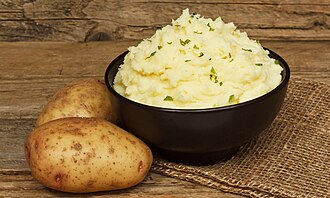
Photo: Wikipedia
This is the quintessential cafeteria comfort food: smooth, creamy, and mild, often made with a touch of milk and butter for a velvety texture. Nutritionally, it's a light, low-calorie starch that provides quick energy from its carbohydrates, with a modest amount of protein and minimal fat.
Calorie split: 11% protein · 67% carbs · 22% fat
↓ Full nutrition💚 Why it's loved
People love it for its comforting, neutral flavor and soft, creamy texture that acts as a perfect canvas for gravy, cheese, or herbs. It's a nostalgic staple that evokes memories of school cafeterias and family dinners, offering simple, satisfying warmth.
⚠️ Watch-outs & how to enjoy it better
Its high glycemic index can cause blood-sugar spikes, especially when served plain. To counteract this, pair it with a source of protein (like chicken or beans) and healthy fat (like olive oil or avocado) to slow digestion. Be mindful of added sodium or butter in school-lunch versions.
Key benefits
- Low calorie density (77 kcal per 100g)
- Good source of quick-release energy from carbohydrates
- Provides some dietary fiber (1g per 100g)
- Contains potassium and vitamin C (from the potato itself)
- Versatile base for adding protein or vegetables
🍽️ Popular dishes
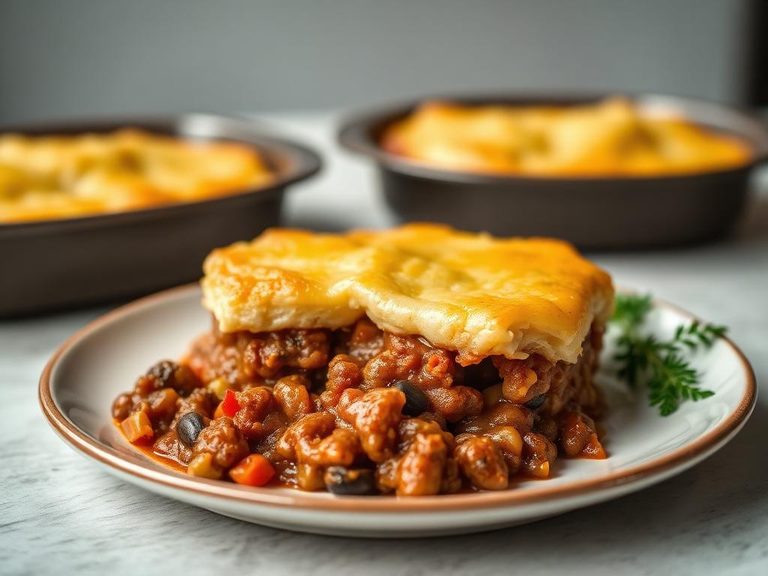
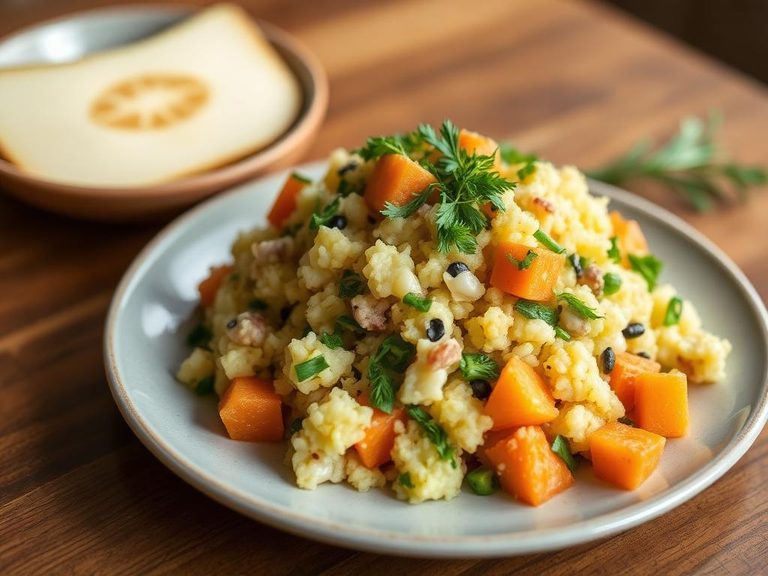
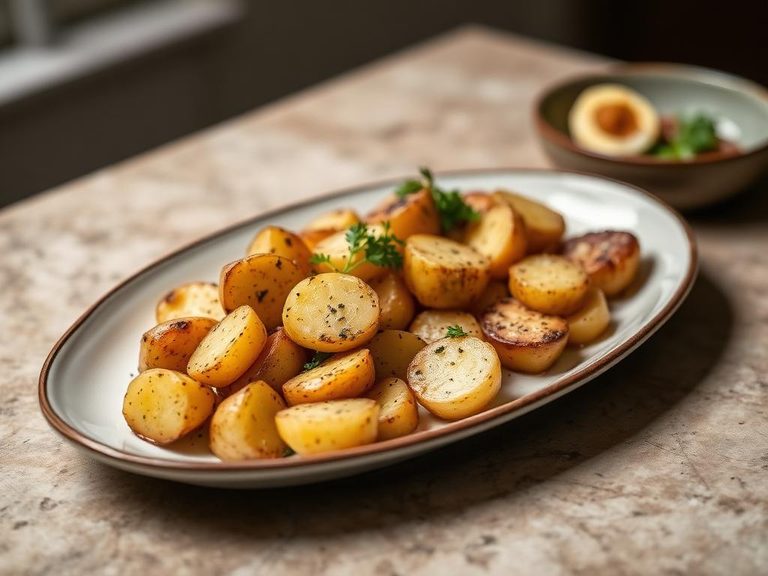
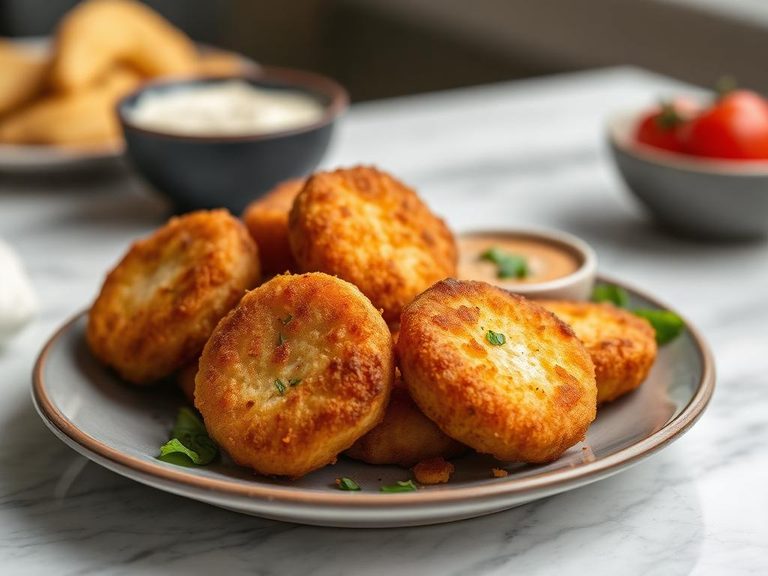
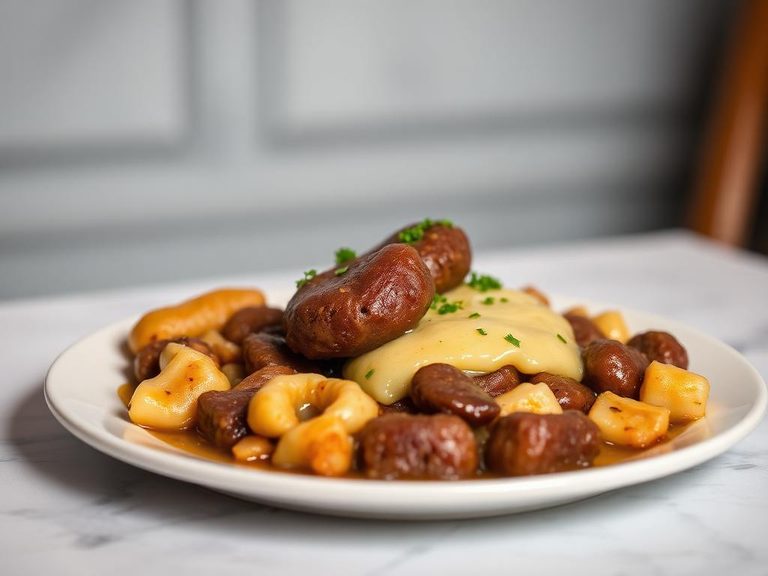
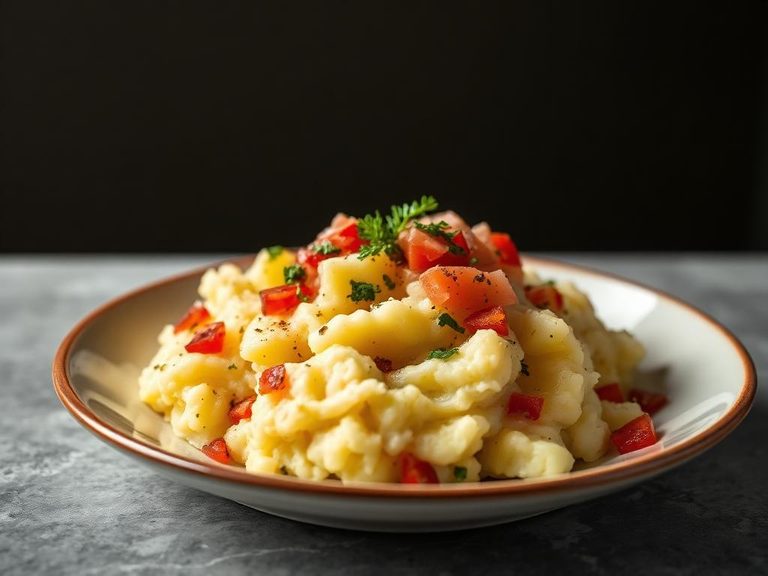
🌍 Where it's eaten
💡 Did you know?
The world record for the largest serving of mashed potatoes was set in 2010 in the UK, weighing over 3,500 pounds (1,588 kg).
Full nutrition (USDA data · scales with serving)
| Water | 81.5 g |
| Energy | 77.0 kcal |
| Protein | 2.1 g |
| Total lipid (fat) | 1.9 g |
| Carbohydrate, by difference | 13.2 g |
| Fiber, total dietary | 1.0 g |
| Total Sugars | 1.9 g |
| Calcium, Ca | 41.0 mg |
| Iron, Fe | 0.18 mg |
| Magnesium, Mg | 13.0 mg |
| Phosphorus, P | 51.0 mg |
| Potassium, K | 203 mg |
| Sodium, Na | 201 mg |
| Zinc, Zn | 0.22 mg |
| Copper, Cu | 0.03 mg |
| Selenium, Se | 0.60 ug |
| Vitamin C, total ascorbic acid | 11.7 mg |
| Thiamin | 0.16 mg |
| Riboflavin | 0.06 mg |
| Niacin | 0.94 mg |
| Vitamin B-6 | 0.19 mg |
| Folate, total | 7.0 ug |
| Folic acid | 0.00 ug |
| Folate, food | 7.0 ug |
| Folate, DFE | 7.0 ug |
| Choline, total | 13.0 mg |
| Vitamin B-12 | 0.17 ug |
| Vitamin B-12, added | 0.00 ug |
| Vitamin A, RAE | 36.0 ug |
| Retinol | 35.0 ug |
| Carotene, beta | 16.0 ug |
| Carotene, alpha | 0.00 ug |
| Cryptoxanthin, beta | 0.00 ug |
| Lycopene | 0.00 ug |
| Lutein + zeaxanthin | 5.0 ug |
| Vitamin E (alpha-tocopherol) | 0.45 mg |
| Vitamin E, added | 0.00 mg |
| Vitamin D (D2 + D3) | 0.40 ug |
| Vitamin K (phylloquinone) | 3.7 ug |
| Alcohol, ethyl | 0.00 g |
| Caffeine | 0.00 mg |
| Theobromine | 0.00 mg |
Fat & fatty acid profile (per 100g)
| Fatty acids, total saturated | 0.49 g |
| SFA 4:0 | 0.01 g |
| SFA 6:0 | 0.00 g |
| SFA 8:0 | 0.00 g |
| SFA 10:0 | 0.01 g |
| SFA 12:0 | 0.01 g |
| SFA 14:0 | 0.03 g |
| SFA 16:0 | 0.25 g |
| SFA 18:0 | 0.16 g |
| Fatty acids, total monounsaturated | 0.64 g |
| MUFA 16:1 | 0.01 g |
| MUFA 18:1 | 0.64 g |
| MUFA 20:1 | 0.01 g |
| MUFA 22:1 | 0.00 g |
| Fatty acids, total polyunsaturated | 0.66 g |
| PUFA 18:2 | 0.59 g |
| PUFA 18:3 | 0.07 g |
| PUFA 18:4 | 0.00 g |
| PUFA 20:4 | 0.00 g |
| PUFA 20:5 n-3 (EPA) | 0.00 g |
| PUFA 22:5 n-3 (DPA) | 0.00 g |
| PUFA 22:6 n-3 (DHA) | 0.00 g |
| Cholesterol | 1.0 mg |
Amino acid profile (per 100g)
Estimated from Snacks, potato chips, made from dried potatoes, reduced fat — USDA does not publish this profile for Potato.
| Tryptophan | 0.04 g |
| Threonine | 0.24 g |
| Isoleucine | 0.25 g |
| Leucine | 0.37 g |
| Lysine | 0.35 g |
| Methionine | 0.07 g |
| Cystine | 0.07 g |
| Phenylalanine | 0.26 g |
| Tyrosine | 0.22 g |
| Valine | 0.33 g |
| Arginine | 0.27 g |
| Histidine | 0.13 g |
| Alanine | 0.20 g |
| Aspartic acid | 1.1 g |
| Glutamic acid | 0.94 g |
| Glycine | 0.19 g |
| Proline | 0.20 g |
| Serine | 0.23 g |
FAQ
Is mashed potato from school lunch healthy?
It can be part of a balanced meal, providing energy and some nutrients, but watch for added salt, butter, or cream that increase calories and sodium.
How can I make school-lunch mashed potatoes healthier?
Use low-fat milk, reduce added butter, and mix in vegetables like cauliflower or spinach to boost fiber and nutrients.
Does mashed potato cause weight gain?
Not inherently; it's low in calories but can contribute to weight gain if eaten in large portions with high-fat toppings or excessive butter.
What nutrients are in mashed potato?
It provides carbohydrates for energy, some protein, fiber, potassium, and vitamin C, but is low in fat and sugar.
Can mashed potato be part of a low-carb diet?
It's high in carbs, so it's not ideal for strict low-carb diets, but small portions can fit into moderate-carb plans.
Nutrient density (calculated · NRF9.3)
Nutrient Rich Foods index: beneficial nutrients (protein, fiber, vitamins, minerals) minus saturated fat, added sugar & sodium, per 100 kcal.
NRF9.3 index — Fulgoni, Keast & Drewnowski, 2009. Computed from USDA nutrients.
Weight-loss friendliness (composite index)
Energy density 0.77 kcal/g · 11% calories from protein · 1.0 g fiber · 1.9 g sugar per 100 g.
Composite of energy density (Rolls et al., 1999), protein & fiber satiety, minus sugar. A calculated heuristic — ranks satiety-per-calorie, not a clinical measure.
Dietary load (calculated from USDA values)
Potential renal acid load. Positive = acid-forming, negative = alkaline-forming.
Sodium-to-potassium ratio: 0.99 (lower is better — aim for ≤ 1)
Sodium:potassium per WHO potassium guidance. Computed from USDA nutrients.