

Potato, mashed, from fresh, made with milk, with gravy
Common food

Photo: Wikipedia
This is the ultimate comfort side: fluffy, creamy mashed potatoes made with milk and finished with a rich, savory gravy. Its texture is luxuriously smooth with a velvety mouthfeel, while the gravy adds a deep, umami-rich, salty contrast. Nutritionally, it's a moderate source of energy from carbs and fat, with a small protein boost from the milk.
Calorie split: 7% protein · 59% carbs · 33% fat
↓ Full nutrition💚 Why it's loved
People adore it for its nostalgic, soul-warming quality—it's a staple of family dinners and holiday feasts across many cultures. The combination of the mild, starchy potato and the intensely flavorful, salty gravy creates a perfectly balanced bite.
⚠️ Watch-outs & how to enjoy it better
The high glycemic load can cause rapid blood-sugar spikes, which is a concern for diabetics or those managing insulin resistance. Commercial gravies are often very high in sodium. To counteract this, pair the dish with a significant source of protein (like roast chicken or meatloaf) and non-starchy vegetables (like green beans or broccoli) to slow digestion and blunt the glucose response. Opt for low-sodium gravy or make your own to control salt.
Key benefits
- Provides quick, accessible energy from carbohydrates.
- Contains potassium, important for fluid balance and nerve function.
- Milk adds calcium and some high-quality protein.
- Gravy can provide minerals like iron if made from meat drippings.
- A comforting, psychologically satisfying food that can support emotional well-being.
🍽️ Popular dishes
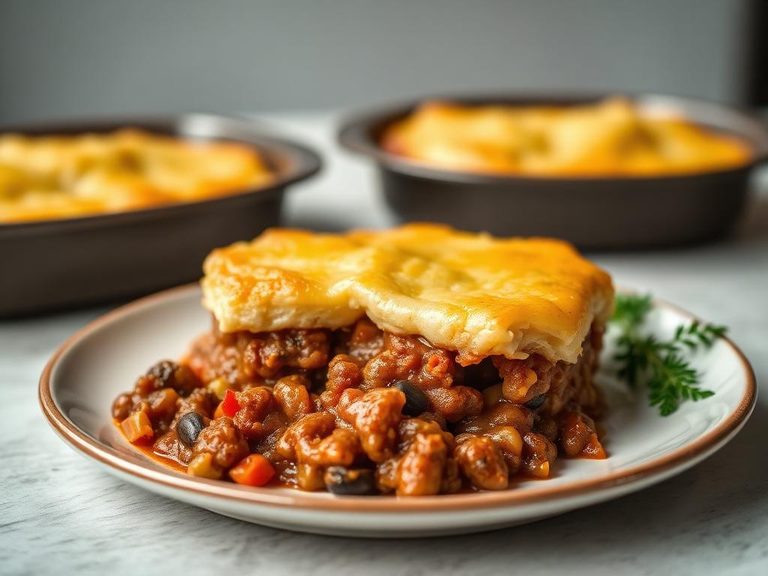
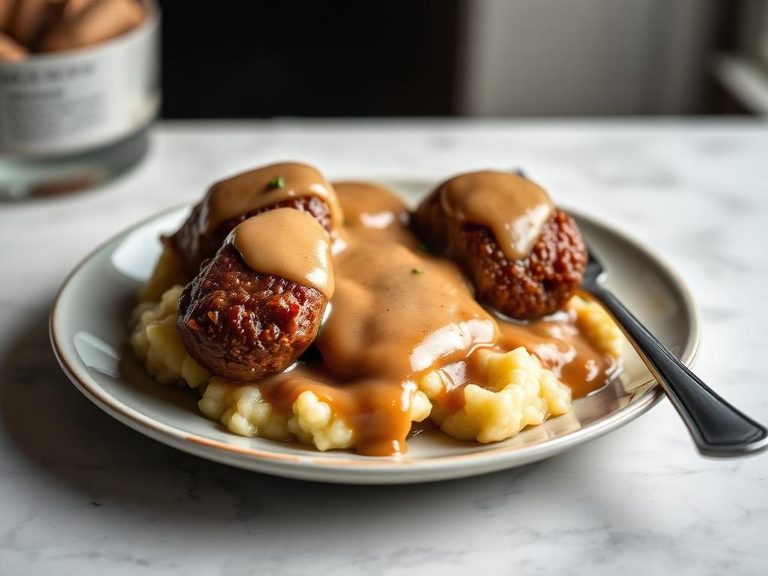
🌍 Where it's eaten
💡 Did you know?
The 'gravy' in the classic British dish 'Bangers and Mash' is traditionally made from the caramelized meat drippings, stock, and sometimes beer or ale, creating a deep, complex sauce that is far more than just a salty topping.
Full nutrition (USDA data · scales with serving)
| Water | 77.9 g |
| Energy | 100 kcal |
| Protein | 1.9 g |
| Total lipid (fat) | 3.8 g |
| Carbohydrate, by difference | 15.1 g |
| Fiber, total dietary | 1.0 g |
| Total Sugars | 1.8 g |
| Calcium, Ca | 22.0 mg |
| Iron, Fe | 0.24 mg |
| Magnesium, Mg | 18.0 mg |
| Phosphorus, P | 50.0 mg |
| Potassium, K | 273 mg |
| Sodium, Na | 246 mg |
| Zinc, Zn | 0.26 mg |
| Copper, Cu | 0.14 mg |
| Selenium, Se | 0.80 ug |
| Vitamin C, total ascorbic acid | 8.1 mg |
| Thiamin | 0.07 mg |
| Riboflavin | 0.05 mg |
| Niacin | 0.94 mg |
| Vitamin B-6 | 0.22 mg |
| Folate, total | 7.0 ug |
| Folic acid | 0.00 ug |
| Folate, food | 7.0 ug |
| Folate, DFE | 7.0 ug |
| Choline, total | 13.0 mg |
| Vitamin B-12 | 0.03 ug |
| Vitamin B-12, added | 0.00 ug |
| Vitamin A, RAE | 30.0 ug |
| Retinol | 29.0 ug |
| Carotene, beta | 10.0 ug |
| Carotene, alpha | 0.00 ug |
| Cryptoxanthin, beta | 0.00 ug |
| Lycopene | 0.00 ug |
| Lutein + zeaxanthin | 0.00 ug |
| Vitamin E (alpha-tocopherol) | 0.22 mg |
| Vitamin E, added | 0.00 mg |
| Vitamin D (D2 + D3) | 0.00 ug |
| Vitamin K (phylloquinone) | 1.3 ug |
| Alcohol, ethyl | 0.00 g |
| Caffeine | 0.00 mg |
| Theobromine | 0.00 mg |
Fat & fatty acid profile (per 100g)
| Fatty acids, total saturated | 1.8 g |
| SFA 4:0 | 0.06 g |
| SFA 6:0 | 0.05 g |
| SFA 8:0 | 0.03 g |
| SFA 10:0 | 0.07 g |
| SFA 12:0 | 0.08 g |
| SFA 14:0 | 0.26 g |
| SFA 16:0 | 0.90 g |
| SFA 18:0 | 0.34 g |
| Fatty acids, total monounsaturated | 1.1 g |
| MUFA 16:1 | 0.07 g |
| MUFA 18:1 | 0.98 g |
| MUFA 20:1 | 0.01 g |
| MUFA 22:1 | 0.00 g |
| Fatty acids, total polyunsaturated | 0.42 g |
| PUFA 18:2 | 0.37 g |
| PUFA 18:3 | 0.04 g |
| PUFA 18:4 | 0.00 g |
| PUFA 20:4 | 0.01 g |
| PUFA 20:5 n-3 (EPA) | 0.00 g |
| PUFA 22:5 n-3 (DPA) | 0.00 g |
| PUFA 22:6 n-3 (DHA) | 0.00 g |
| Cholesterol | 9.0 mg |
Amino acid profile (per 100g)
Estimated from Snacks, potato chips, made from dried potatoes, reduced fat — USDA does not publish this profile for Potato.
| Tryptophan | 0.04 g |
| Threonine | 0.24 g |
| Isoleucine | 0.25 g |
| Leucine | 0.37 g |
| Lysine | 0.35 g |
| Methionine | 0.07 g |
| Cystine | 0.07 g |
| Phenylalanine | 0.26 g |
| Tyrosine | 0.22 g |
| Valine | 0.33 g |
| Arginine | 0.27 g |
| Histidine | 0.13 g |
| Alanine | 0.20 g |
| Aspartic acid | 1.1 g |
| Glutamic acid | 0.94 g |
| Glycine | 0.19 g |
| Proline | 0.20 g |
| Serine | 0.23 g |
FAQ
Is mashed potato with gravy a good post-workout meal?
It can be. The carbohydrates help replenish glycogen stores, and the protein from the milk and gravy aids muscle repair. However, its high sodium and fat content might not be ideal for everyone; consider a lighter, homemade version.
Can I make this dish dairy-free?
Yes. Substitute the milk with unsweetened plant-based milk (like oat or soy) and use a dairy-free butter or oil. Ensure your gravy is also made without butter or cream.
Why does my mashed potato become gluey?
Over-mashing or using a food processor ruptures too many starch cells, releasing amylose and creating a sticky, gluey texture. Use a potato ricer, food mill, or mash gently by hand just until combined.
Nutrient density (calculated · NRF9.3)
Nutrient Rich Foods index: beneficial nutrients (protein, fiber, vitamins, minerals) minus saturated fat, added sugar & sodium, per 100 kcal.
NRF9.3 index — Fulgoni, Keast & Drewnowski, 2009. Computed from USDA nutrients.
Weight-loss friendliness (composite index)
Energy density 1.00 kcal/g · 7% calories from protein · 1.0 g fiber · 1.8 g sugar per 100 g.
Composite of energy density (Rolls et al., 1999), protein & fiber satiety, minus sugar. A calculated heuristic — ranks satiety-per-calorie, not a clinical measure.
Dietary load (calculated from USDA values)
Potential renal acid load. Positive = acid-forming, negative = alkaline-forming.
Sodium-to-potassium ratio: 0.90 (lower is better — aim for ≤ 1)
Sodium:potassium per WHO potassium guidance. Computed from USDA nutrients.