

Potato chips, without salt, reduced fat
Whole food · Snacks

Photo: Wikipedia
These are ultra-thin, crispy potato slices cooked until golden, but with the salt shaker left aside and a portion of the oil reduced. The result is a clean, pure potato flavor with a satisfying crunch that lets the natural earthiness of the spud shine. Nutritionally, they offer a significant carbohydrate boost with less fat than traditional chips.
Calorie split: 6% protein · 56% carbs · 38% fat
↓ Full nutrition💚 Why it's loved
People love them for the pure, unadulterated potato taste and the addictive crunch without the overwhelming saltiness. They are a versatile base for custom seasoning or a neutral companion to rich dips and sandwiches.
⚠️ Watch-outs & how to enjoy it better
Despite being 'reduced fat,' they are still a calorie-dense, low-nutrient snack that can contribute to blood sugar spikes due to their high glycemic load. To counteract this, pair them with a protein or fat source like hummus, cheese, or guacamole to slow digestion, and practice strict portion control by measuring a single serving.
Key benefits
- Provides quick energy from complex carbohydrates.
- Contains dietary fiber for digestive health.
- Lower in fat than standard potato chips.
- A source of potassium, an essential mineral.
- Offers a crunchy snack with a simpler ingredient list.
🍽️ Popular dishes
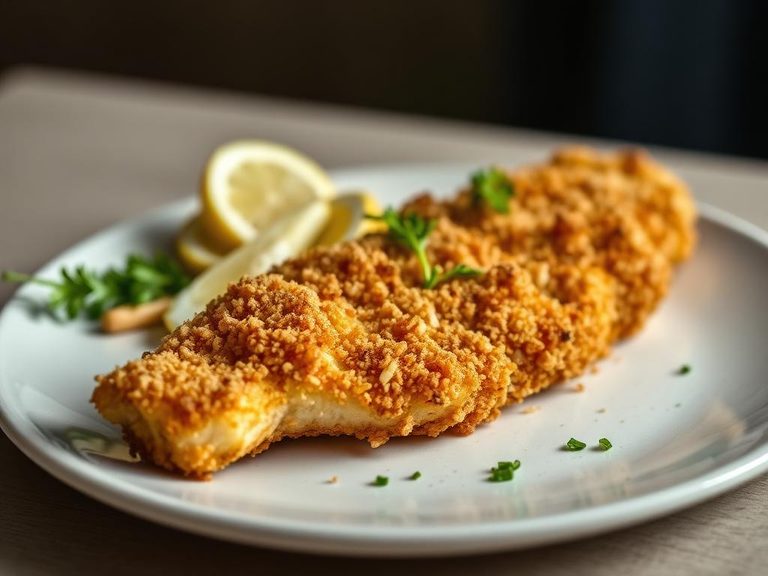
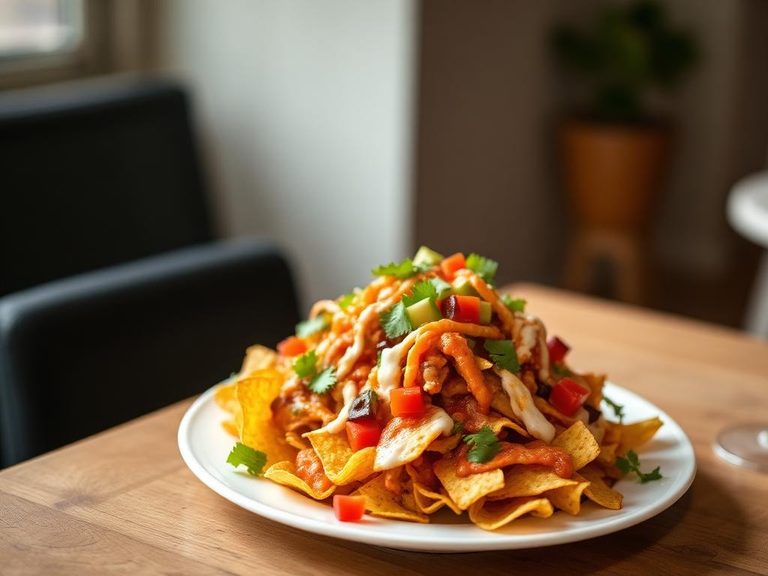
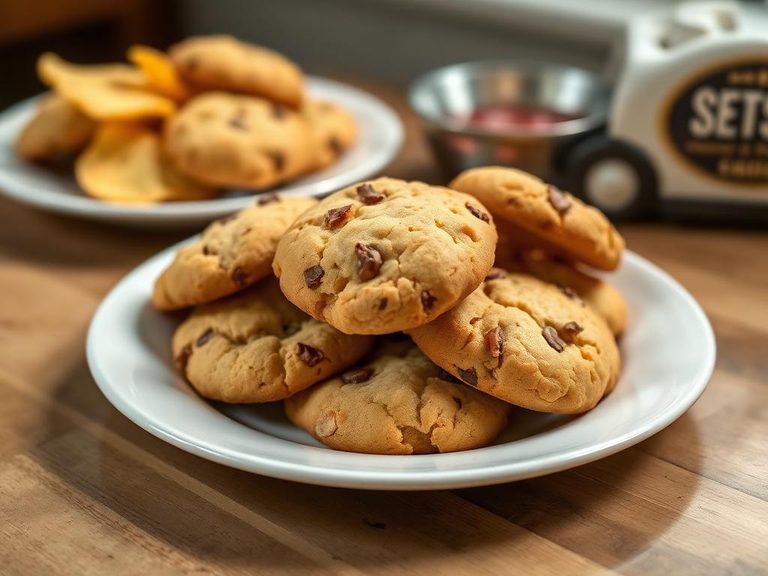
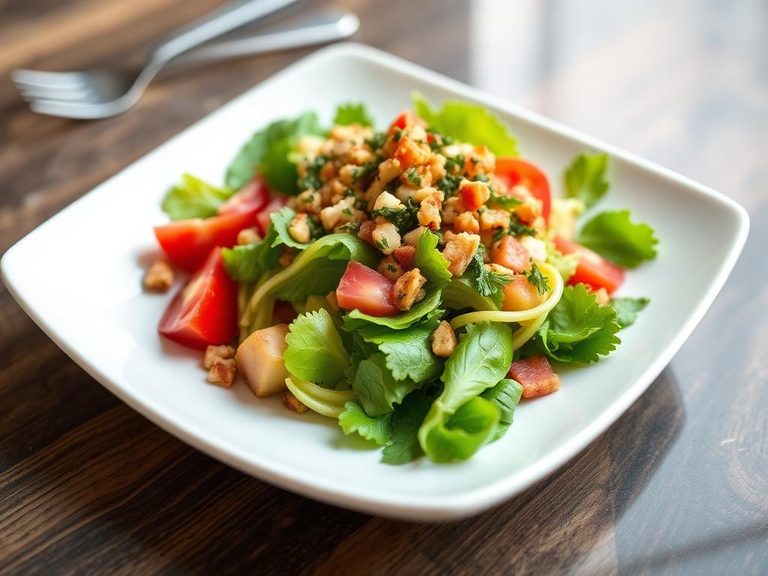
🌍 Where it's eaten
💡 Did you know?
The potato chip was reportedly invented in 1853 by chef George Crum at Moon's Lake House in Saratoga Springs, New York, as a spiteful response to a customer who kept sending back fried potatoes for being too thick.
Full nutrition (USDA data · scales with serving)
| Water | 1.0 g |
| Energy | 487 kcal |
| Energy | 2037 kj |
| Protein | 7.1 g |
| Total lipid (fat) | 20.8 g |
| Ash | 3.3 g |
| Carbohydrate, by difference | 67.8 g |
| Fiber, total dietary | 6.1 g |
| Total Sugars | 0.22 g |
| Calcium, Ca | 21.0 mg |
| Iron, Fe | 1.4 mg |
| Magnesium, Mg | 89.0 mg |
| Phosphorus, P | 193 mg |
| Potassium, K | 1744 mg |
| Sodium, Na | 8.0 mg |
| Zinc, Zn | 1.0 mg |
| Copper, Cu | 0.35 mg |
| Selenium, Se | 8.1 ug |
| Vitamin C, total ascorbic acid | 25.7 mg |
| Thiamin | 0.21 mg |
| Riboflavin | 0.27 mg |
| Niacin | 7.0 mg |
| Vitamin B-6 | 0.67 mg |
| Folate, total | 10.0 ug |
| Folic acid | 0.00 ug |
| Folate, food | 10.0 ug |
| Folate, DFE | 10.0 ug |
| Choline, total | 53.0 mg |
| Vitamin B-12 | 0.00 ug |
| Vitamin B-12, added | 0.00 ug |
| Vitamin A, RAE | 0.00 ug |
| Retinol | 0.00 ug |
| Carotene, beta | 0.00 ug |
| Carotene, alpha | 0.00 ug |
| Cryptoxanthin, beta | 0.00 ug |
| Vitamin A, IU | 0.00 iu |
| Lycopene | 0.00 ug |
| Lutein + zeaxanthin | 0.00 ug |
| Vitamin E (alpha-tocopherol) | 5.5 mg |
| Vitamin E, added | 0.00 mg |
| Vitamin D (D2 + D3), International Units | 0.00 iu |
| Vitamin D (D2 + D3) | 0.00 ug |
| Vitamin K (phylloquinone) | 13.3 ug |
| Alcohol, ethyl | 0.00 g |
| Caffeine | 0.00 mg |
| Theobromine | 0.00 mg |
Fat & fatty acid profile (per 100g)
| Fatty acids, total saturated | 4.2 g |
| SFA 4:0 | 0.00 g |
| SFA 6:0 | 0.00 g |
| SFA 8:0 | 0.00 g |
| SFA 10:0 | 0.00 g |
| SFA 12:0 | 0.00 g |
| SFA 14:0 | 0.12 g |
| SFA 16:0 | 3.5 g |
| SFA 18:0 | 0.51 g |
| Fatty acids, total monounsaturated | 4.8 g |
| MUFA 16:1 | 0.50 g |
| MUFA 18:1 | 4.3 g |
| MUFA 20:1 | 0.00 g |
| MUFA 22:1 | 0.00 g |
| Fatty acids, total polyunsaturated | 10.9 g |
| PUFA 18:2 | 10.8 g |
| PUFA 18:3 | 0.19 g |
| PUFA 18:4 | 0.00 g |
| PUFA 20:4 | 0.00 g |
| PUFA 20:5 n-3 (EPA) | 0.00 g |
| PUFA 22:5 n-3 (DPA) | 0.00 g |
| PUFA 22:6 n-3 (DHA) | 0.00 g |
| Cholesterol | 0.00 mg |
Amino acid profile (per 100g)
Estimated from Snacks, potato chips, reduced fat — USDA does not publish this profile for Potato chips.
| Tryptophan | 0.11 g |
| Threonine | 0.26 g |
| Isoleucine | 0.29 g |
| Leucine | 0.43 g |
| Lysine | 0.43 g |
| Methionine | 0.11 g |
| Cystine | 0.09 g |
| Phenylalanine | 0.32 g |
| Tyrosine | 0.27 g |
| Valine | 0.40 g |
| Arginine | 0.33 g |
| Histidine | 0.16 g |
| Alanine | 0.22 g |
| Aspartic acid | 1.8 g |
| Glutamic acid | 1.2 g |
| Glycine | 0.21 g |
| Proline | 0.26 g |
| Serine | 0.31 g |
FAQ
Are unsalted potato chips actually healthier?
They are lower in sodium and fat than regular chips, but they are still a processed, calorie-dense food. The healthiness depends entirely on portion size and what you eat them with.
Why do they taste different from regular chips?
Salt is a powerful flavor enhancer. Without it, the natural, slightly sweet and earthy flavor of the potato becomes the dominant taste, and the texture of the fry or bake is more noticeable.
Can I make these at home?
Yes. Slice potatoes paper-thin, rinse to remove excess starch, pat completely dry, and bake at a low temperature (around 300°F/150°C) until crisp, or fry briefly in oil. This gives you full control over fat and salt.
Nutrient density (calculated · NRF9.3)
Nutrient Rich Foods index: beneficial nutrients (protein, fiber, vitamins, minerals) minus saturated fat, added sugar & sodium, per 100 kcal.
NRF9.3 index — Fulgoni, Keast & Drewnowski, 2009. Computed from USDA nutrients.
Weight-loss friendliness (composite index)
Energy density 4.87 kcal/g · 6% calories from protein · 6.1 g fiber · 0.2 g sugar per 100 g.
Composite of energy density (Rolls et al., 1999), protein & fiber satiety, minus sugar. A calculated heuristic — ranks satiety-per-calorie, not a clinical measure.
Dietary load (calculated from USDA values)
Potential renal acid load. Positive = acid-forming, negative = alkaline-forming.
Sodium-to-potassium ratio: 0.00 (lower is better — aim for ≤ 1)
Sodium:potassium per WHO potassium guidance. Computed from USDA nutrients.