

Potato chips, reduced fat
Common food

Photo: Wikipedia
Reduced-fat potato chips offer the classic crispy, salty snack experience with a lighter crunch, achieved by using less oil during frying or baking. They maintain a satisfying potato flavor and texture, though often with a slightly less rich mouthfeel than their full-fat counterparts. Nutritionally, they provide a lower-fat alternative while still delivering a significant carbohydrate load for energy.
Calorie split: 6% protein · 56% carbs · 38% fat
↓ Full nutrition💚 Why it's loved
People love them for the familiar, addictive combination of salt and crunch that satisfies snack cravings in a more portion-controlled package. Their versatility makes them a go-to for dipping, topping casseroles, or enjoying straight from the bag.
⚠️ Watch-outs & how to enjoy it better
The reduced fat can sometimes lead to a drier, less satisfying texture, and they remain high in sodium and refined carbohydrates, which can contribute to blood-sugar spikes. To counteract this, pair them with a protein or healthy fat like hummus or guacamole, and practice strict portion control by measuring a single serving.
Key benefits
- Lower in total fat than regular potato chips
- Provides a source of quick energy from carbohydrates
- Contains dietary fiber from the potato
- Can be a more diet-conscious snack option
🍽️ Popular dishes
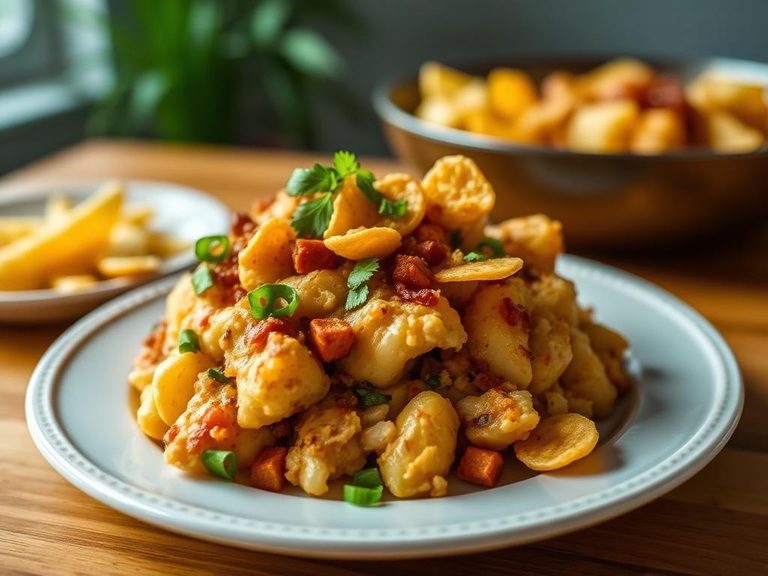

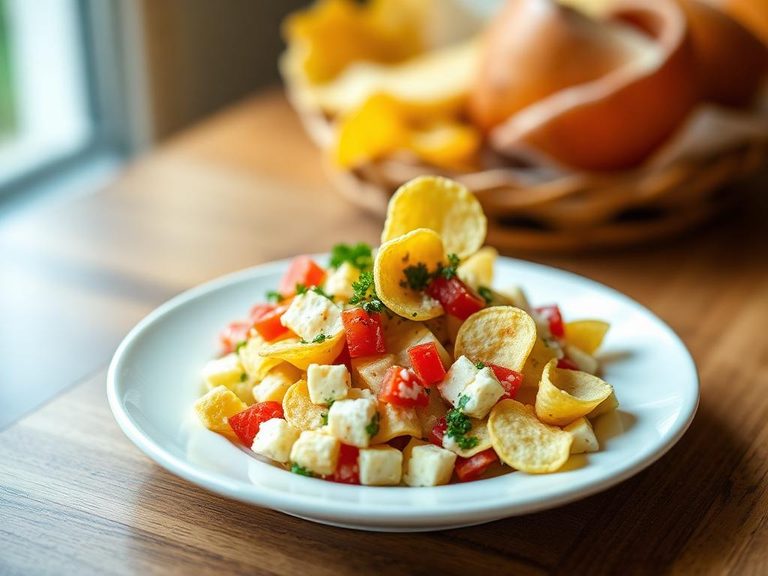


🌍 Where it's eaten
💡 Did you know?
The 'reduced fat' label often means about 25-50% less fat than the original, but manufacturers frequently compensate by adding more sugar or starch to maintain flavor and texture.
Full nutrition (USDA data · scales with serving)
| Water | 0.99 g |
| Energy | 482 kcal |
| Protein | 7.0 g |
| Total lipid (fat) | 20.6 g |
| Carbohydrate, by difference | 67.1 g |
| Fiber, total dietary | 6.0 g |
| Total Sugars | 0.22 g |
| Calcium, Ca | 21.0 mg |
| Iron, Fe | 1.3 mg |
| Magnesium, Mg | 88.0 mg |
| Phosphorus, P | 191 mg |
| Potassium, K | 1727 mg |
| Sodium, Na | 391 mg |
| Zinc, Zn | 1.0 mg |
| Copper, Cu | 0.34 mg |
| Selenium, Se | 8.0 ug |
| Vitamin C, total ascorbic acid | 25.4 mg |
| Thiamin | 0.21 mg |
| Riboflavin | 0.27 mg |
| Niacin | 6.9 mg |
| Vitamin B-6 | 0.66 mg |
| Folate, total | 10.0 ug |
| Folic acid | 0.00 ug |
| Folate, food | 10.0 ug |
| Folate, DFE | 10.0 ug |
| Choline, total | 52.5 mg |
| Vitamin B-12 | 0.00 ug |
| Vitamin B-12, added | 0.00 ug |
| Vitamin A, RAE | 0.00 ug |
| Retinol | 0.00 ug |
| Carotene, beta | 0.00 ug |
| Carotene, alpha | 0.00 ug |
| Cryptoxanthin, beta | 0.00 ug |
| Lycopene | 0.00 ug |
| Lutein + zeaxanthin | 0.00 ug |
| Vitamin E (alpha-tocopherol) | 5.4 mg |
| Vitamin E, added | 0.00 mg |
| Vitamin D (D2 + D3) | 0.00 ug |
| Vitamin K (phylloquinone) | 13.2 ug |
| Alcohol, ethyl | 0.00 g |
| Caffeine | 0.00 mg |
| Theobromine | 0.00 mg |
Fat & fatty acid profile (per 100g)
| Fatty acids, total saturated | 4.1 g |
| SFA 4:0 | 0.00 g |
| SFA 6:0 | 0.00 g |
| SFA 8:0 | 0.00 g |
| SFA 10:0 | 0.00 g |
| SFA 12:0 | 0.00 g |
| SFA 14:0 | 0.12 g |
| SFA 16:0 | 3.5 g |
| SFA 18:0 | 0.51 g |
| Fatty acids, total monounsaturated | 4.8 g |
| MUFA 16:1 | 0.49 g |
| MUFA 18:1 | 4.3 g |
| MUFA 20:1 | 0.00 g |
| MUFA 22:1 | 0.00 g |
| Fatty acids, total polyunsaturated | 10.8 g |
| PUFA 18:2 | 10.6 g |
| PUFA 18:3 | 0.19 g |
| PUFA 18:4 | 0.00 g |
| PUFA 20:4 | 0.00 g |
| PUFA 20:5 n-3 (EPA) | 0.00 g |
| PUFA 22:5 n-3 (DPA) | 0.00 g |
| PUFA 22:6 n-3 (DHA) | 0.00 g |
| Cholesterol | 0.00 mg |
Amino acid profile (per 100g)
Estimated from Snacks, potato chips, made from dried potatoes, sour-cream and onion-flavor — USDA does not publish this profile for Potato chips.
| Tryptophan | 0.07 g |
| Threonine | 0.28 g |
| Isoleucine | 0.31 g |
| Leucine | 0.48 g |
| Lysine | 0.44 g |
| Methionine | 0.10 g |
| Cystine | 0.08 g |
| Phenylalanine | 0.29 g |
| Tyrosine | 0.25 g |
| Valine | 0.38 g |
| Arginine | 0.31 g |
| Histidine | 0.15 g |
| Alanine | 0.25 g |
| Aspartic acid | 0.93 g |
| Glutamic acid | 1.1 g |
| Glycine | 0.21 g |
| Proline | 0.37 g |
| Serine | 0.29 g |
FAQ
Are reduced-fat chips healthier than regular chips?
They contain less fat and slightly fewer calories per gram, but are often similar in sodium and carbohydrates. The overall health impact depends on portion size and dietary context.
Why do reduced-fat chips sometimes taste different?
Fat carries flavor and creates a rich mouthfeel. With less oil, manufacturers may adjust seasoning blends or use different cooking methods, which can alter the taste and texture profile.
Can reduced-fat chips be part of a balanced diet?
Yes, when consumed in moderation. They can fit into a balanced diet as an occasional treat, especially when paired with nutrient-dense foods like vegetables or lean protein.
Nutrient density (calculated · NRF9.3)
Nutrient Rich Foods index: beneficial nutrients (protein, fiber, vitamins, minerals) minus saturated fat, added sugar & sodium, per 100 kcal.
NRF9.3 index — Fulgoni, Keast & Drewnowski, 2009. Computed from USDA nutrients.
Weight-loss friendliness (composite index)
Energy density 4.82 kcal/g · 6% calories from protein · 6.0 g fiber · 0.2 g sugar per 100 g.
Composite of energy density (Rolls et al., 1999), protein & fiber satiety, minus sugar. A calculated heuristic — ranks satiety-per-calorie, not a clinical measure.
Dietary load (calculated from USDA values)
Potential renal acid load. Positive = acid-forming, negative = alkaline-forming.
Sodium-to-potassium ratio: 0.23 (lower is better — aim for ≤ 1)
Sodium:potassium per WHO potassium guidance. Computed from USDA nutrients.